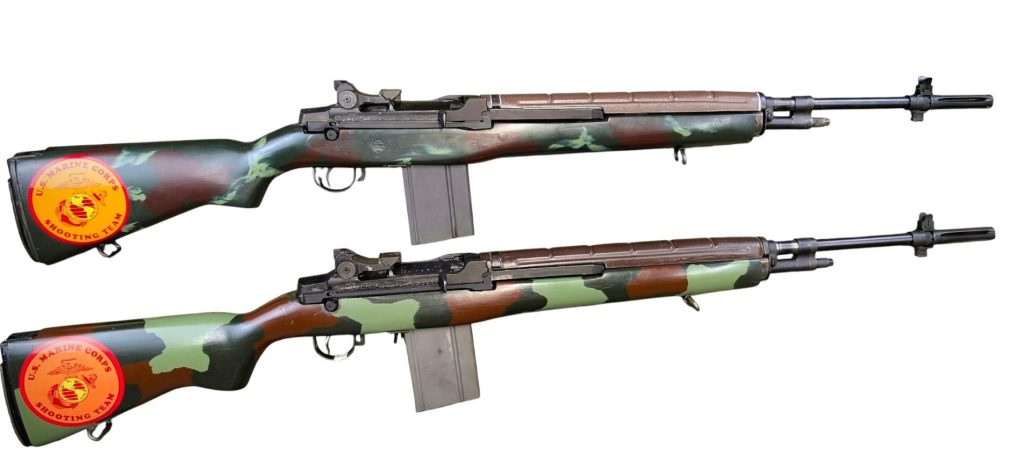
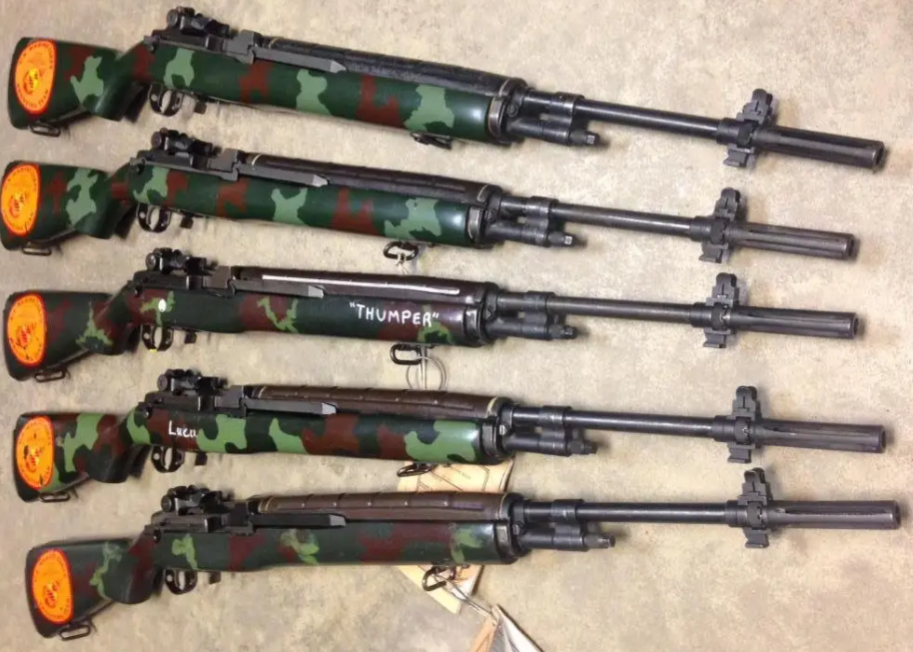
When speaking to the competitors that arrive at Camp Perry, Ohio for the National Matches every summer, no rifle brings as much nostalgia to the conversation as the Marine Corps’ Match Conditioned M14. In the iconic McMillan camouflage stock with big orange “U.S. Marine Corps Shooting Team” stickers emblazoned on the starboard side, the USMC M14s could not be missed. The M14 era would represent the high-water mark for Marine Corps competitive shooting, and the rifles that graced the firing lines of those days were true works of art and precision.
The Early USMC National Match M14
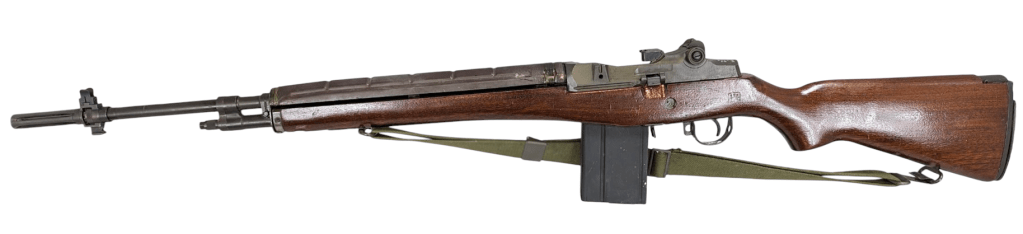
Springfield Armory M14NM #564426, an early factory National Match M14 that was further match conditioned by the Marine Corps. This rifle was used by SSgt Robert Goller to win the National Trophy Individual match in 1967.
(USMC History Division).
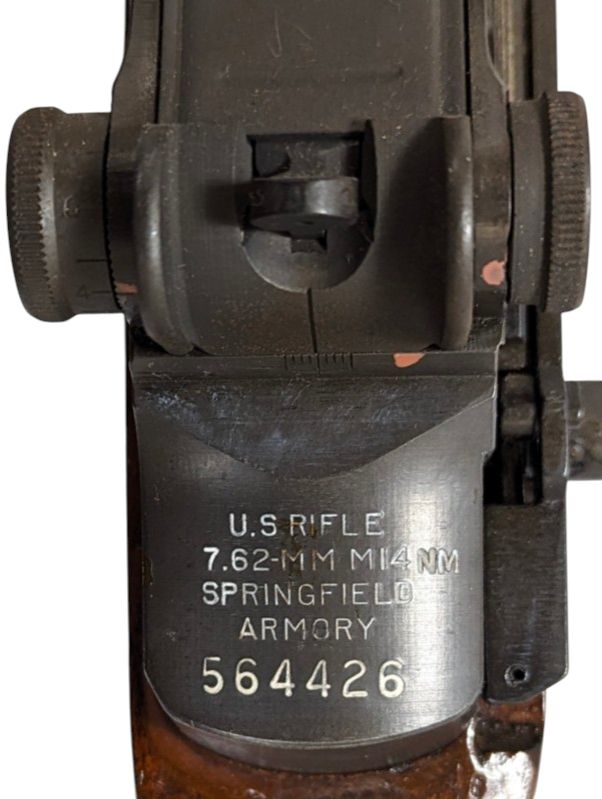
Factory National Match M14
- Springfield Armory would produce a total of of 6,641 National Match M14s form 1962 to 1963.
- TRW would produce 4,874 National Match M14s in 1964.
- Springfield Armory converted 2,094 M14s into National Match types in 1965, and 2,395 conversions would take place in 1966.
- The last National Match M14s would be Rock Island Arsenal rebuilds, 2,462 in total in 1967.
- The Marine Corps would further modify these rifles in regards to bedding, epoxying the handguard clips, and staking various parts to minimize movement.
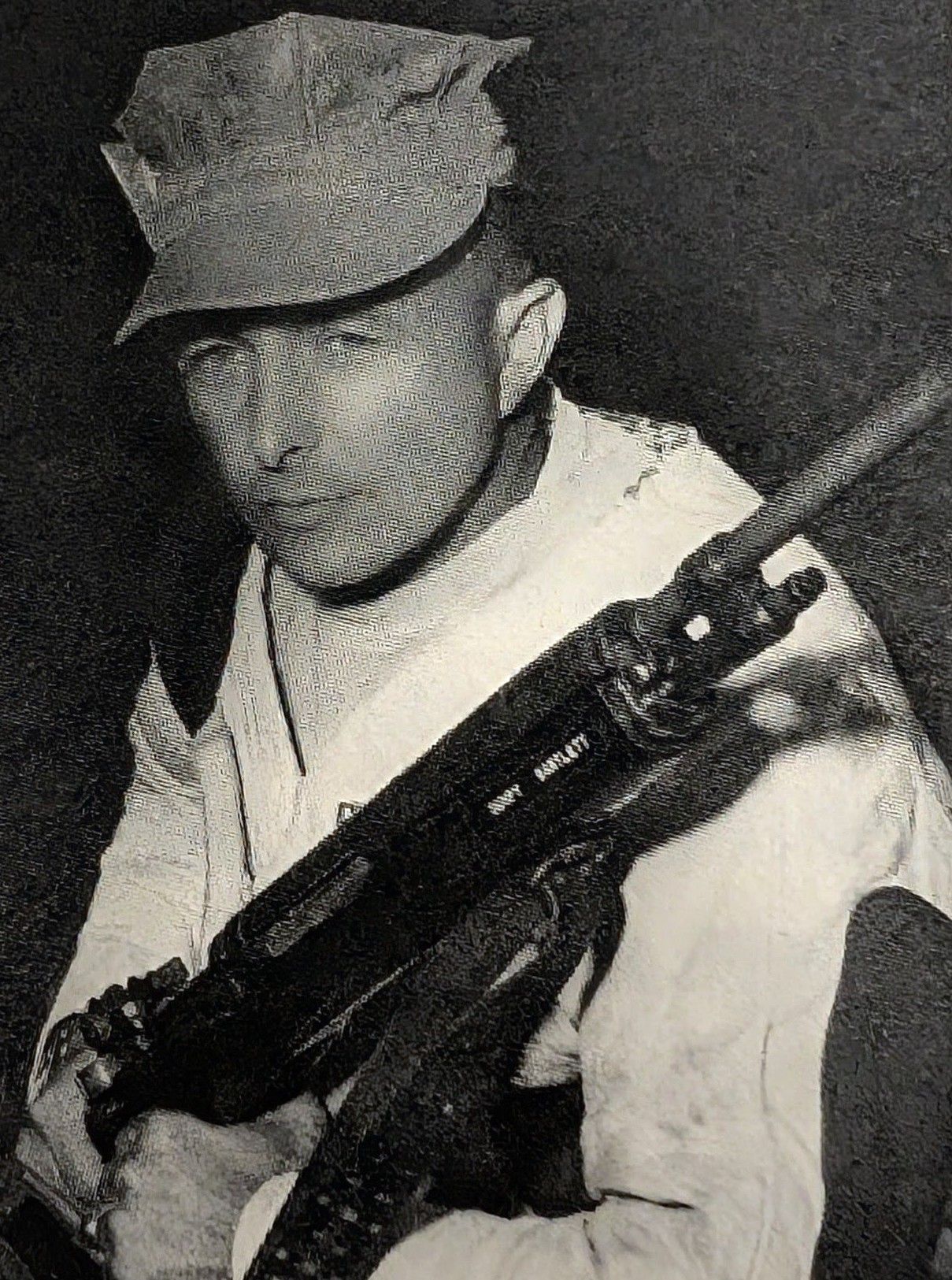
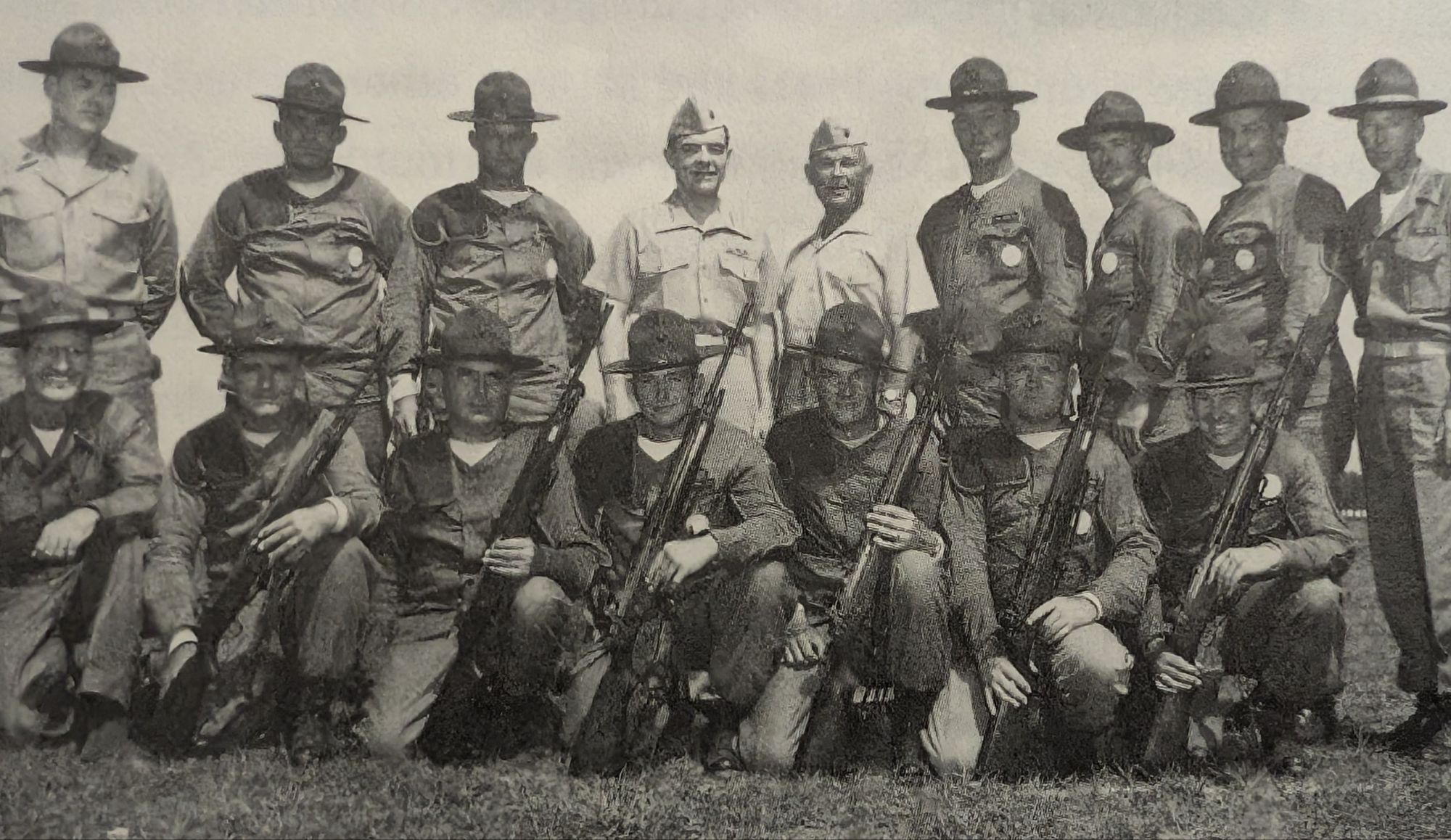
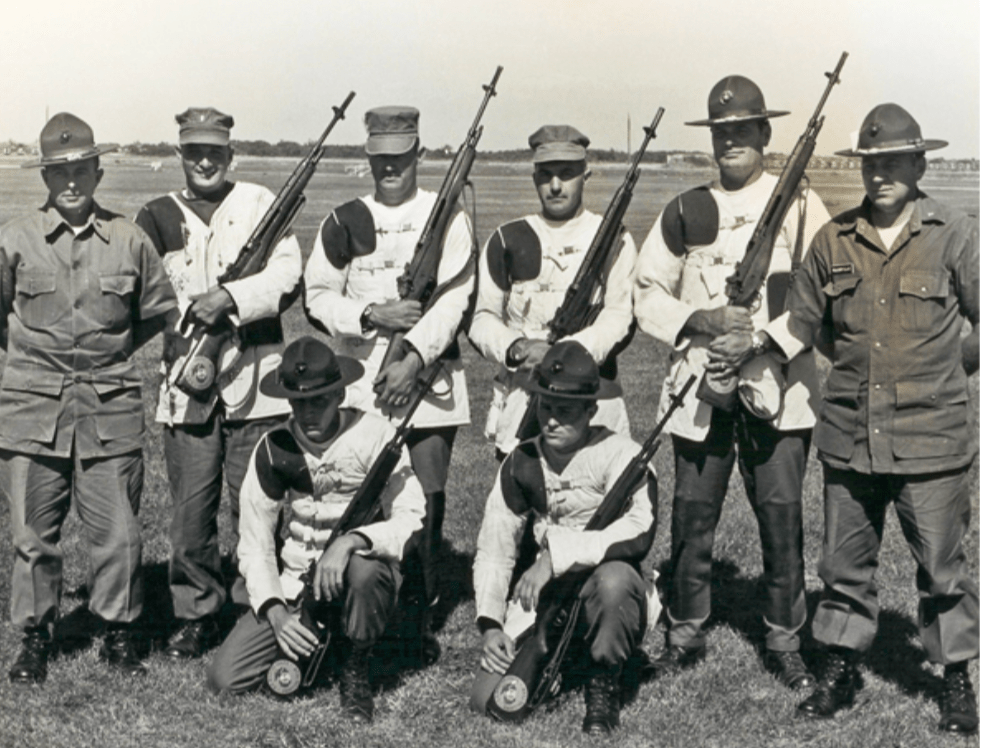
Left: Gunny Bartlett with his National Match M14 in 1962, the first year the M14 was used in competition. (USMC).
Right: The USMC Rifle Team with M14s in 1964 (USMC).
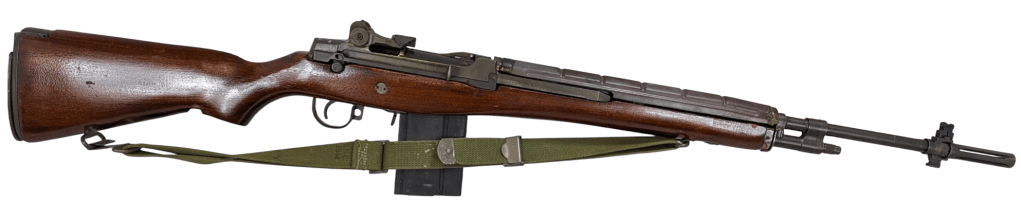
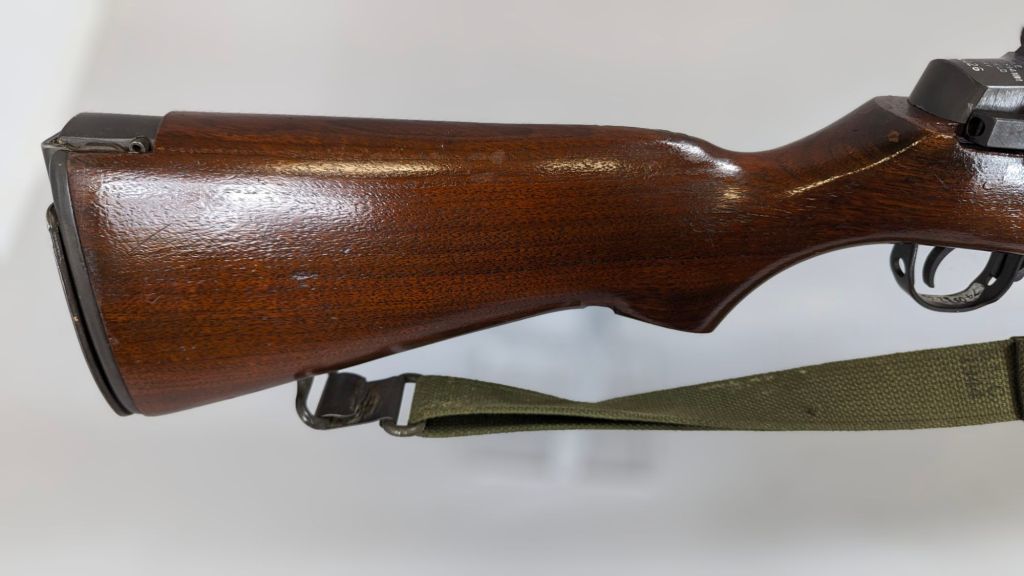
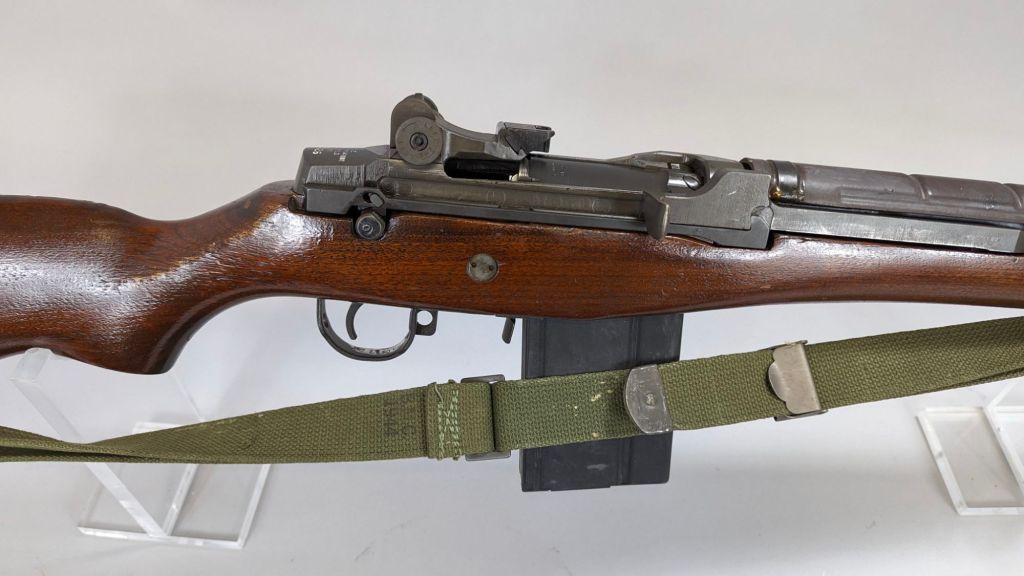
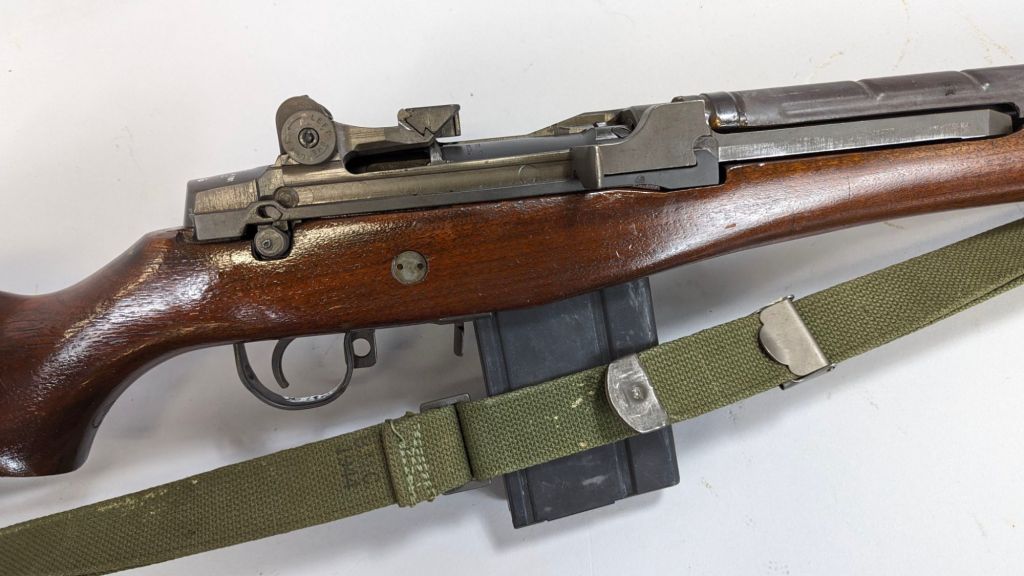
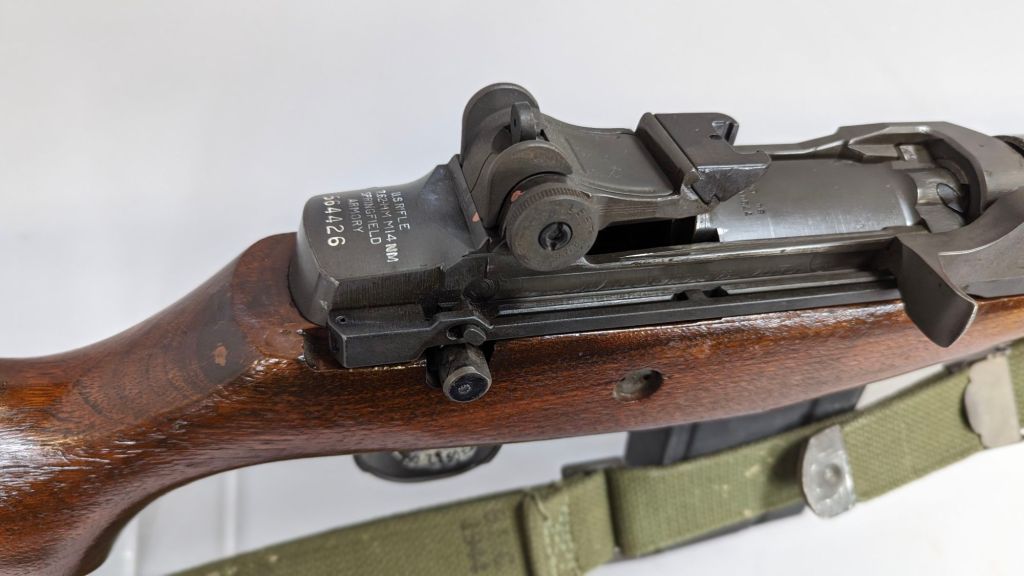
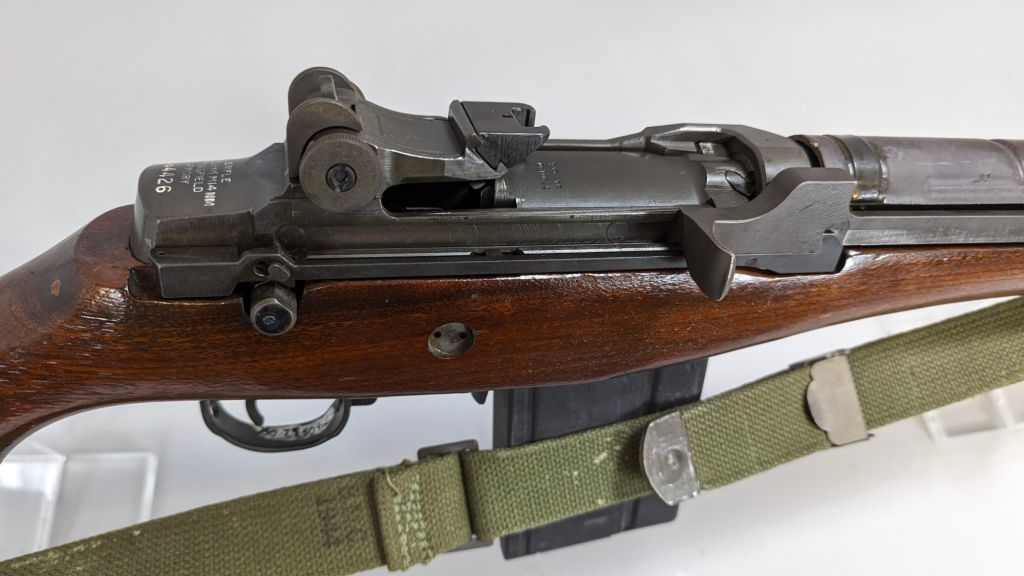
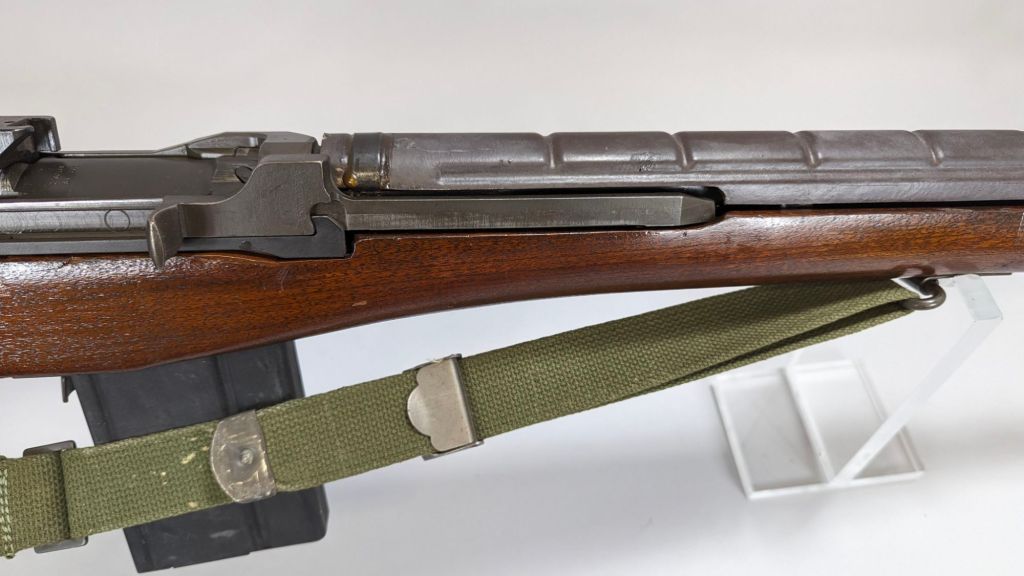
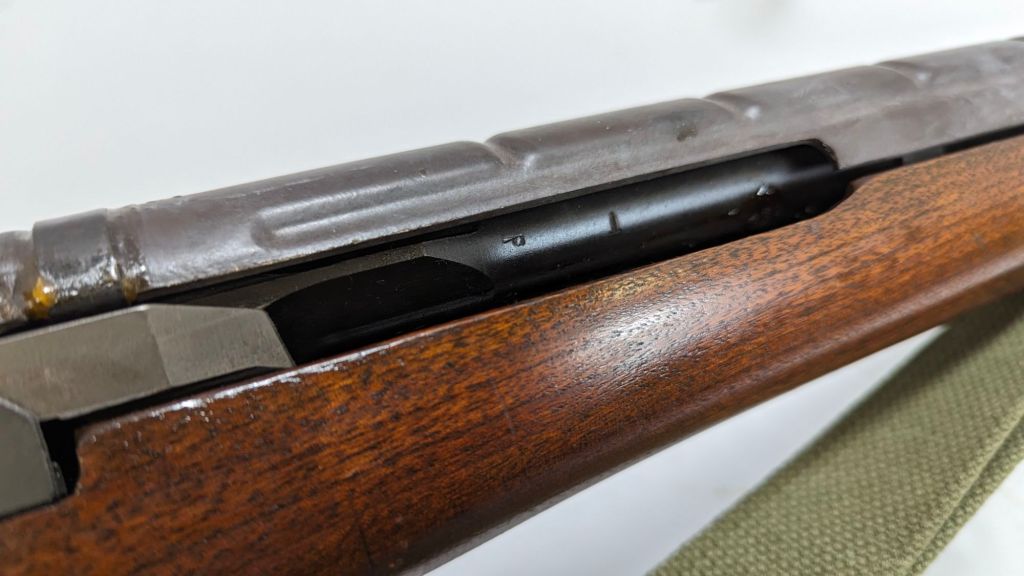
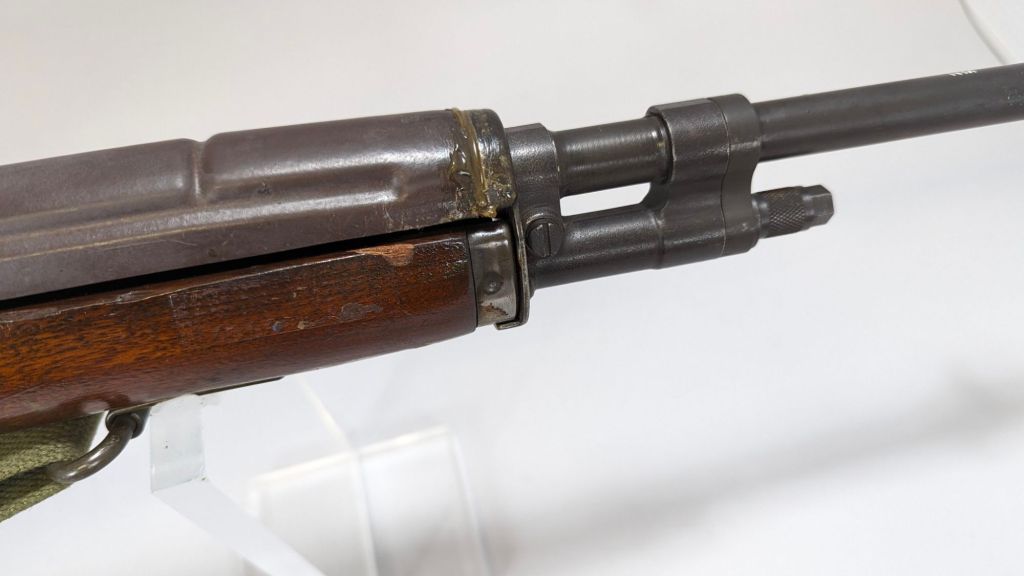
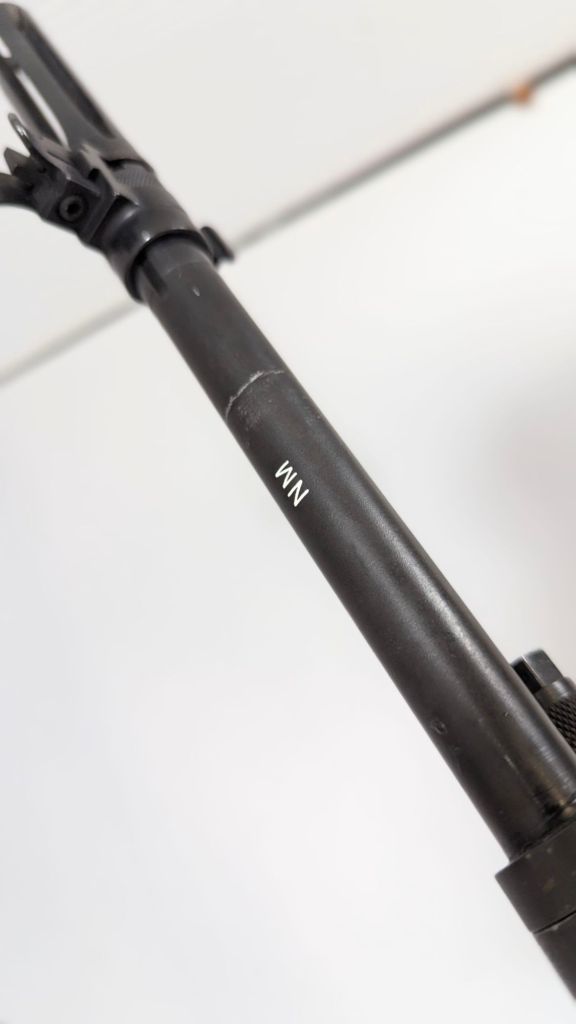
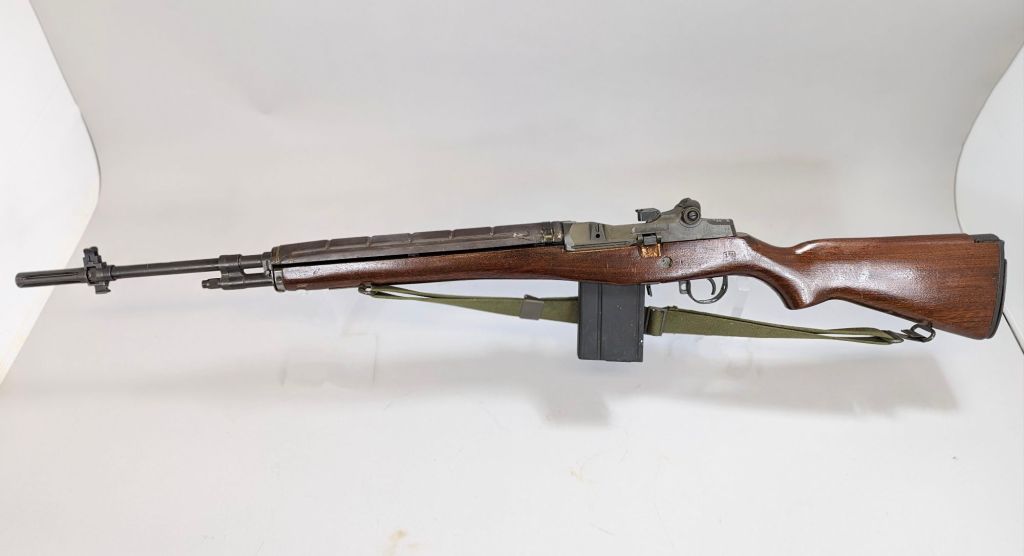
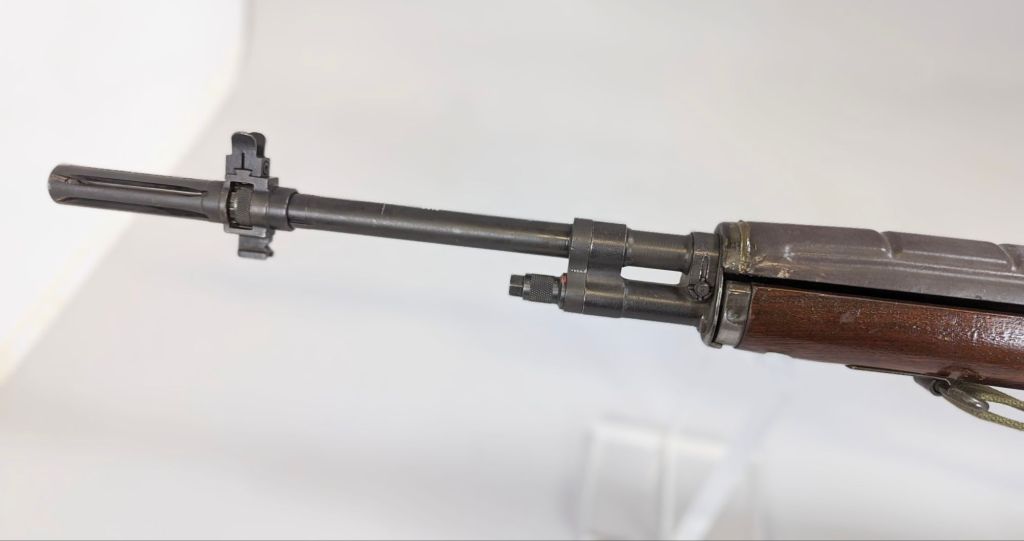
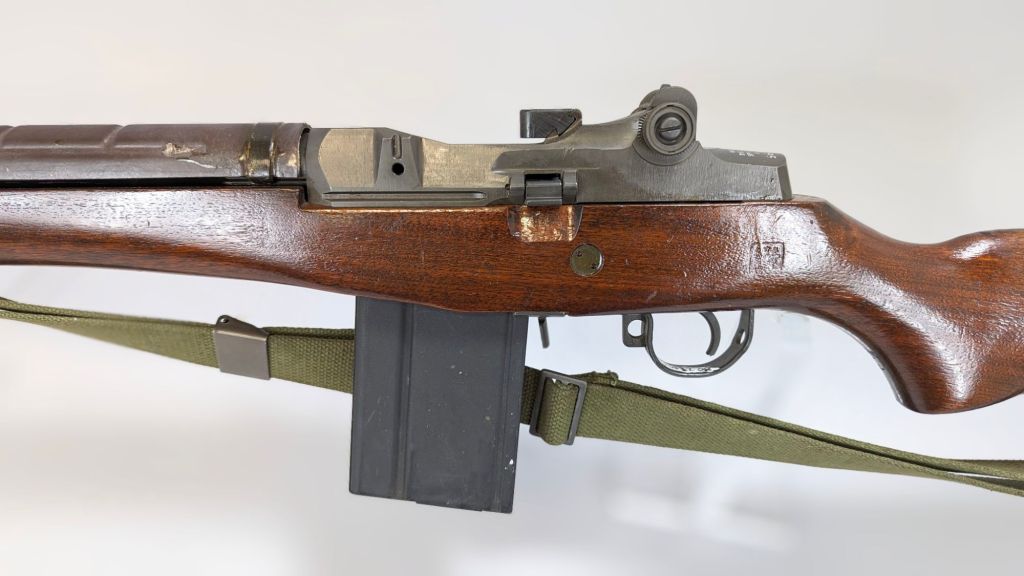
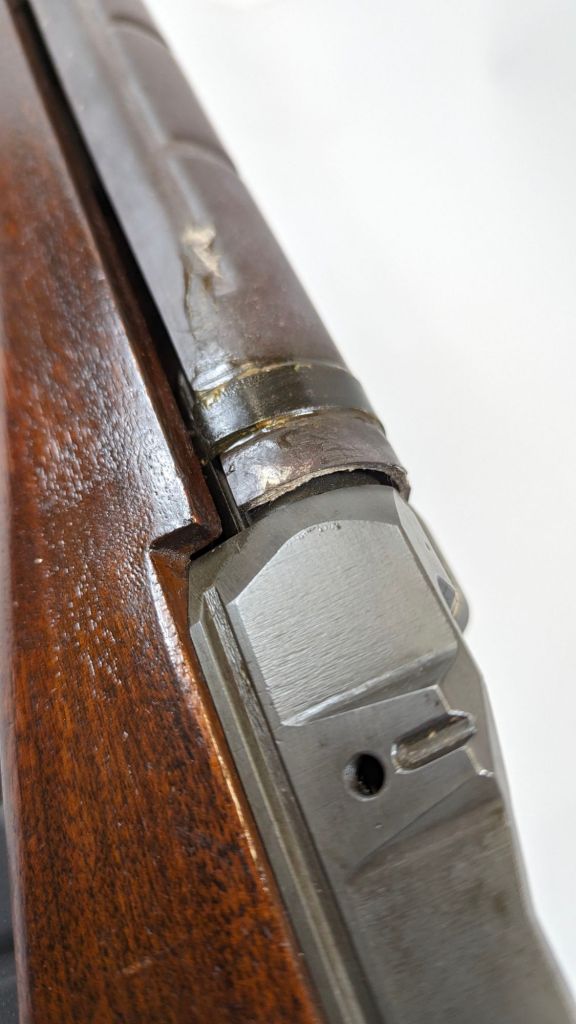
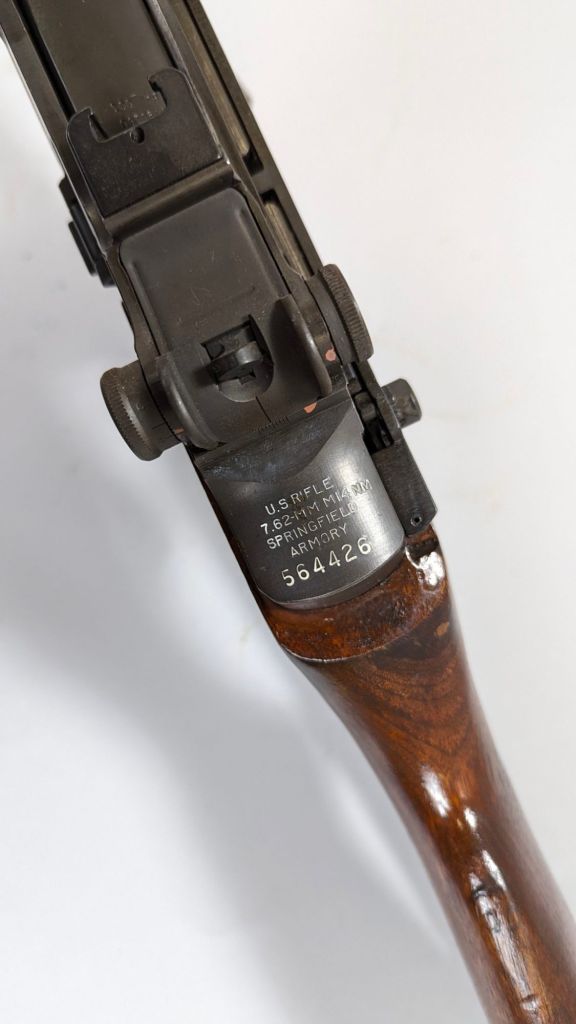
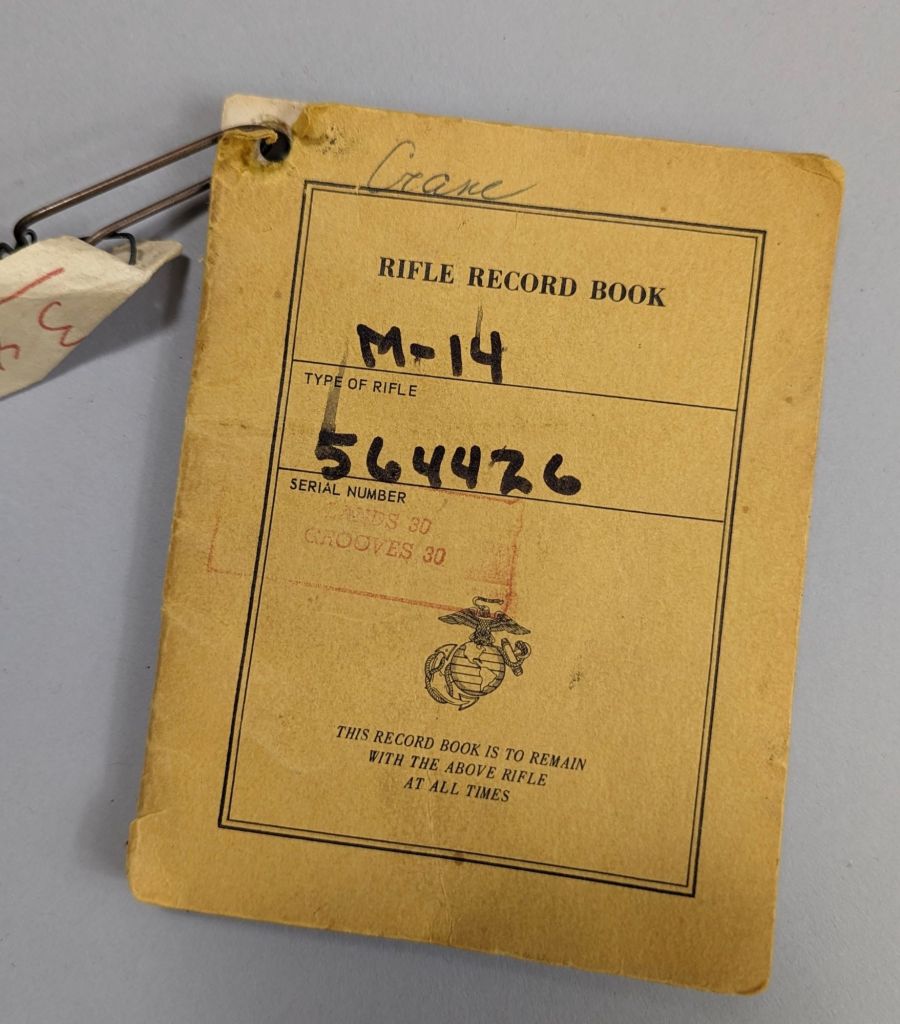
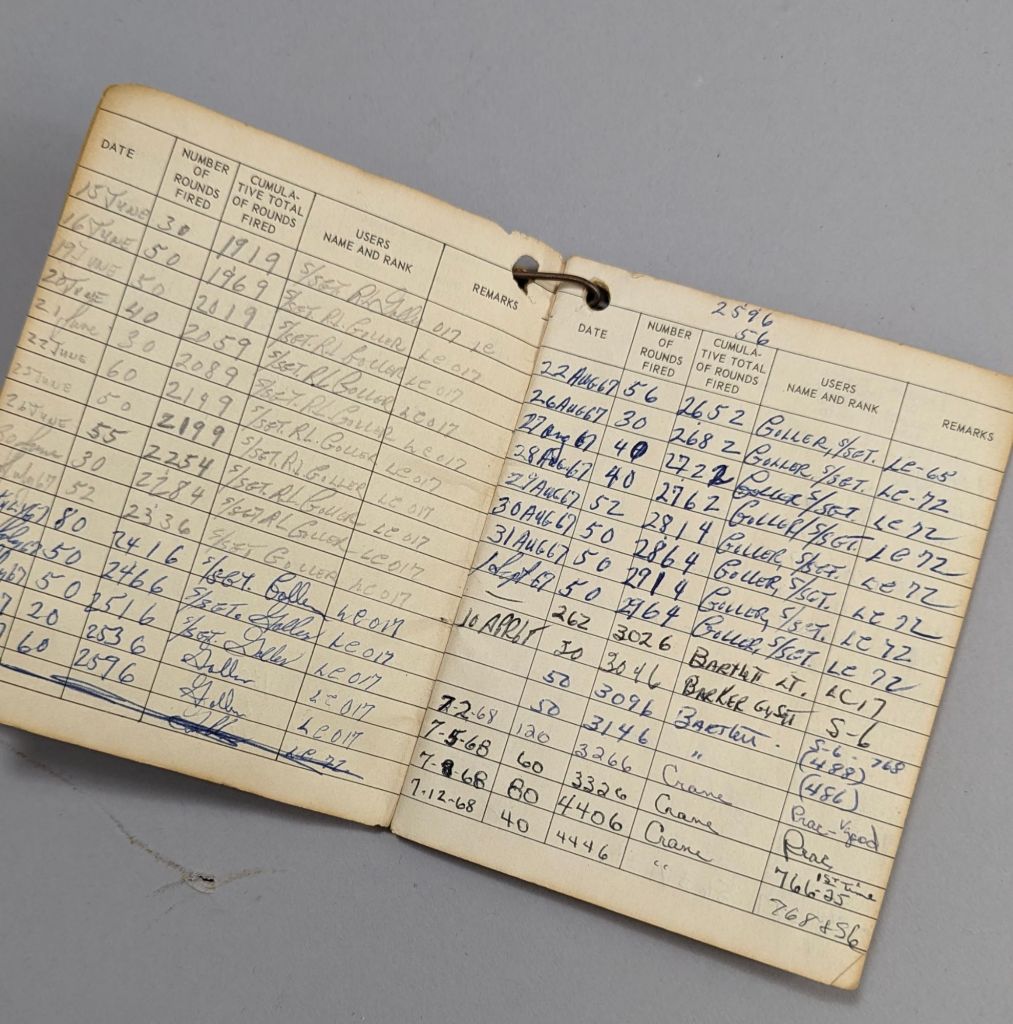
Slideshow of Staff Sergeant Goller’s Daniel Boone and Dogs of War Trophies winning National Match M14 (NMMC).
The Iconic USMC Match Conditioned M14
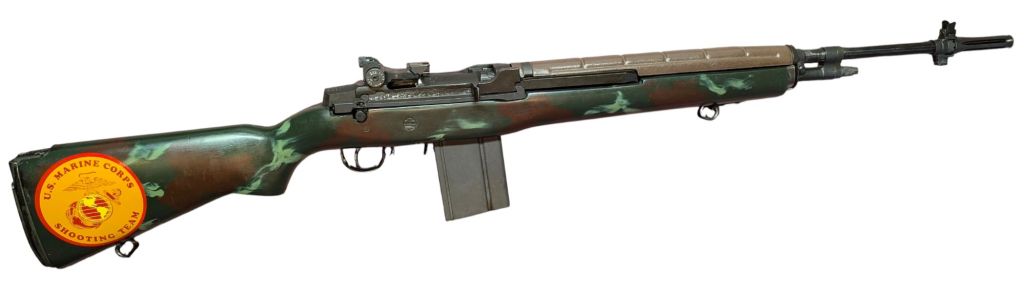
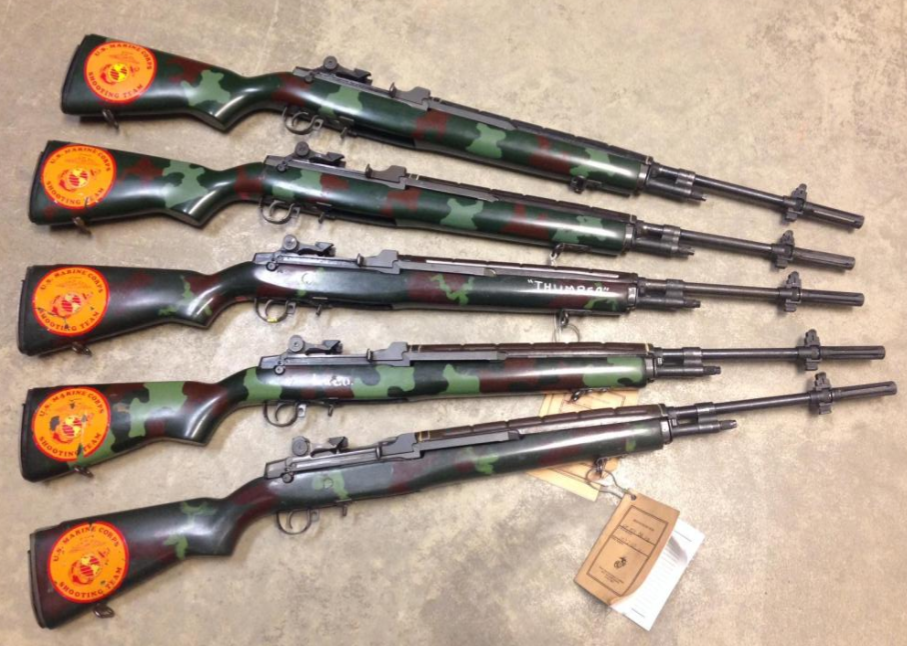
An early USMC Match Conditioned M14 McMillan “smear” stock, named so due to the blending of colors.
The genesis of the iconic camouflaged McMillan composite stock wasn’t the rifle range, but the jungles of Vietnam. The sweltering heat, humidity and rain exposed a vulnerability in the wooden stocks of USMC Remington M40 sniper rifles, which despite bedding and channel work would swell to the point of contacting the barrel, reducing accuracy. The rigid nature of a composite stock would make a much more sustainable platform, and McMillan would contract with the USMC to make this happen with the refined M40A1. The M40A1 would be built in-house by the Marines at the Rifle Team Equipment (RTE) shop, and the opportunity for composite stocks to be used on M14s was recognized.
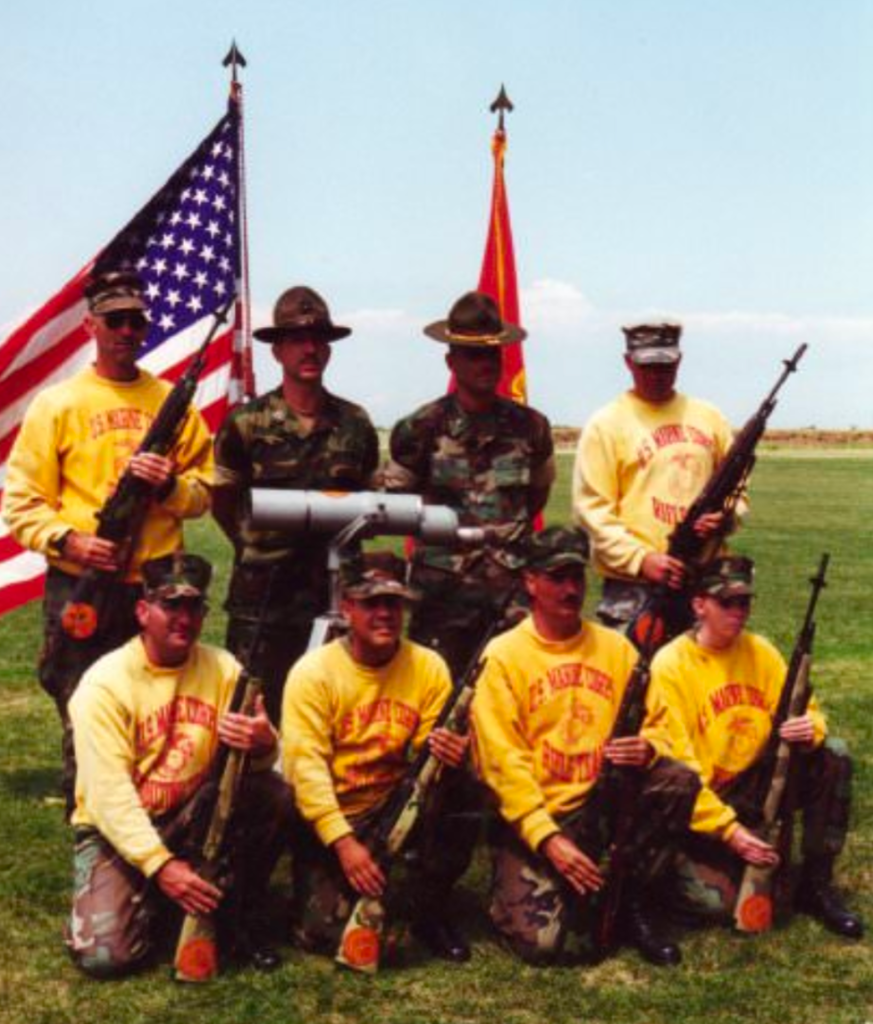
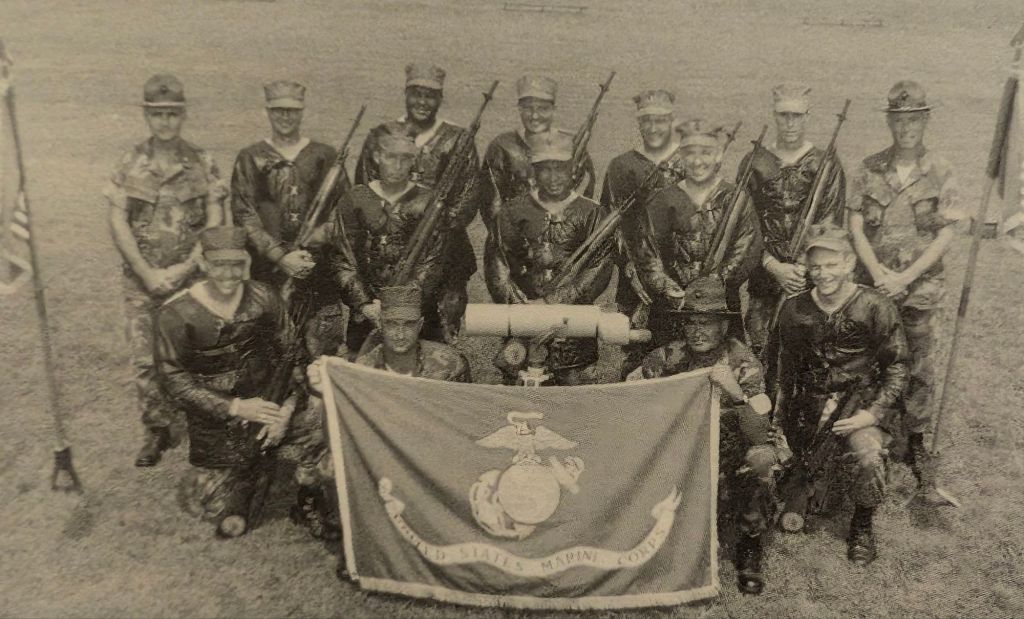
The USMC Rifle Team during the National Matches at Camp Perry, Ohio in the 1990s. Half of these rifles have the less common desert camouflage pattern.
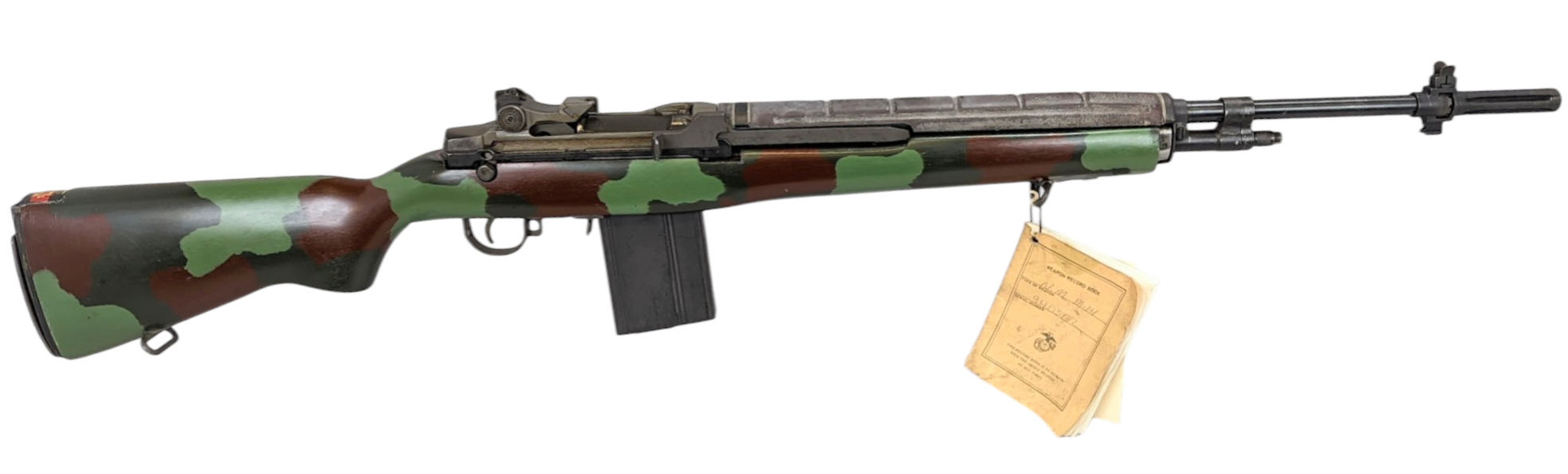
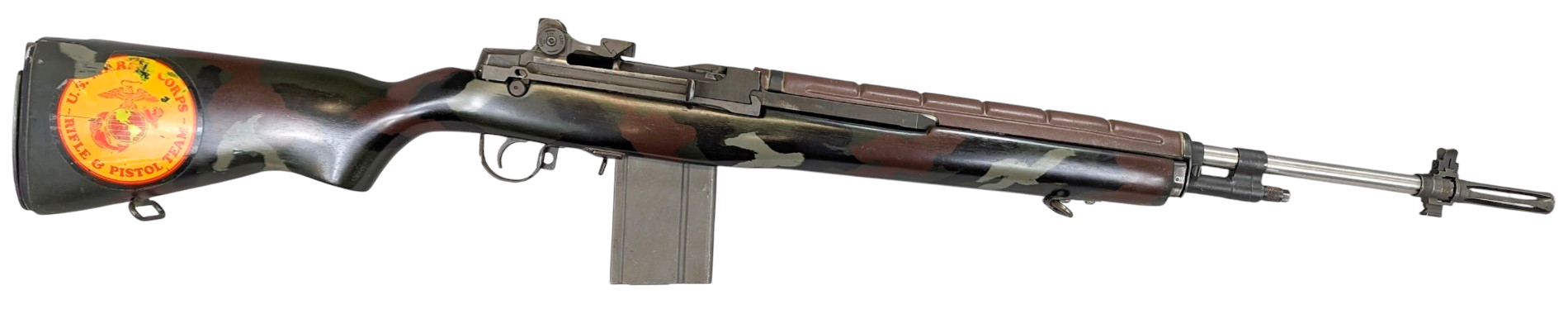
Later variants of the McMillan stocks were a more defined than the smear stocks, initially with a tri-color pattern and last with four color variant (NMMC).
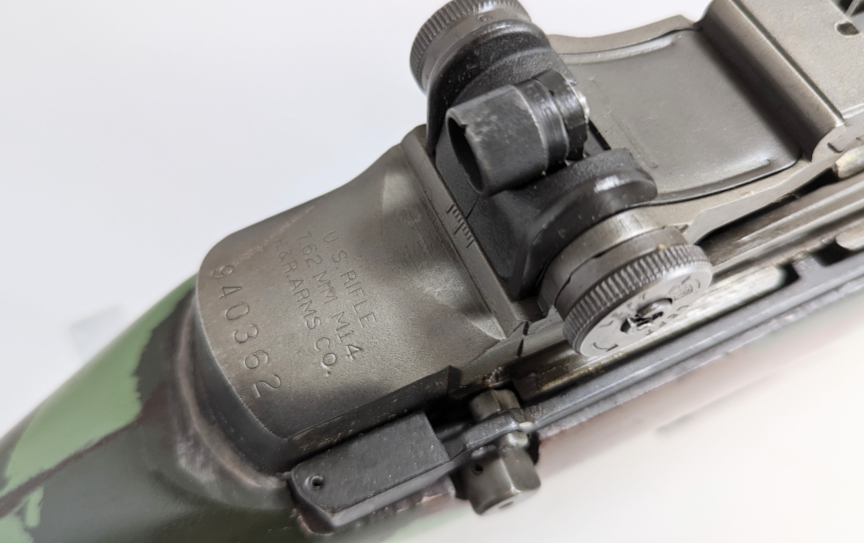
Left: The RTE armorers would use standard USGI receivers when building Match Conditioned M14s. This example bears the O-66 electropencil markings of a 1966 USMC rebuild (NMMC).
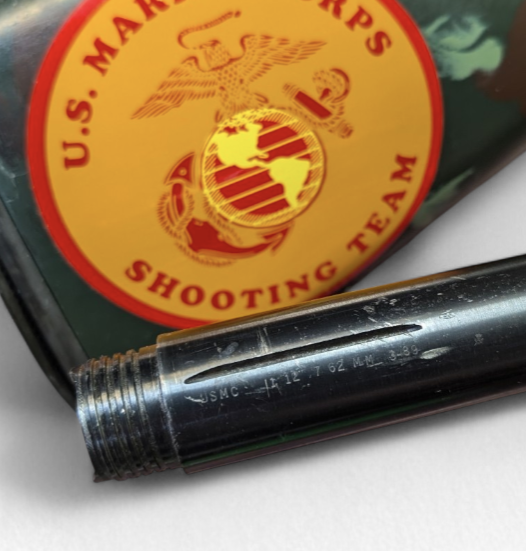
Right: A USMC National Match barrel produced for the Rifle Team in 1989 by Gene Barnett (Plowman collection).
Like the M40A1s, match purpose M14s were built entirely in house. Receivers would come from standard stocks and then have two sets of lugs welded on to lock into the McMillan stocks. Barrels were sourced primarily from Gene Barnett, and were marked with production date, twist rate and “USMC” on the side. Small parts were in-spec USGI types, often being those made by TRW as they were typically the highest quality. Like the Match Conditioned M1 Garands, triggers were worked over and the last several digits of the serial number applied. The actions would then be bedded to the stock with Marine-Tex compound, and epoxy used to glue the handguards and clips into place. The finished product was remarkably superior to the factory National Match M14s of just a few years prior, and the scores on the range would reflect this fact.
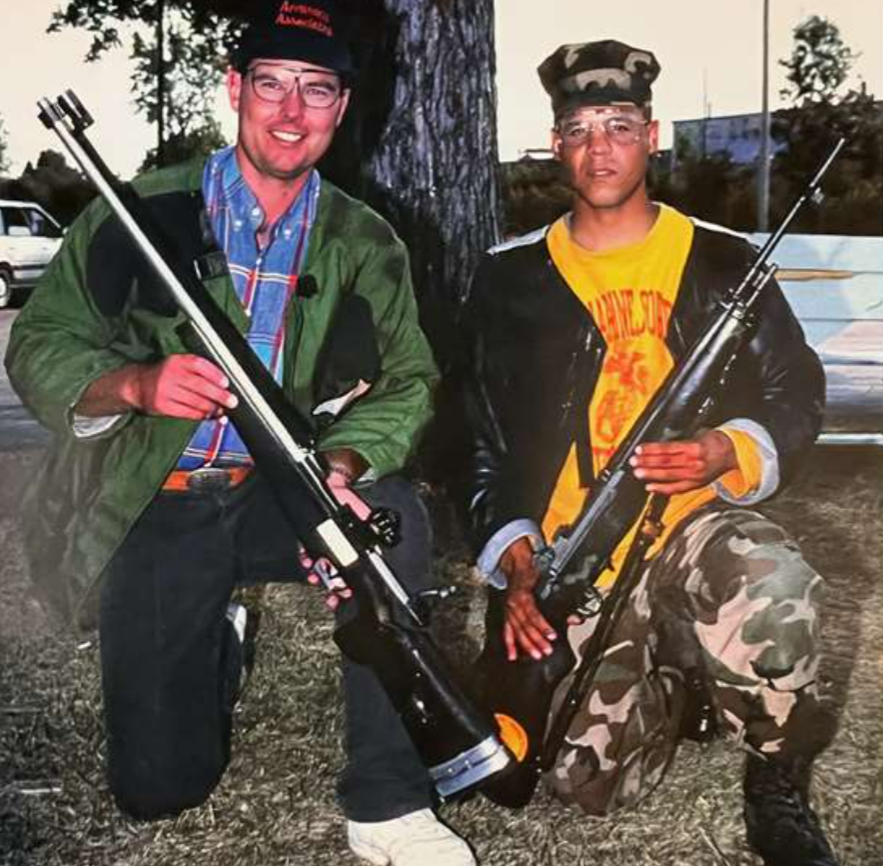
Left: National Champion David Tubb with Service Rifle Champion Nelson Ocasio in 1991.
Right: USMC Match Conditioned M14s at the RTE Shop in Quantico.
The Marine Corps rifle team would do well with the McMillan stocked, match conditioned M14 as this iconic rifle brought with it the last era of USMC dominance on the National Match firing lines. The 1980s and 1990s would be another Golden Age for the Marine Corps Rifle Team, but like the distinctive M14s these Marines carried, both would fade away. When the M14 would be retired as a primary National Match service rifle in favor of the M16 in 1997, a new century and the Global War on Terror it would bring were just on the horizon. This new era of irregular warfare would see the Marine Corps shift its focus on the traditional National Match style of shooting, and with it the staffing and funding of an elite Rifle Team. While the glory days of elite teams from every branch of service are now in the past, a handful of Marines still journey to Camp Perry to compete every summer, often bringing USMC M14s with them for vintage match competitions.
 USMCWEAPONRY.COM