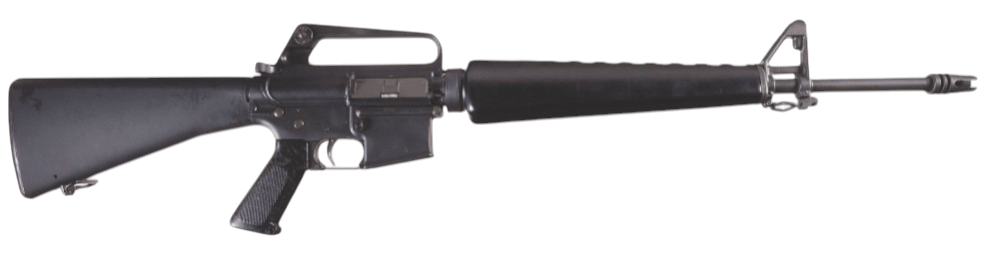
The story of the M16 family of rifles begins with Eugene Stoner, an engineer and former Marine armorer who created the ArmaLite AR-10 in 1956. The AR-10 was chambered in the standard 7.62x51mm NATO cartridge, but the subsequent year’s smaller AR-15 and its .223 Remington cartridge would be the design that would completely revolutionize the modern service rifle. ArmaLite’s sale of the AR-10 and AR-15’s rights to Colt would lead to product refinements, and the standardization of the .223 cartridge as the 5.56x45mm NATO round. The AR-15 would be adopted by the Department of Defense in 1962 and designated the M16 in 1963; production of various experimental models would soon follow.
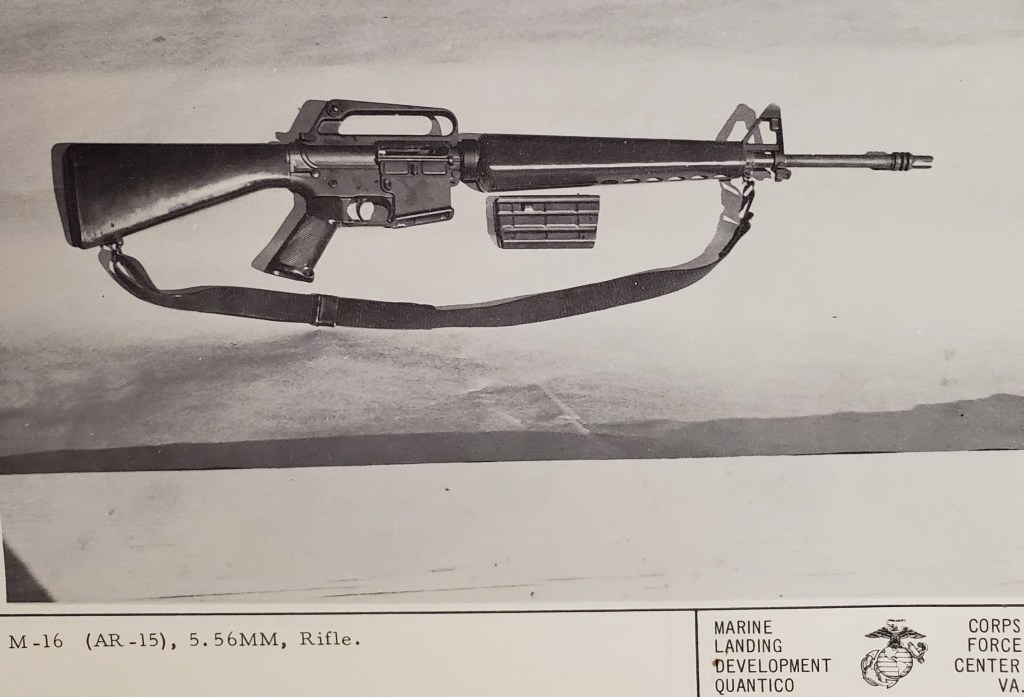
The M16 did not have a forward assist, and would only be tested by the Marine Corps (NMMC).
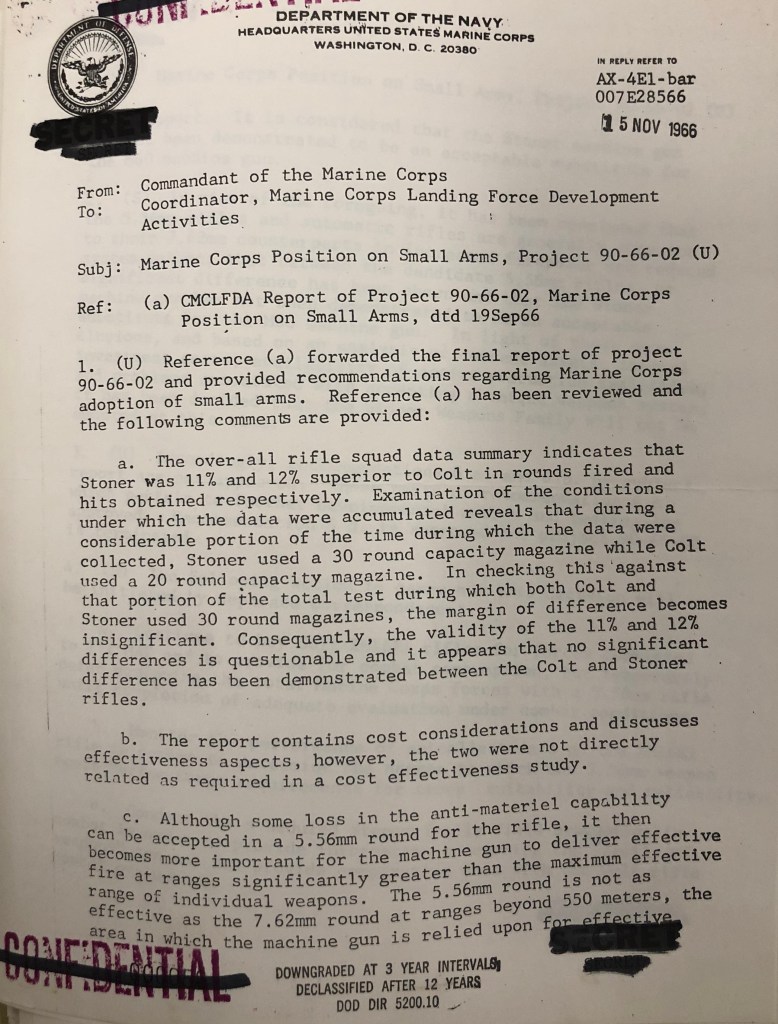
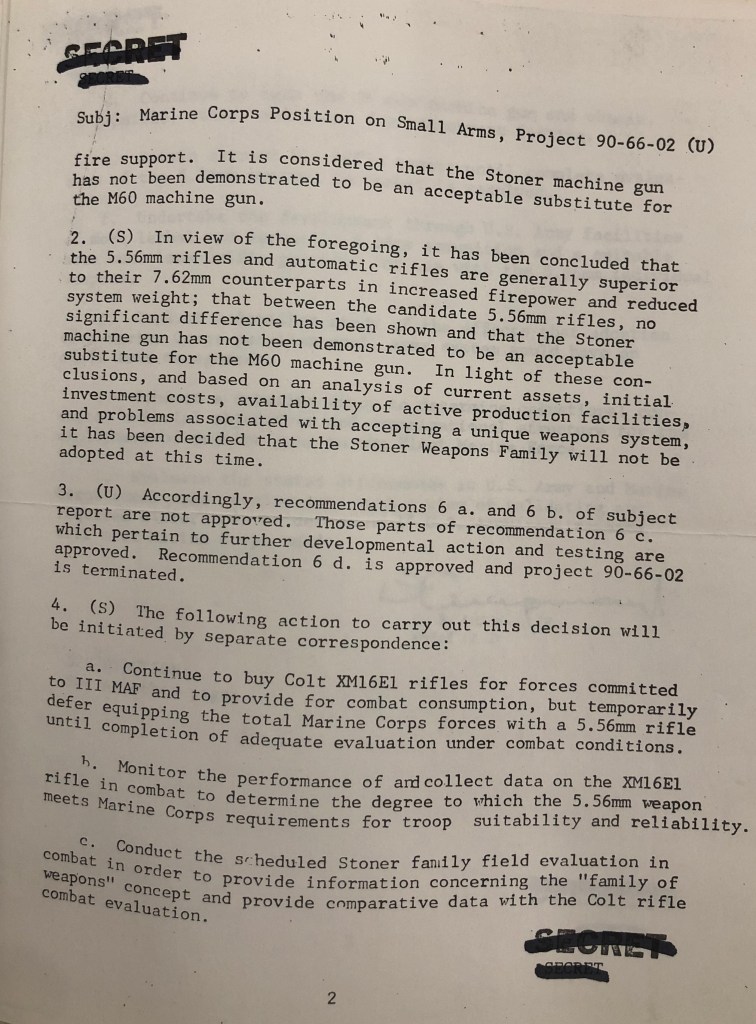
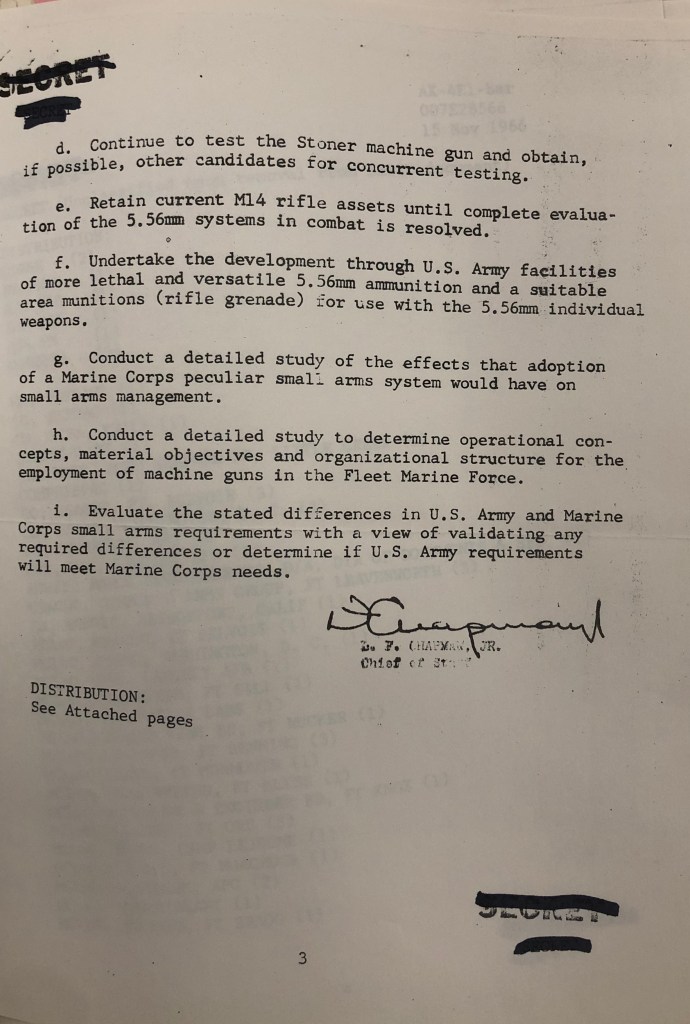
The USMC would decide to adopt the M16 in 1966 (NMMC).
The early 1960s would see the M14 standardized as the common service rifle by the Department of Defense, with the goal of replacing the M1 Garand, M1 Carbine and M1918A2 Browning Automatic Rifle as a “one size fits all” weapon. This would lead to a design that underperformed in nearly all scenarios, and almost immediately the door for a replacement had opened. The Marine Corps would begin testing the M16 in the early 1960s, but would not field this version of the rifle in Vietnam. The M16 did not have a forward assist, and while this was not problematic to the USMC, the army would insist on one being added. This led to the creation of the XM16E1, an M16 with forward assist incorporated into the upper receiver. Some Marine Corps units would test the XM16E1 in Vietnam while others the Stoner 63. Ultimately, the XM16E1 would be determined to be the best design to replace the M14.
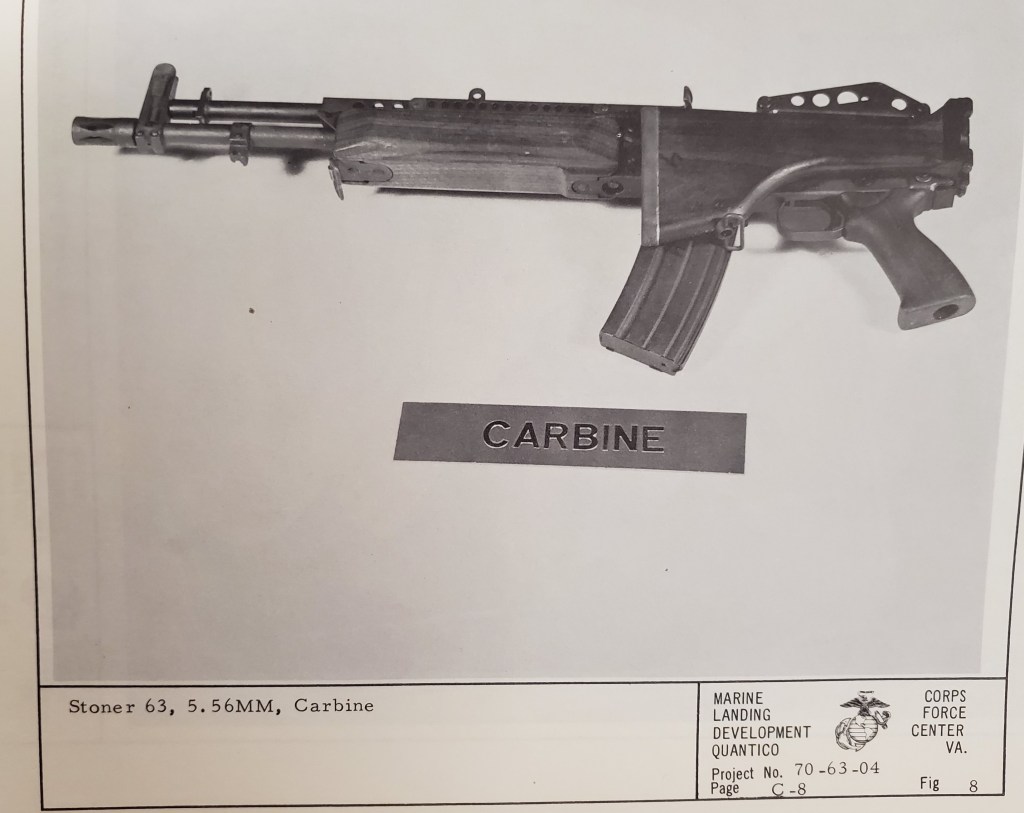
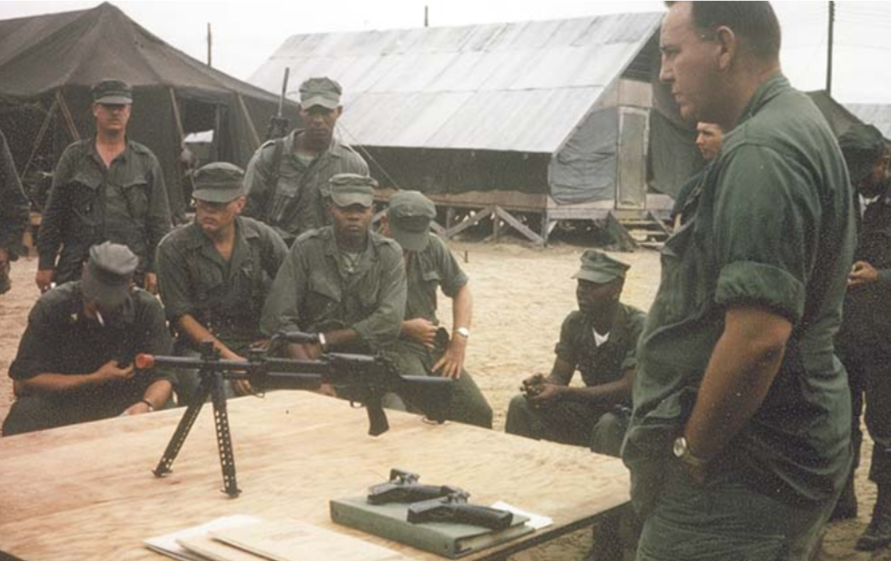
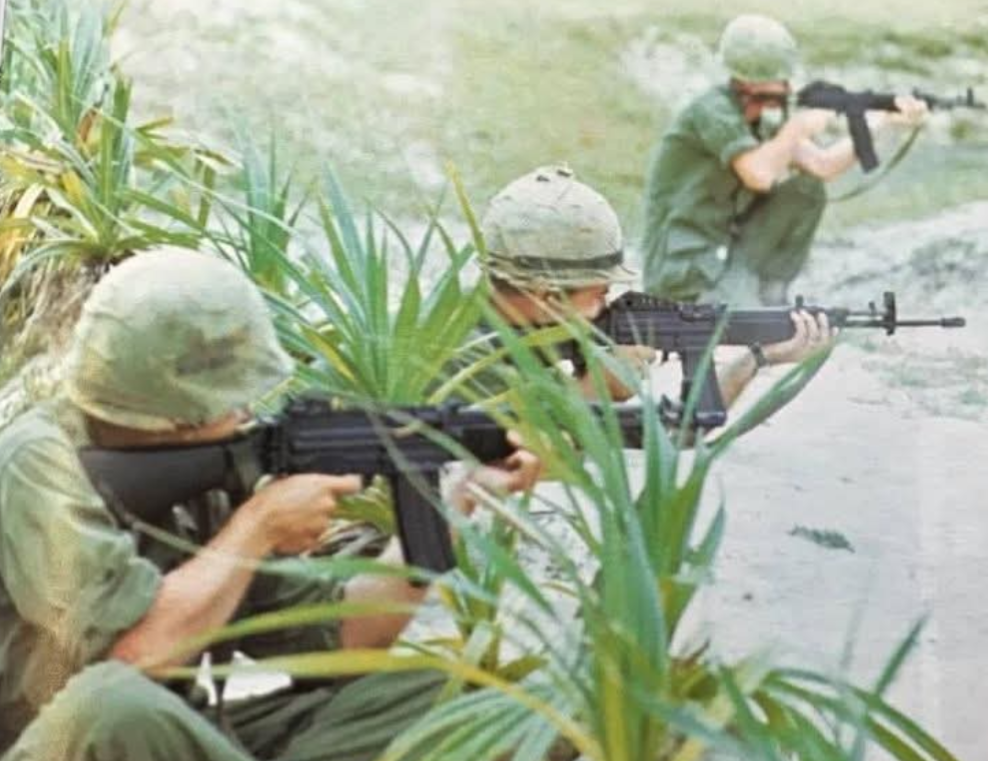
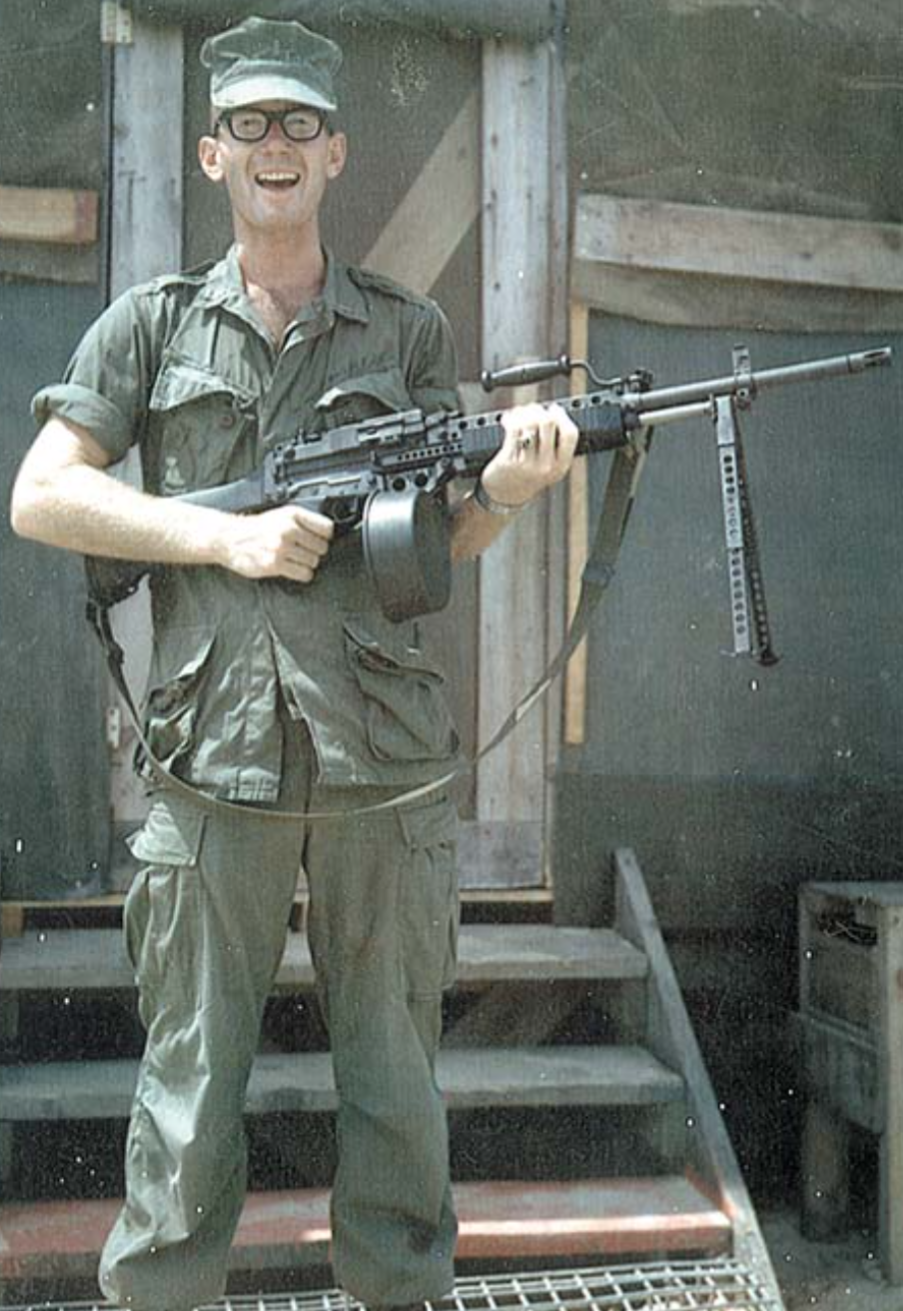
An article by By Lt. Colonel J.W. Gibbs III, U.S. Marine Corps, (Retired) in Small Arms Review details L Company, 3rd Battalion, 3rd Marines testing the Stoner 63 Carbine and Light Machine Gun in Vietnam. While there were some initial problems, the rifles “broke in” and were considered superior to the XM16E1.
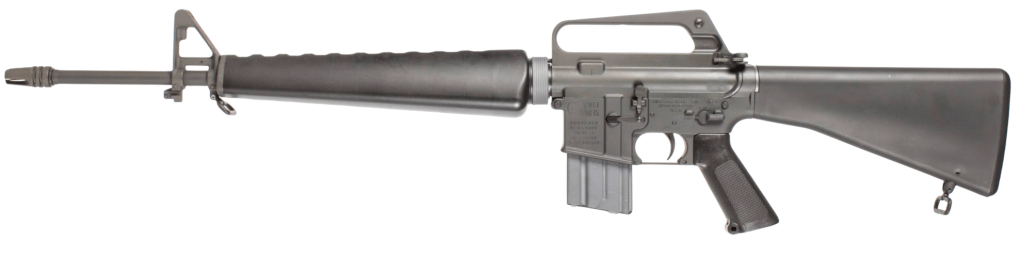
The XM16E1 would be the first M16 type rifle fielded by the USMC.
 USMCWEAPONRY.COM