
The USMC M1911
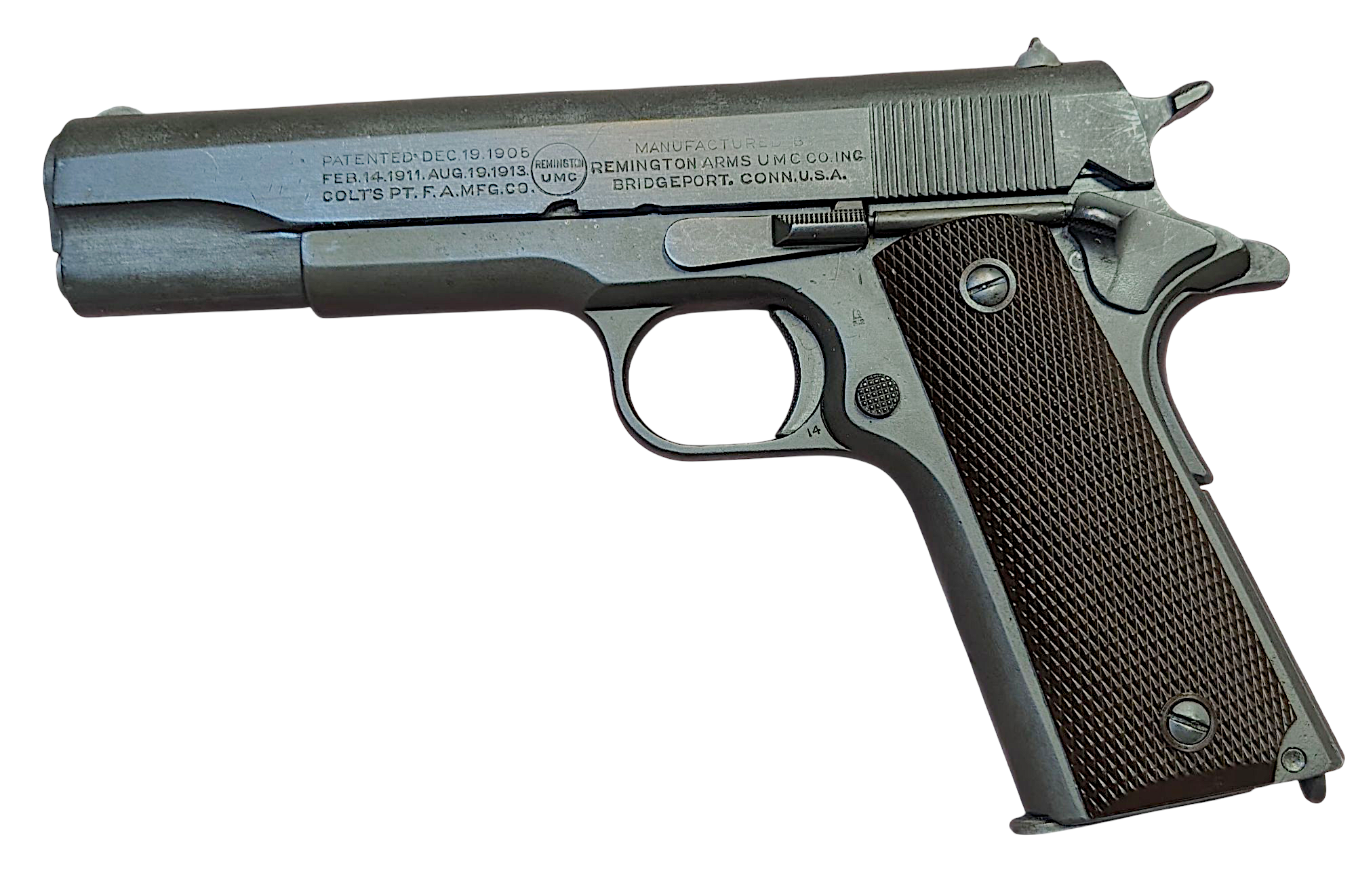
Perhaps the most iconic American firearm, the M1911 served the Marine Corps well on battlefields across the globe during the 20th Century. A sharp, clean looking design that would set the standard for the modern sidearm, the M1911 would prove itself many times over. The Marine Corps would embrace the M1911 enthusiastically, receiving their first allotment of 300 pistols in 1912, and by 1918 would have at least 5,500 M1911s in their possession.
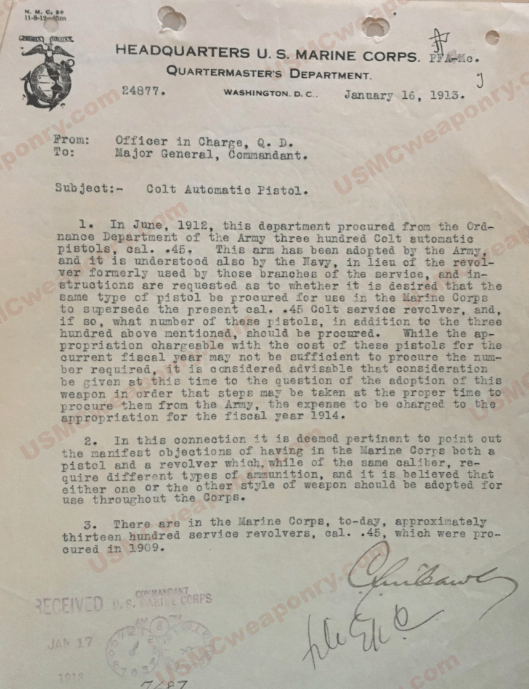
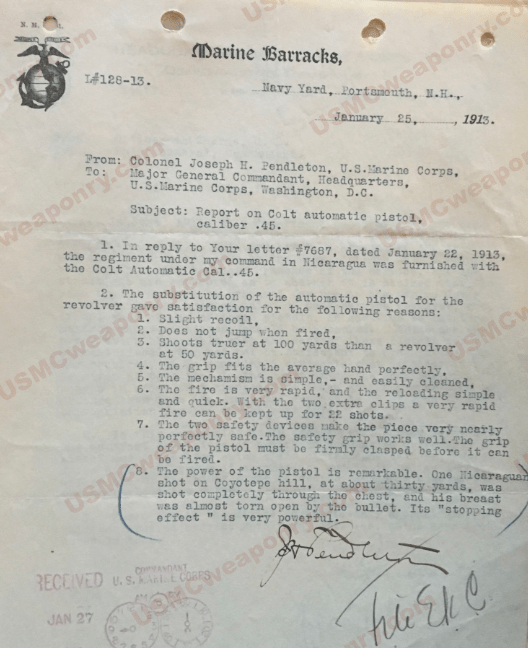
The M1911 would be adopted by the Marine Corps not long after production, and would be very well received (NARA).
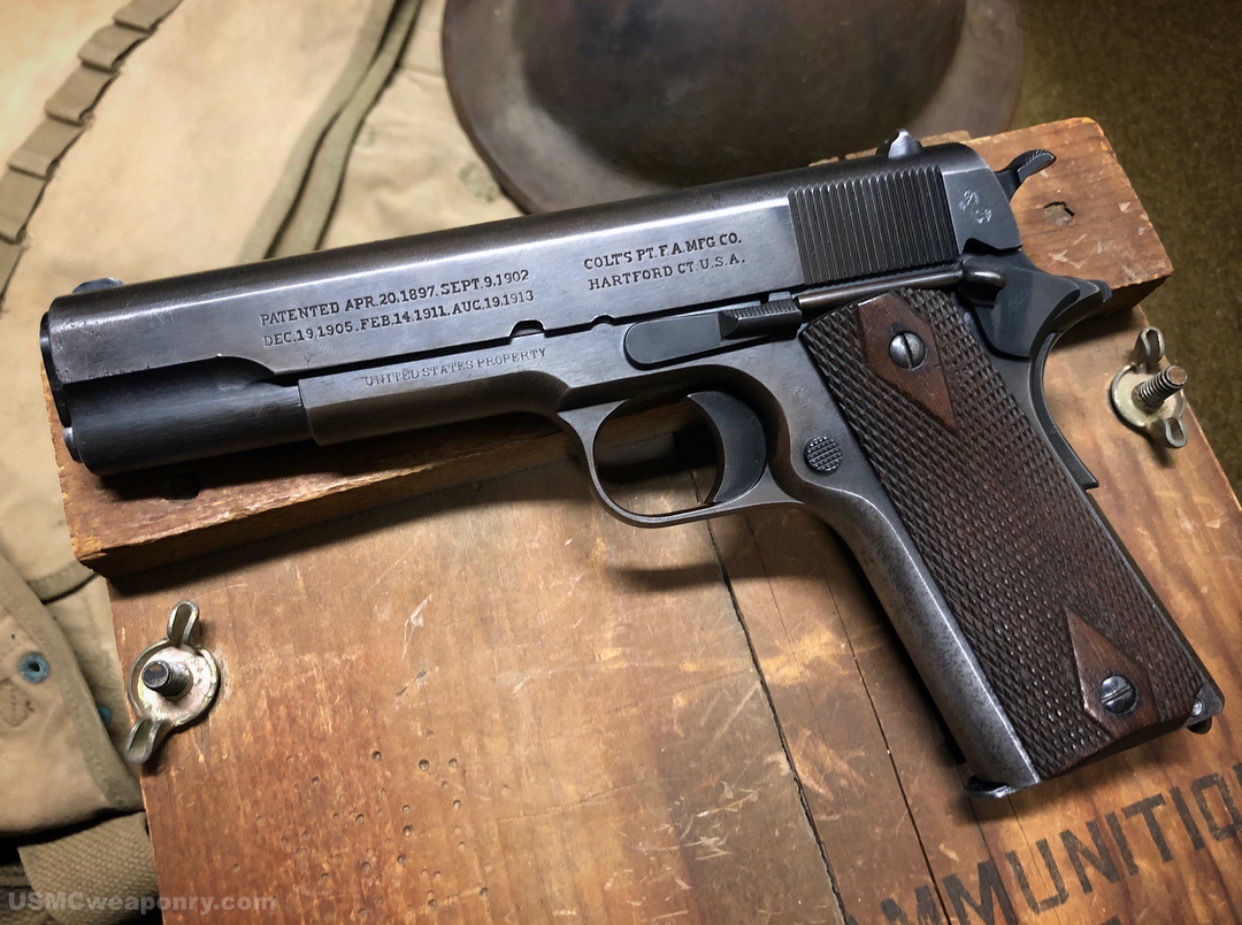
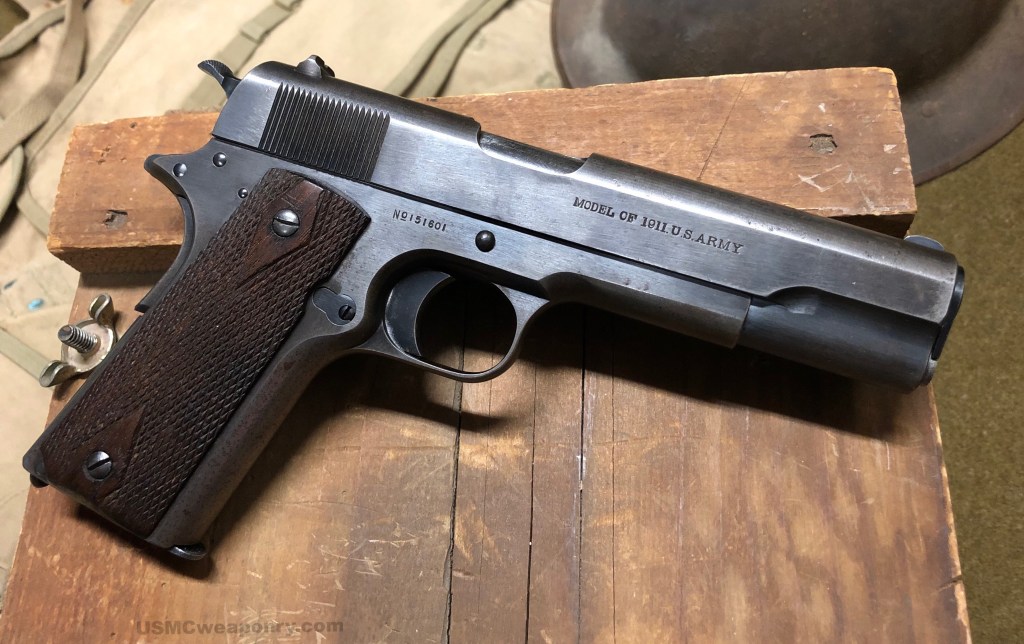
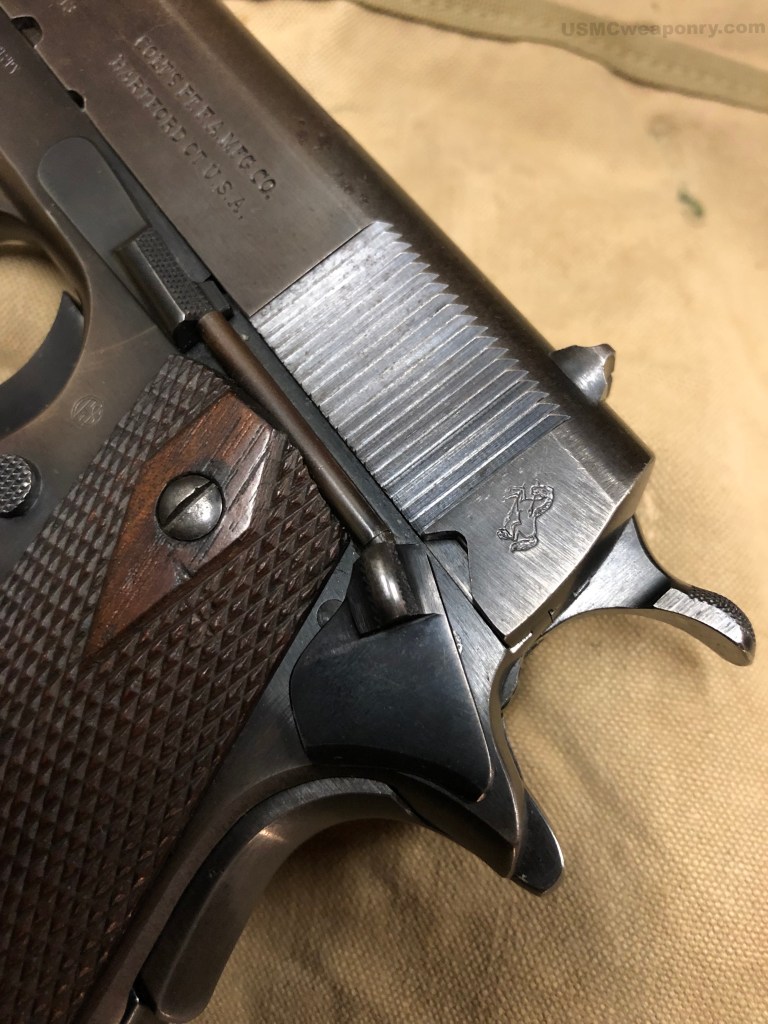
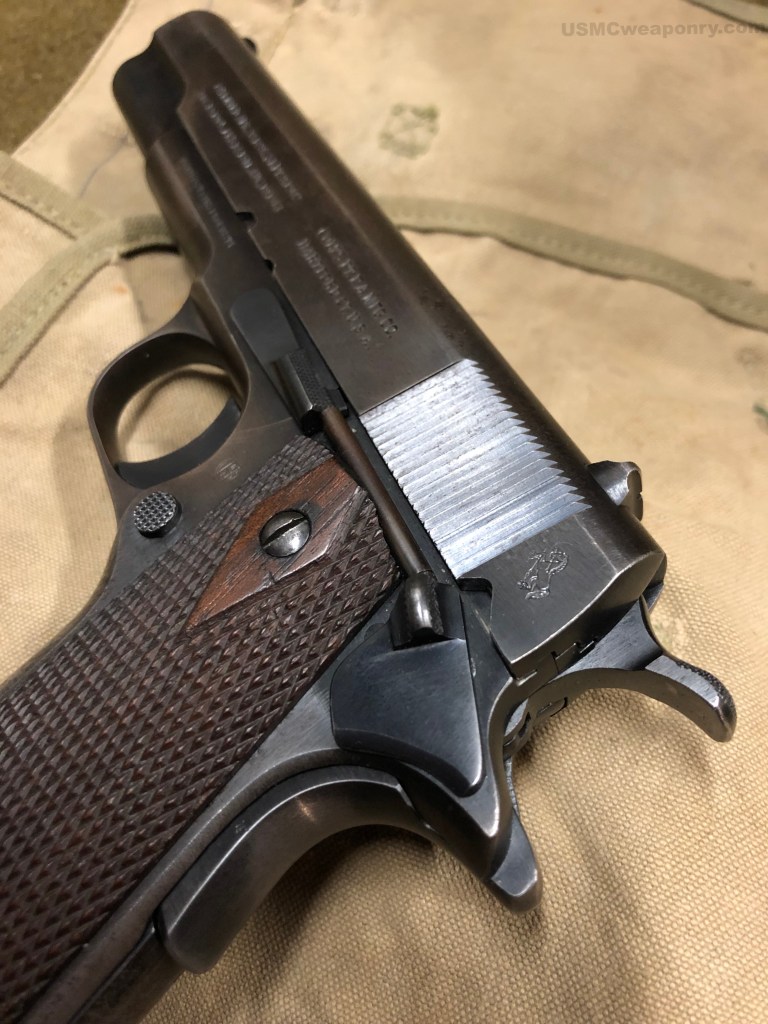

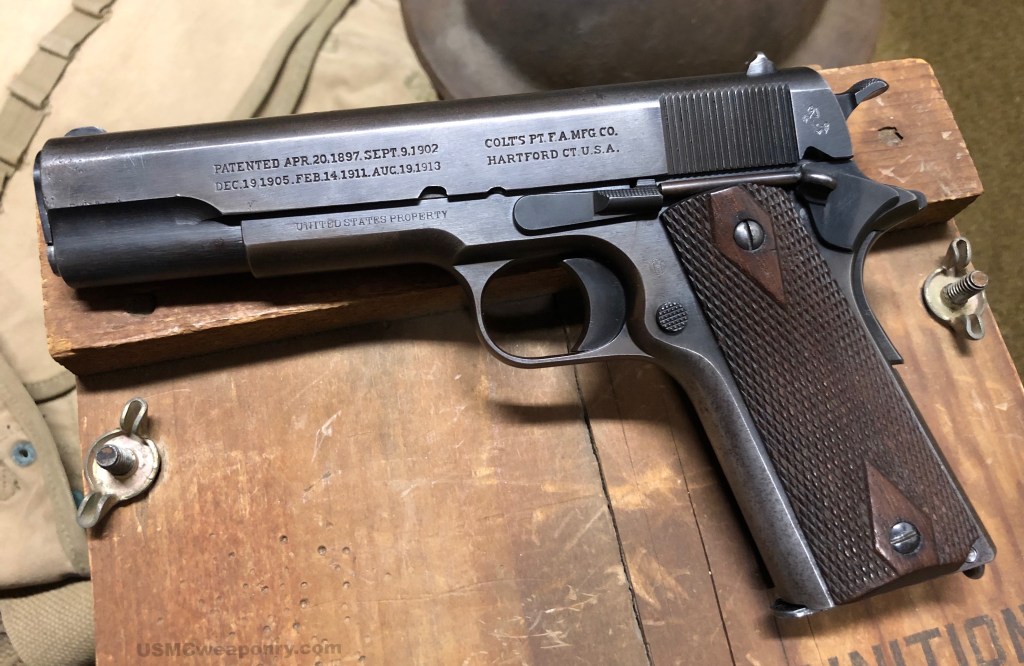
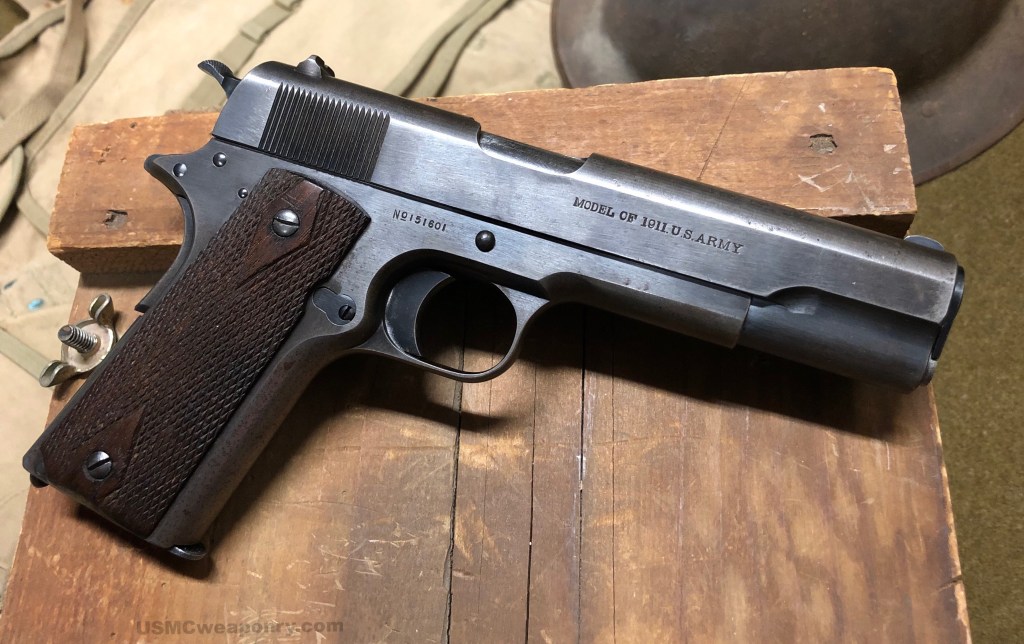
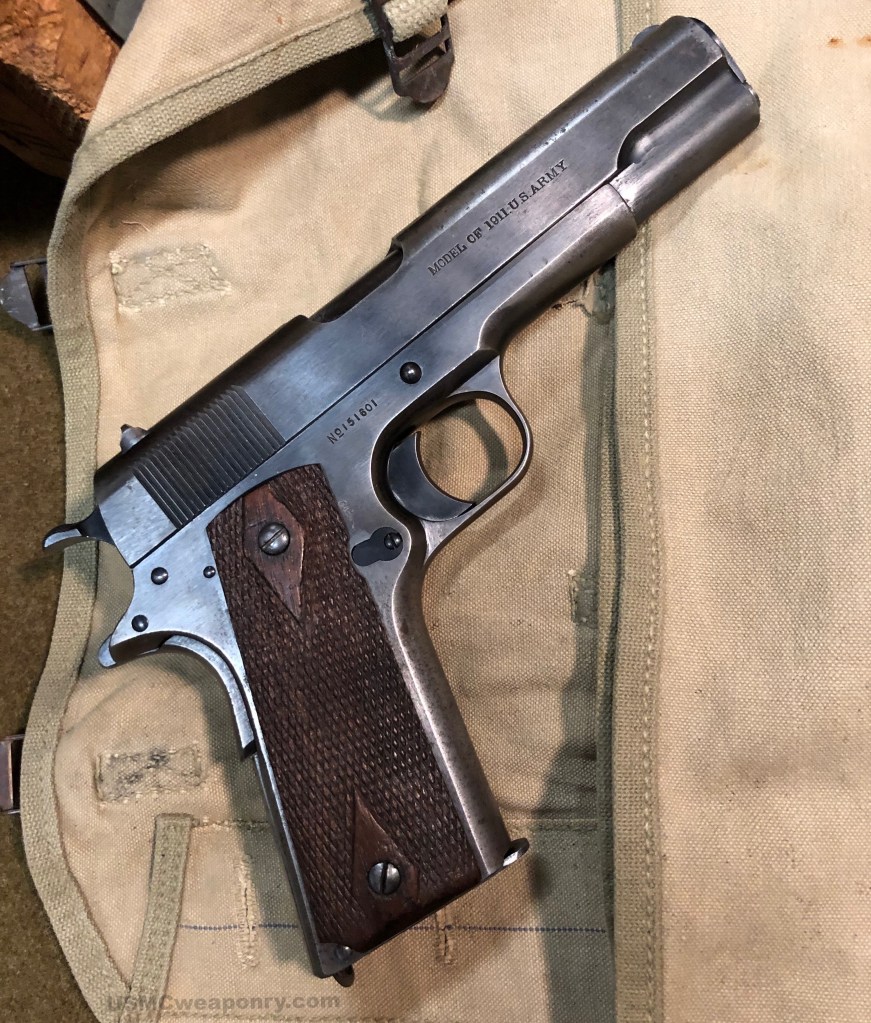
USMC contract M1911 shipped to the Marine Corps in November of 1916 (Plowman collection).
Prior to the adoption of the M1911, the Marine Corps had quickly cycled through a series of Colt revolvers. The first was a variation of the Colt M1892 titled the Model 1905 Marine Corps, which like other .38 caliber revolvers was maligned for a lack of “stopping power.” The solution would be the Colt USMC Model of 1909, and its beefier .45 Long Colt round. The M1909 was a robust pistol that performed its duties adequately, but the advent of John Browning’s M1911 would render it obsolete for an expeditionary service like the Marine Corps.
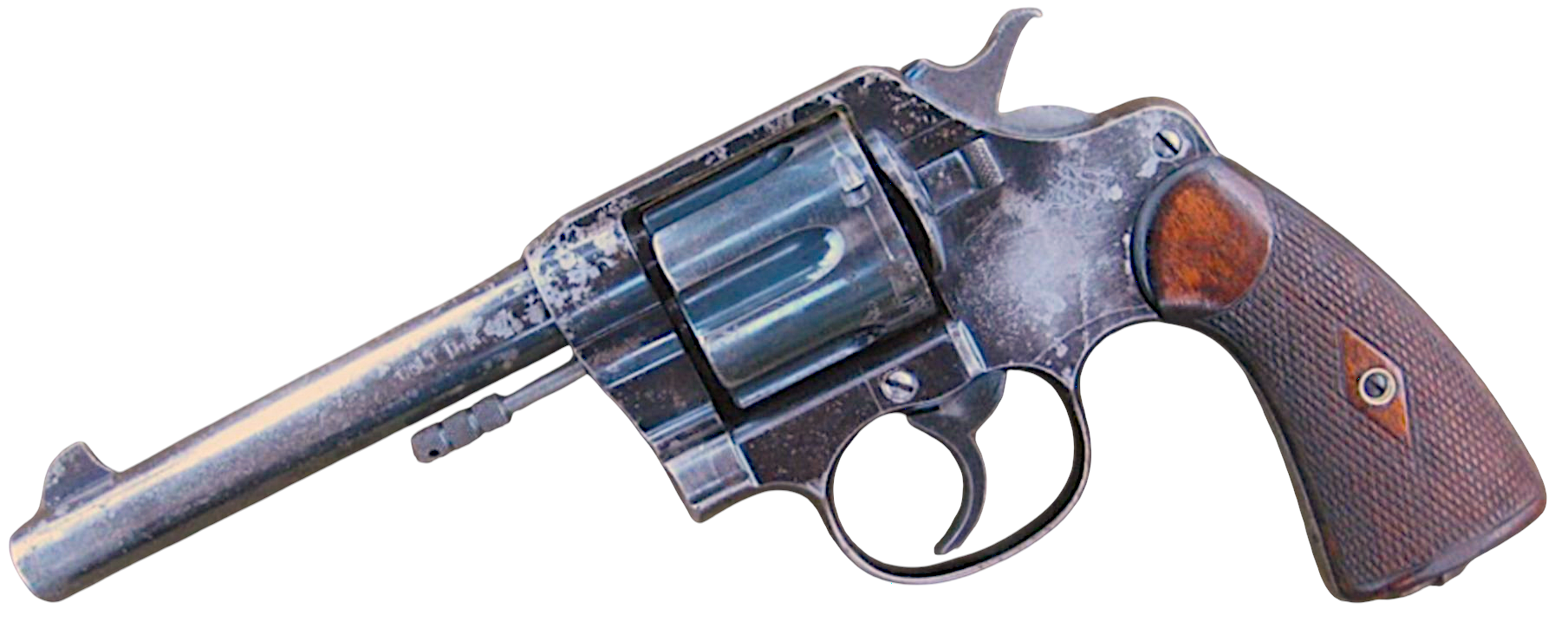
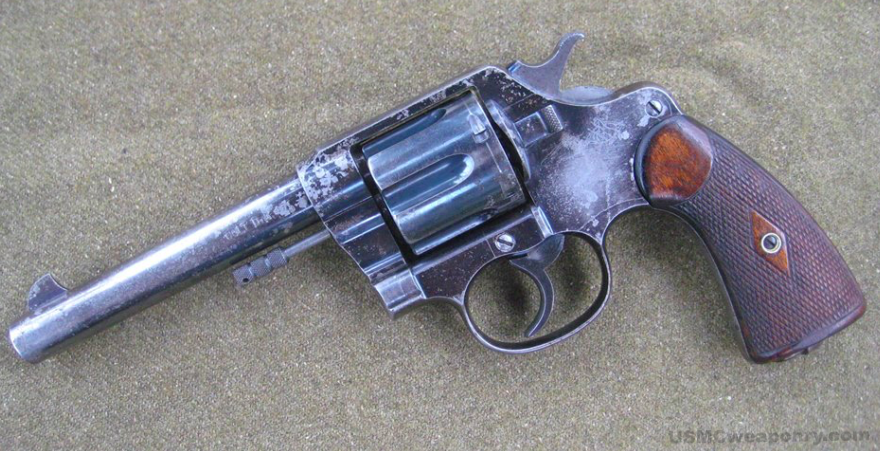
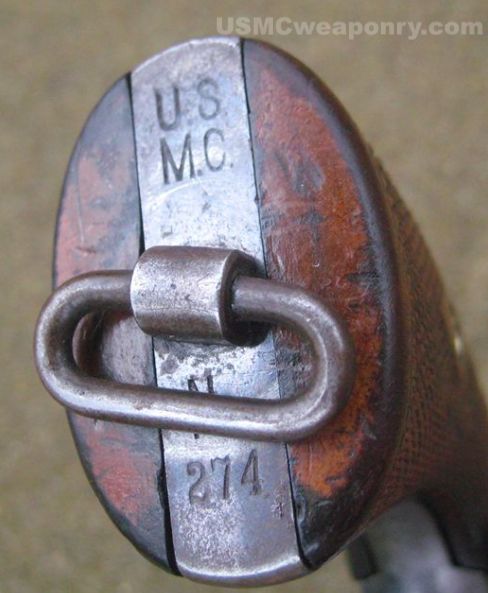
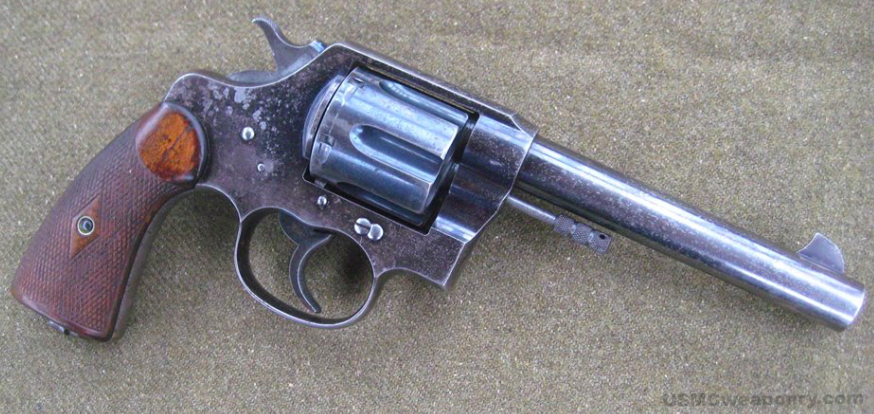
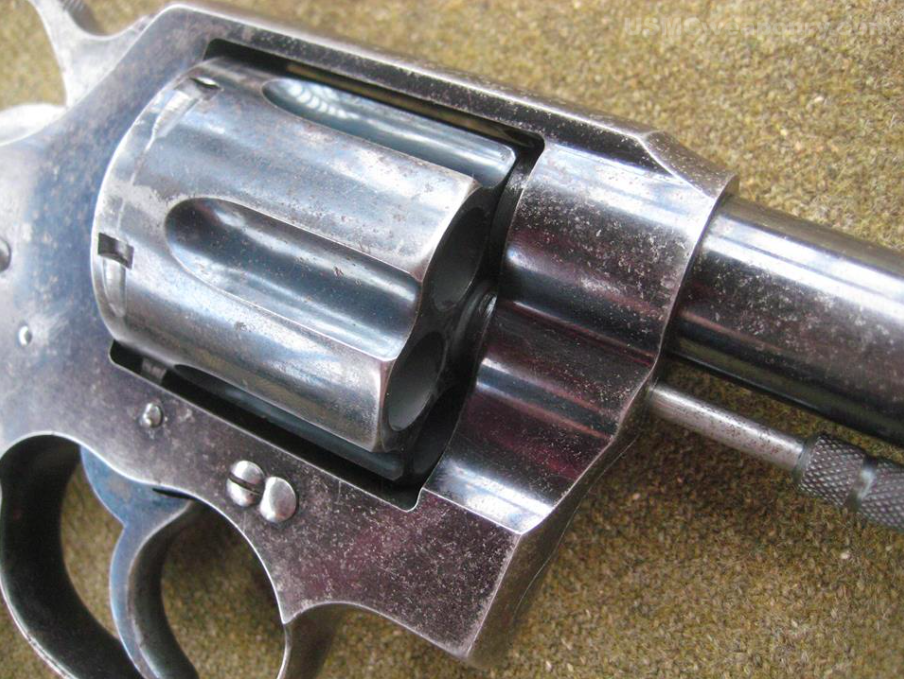
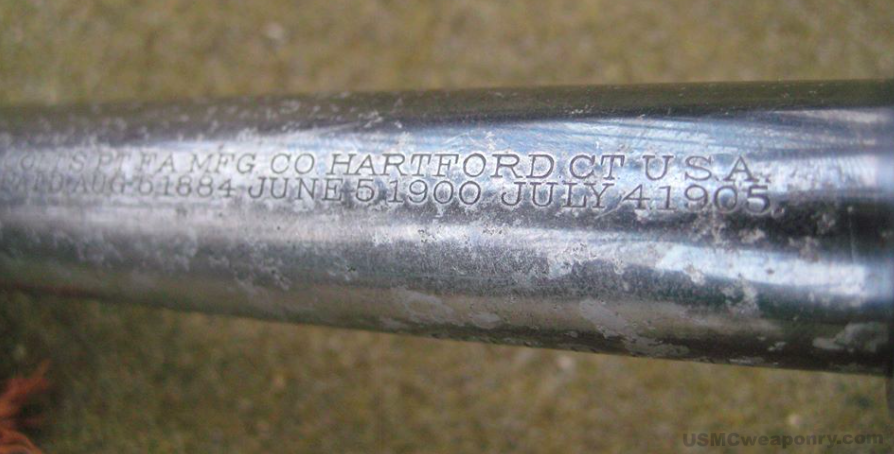
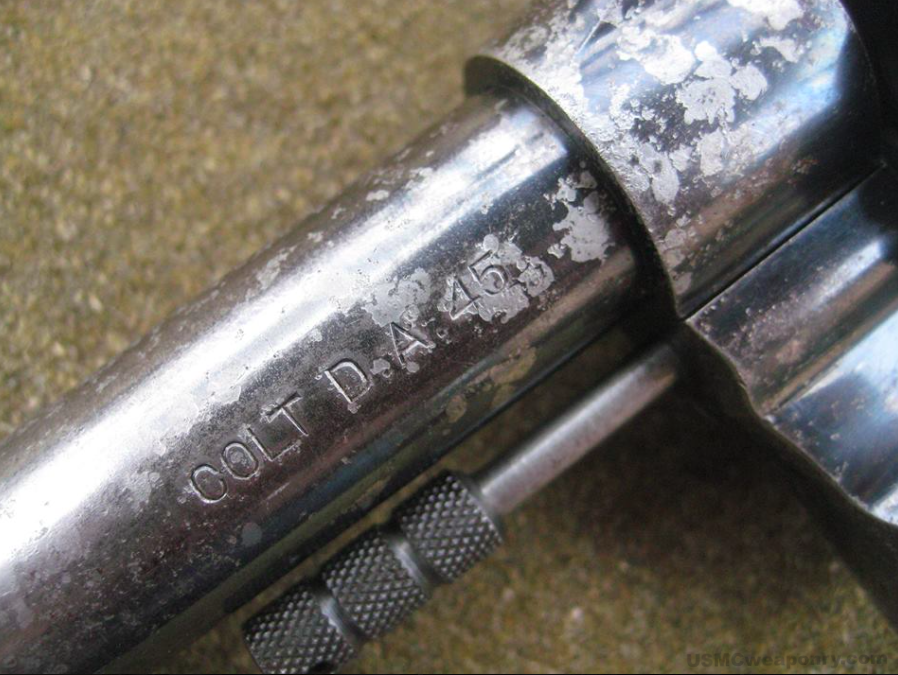
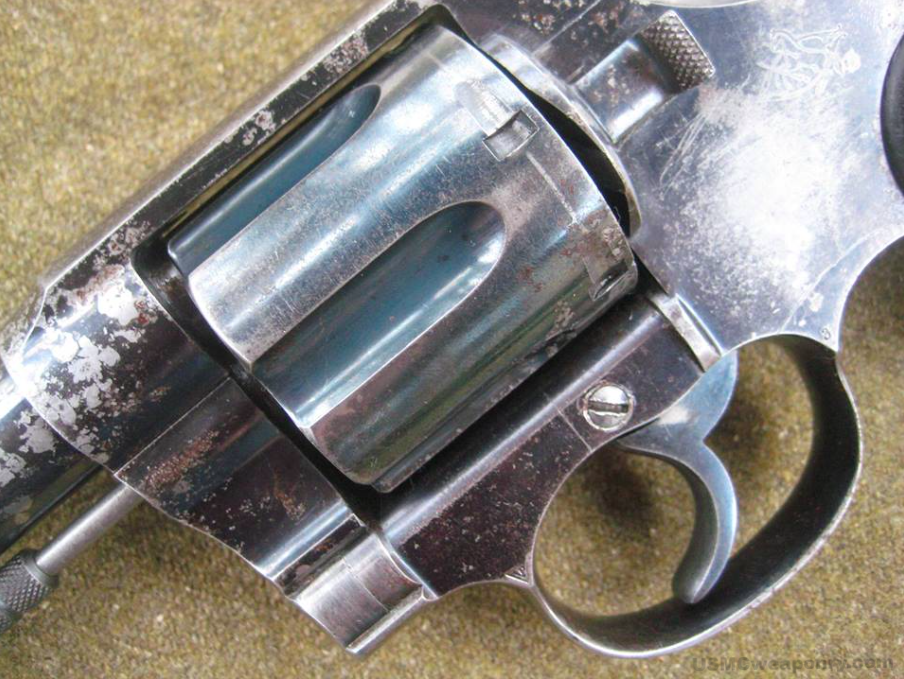
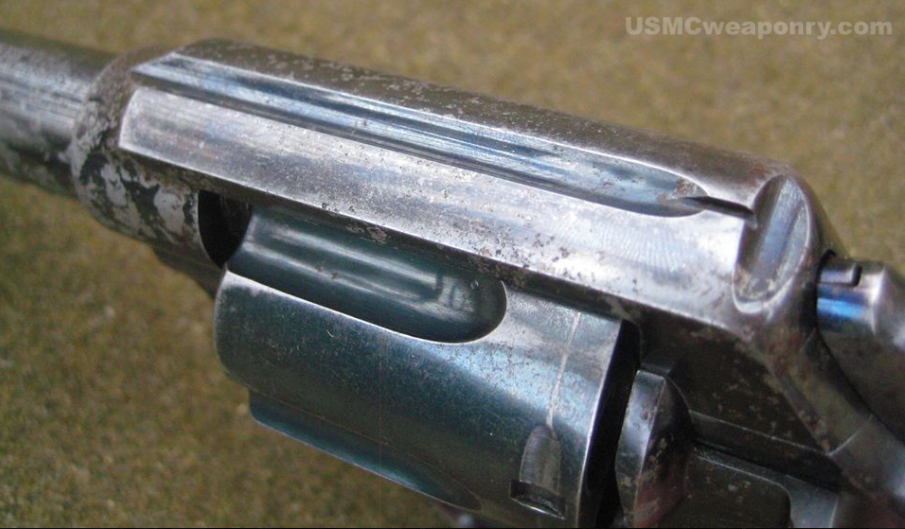
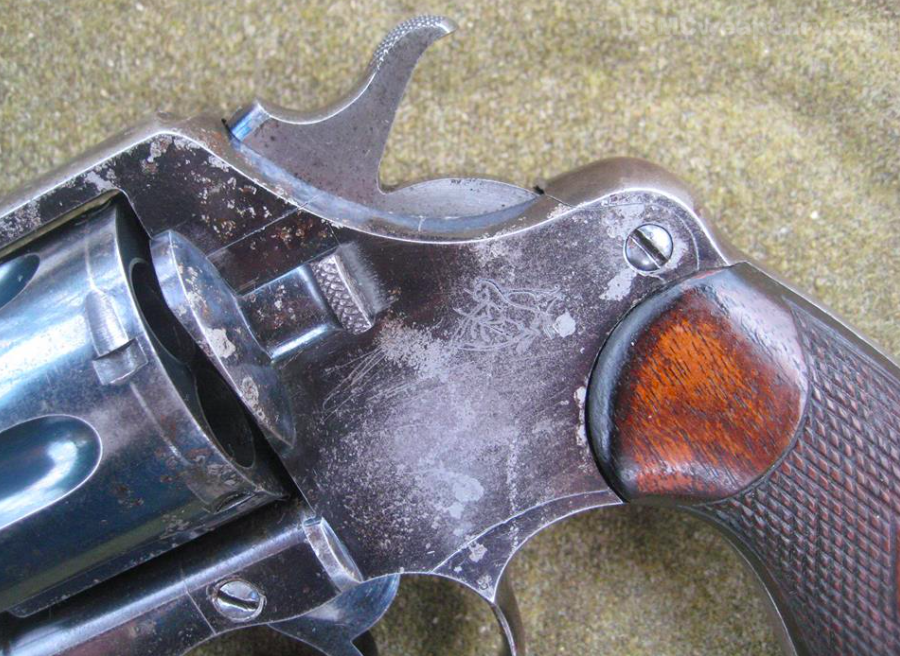
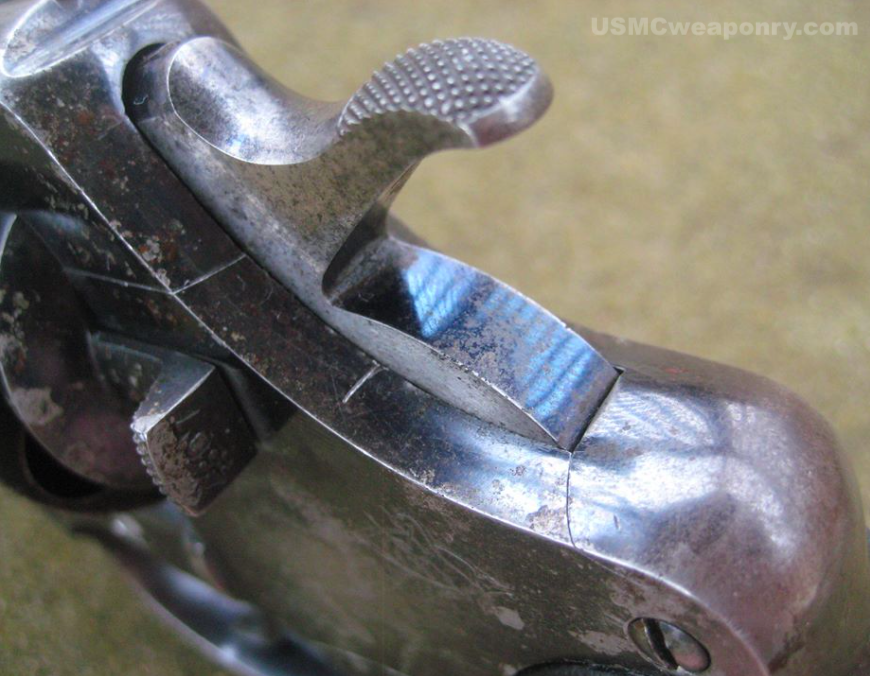
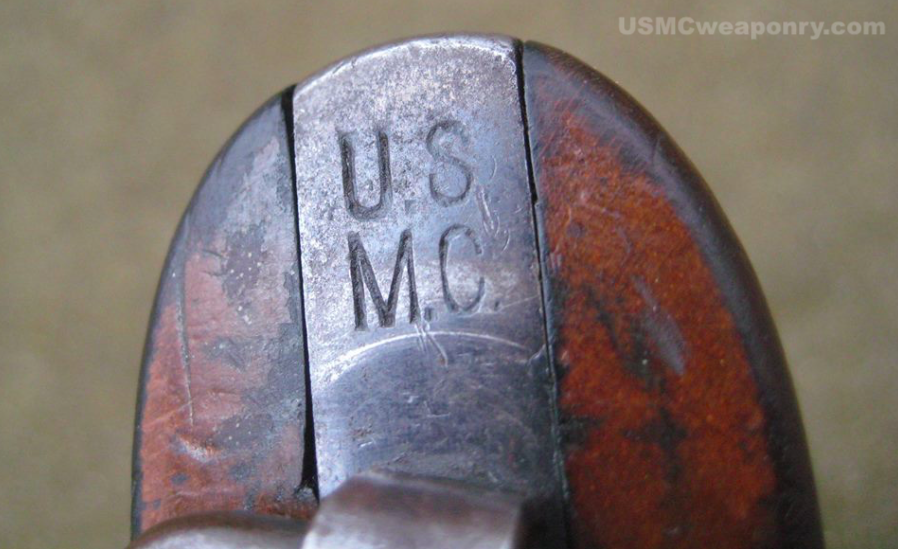
The Colt USMC M1909 Revolver was the short lived predecessor of the M1911 (Anderson collection).
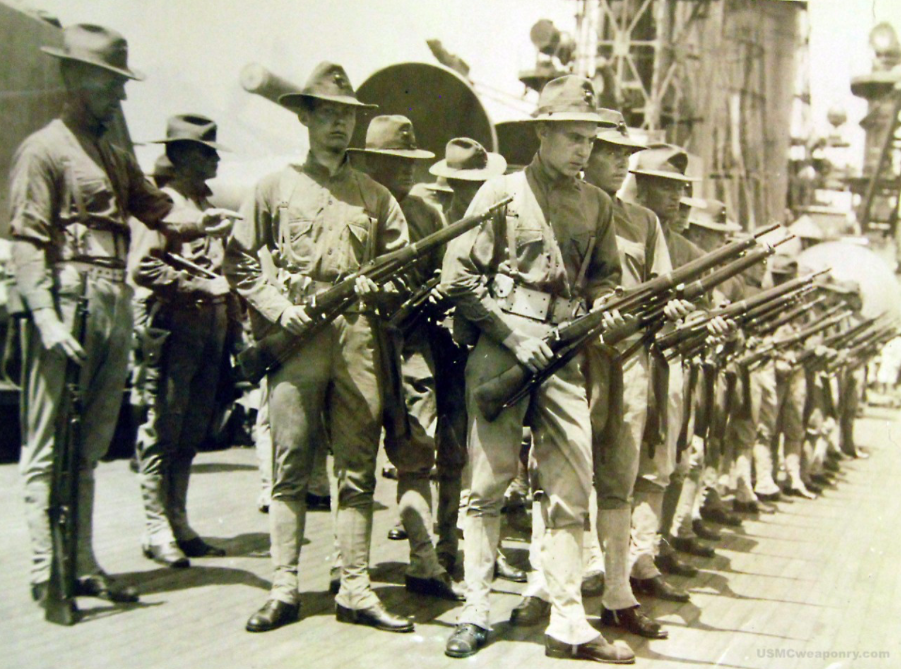
Ship’s Detachment Marines practicing drill, with Marine officer in background with newly issued M1911 in leg holster (USMC)
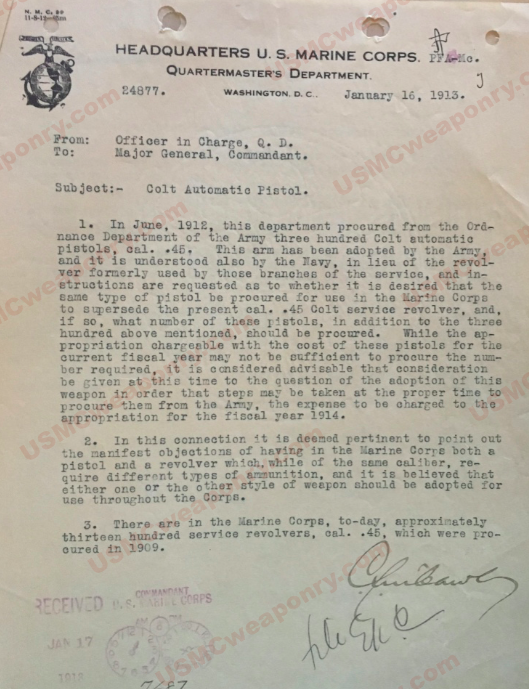
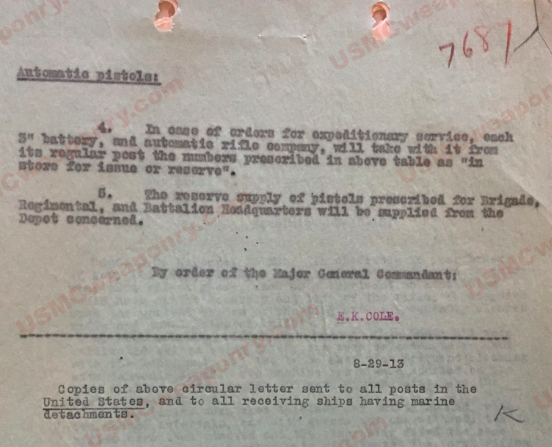
Distribution policy for the M1911 in 1913 (NARA).
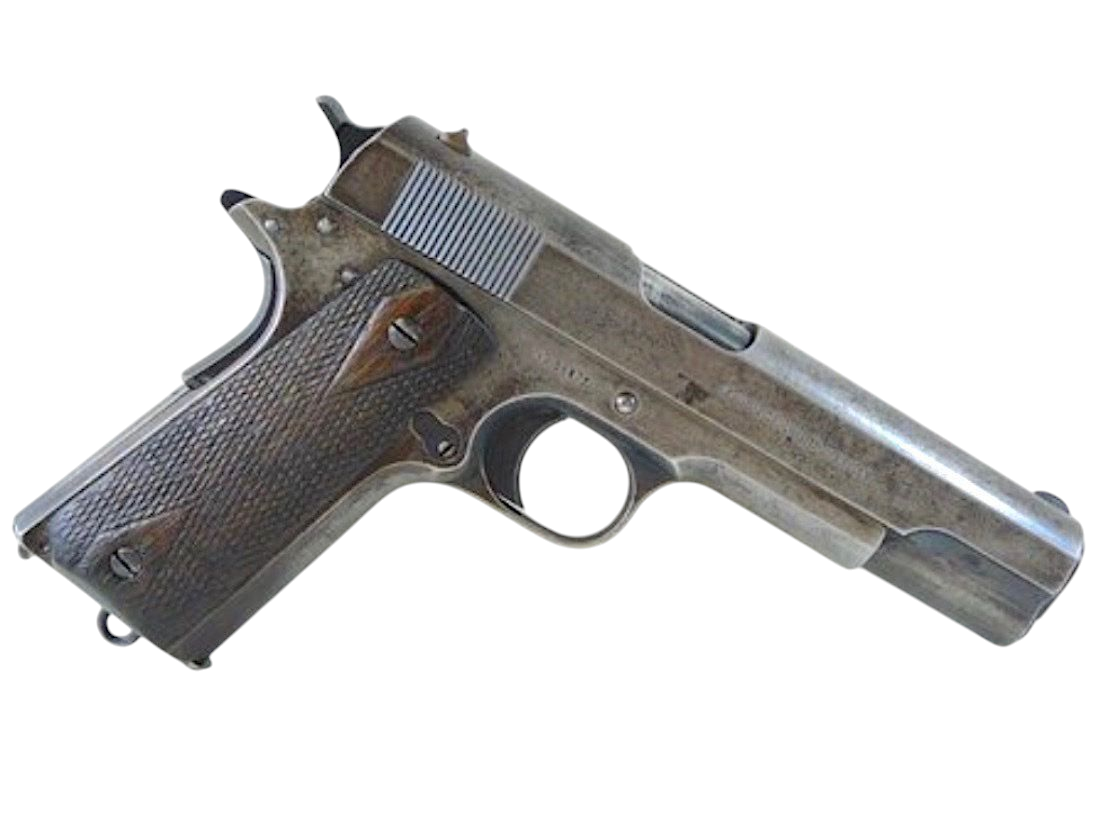
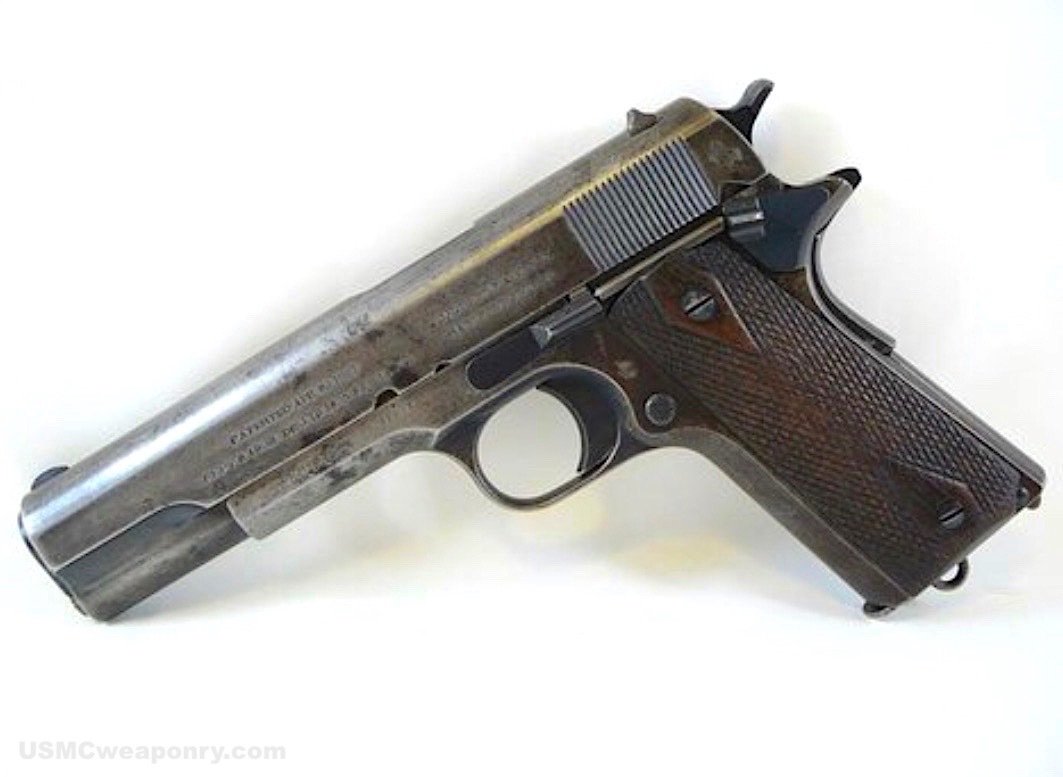
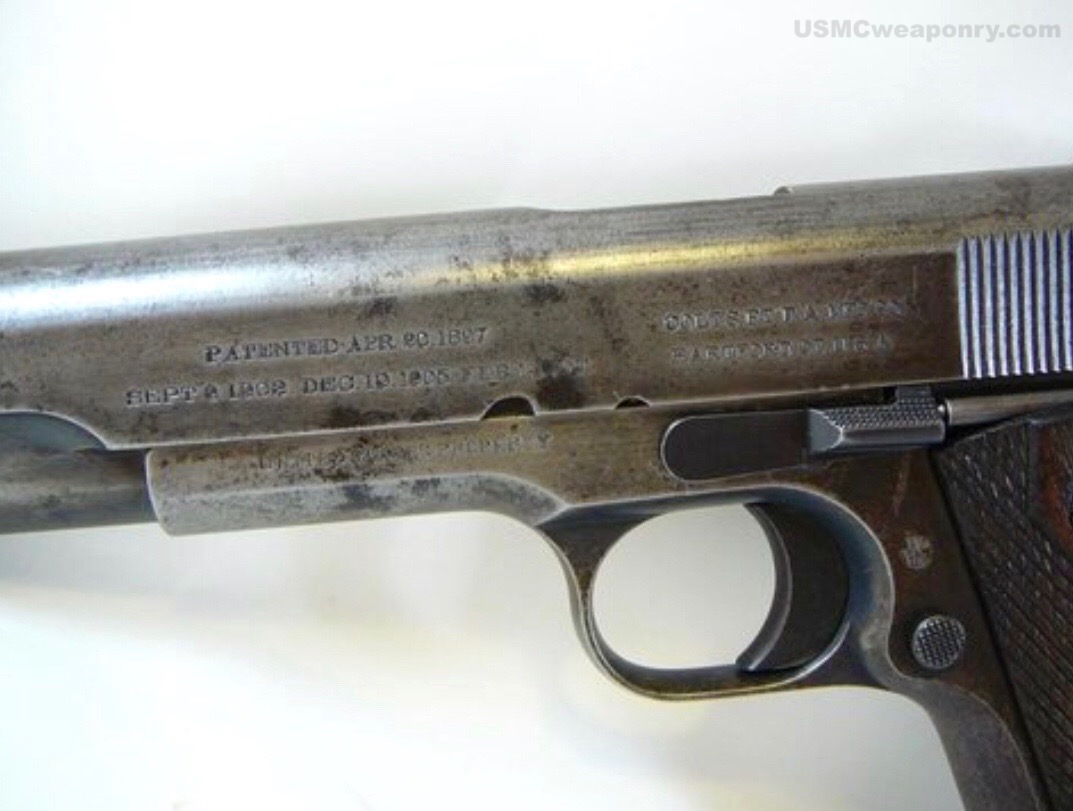
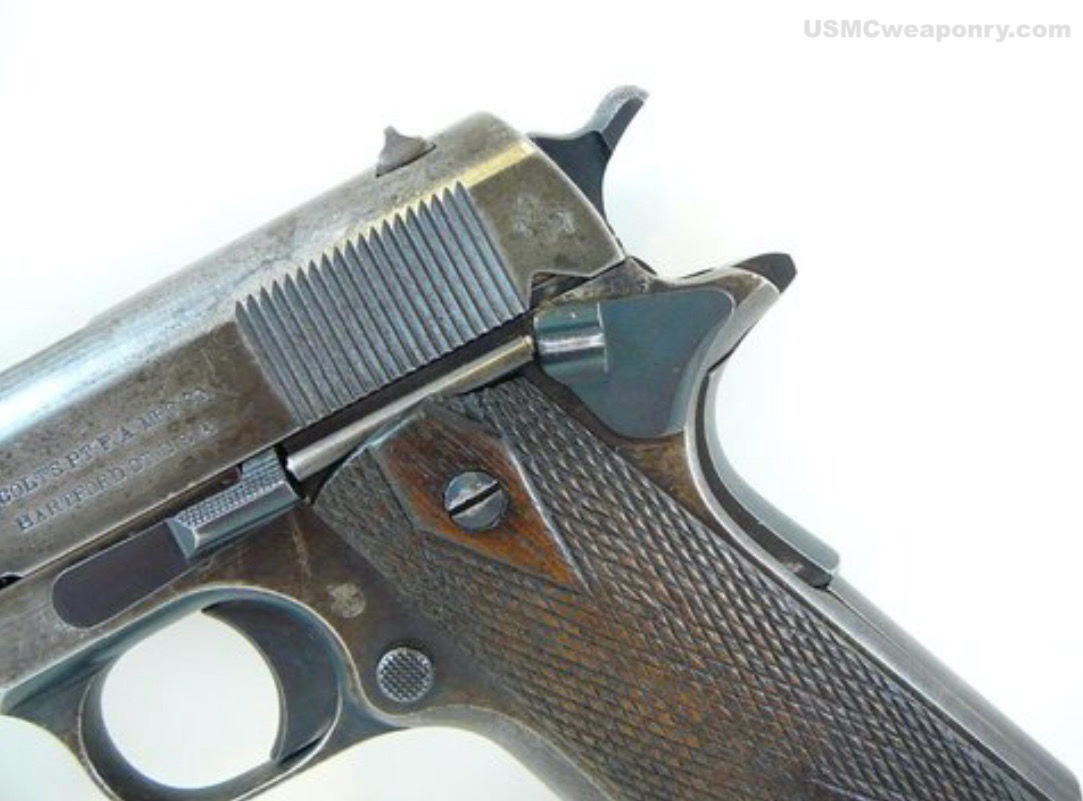
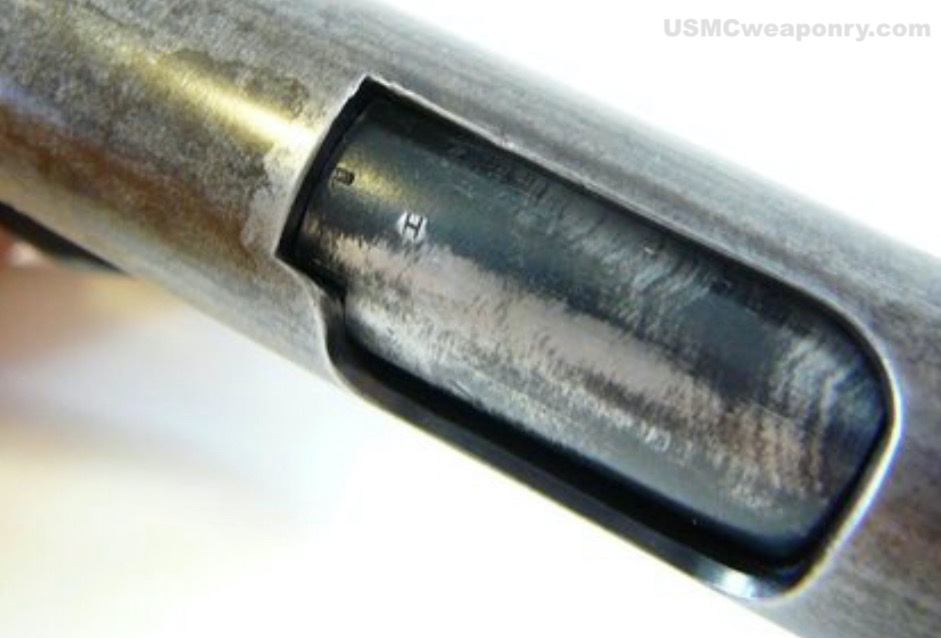
USMC M1911, one of 1250 delivered to the Marine Corps in 1913 (Norton collection).
M1911s would be deployed almost immediately with the Marine Corps’ expeditionary forces, and be found to be excellent sidearms in combat. Marine legends like Colonel Joseph Pendleton would write glowing reviews of the new pistol, noting that it was twice as accurate as previous revolvers and possessed an exceptional smooth action with low recoil. As as service, the Marine Corps was notoriously skeptical and thorough in weapons testing, usually taking a significant amount of time to warm to a new weapon. The M1911 would be the exception, being accepted in earnest from the beginning. The Marine Corps would procure 5,500 sequential serial number “blocks” prior to 1918. While Colt kept excellent shipping records up until 1918, the tremendous increase of production coupled with the demand for speedy shipments relegated M1911 disbursement to Ordnance Department officials. As such, the exact number of pistols the Marine Corps received during World War I is unknown, though likely significant.

USMC M1911 shipment blocks blocks by year and sequential serial number range:
1912: #3501 – 3800 (300 total)
1913: #36401 – 37650 (1250 total)
1914: #83901 – 8440 (500 total)
1916: #151187 – 151986 (800 total)
1917: #185801 – 186200 (400 total)
1917: #209587 – 210386 (800 total)
1917: #215387 – 216186 (800 total)
1917: #216587 – 216986 (400 total)
1918: #216986 – 217386 (400 total)
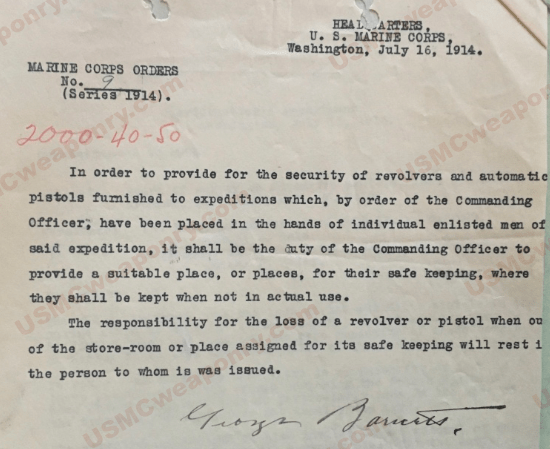
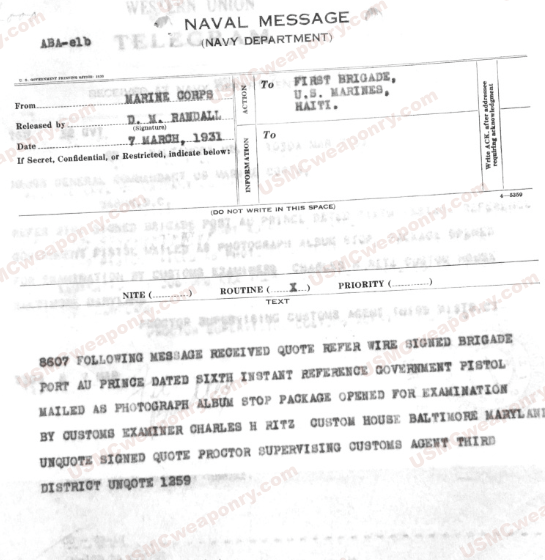

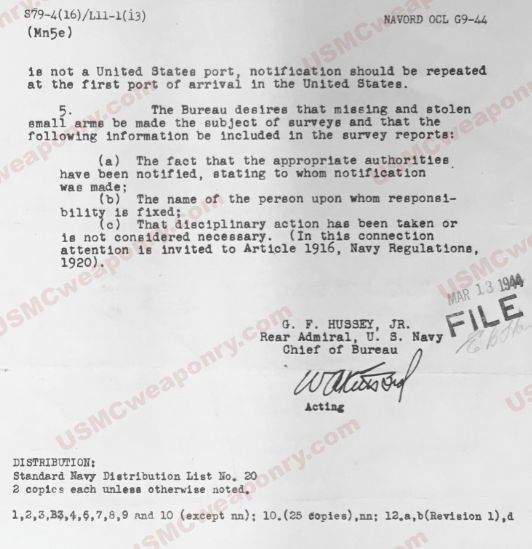
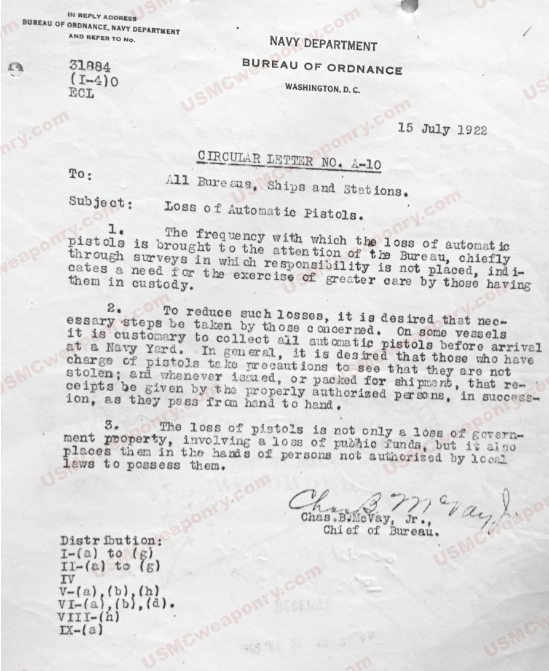
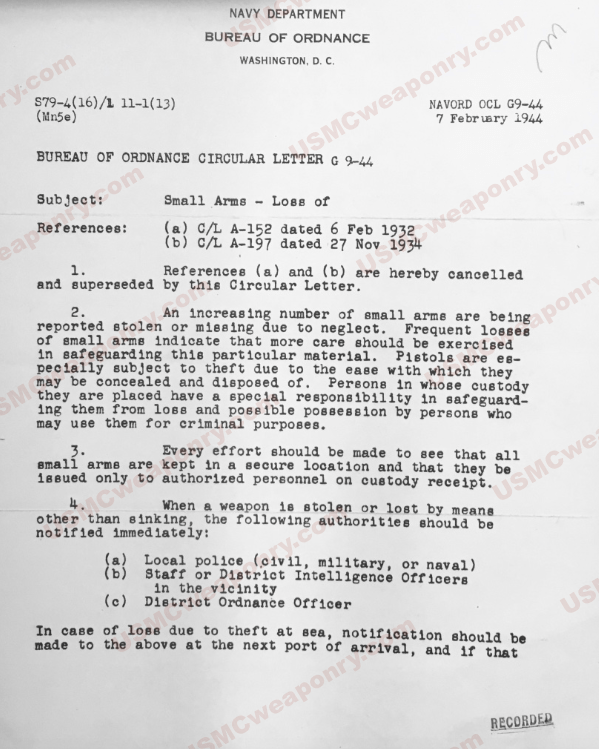
The biggest problem with M1911s wasn’t in regards to performance but related to their security, as they were frequently “souvenired” by those who carried them (NARA).
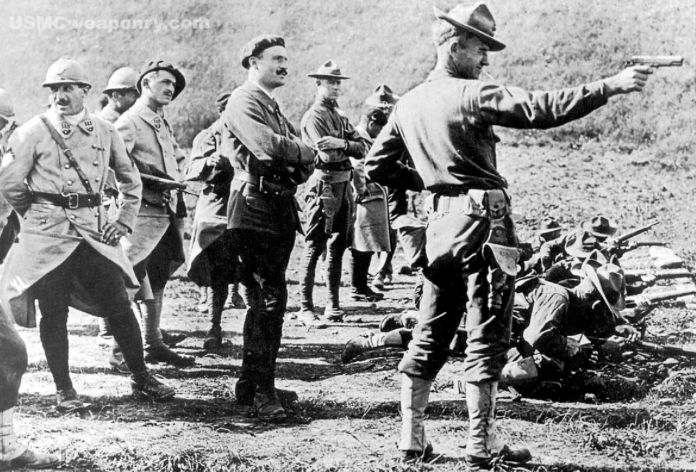
A Marine officer in France during WWI with his M1911 (USMC).
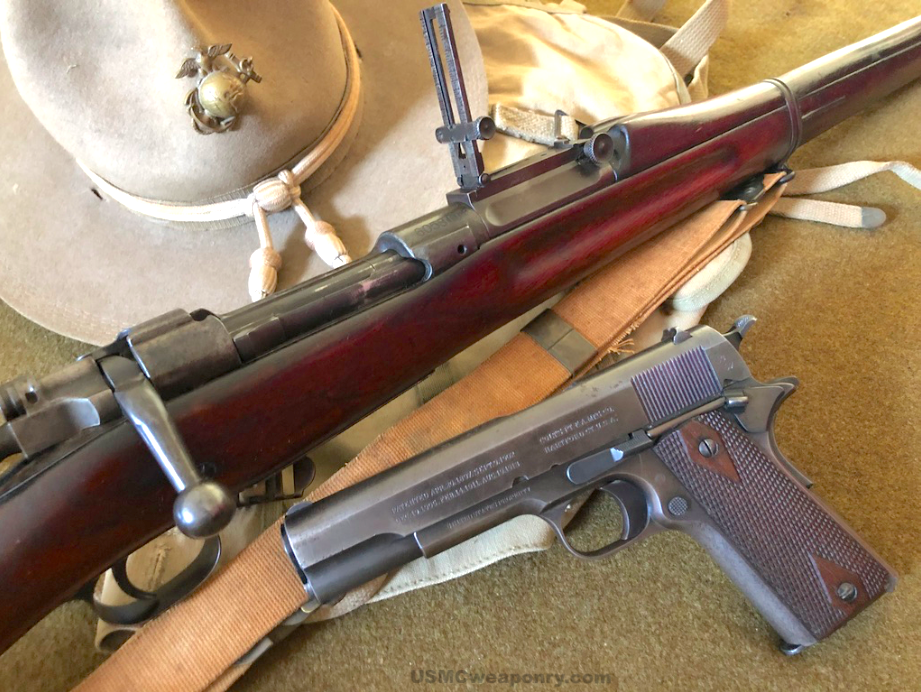
Primary arms of Marines in World War I (Plowman collection).
The 5th and 6th Marine Regiments would be hastily outfitted with new men and arms in late 1916 and 1917. The 5th Marine Regiment would depart for France several months earlier than the 6th Marine Regiment, but the two would join up to comprise the 4th Marine Brigade of the army’s 2nd Infantry Division. While in France, the 4th Marine Brigade would draw ammunition, clothing, and most other supplies from the army. Small arms however would still be provided by the Marine Corps and their parent appropriator, the Naval Department’s Bureau of Ordnance. It is safe to assume that the majority of M1911s in the hands of Marines in France were from the 5,500 procured from Colt prior to 1918. There are some noteworthy exceptions, with several documented M1911s being in US Navy or US Army serial number contract blocks. In combat, the M1911 would prove a very resourceful weapon for Marine officers and machine gun crews. The fighting would be horrific, and the casualties tremendous. The Marine Corps would procure more M1911s in 1918 as casualties mounted and a massive influx of new Marines swelled the ranks of the service. As mentioned earlier, the days of neat, sequential shipments were gone in order to meet the demand of wartime production, and the M1911s obtained in 1918 would have spanned a large serial number range. One exception to this would be two well known shipments totaling 3500 M1911s sent to the Marine Corps in late 1918. The serial number range for these two shipments spans 543000-556000, giving any M1911 in that range roughly a one-third chance of being USMC issue.
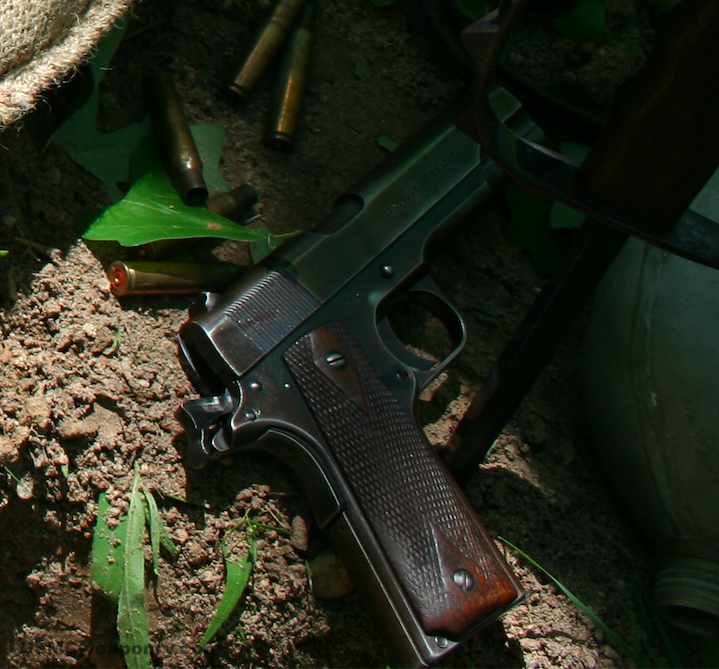
1917 contract USMC M1911. The majority of USMC M1911s at early World War I battles like Belleau Wood would have been from the sequentially shipped, pre-1918 Colt contracts (Anderson collection).
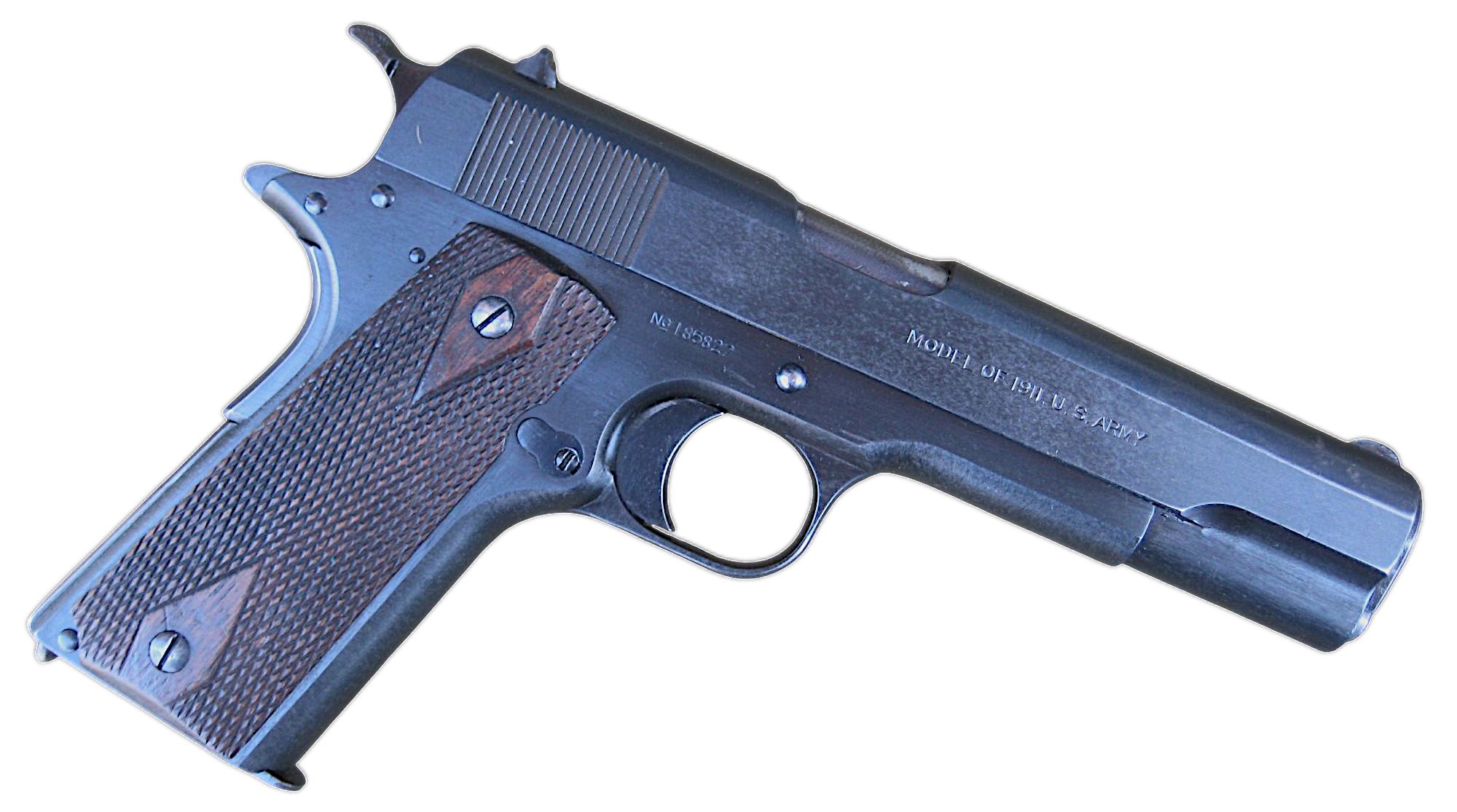
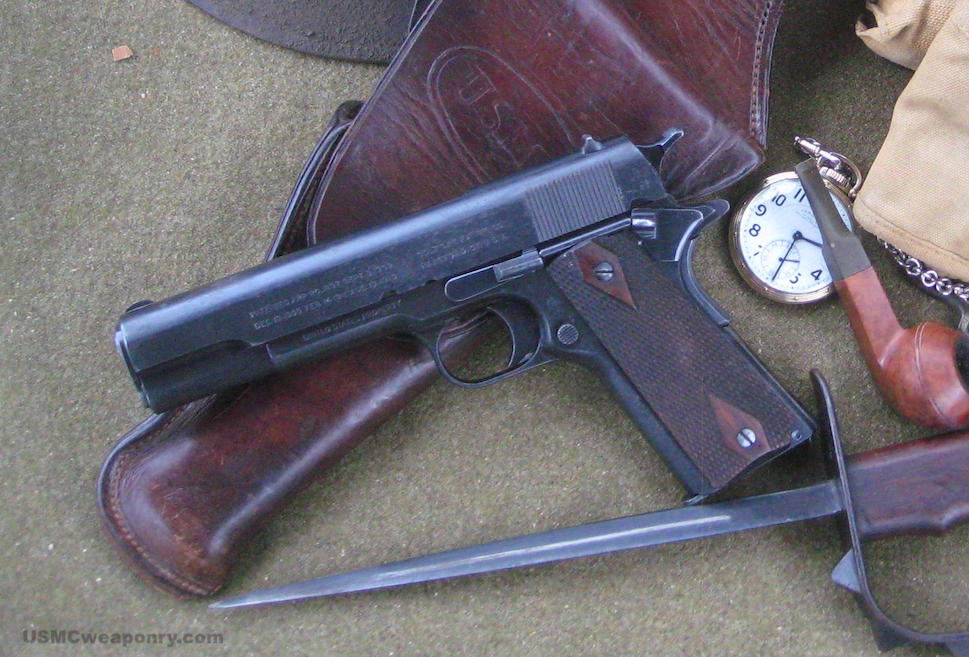
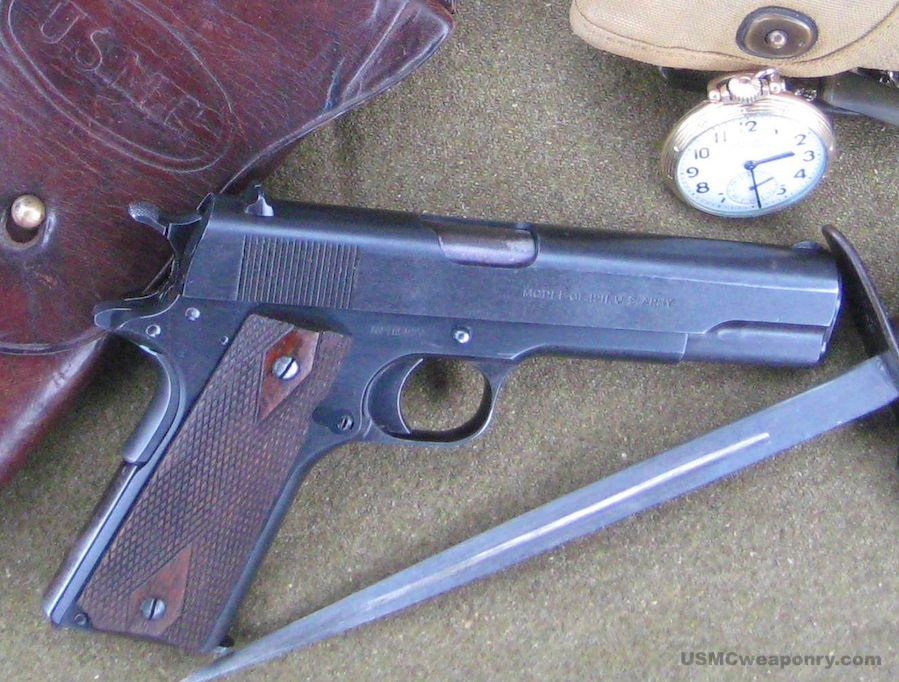
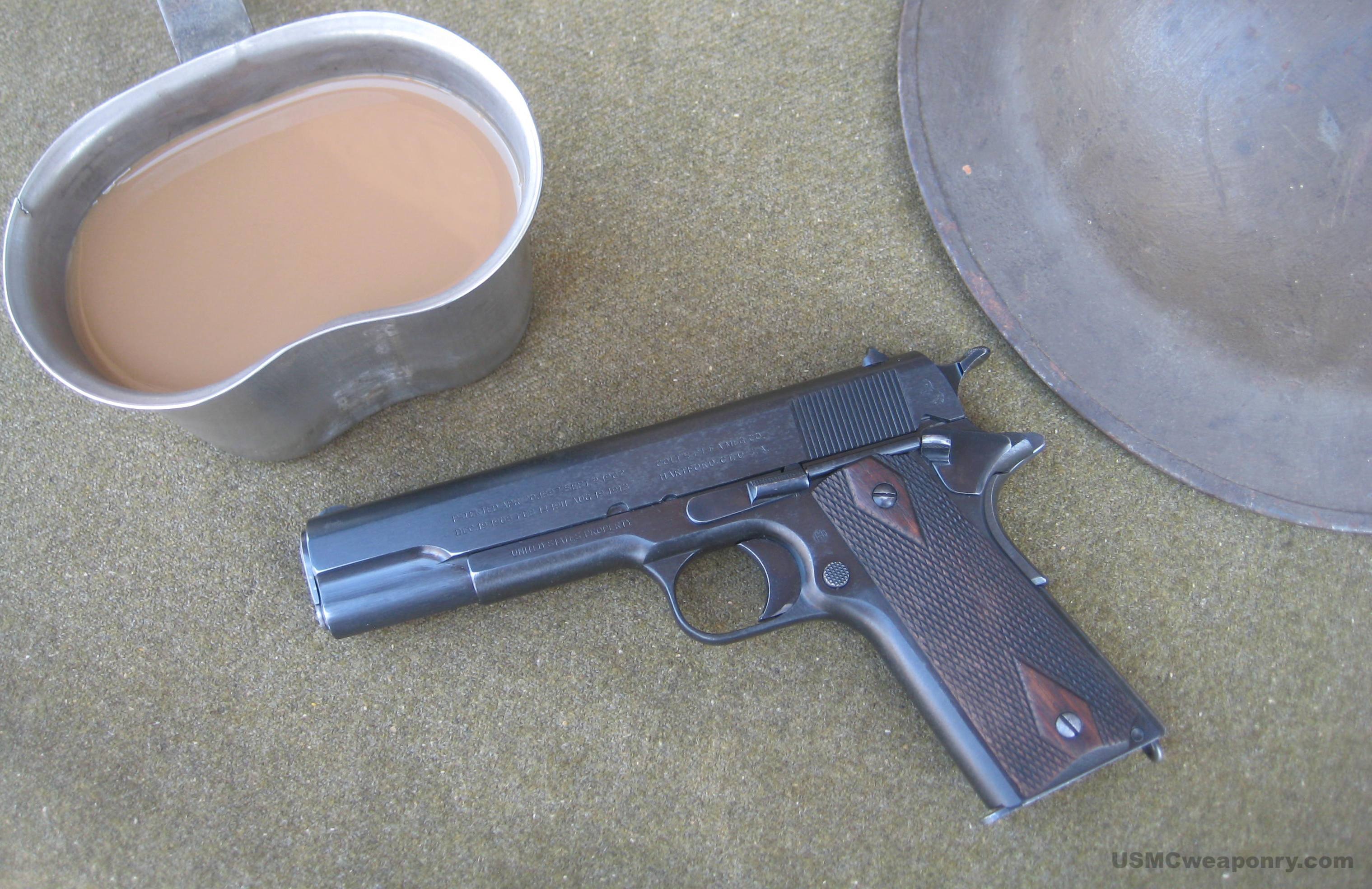
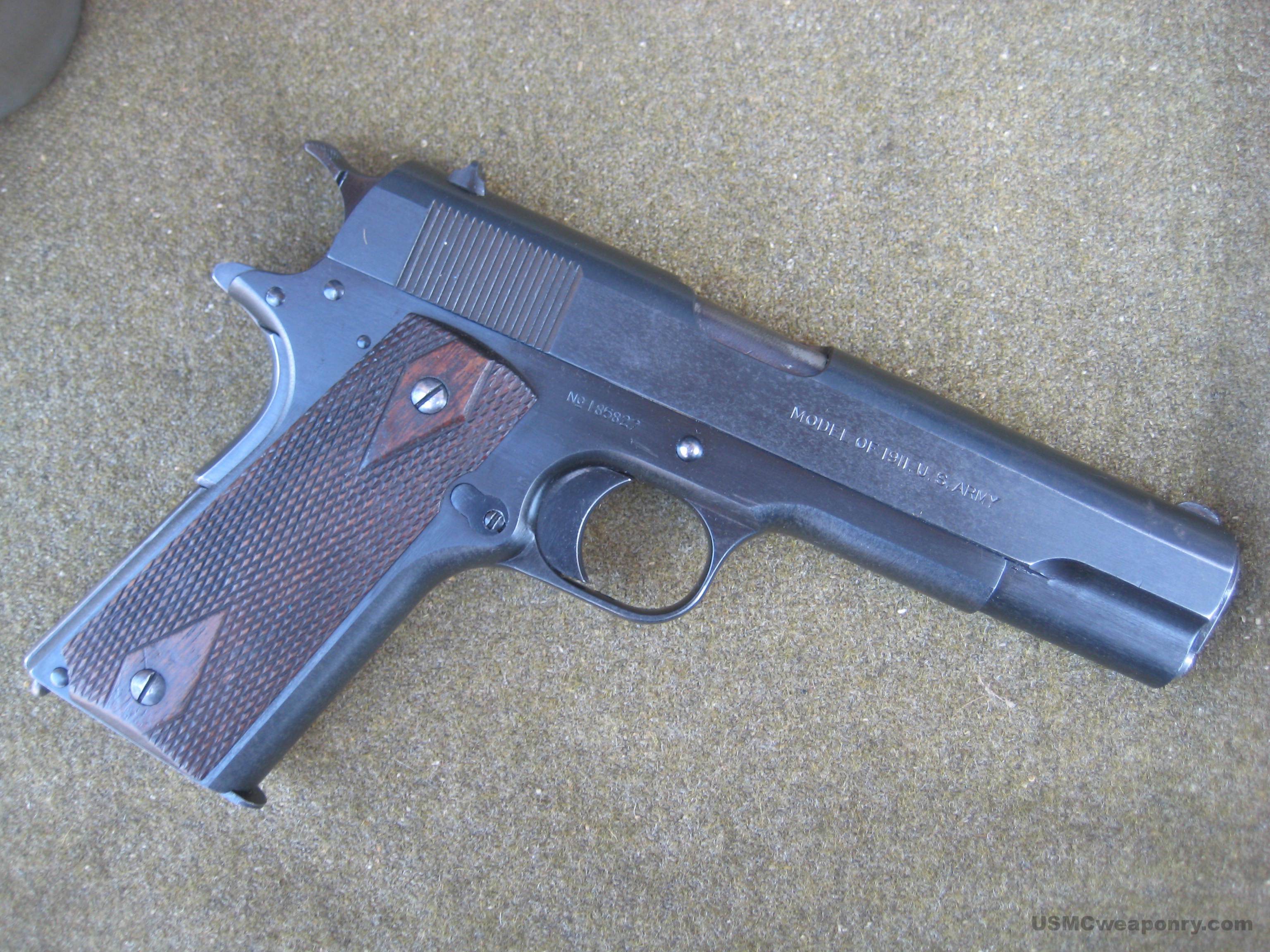

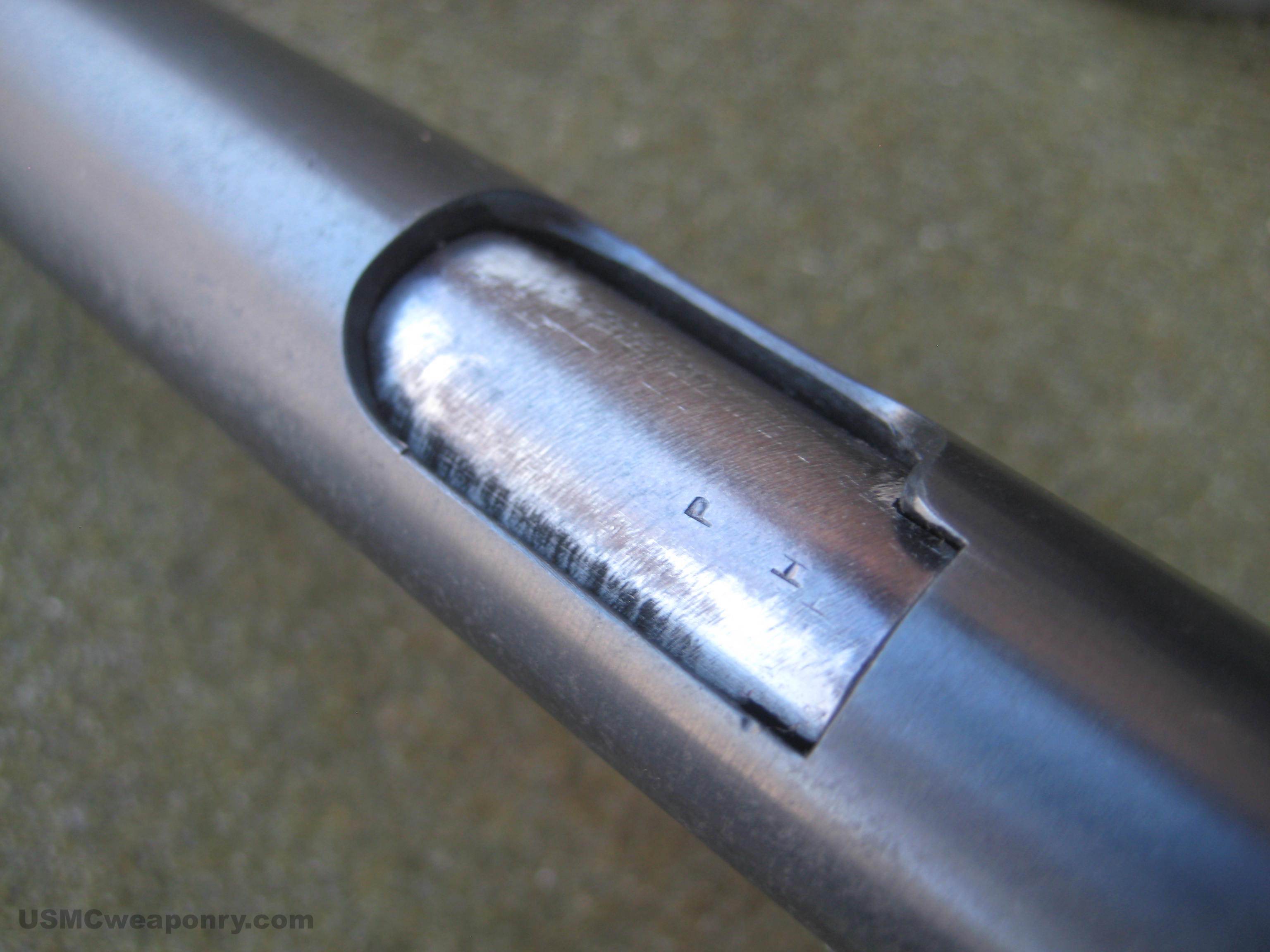
USMC M1911 from the first of several contracts received in 1917 (Anderson collection).
1919 production USMC Colt M1911s
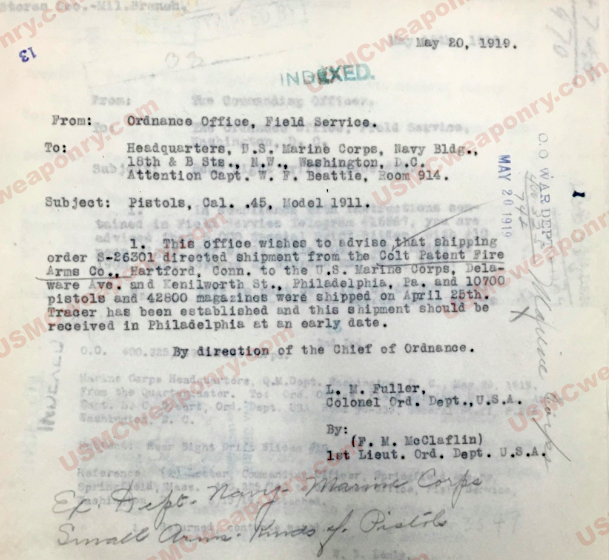
The Marine Corps received a final shipment of 10,700 M1911s in May of 1919. While not a perfectly sequential shipment, the overwhelming majority fall between serial numbers 617730 and 628450 – a range of almost exactly 10,700. The odds of a M1911 in this serial number range having been issued to the USMC a practical certainty (NARA).
Many of the 1919 shipment USMC M1911s would see service through World War II and beyond, and have been observed rebuilt many times over, remaining in service until the M9 Beretta replaced all M1911/A1s in the 1980s.
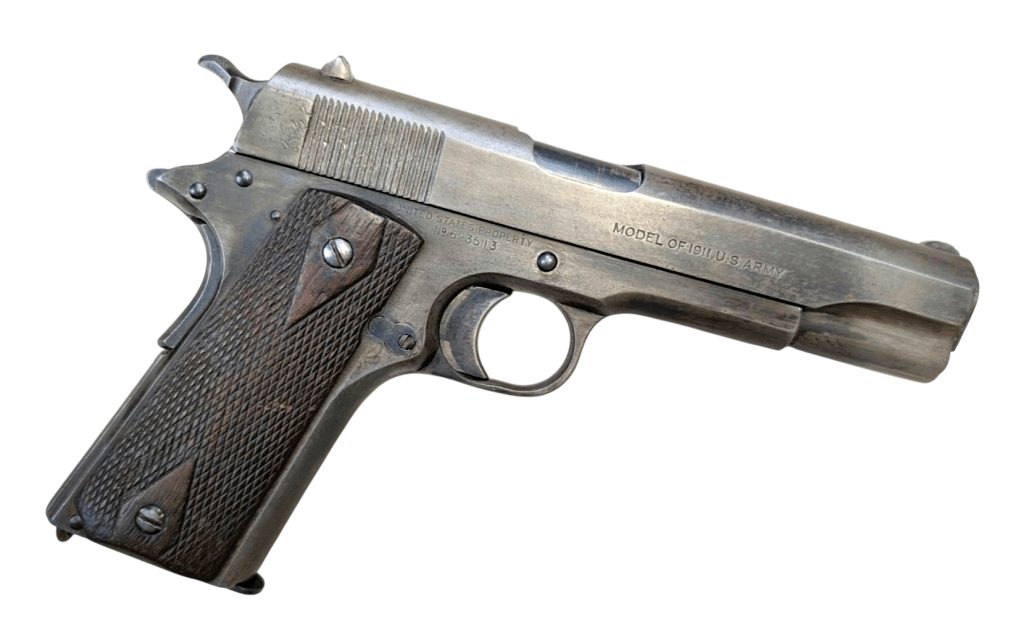
1919 production USMC M1911 #623513, with faint original blued finish (Hartsell collection).
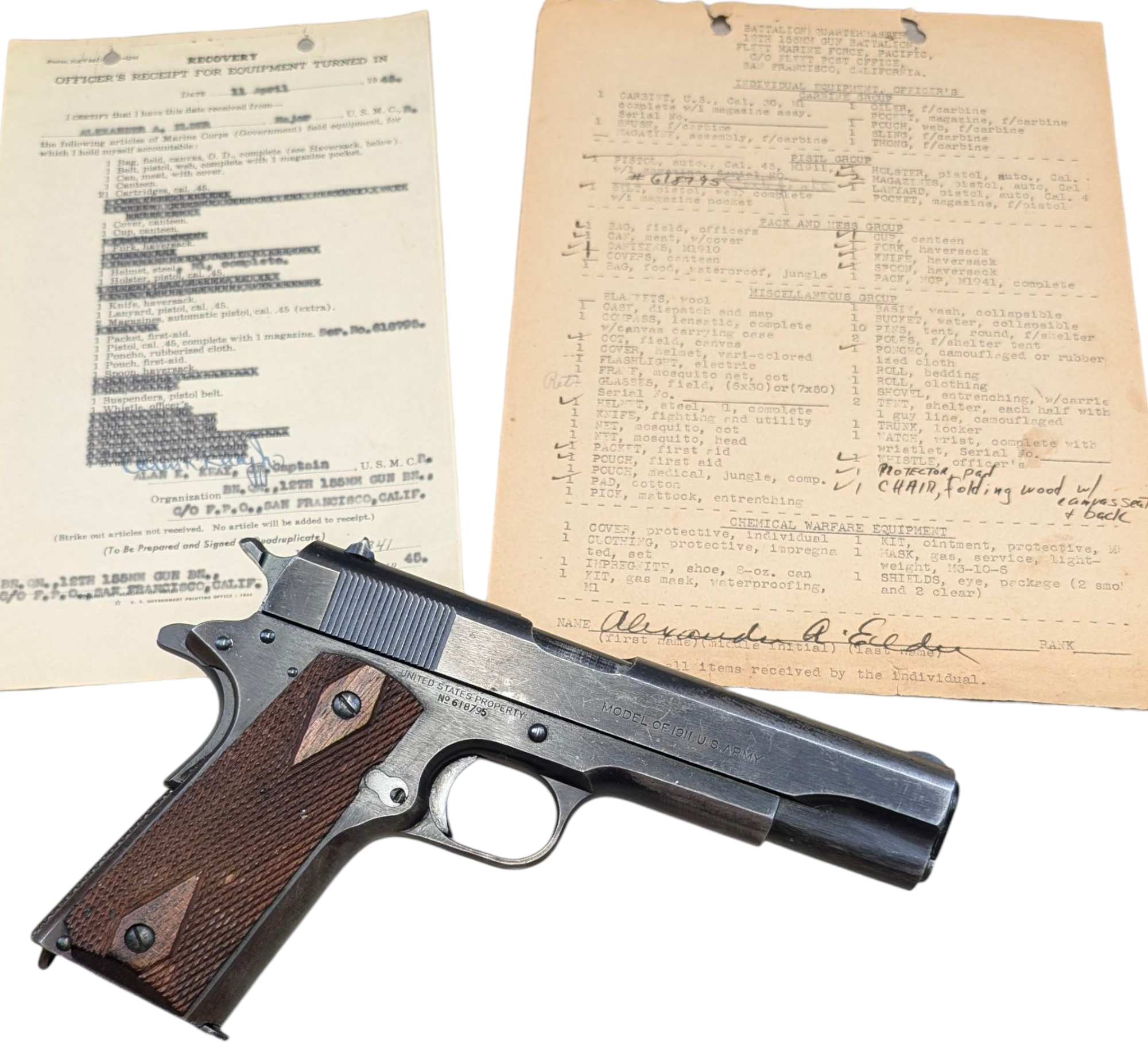
1919 production USMC Colt M1911 #618795 issued to and carried on Iwo Jima by Major Alexander Elder, a Marine artillery officer (Plowman collection).
In the months following World War I’s unexpectedly early end, the Marine Corps would receive a final, relatively large shipment of 10,700 M1911s as Colt and the Ordnance Department sought to dispose of surplus of arms. Nearly all of these M1911s are in the 600k serial number range, though this shipment would not have been perfectly sequential. This extra large supply of M1911s would be put to considerable use not long after they were received. The Marine Corps would stay busy in the years between the world wars, deploying across the South Pacific, peacekeeping in China, or fighting in various “Banana Wars” in Nicaragua and Haiti. None of these conditions were particularly favorable for the blued M1911, and the Marine Corps would begin parkerizing their weapons to provide for a much more durable finish. While pistols were not rebuilt nearly as often as service rifles, they were when needed. As such, a significant portion of USMC contract M1911s seen today are rebuilt, parkerized, or both- making original blued examples very desirable. Many USMC M1911s rebuilt early in the World War II era have had their triggers updated to the shorter M1911A1 type, and mainspring housings upgraded to the arched variety.
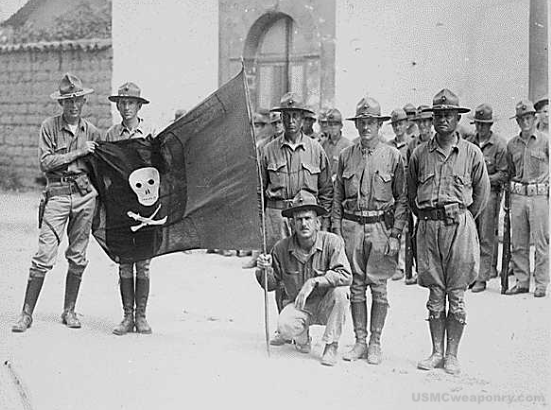
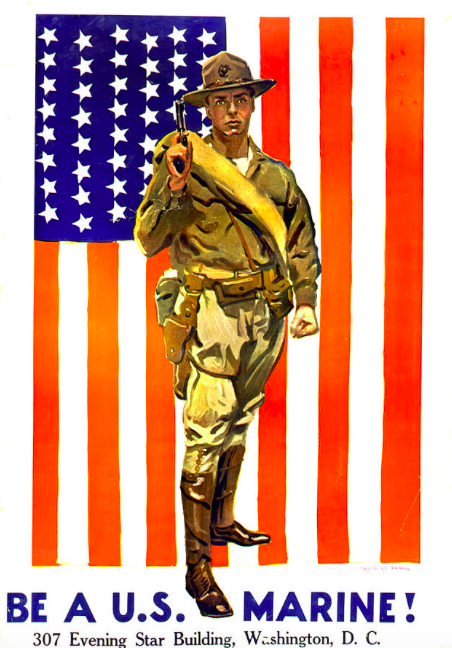
Marines in Nicaragua with Sandino’s flag, 1911 holsters and magazine pouches on officers (USMC).

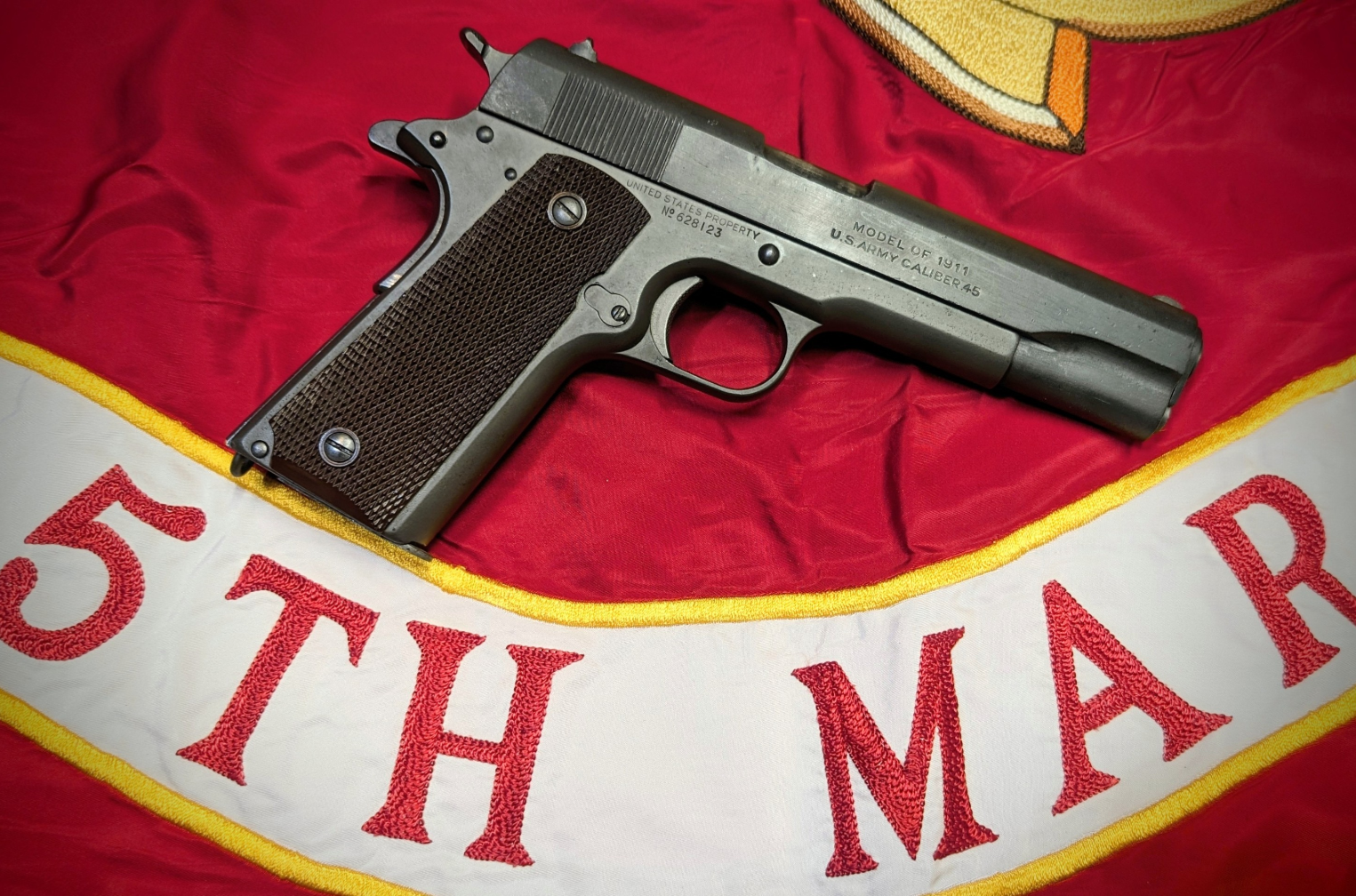
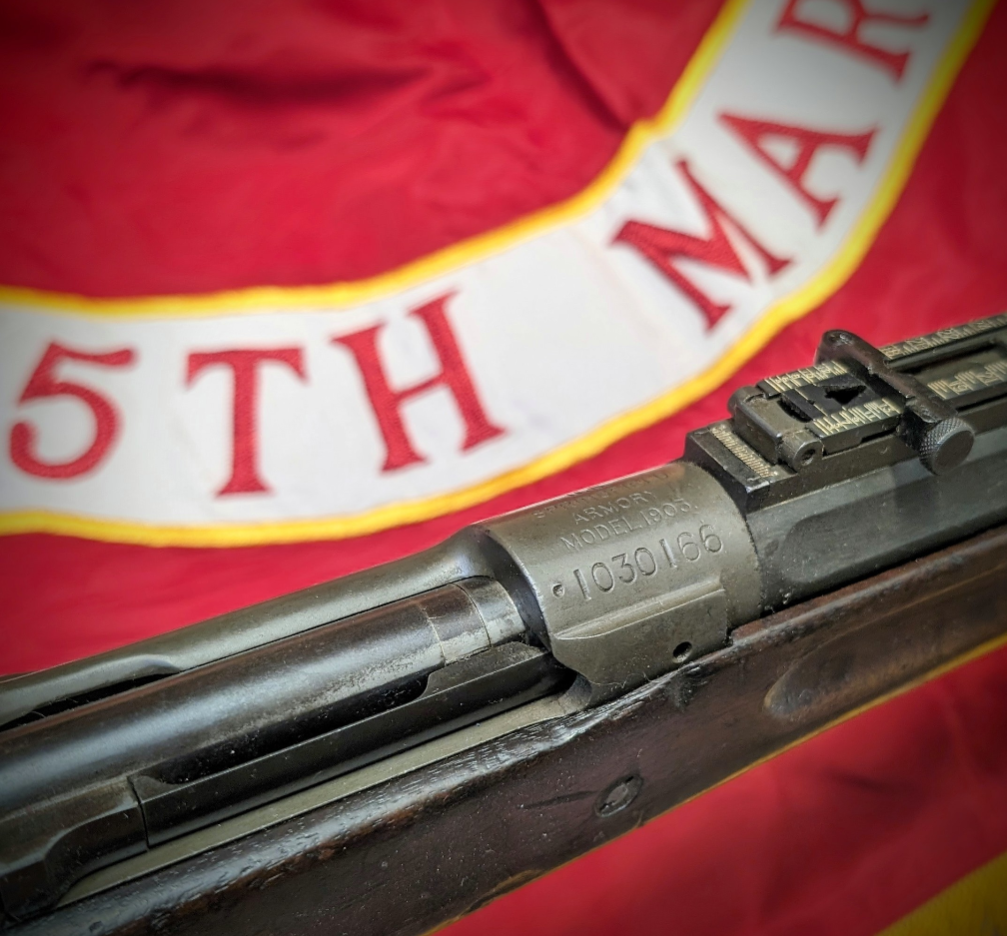
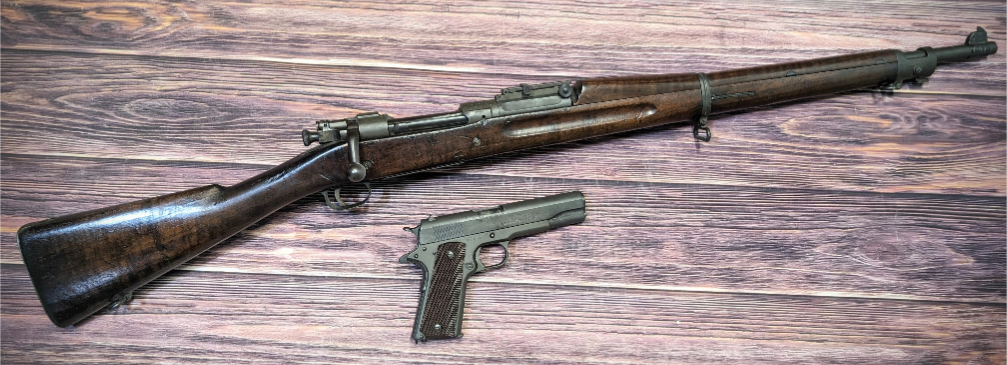
USMC Colt M1911 #628123 & USMC M1903 #1030166, both documented to the 5th Marine Regiment in Nicaragua in 1929 and later rebuilt in the early World War II era. #628123 is in very rare company as it shows up in Marine Corps documentation years later, at the Marine Corps barracks in Annapolis in 1950 (NARA).
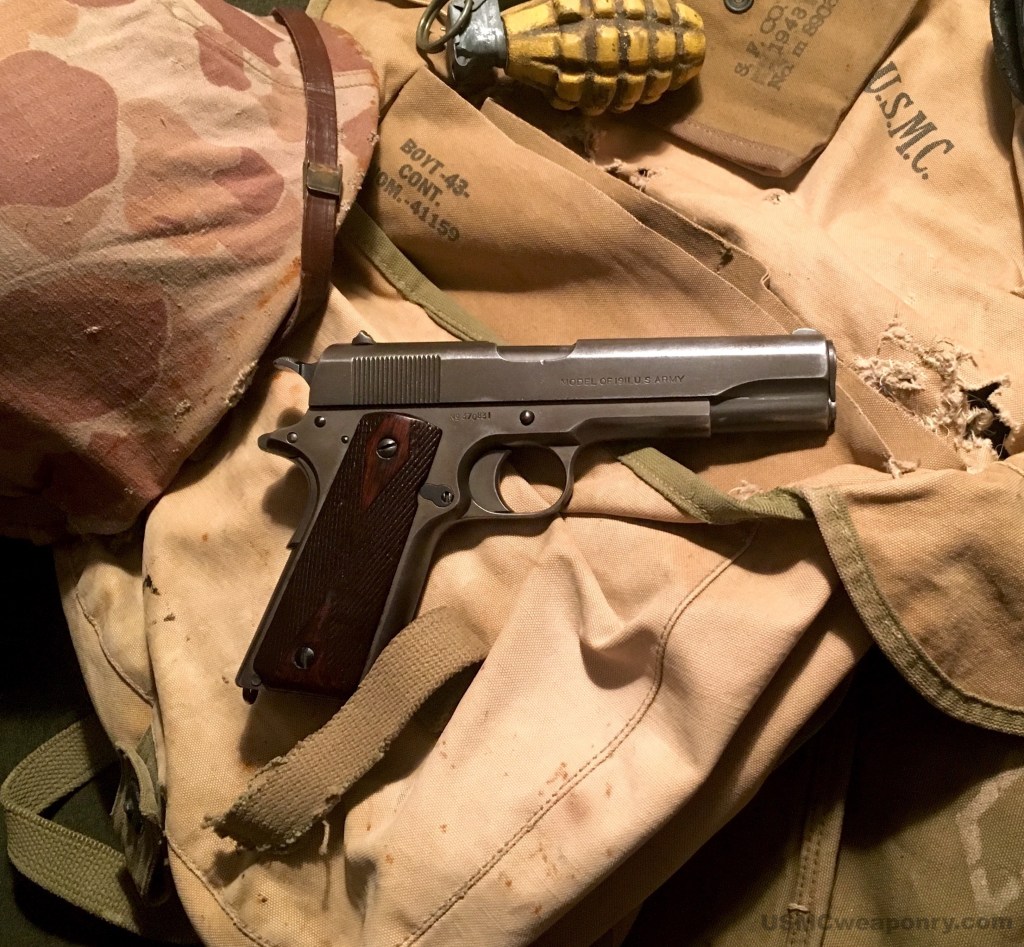
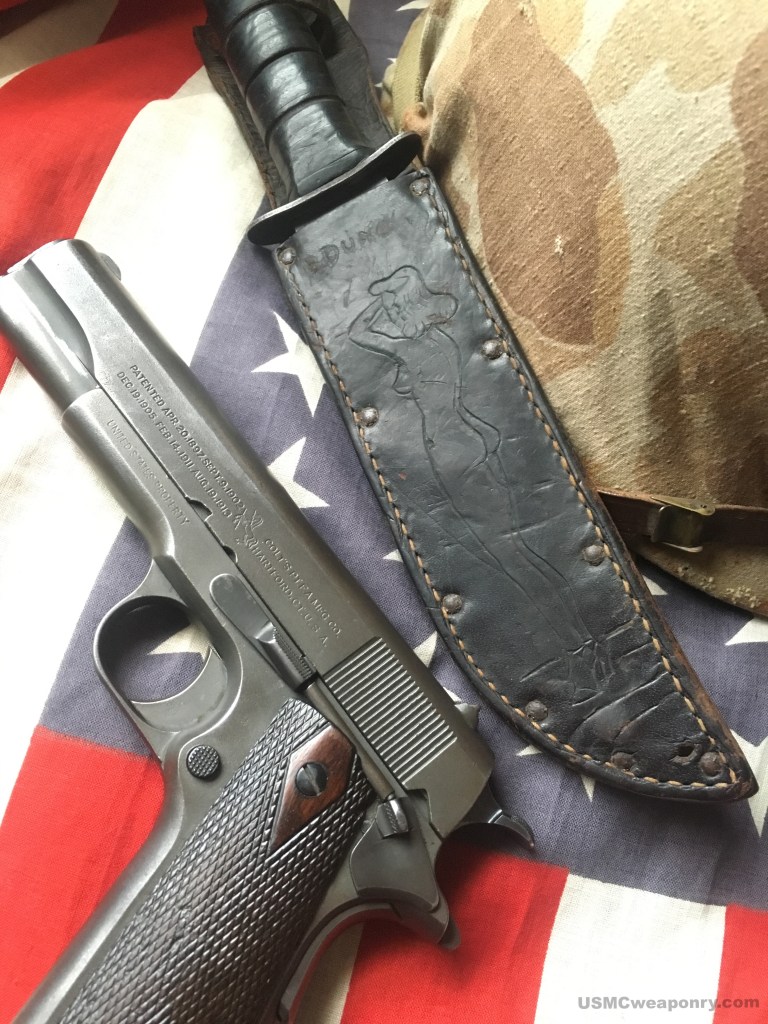
Though needing overhaul far less than service rifles, a significant amount of M1911s in the hands of Marines in WWII would have had their bluing replaced with a parkerized finish (Plowman collection).
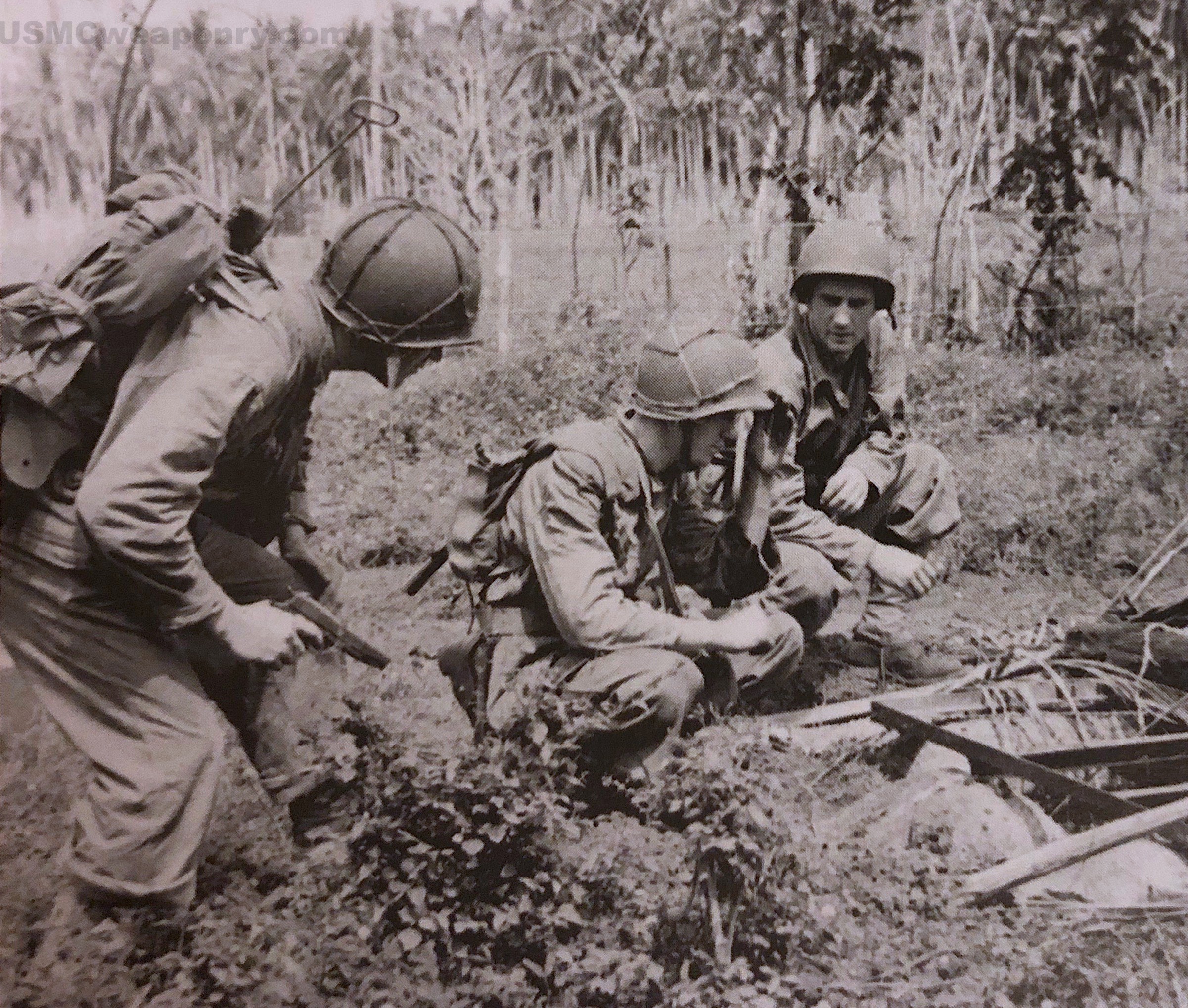
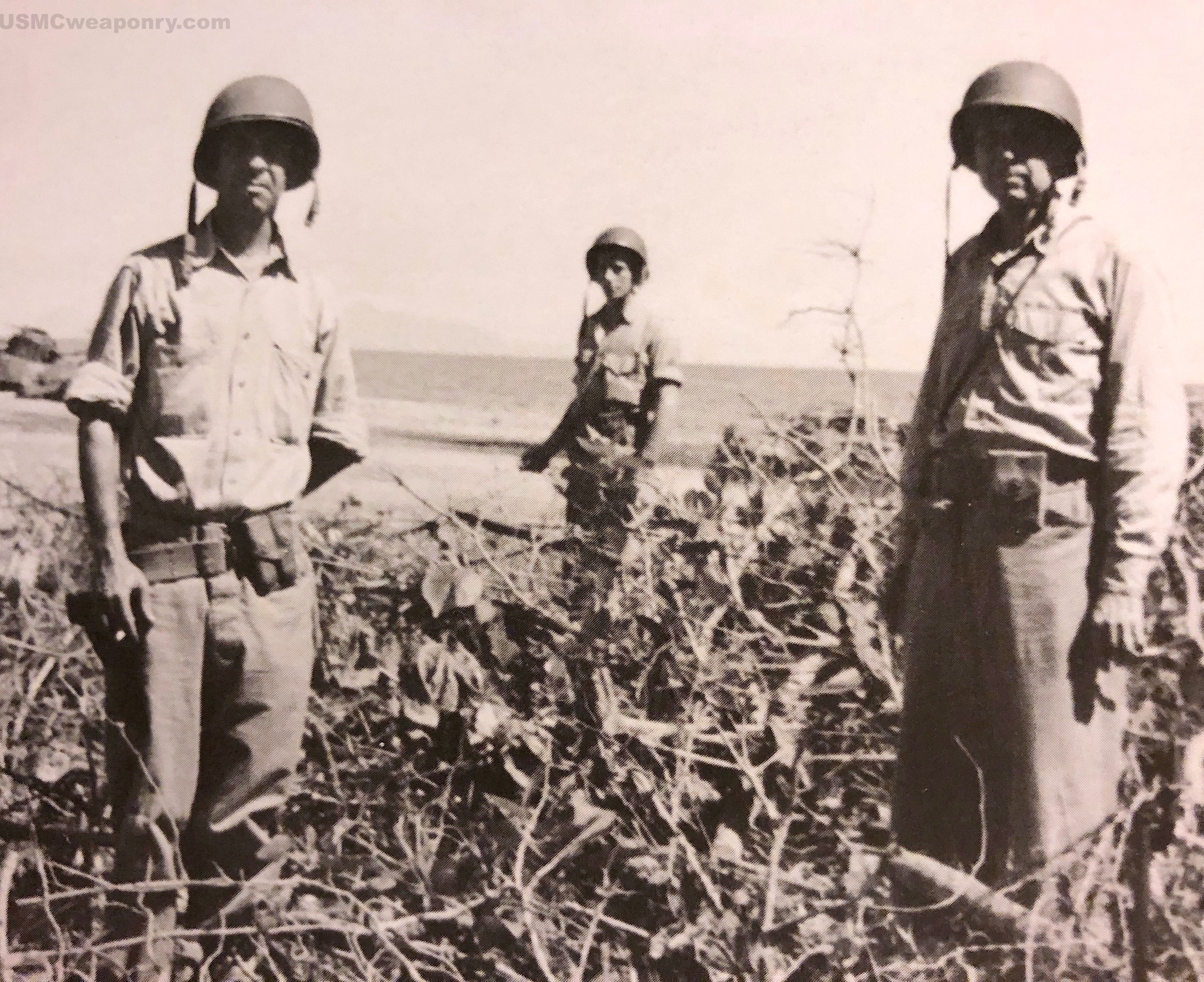
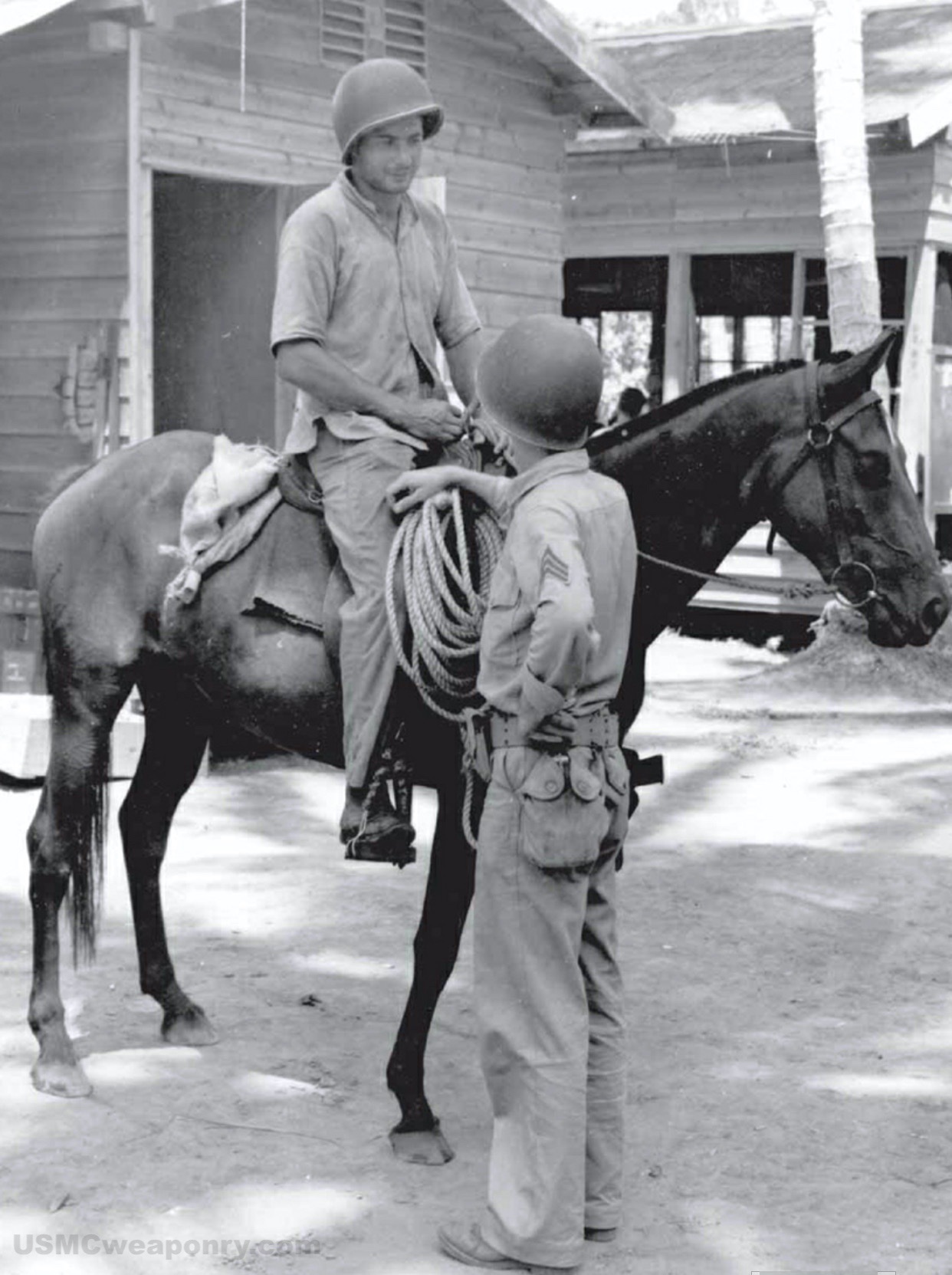
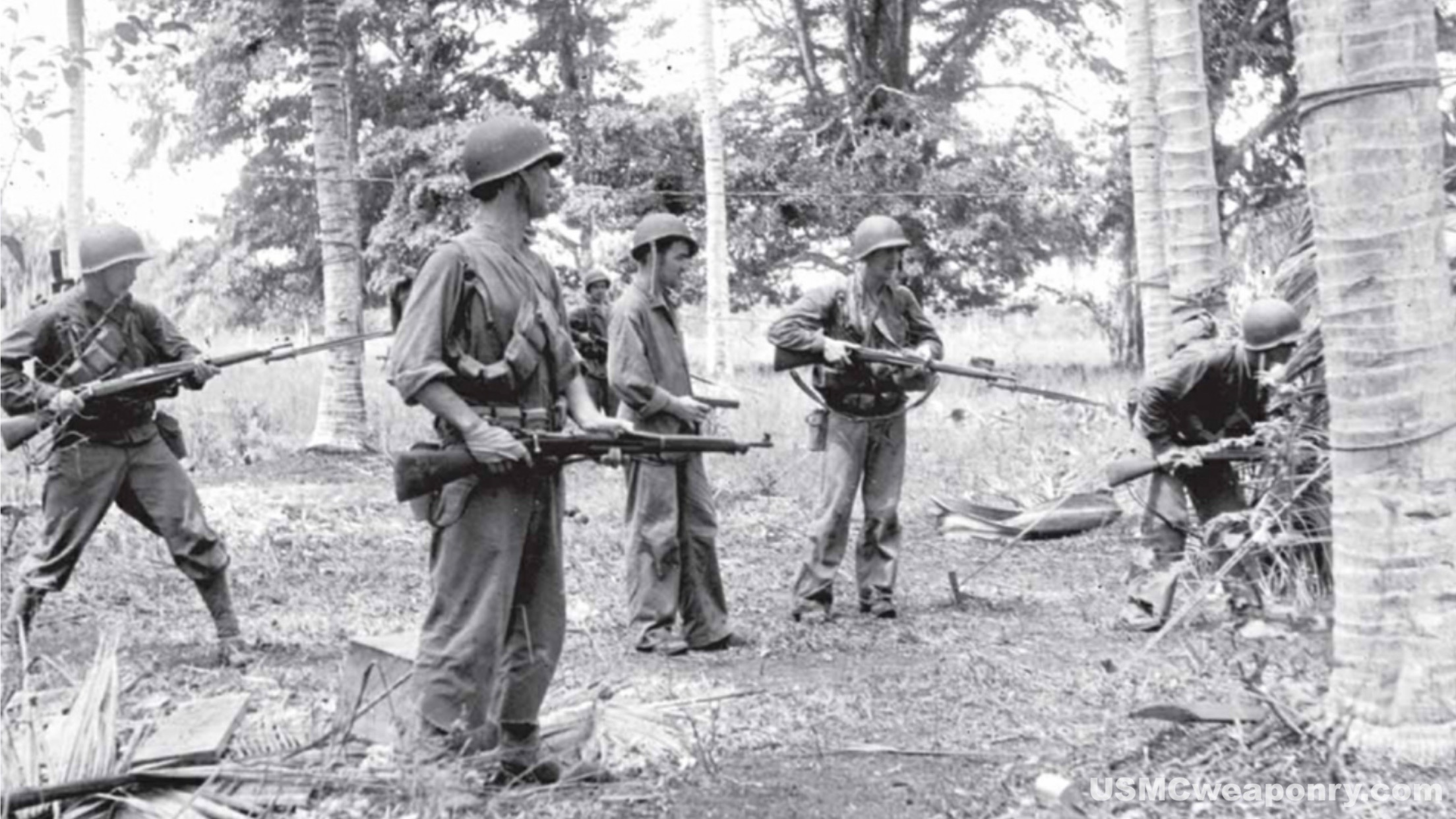
1st Marine Division infantrymen with M1911s on Guadalcanal (photos: USMC & NARA).

The USMC M1911A1
With the advent of World War II, the Marine Corps would once again find itself with a tremendous need for sidearms to outfit rapidly expanding ranks. The M1911A1 would be produced by Colt, Remington Rand, Union Switch & Signal, and Ithaca (as well as Singer, but no evidence of the Marine Corps receiving any of the small amount they produced exists). Many of these new M1911A1s would have obvious units to which they would be issued, like the Marine Air Wings. On the ground, the Marine Divisions would already be equipped with M1911s heading into the war, but documents show that by the end of combat M1911A1s were more commonplace. While M1911A1 distribution isn’t completely addressed in what archival documents we have, we know that the Marine Corps procured a significant amount of them. The weapons logistical situation was very complicated in 1942, with delays in the sorely needed M1 Carbine forcing policy to change many times over. The nature of combat had changed during World War II, and the threat of enemy paratroopers and jungle ambushes left the Marine Corps with the opinion that a pistol would not be adequate for most support troops. On top of this, there was also a desire to simplify ammunition logistics amongst the divisions, with some officers going as far as suggesting that all .45 caliber weapons be replaced. The Marine Corps had hoped the M1 Carbine would be a one size fits all solution, capable of replacing the Thompson Submachine Gun, the Reising Submachine Gun (which was only adopted due to a delay in M1 Carbine production), and the M1911/A1. These hopes wouldn’t last long, as the need for both the firepower of a submachine gun and the convenience of the M1911/A1s would be accepted as fact by 1944.
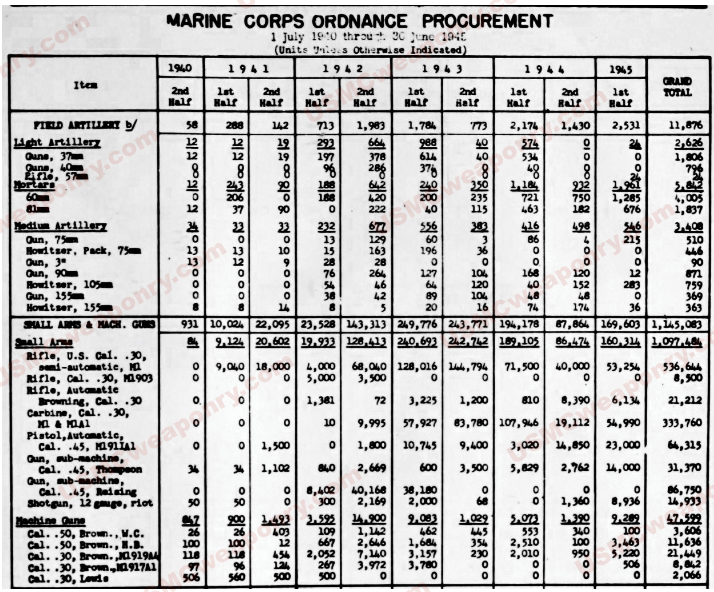
During WWII the Marine Corps would procure 64,315 M1911A1s (document: USMC).

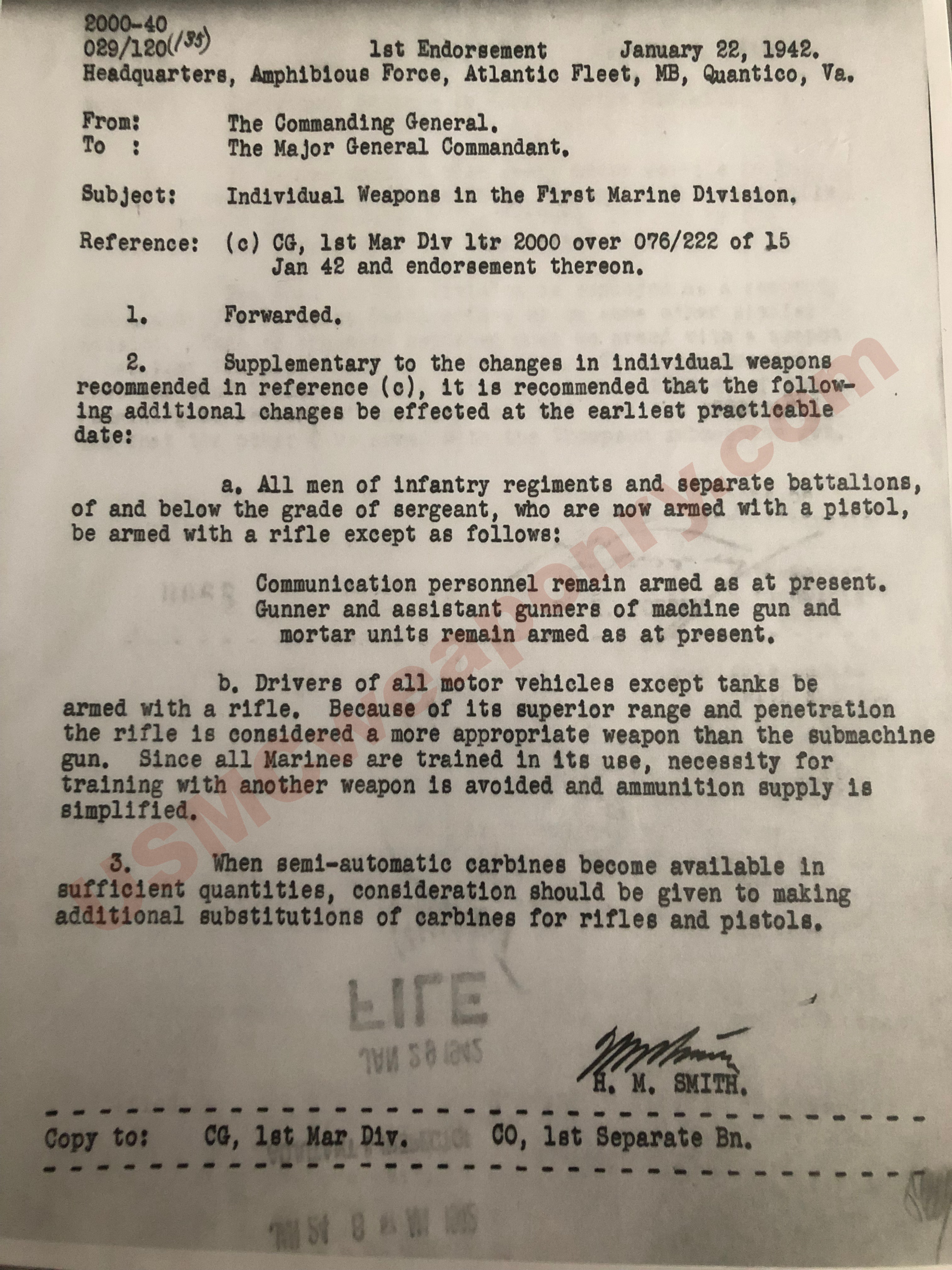
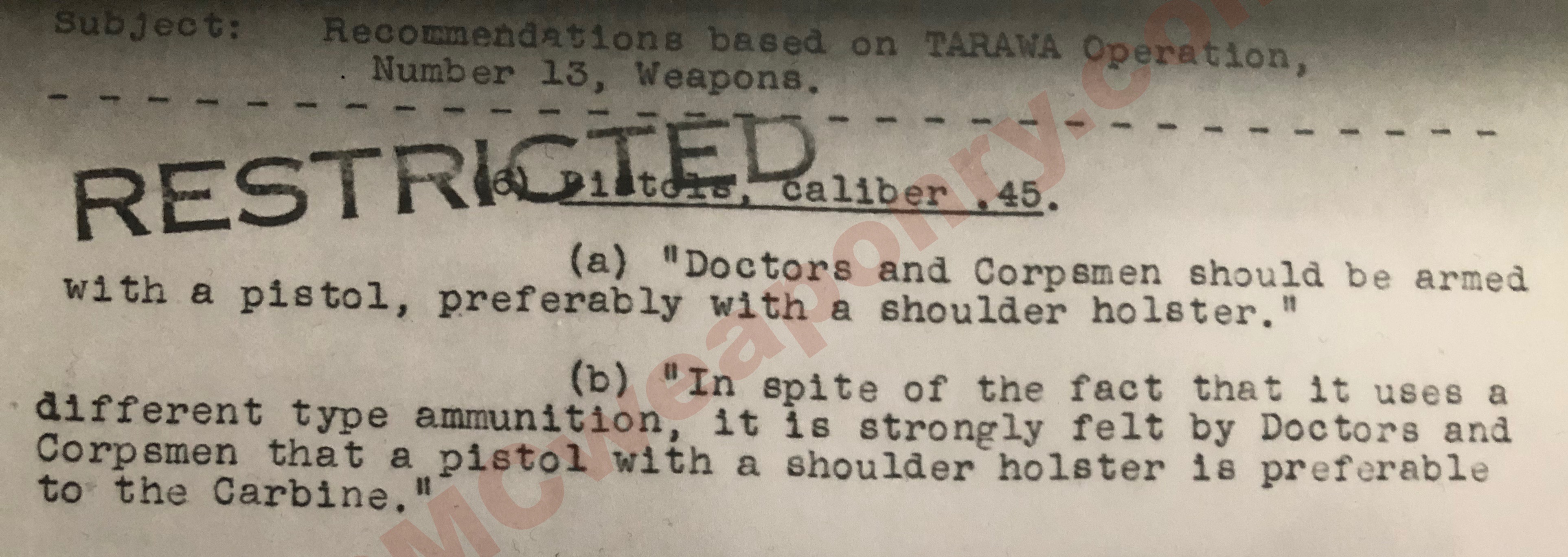
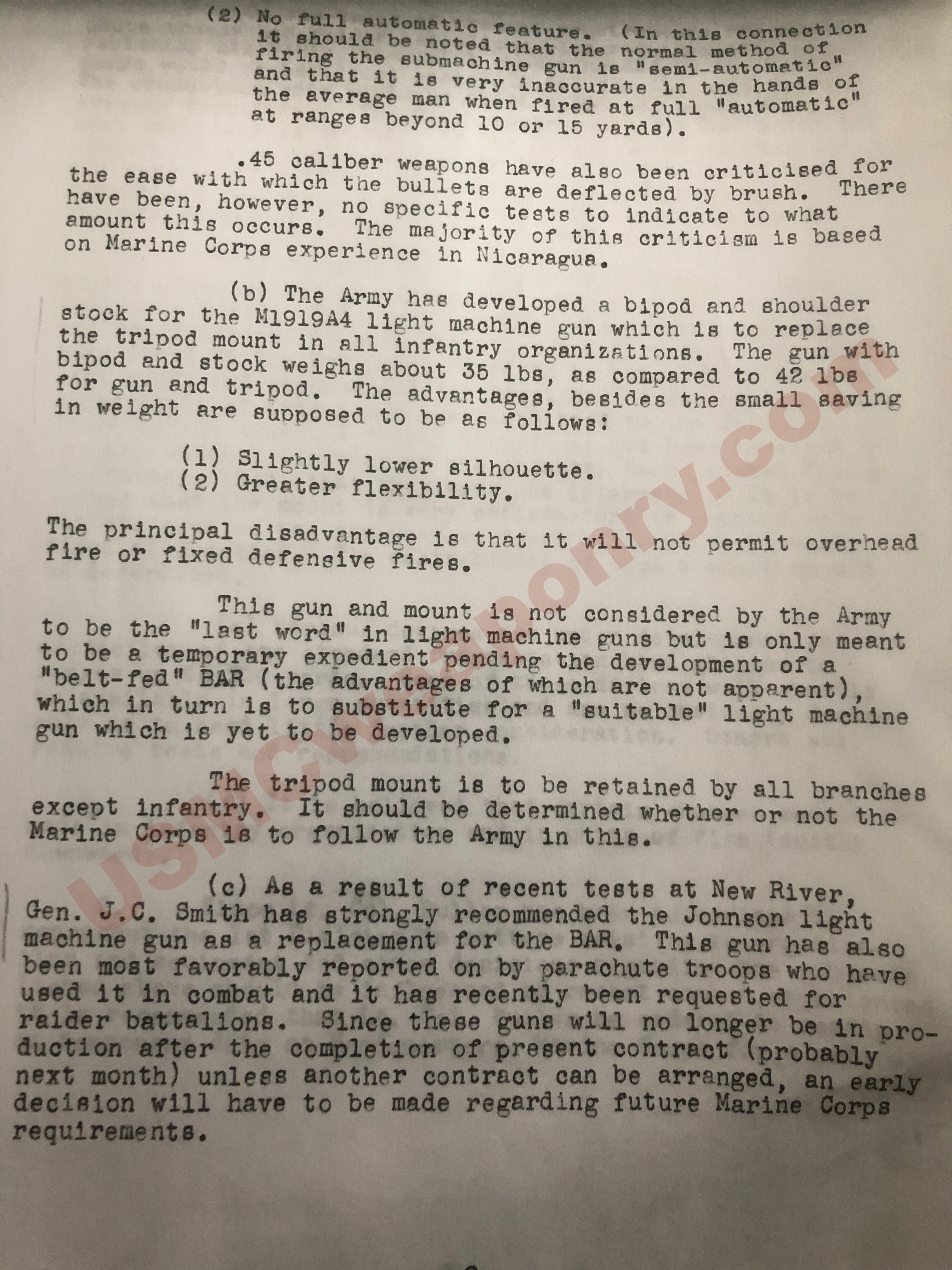
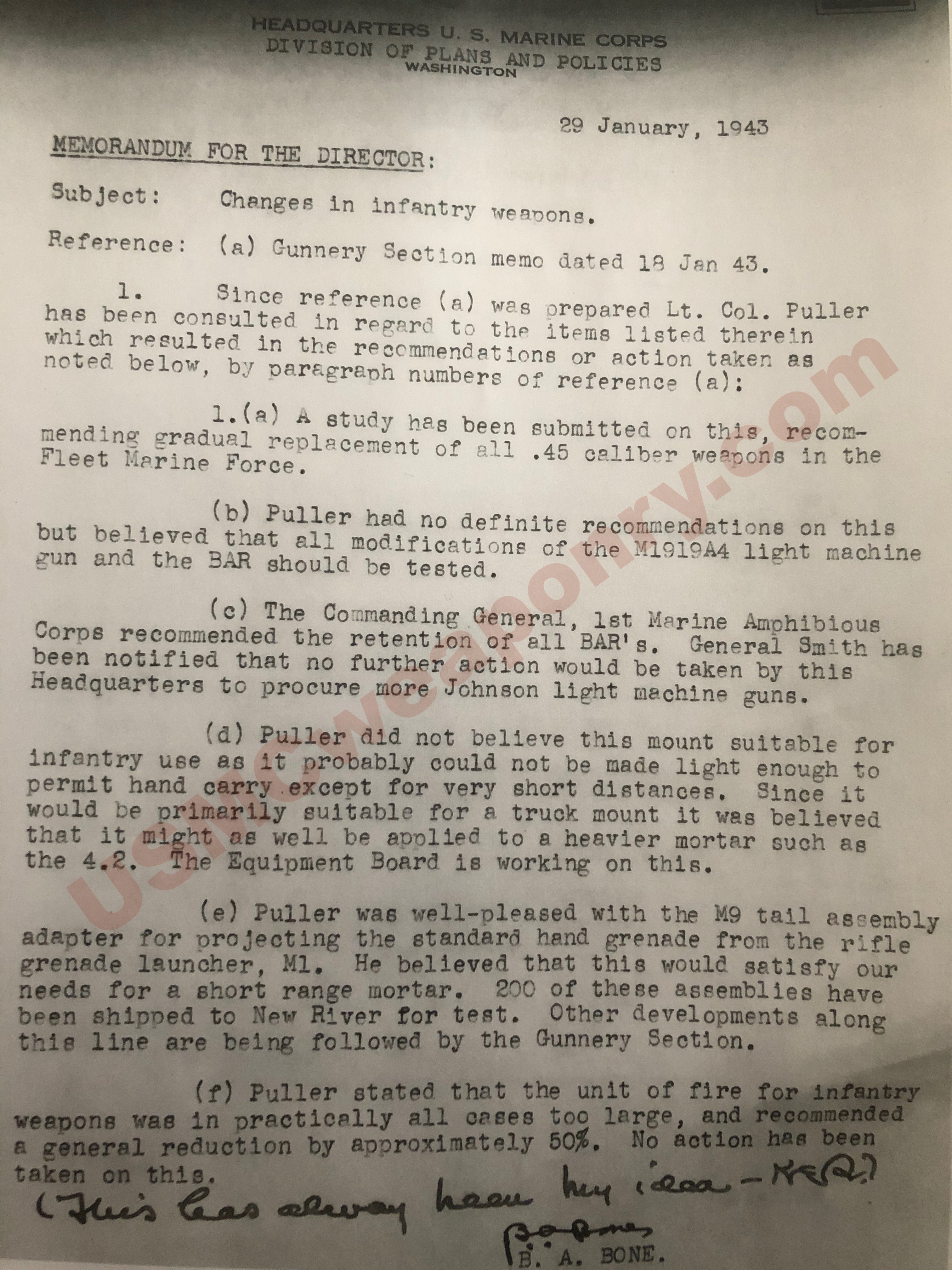
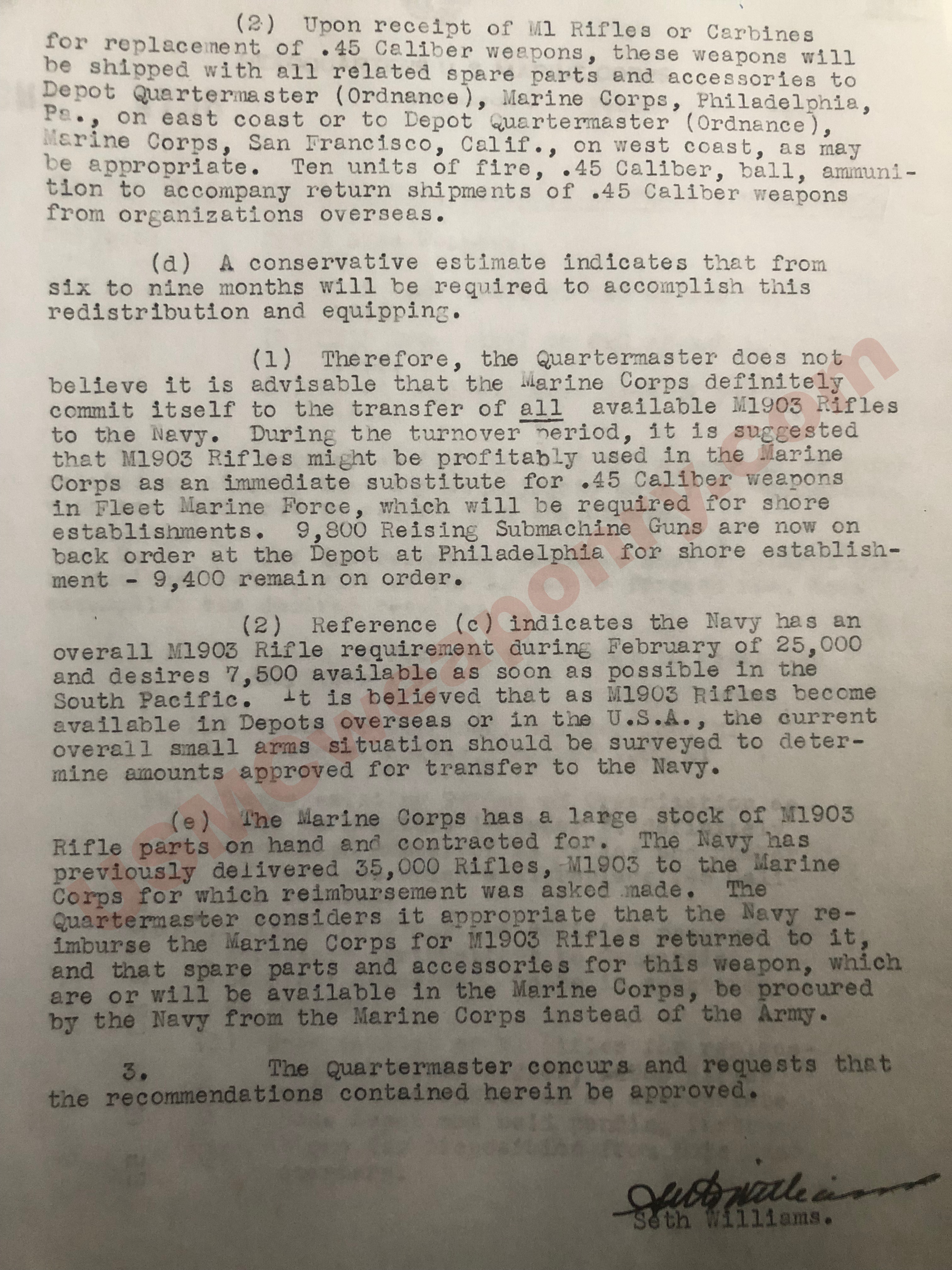
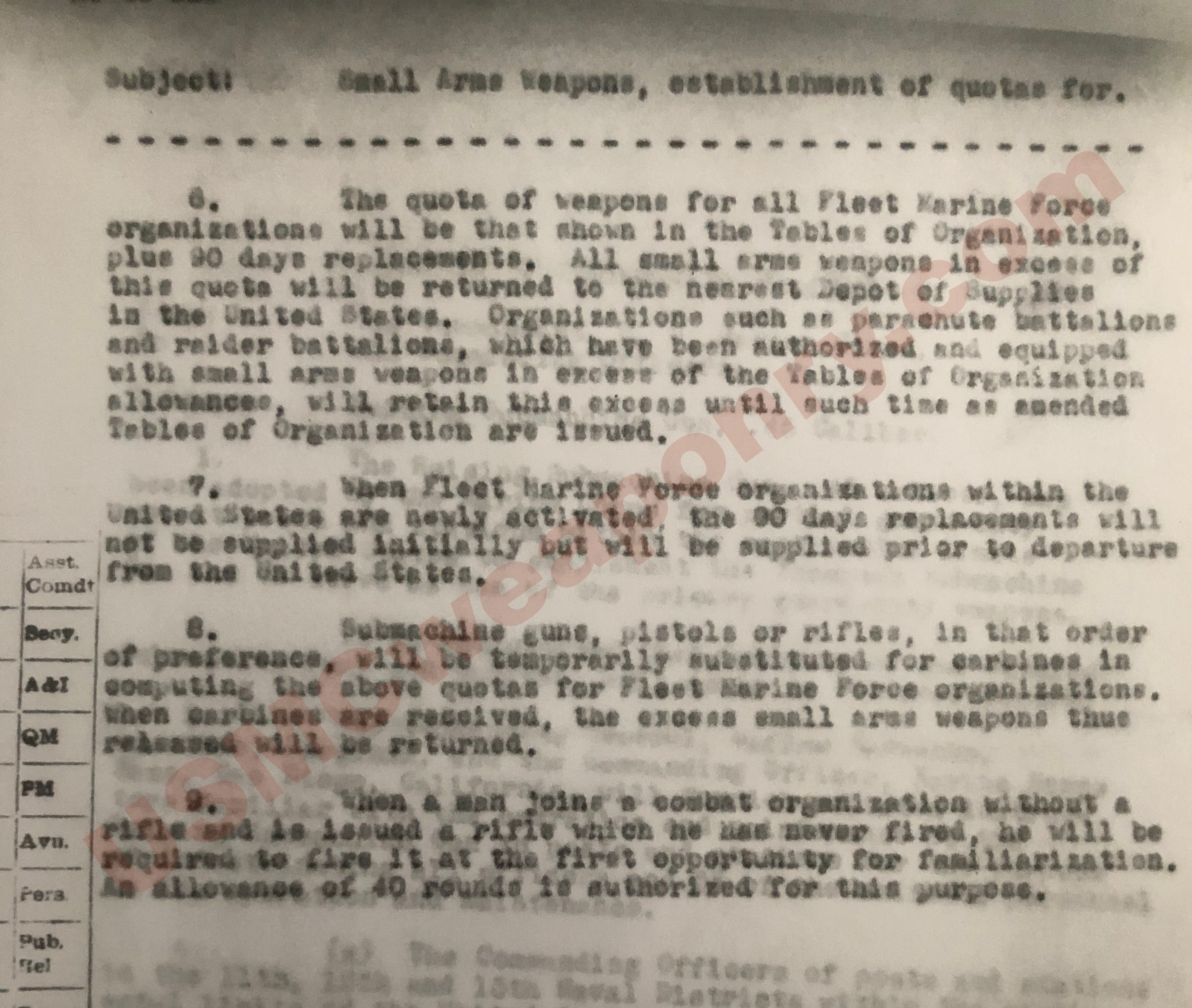
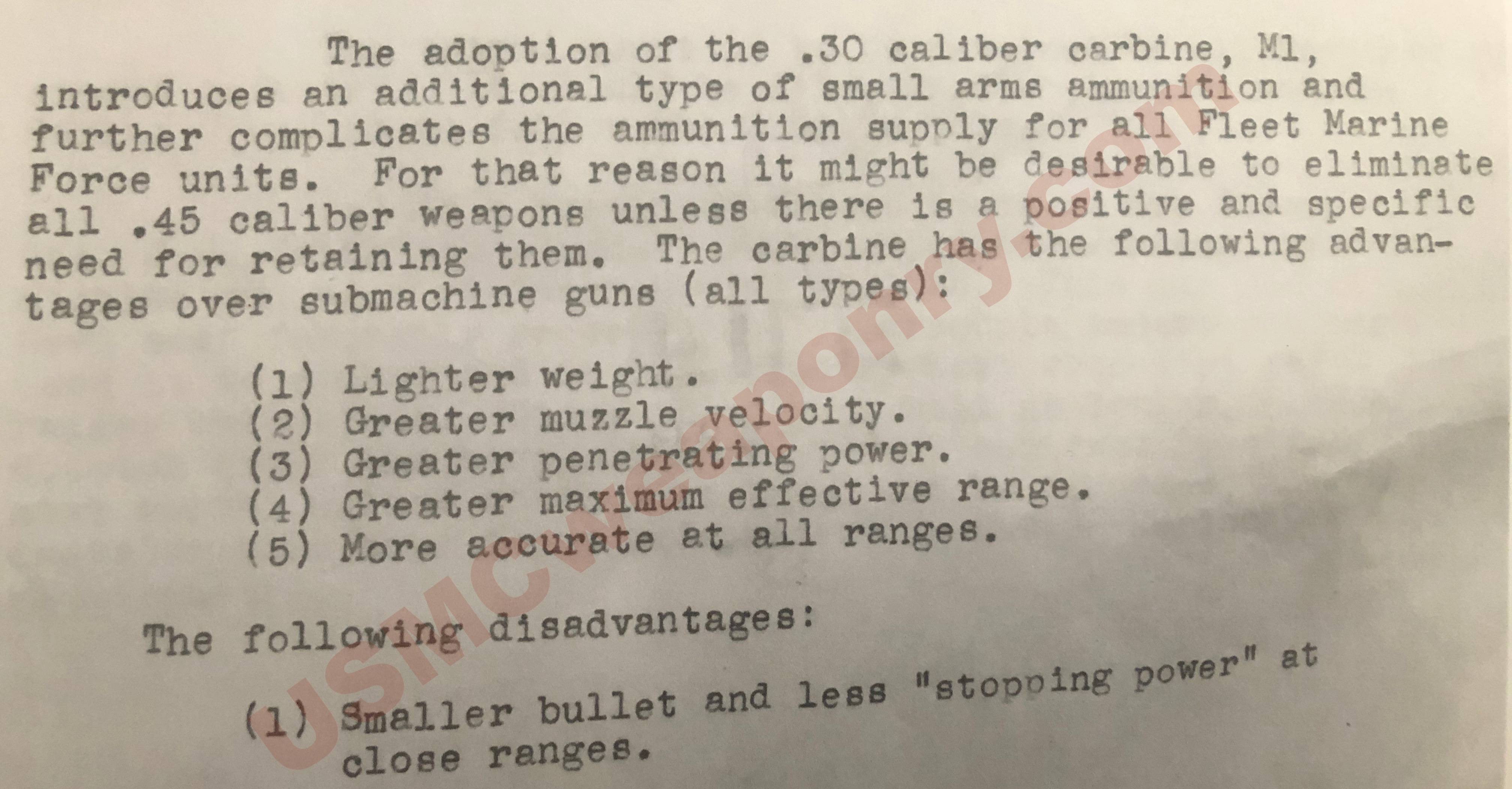
Documents detailing considerations in 1942 to replace the M1911/A1 with the M1 Carbine. These would prove to be impractical, and fall by the wayside (documents: NARA).
As more M1911A1s filtered into the Marine Divisions, some of the few documents that differentiate between M1911s and M1911A1s suggest the older model was become more of a rarity. A 1946 2nd Marine Division report shows only a few M1911s are listed in division reserve compared to a larger amount of M1911A1s. While it is possible this is due to the M1911s having already been issued and the new M1911A1s that were excess to unit needs being set aside as reserve pistols, the high percentage of pistols lost in combat (or sent home as souvenirs) would have left considerable room for the newer pistols to take their place. As with earlier conflicts, many pistols were to be reported as lost in combat or destroyed when in reality they were “acquired” by the Marines who carried them. This issue would become severe enough to warrant directives being issued from the highest levels, hoping to stem the flow of pistols (amongst other American weapons) sent stateside.
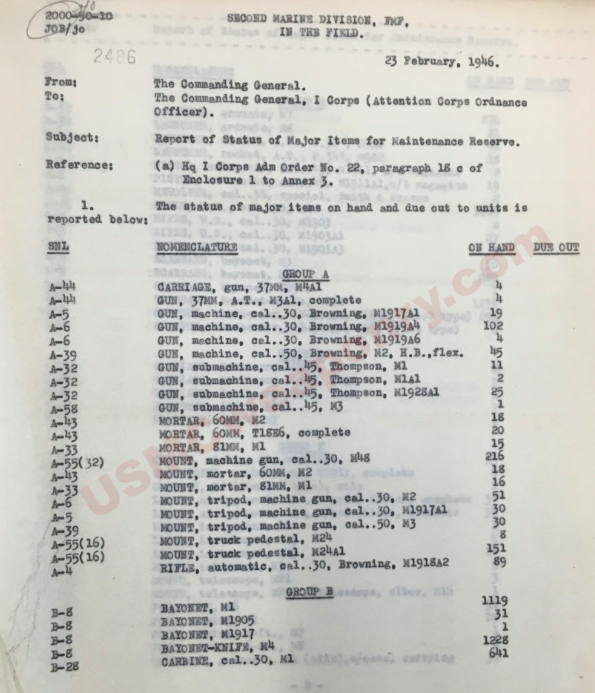
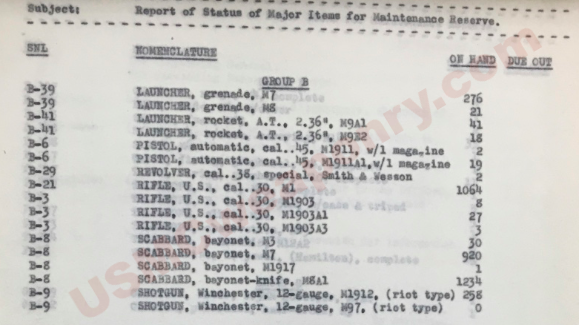
One of the few documents fund thus far that differentiate between M1911s and M1911A1s, from the 2nd Marine Division in early 1946 (NARA).
Although many more M1911A1s were procured by the Marine Corps in World War II than M1911s in World War I, they cannot be easily defined like the sequential serial number blocks of the pre-WWI Colt M1911s. As of now, the only way to identify a non-rebuilt, WWII original USMC M1911A1 is by serial number, and relatively few exist in National Archives documentation. Another equally difficult option is to identify one that was purchased or obtained from the Marine Corps directly and has official documentation to go with it.
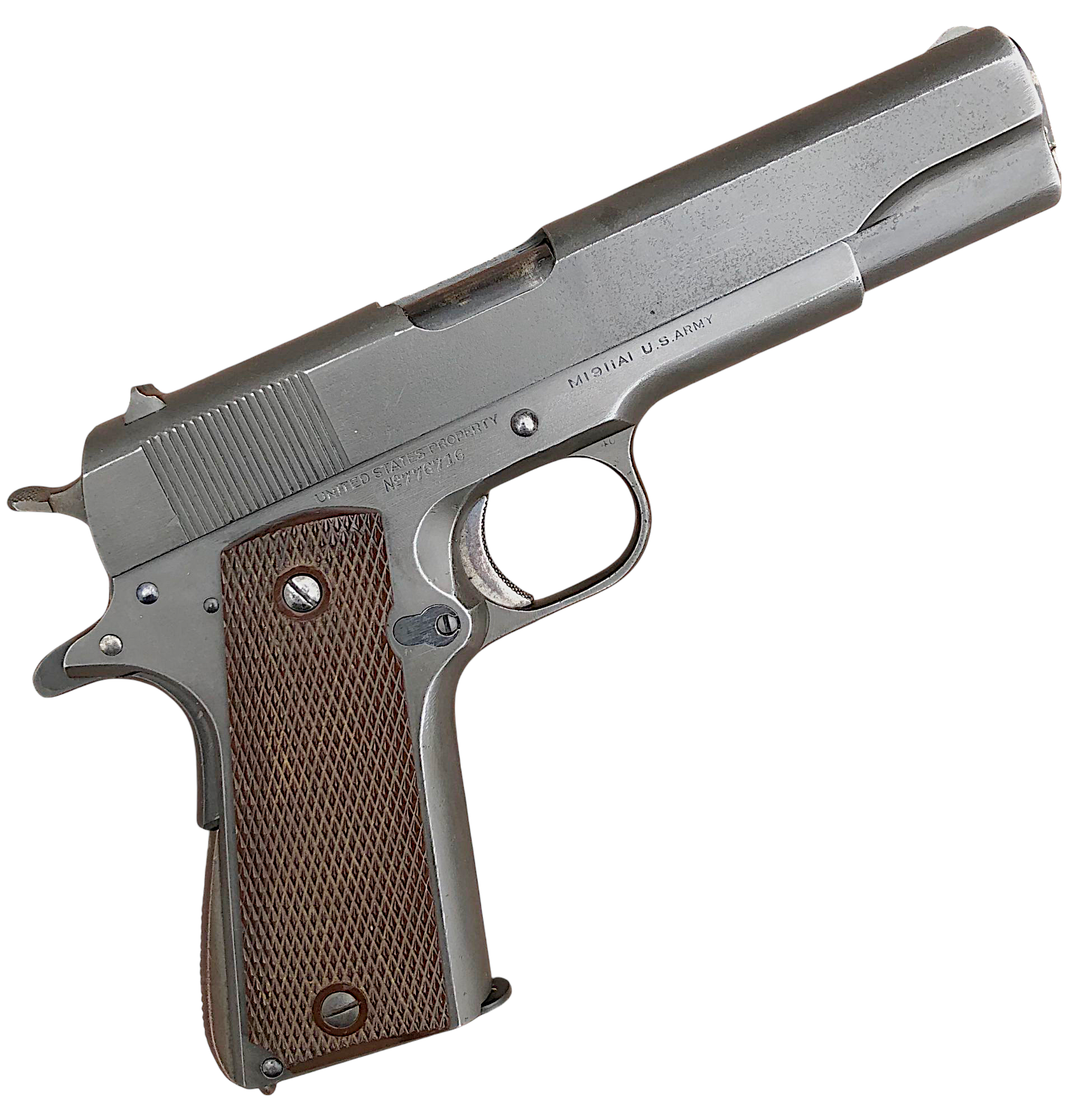
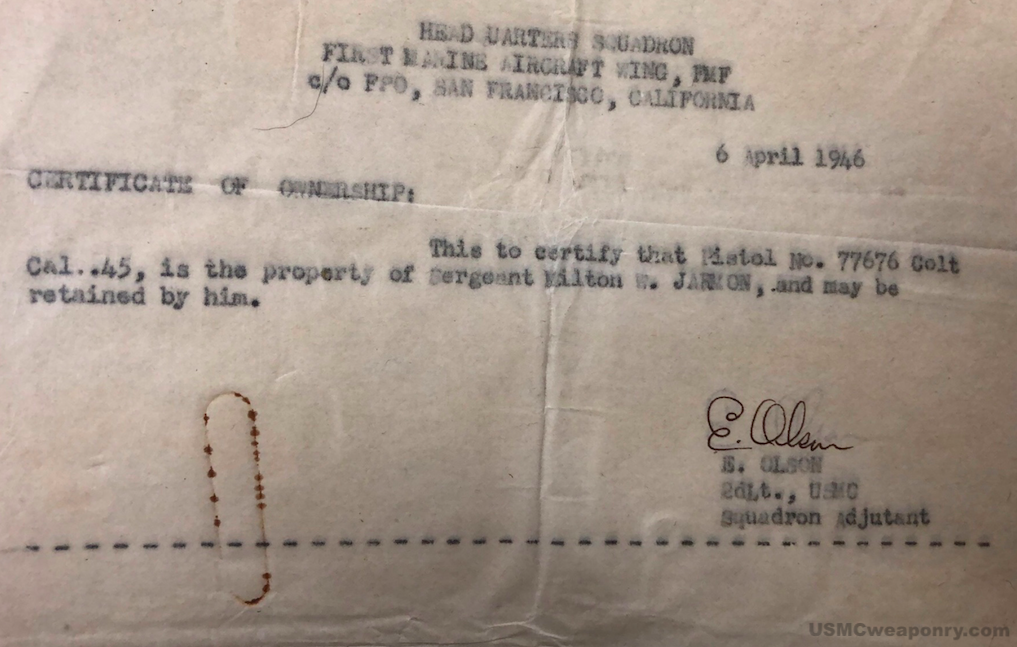
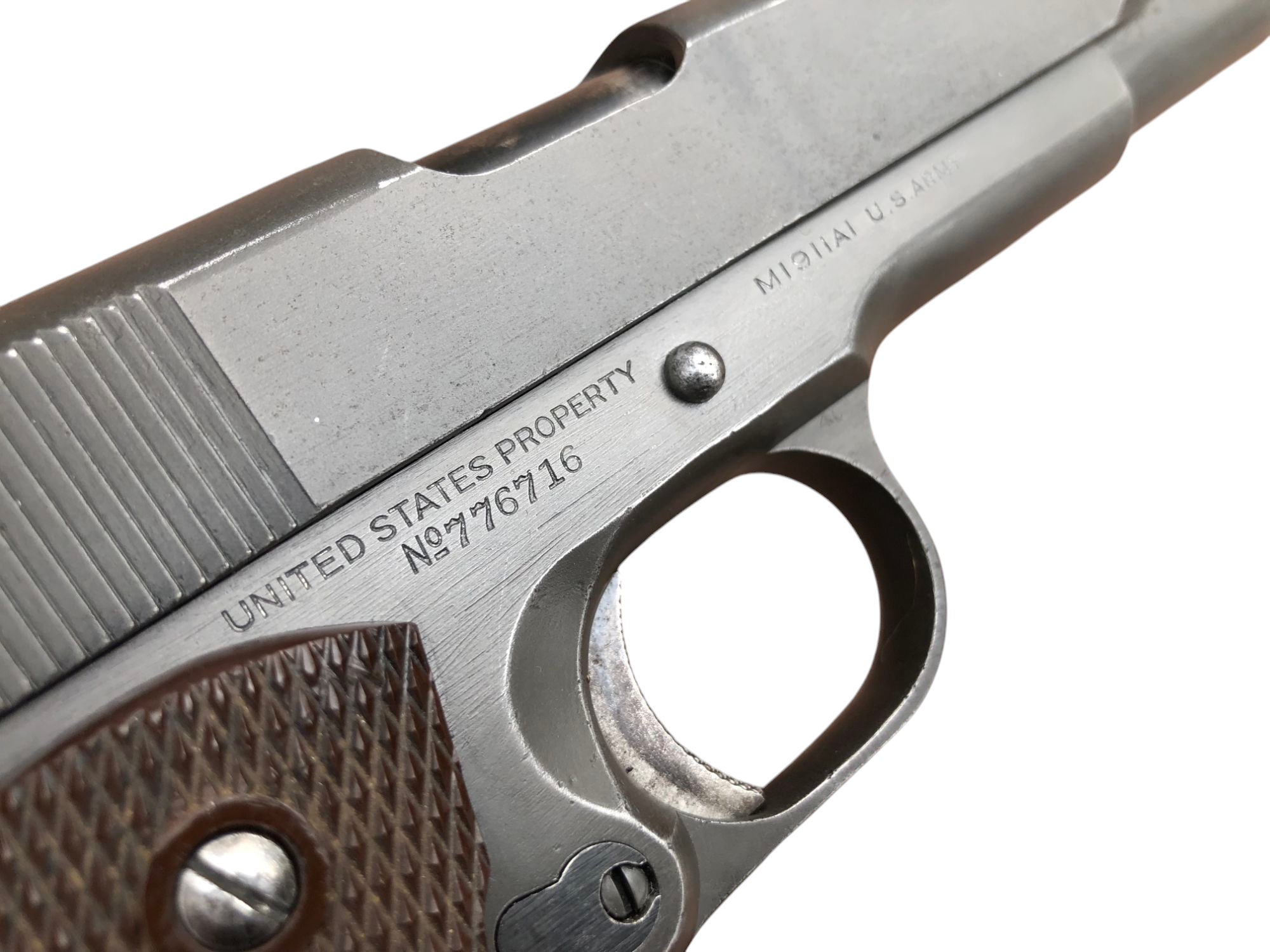
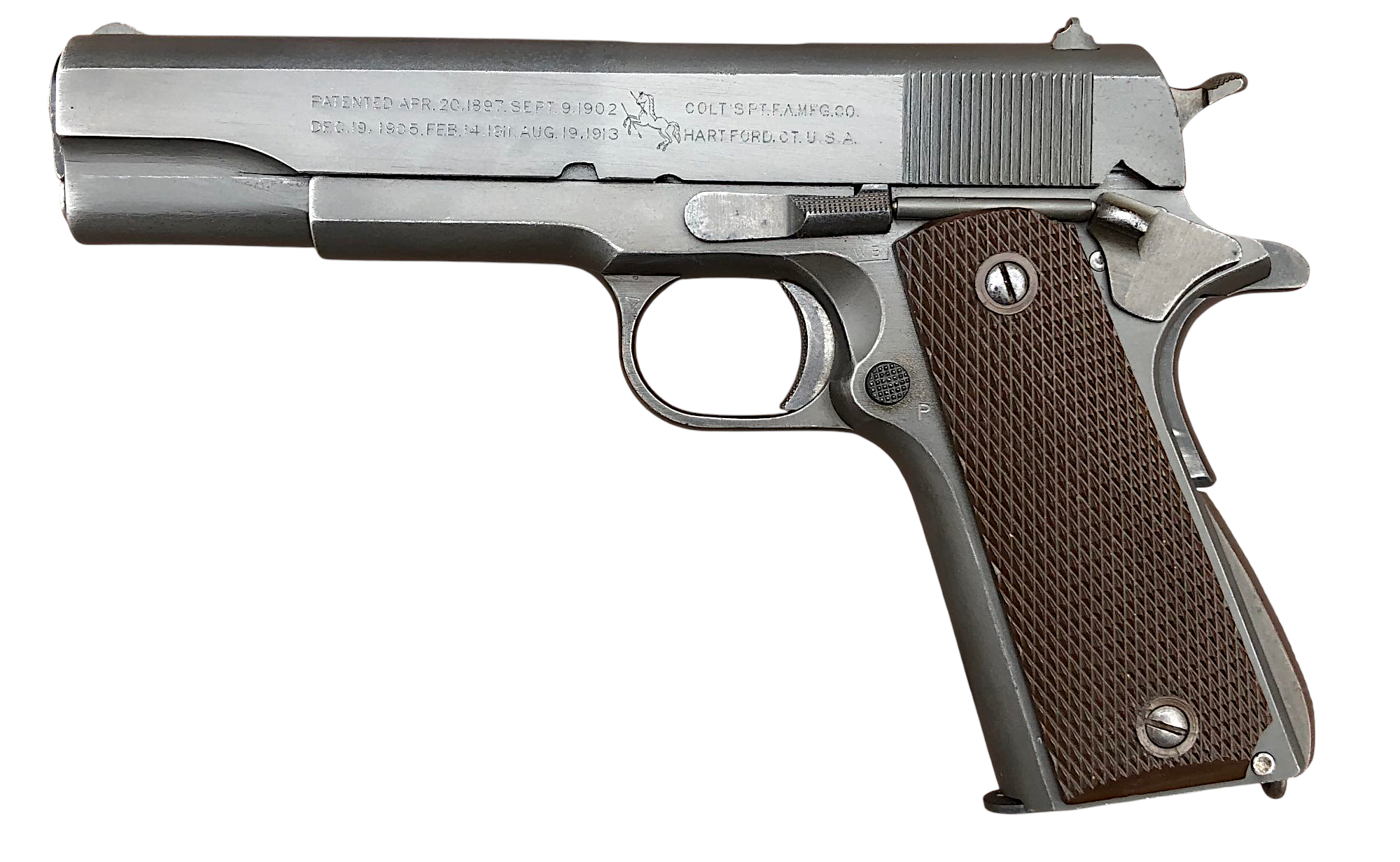
USMC M1911A1 #776716, documented to Sergeant Milton Jarman (Plowman collection).
One of the few USMC M1911A1s with official Marine Corps documentation is #776716. This pistol was retained be Sergeant Milton Jarman, a late World War II Marine. Sgt Jarman held no Military Occupational Specialty, and is listed in muster roles as a 521, Basic Marine. He served as a security guard and driver for Headquarters Squadron, 1st Marine Aviation Wing beginning in the late fall of 1944. His section was tasked with operations in Okinawa, specifically the defense of Yontan Airfield, which was notably attacked by Japanese commandos on the night of May 24th, 1945. While it is unclear if this was Sgt Jarman’s personal pistol, one he picked up from the many Marine casualties that cycled through Yontan, or one he received later while serving with the Marines in the states, he was allowed to keep it as personal property immediately prior to his discharge. The typist who prepared the document for his adjutant to sign off on was sloppy, misspelling Sgt Jarman’s name and omitting the number “1” in the pistol’s serial number, which is unfortunate. However, the totality of evidence makes it clear this was Sgt Jarman’s pistol, and is one of only a handful of documented Marine M1911A1s known to exist. The pistol went through some sort of World War II rebuild, and as such is not original. As per USMC order at that time, small parts were not parkerized.
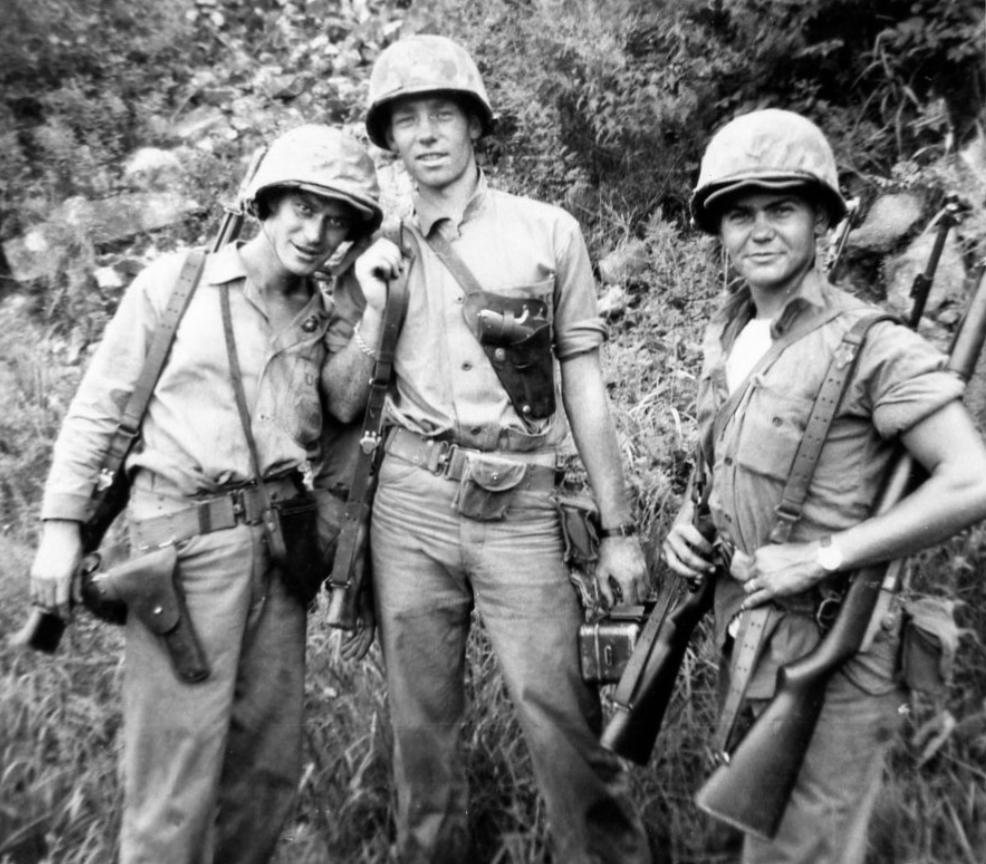
USMC M1911A1s with the 1st Marine Regiment in Korea (USMC).
The Marine Corps would more or less use the same small arms during the Korean War as they had in WWII, and the M1911s or M1911A1s that would be carried by the men of the 1st Marine Division would be no different. Some would still be in their original condition, while others would be rebuilt to various extents with fresh parkerizing and blackened small parts. As such, identifying a Korean War era USMC M1911/A1 is just as difficult as finding one from World War II, with serial number documentation being the only way to prove Marine Corps provenance.
The USMC M1911A1 Rebuilds

The USMC Modified M1911A1
- M1911 frames depot modified with M191A1 finger relief cuts
- M1911A1 mainspring housing
- M1911A1 trigger
- Parkerized finish
- Some modified to say “1911A1”
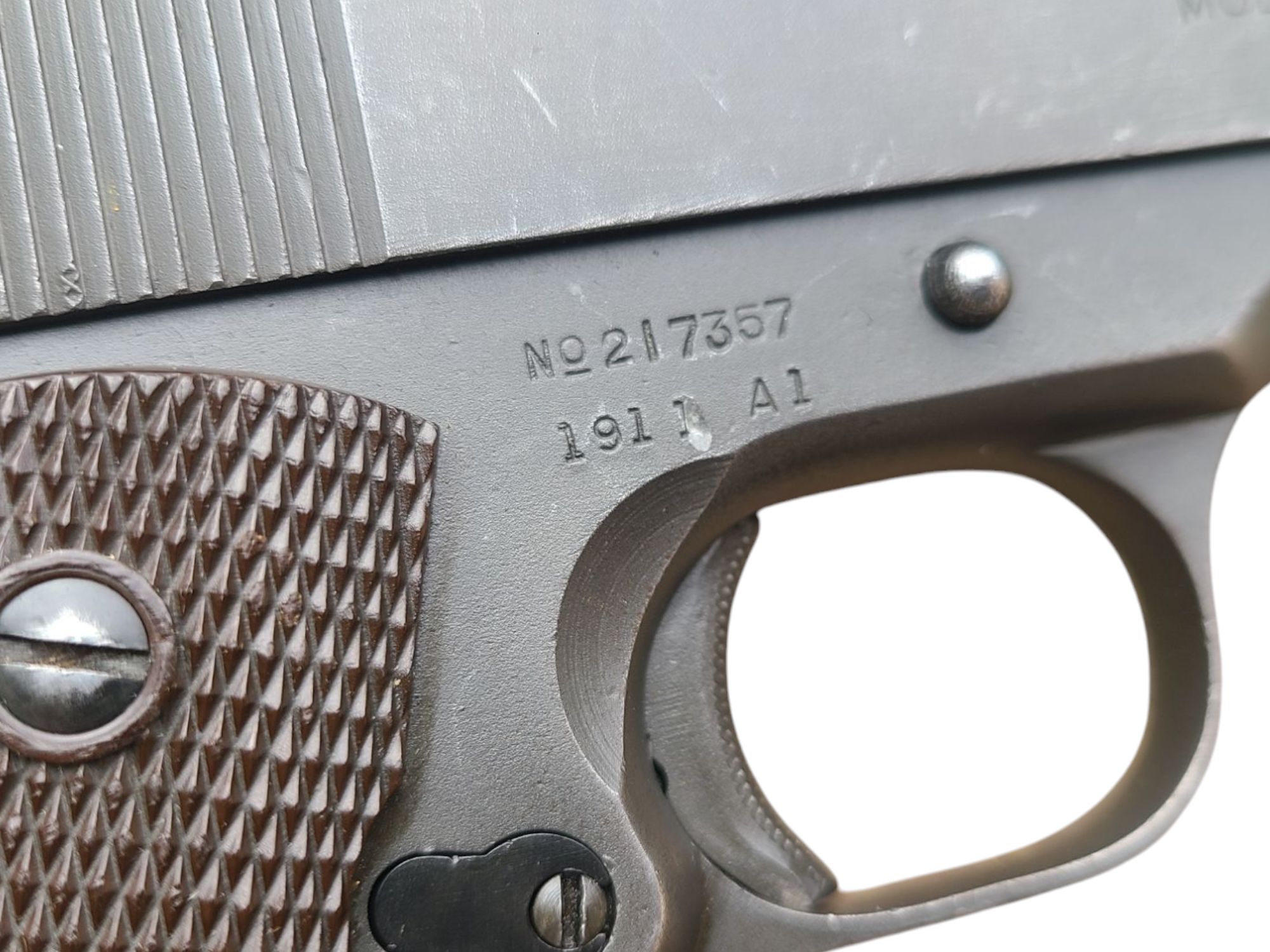


USMC Modified M1911A1 #217357. This pistol was originally delivered to the Marine Corps in very early 1918 as part of the last sequential Colt M1911 contract. It was later modified by the USMC into a M1911A1 for continued service before being auctioned by the Civilian Marksmanship Program in 2022 (CMP).
Identification of Marine M1911A1s has recently improved dramatically, thanks to the Civilian Marksmanship Program (CMP) and their sales of M1911s to the public. The characteristics of rebuilds from the 1950s and beyond has provided collectors an avenue for USMC M1911A1 identification. Just as was done on M1 Garands, pistols rebuilt by the Marines in this time period would have an “O” (standing for Overhaul) electropenciled onto the frame, followed by a dash and the last two digits of the year the overhaul took place. Later rebuilds would denote which of the two Marine Corps Logistics Base level five repair depots they were rebuilt at, with an “A” for Albany, or a “B” for Barstow added behind the “O”.
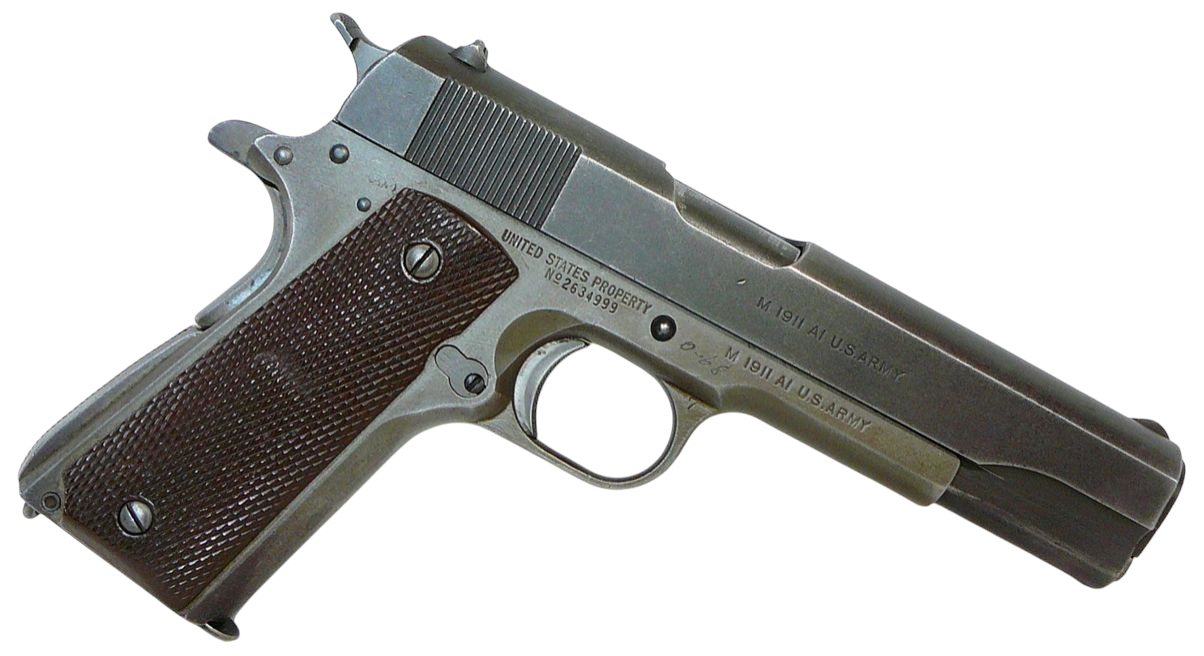
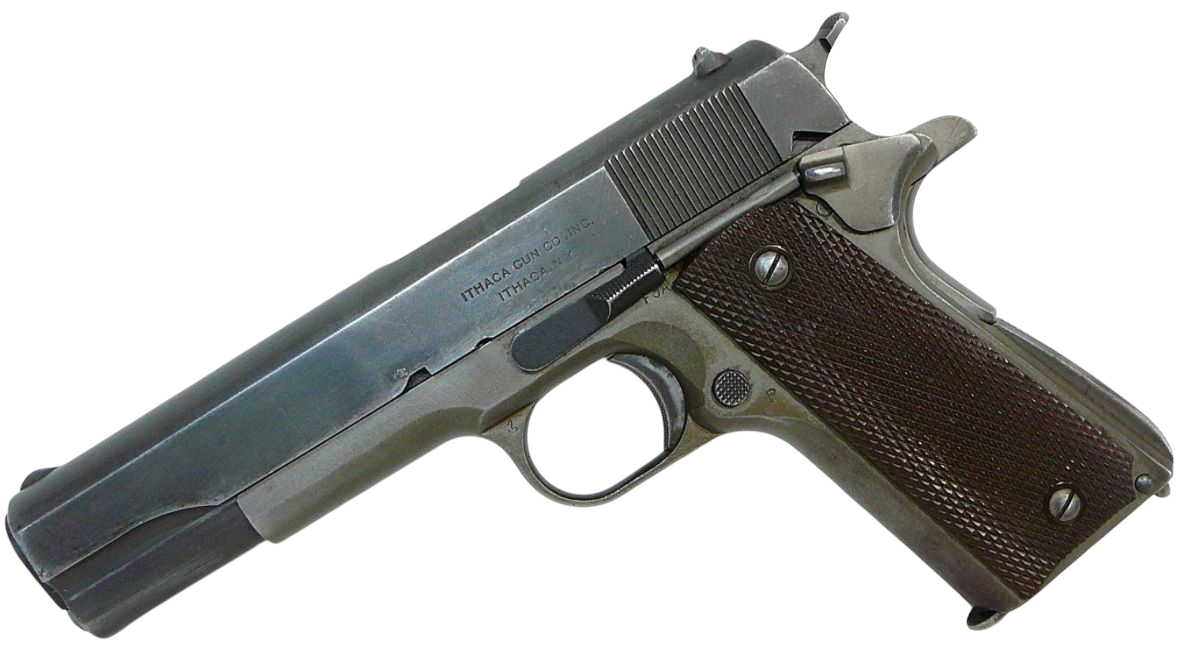
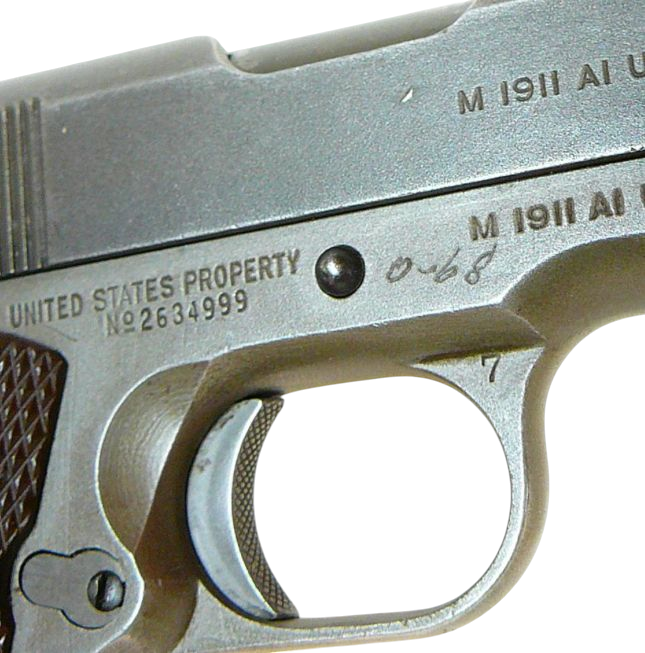
During Vietnam era, the Marine Corps would electropencil an “O” for Overhaul, followed by a dash and the last two digits of the year the overhaul took place. This Ithaca M1911A1 was rebuilt buy the Marine Corps in 1968 (Norton collection).
The CMP M1911A1s have shown us that the Albany and Barstow would diverge in the way they marked their rebuilds in the late 1970s. While Barstow would continue marking their rebuilds “OB-xx” via electropencil, Albany would forgo electropencil use and begin stamping M1911A1 frames with”A-xx” in block letters.

USMC M1911A1 Overhauls
Marine Corps Logistics Base Albany
Marine Corps Logistics Base Albany M1911A1 Rebuild Timeline
Mid – Late 1960s
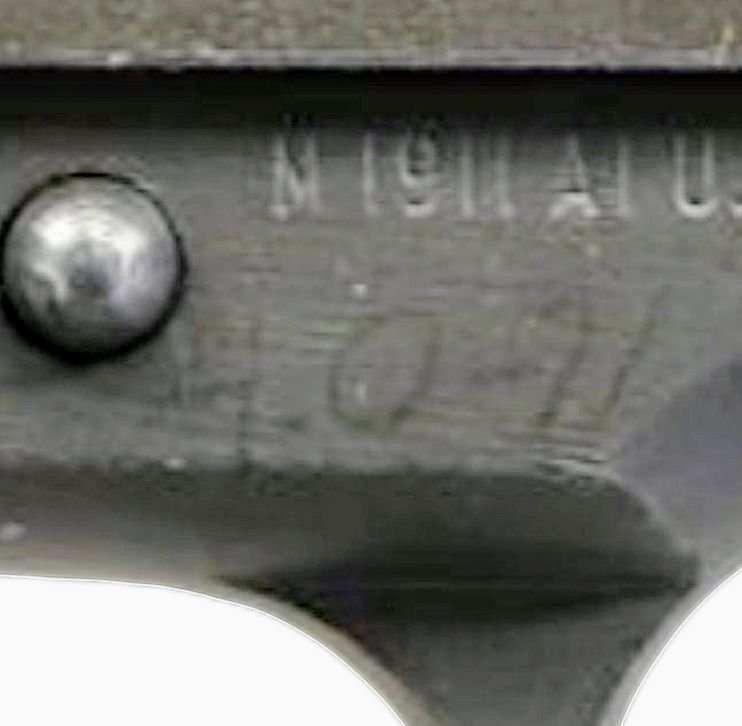
Initially electropenciled “O-6x” depending on the year (example: “O-68” for Overhauled 1968), no difference between Barstow markings.
Eventually marked “OA-6x” or “A-O-6x” to differentiate between Barstow rebuilds.
Early 1970s
Electropenciled “A-O-7x” depending on the year (example: “A-O-71” for Albany Overhauled 1971).
May have been electropenciled “OA-7x” as well – this has been observed on other weapons systems.
Mid 1970s
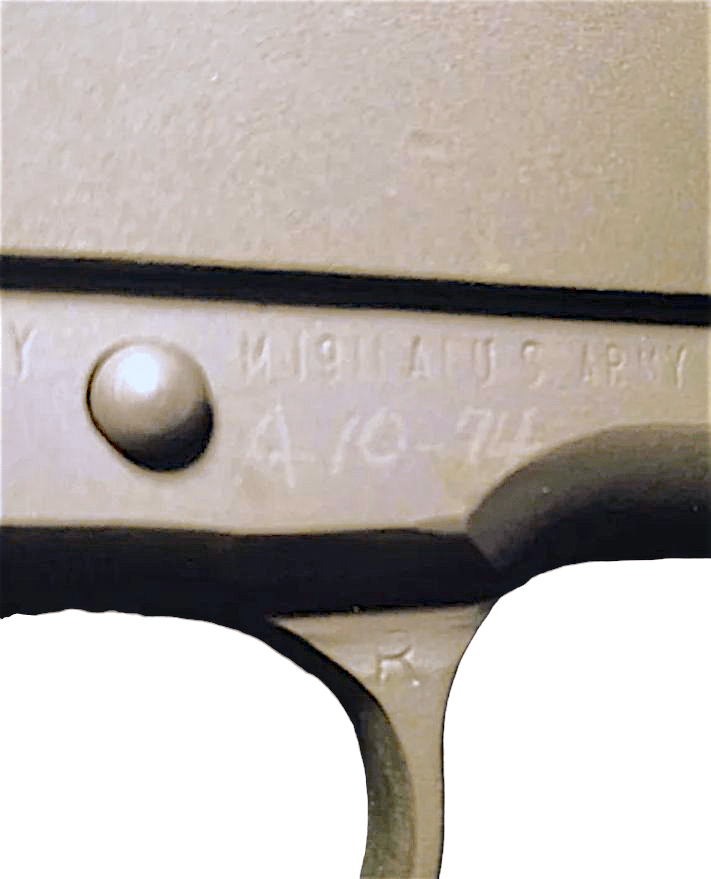
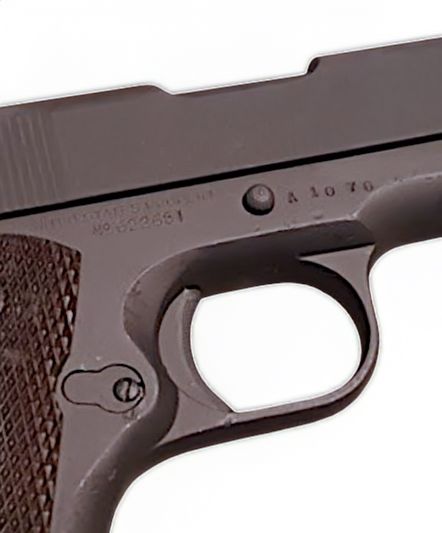
First use of the standalone “A” followed by digits representing the month and last two digits of the year (example: “A 10-74” for Albany, October 1974), until the end of 1911A1 rebuilds around 1986.
Late 1970s
Stamped “A” followed by digits representing the month and last two digits of the year (example: “A 10 76” for Albany, October 1976).
1980s
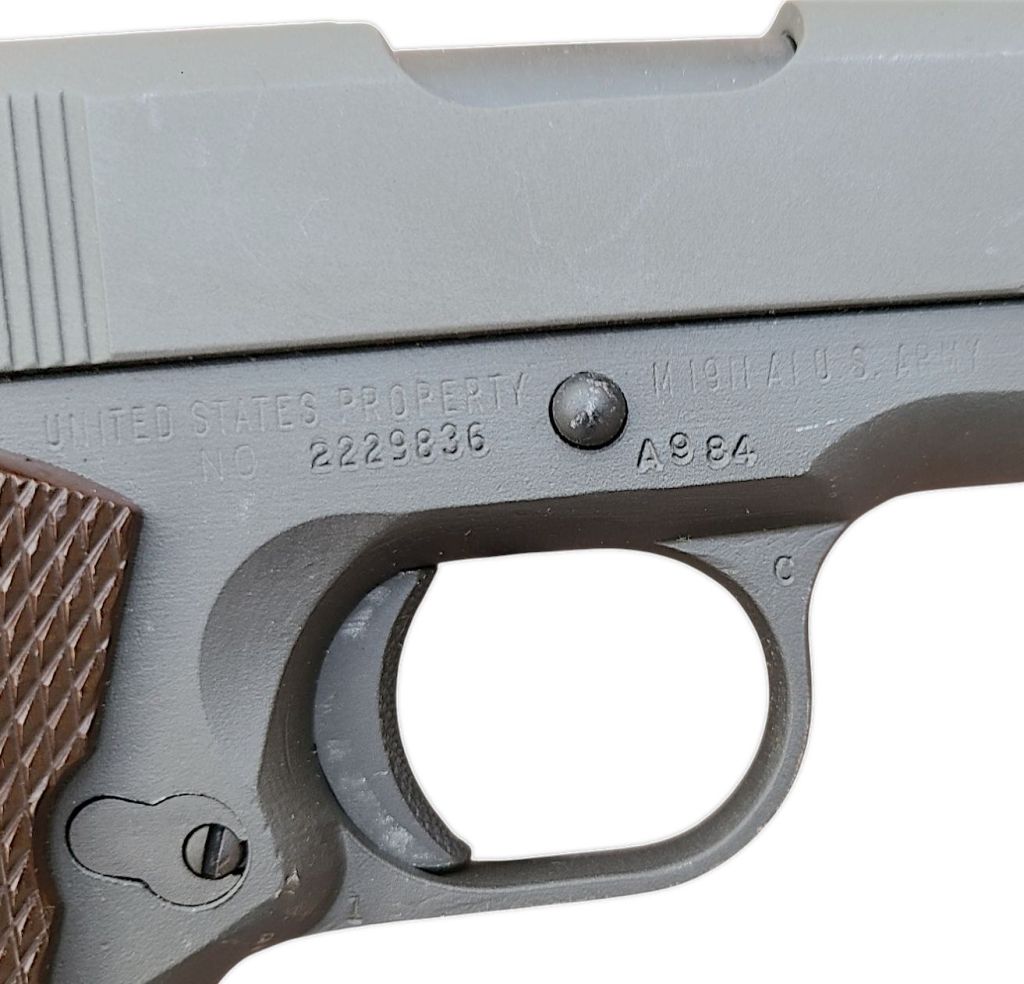
Continued use of stamped “A” followed by digits representing the month and last two digits of the year (example: “A 9 84” for Albany, September 1984), until the end of 1911/A1 rebuilds around 1986.
USMC M1911A1 Overhauls
Marine Corps Logistics Base Barstow

Marine Corps Logistics Base Barstow M1911A1 Rebuild Timeline
Mid – Late 1960s
Initially electropenciled “O-6x” depending on the year (example: “O-68” for Overhauled 1968), no difference between Albany markings.
Eventually marked “OB-6x” to differentiate between Albany.
1970s
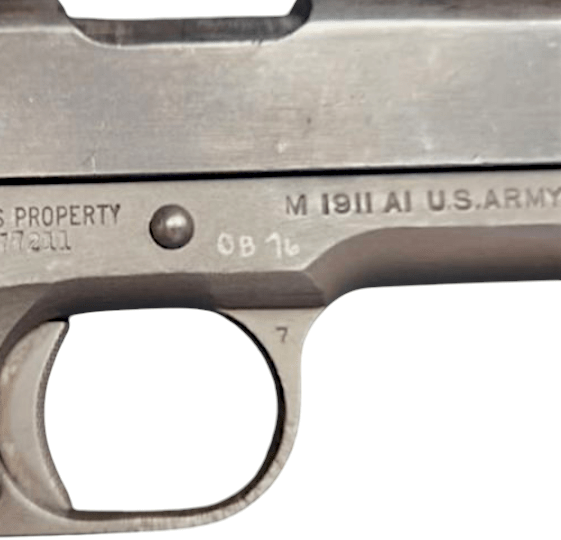
Electropenciled “OB” followed by the last two digits of the year (example: “OB-76” for Overhauled Barstow 1976).
1980s
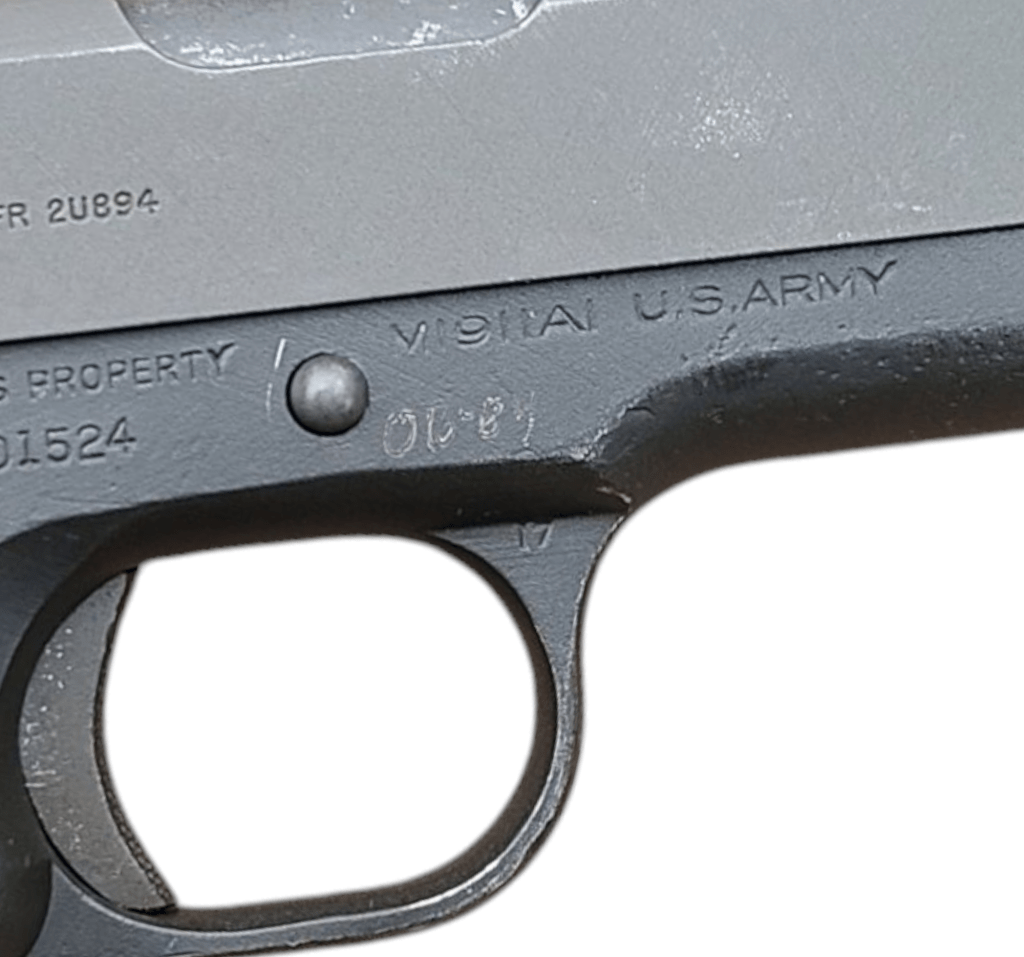
Continued use of electropenciling “OB” followed by the last two digits of the year (example: “OB-84” for Overhauled Barstow 1984).
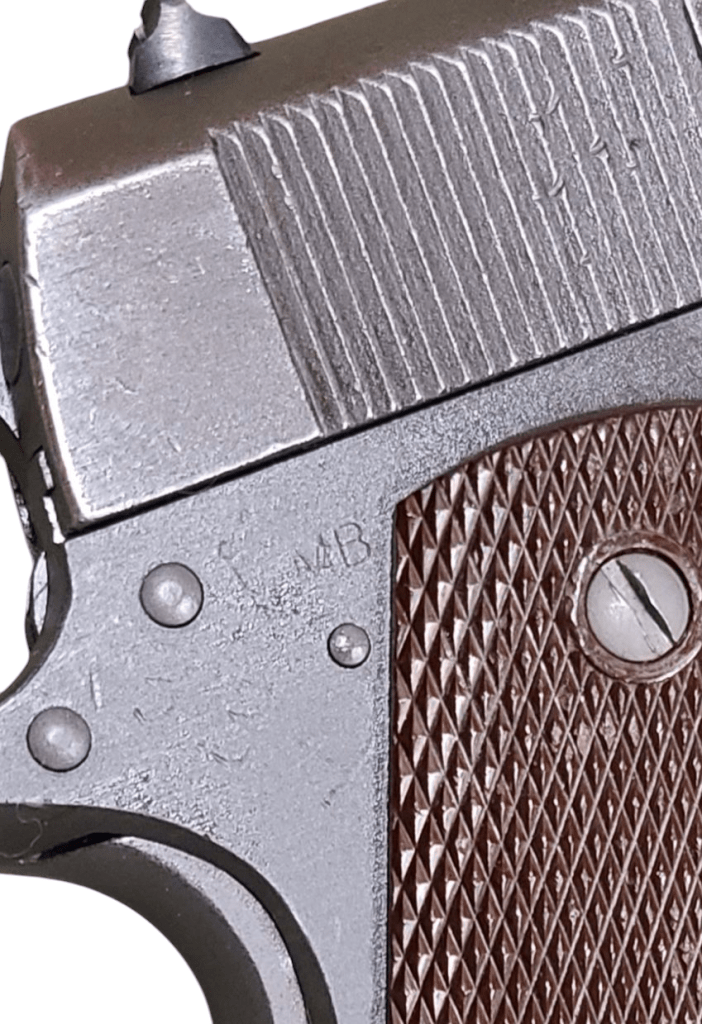
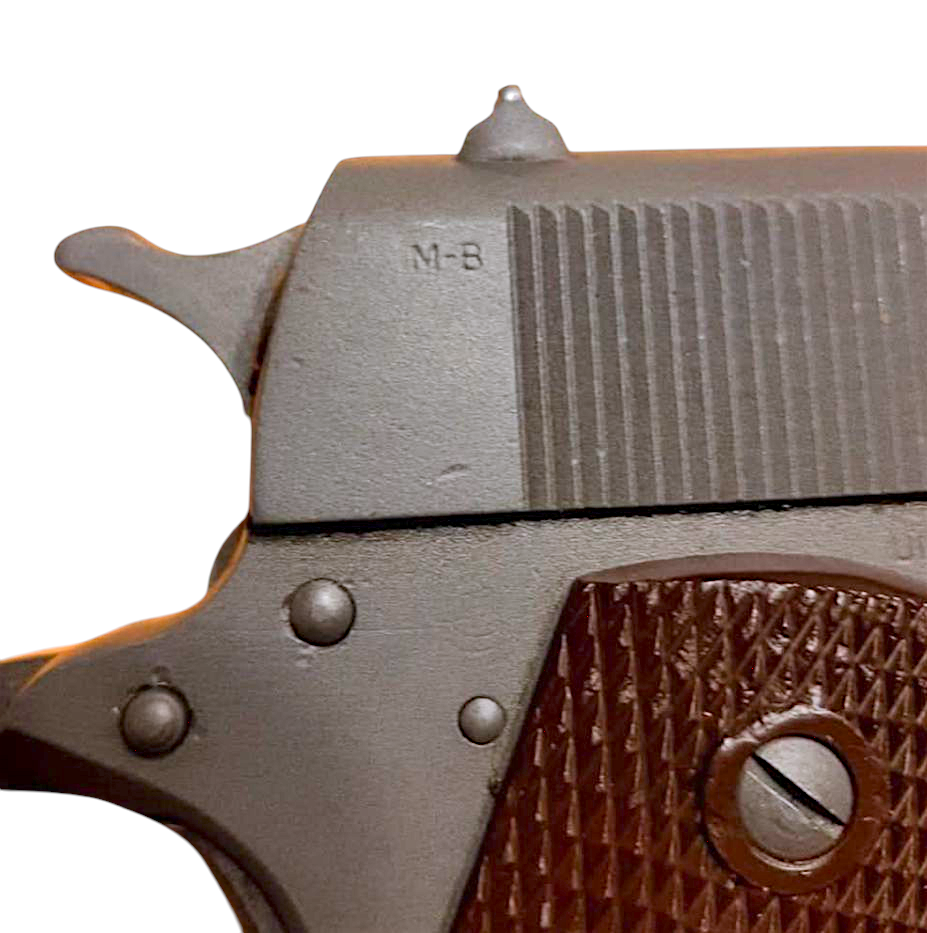
M-B Stamps
Often marked “M B” of “M-B” on the frame, slide, or both with a presumed meaning of “Magnafluxed Barstow”, denoting successful passage of a magnetic particle inspection.
It is important to note that not all USMC M1911A1s were rebuilt at Albany and Barstow, and those requiring less work could have been serviced at lower level facilities. Many Freedom of Information Act (FOIA) requests have shown Marine Corps provenance on recently sold CMP pistols with no rebuild markings whatsoever. Beyond pistols that can only be proven by FOIA, an interesting and very likely USMC association in M1911s involves the circled-S “Sedgley” marking seen on some frames and slides. The style of of the circled-S is similar to the point of near certainty, and it is well documented that the Sedgley Corporation, located in Philadelphia by the USMC supply depot, had a long history of business with the Marine Corps. While no definitive proof has been found in any documentation as of yet, there is a very strong chance these pistols were either rebuilt for the Marine Corps at Sedgley, or more likely sold to them as surplus following World War II. The sale theory seems the most logical, as the Marine Corps had a significant amount of M1911A1s after the war ended, and almost all circled-S examples are M1911s. Further increasing this likelihood, archival documentation shows the Marine Corps Depot in Philadelphia had auctioned off surplus M1903s in the years between the World Wars and Sedgley’s proximity to the Depot would have made them a very likely buyer. The purpose of the circled-S marking may have been to signify these were surplus pistols, and not stolen from the government.
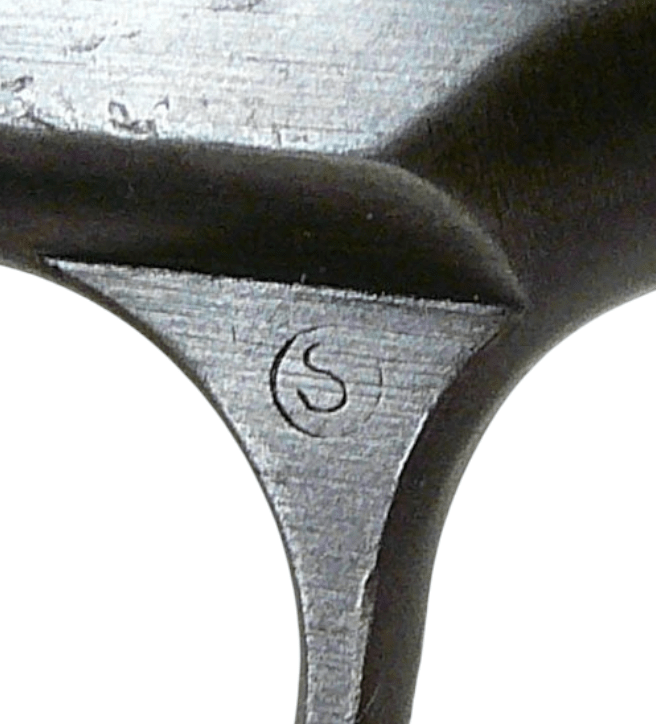
USMC-Likely “Sedgley” Circled-S M1911s
- Circled-S marking is identical to that of Marine Corps contractor Sedgley.
- Seen on M1911s in serial number ranges associated with the USMC, most often 1918 & 1919 production.
- The only other markings observed have been an “AA” on the left side of the frame, with unknown meaning.
- Highly likely to have been sold to Sedgley at auction by the USMC following World War II.
- Still unverified in documentation.
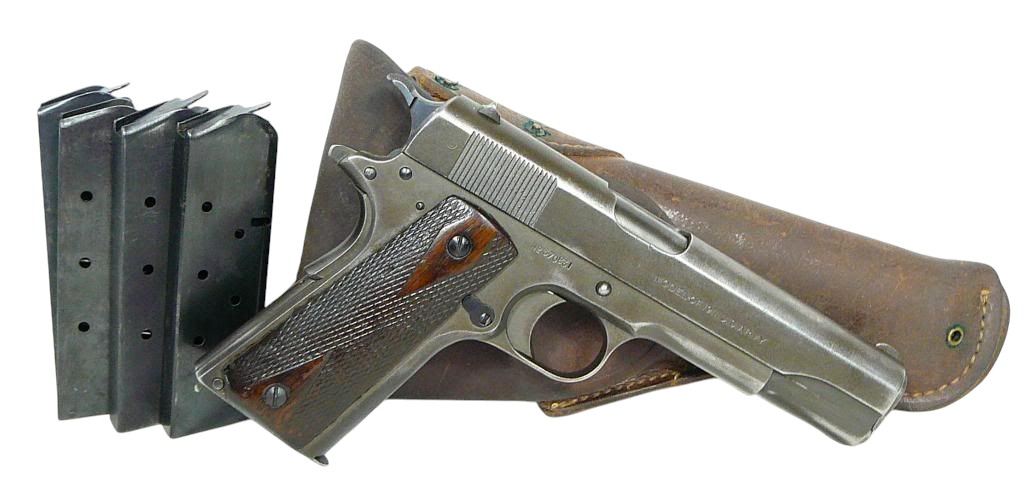
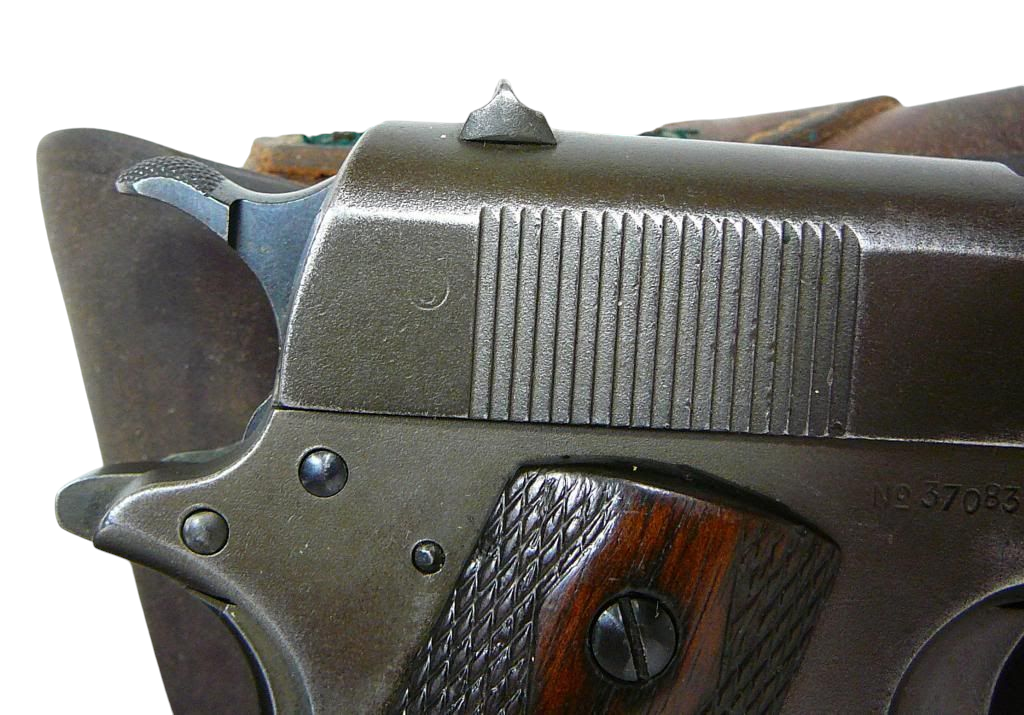
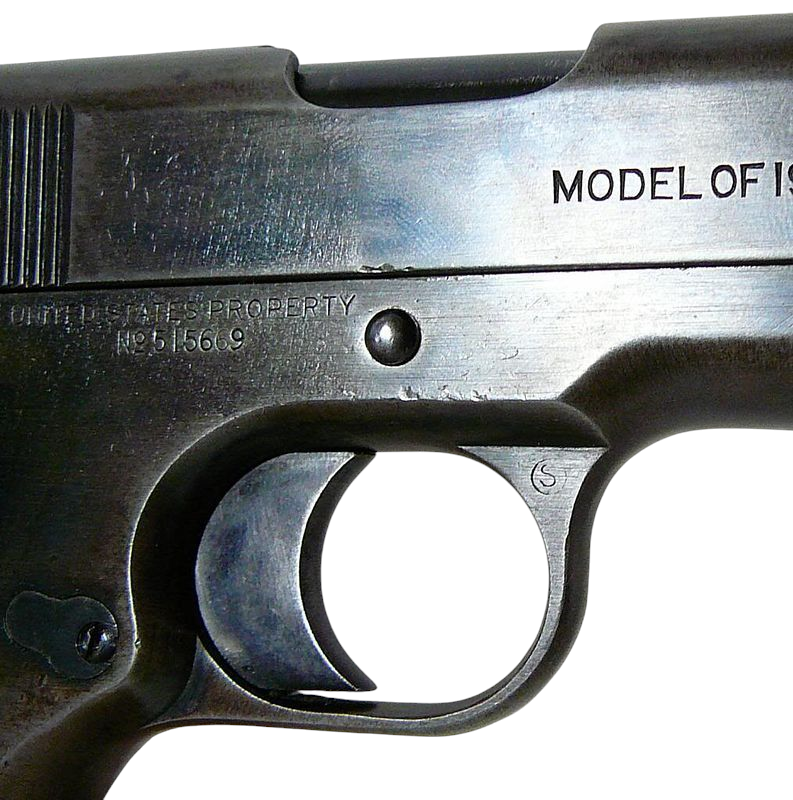
Examples of Sedgley marked M1911s, very likely connected to the USMC (Norton collection).
 USMCWEAPONRY.COM