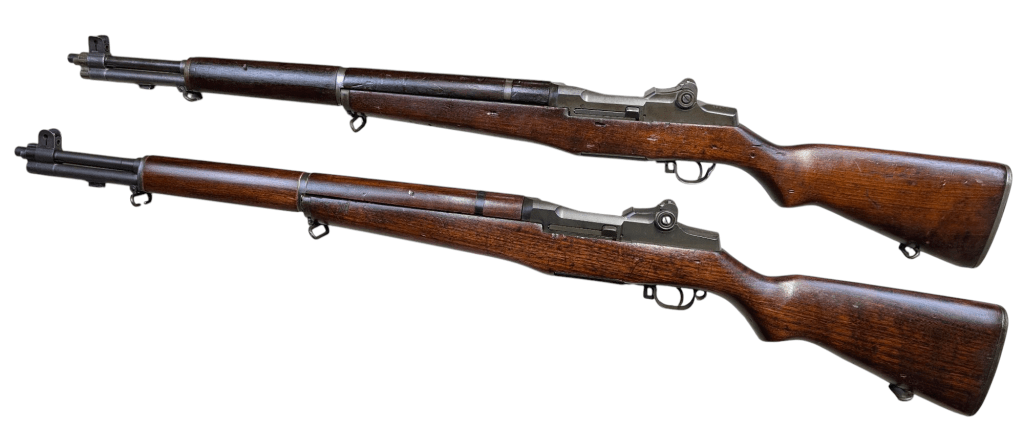
THE TYPE I USMC MATCH CONDITIONED M1 GARAND
Prior to World War II, the Marine Corps had received new Springfield Armory National Match Model 1903 rifles every year before the National Matches at Camp Perry, Ohio; making only relatively minor modifications before the matches began. The Marine Corps would take an entirely different approach with in-house built Match Conditioned M1 Garands due to the nature of competitive rifle matches in the post-WWII era. When matches resumed after World War II, the National Board for the Promotion of Rifle Practice (NBPRP) rules dictated that match M1 Garands be practically indistinguishable from those of standard issue. No National Match M1 Garands were rolling off the line at Springfield Armory, leaving the services (and all competitors for that matter) to tune their M1s themselves.
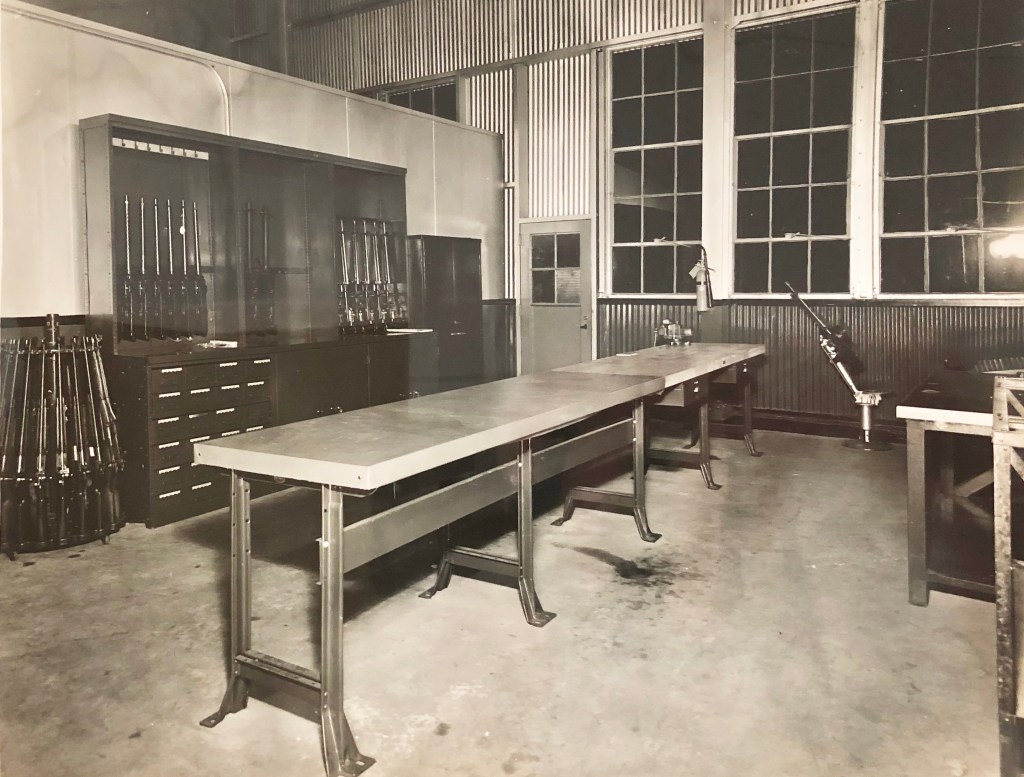
USMC Armory with Match Conditioned rifles in the background (USMC History Division Archives).
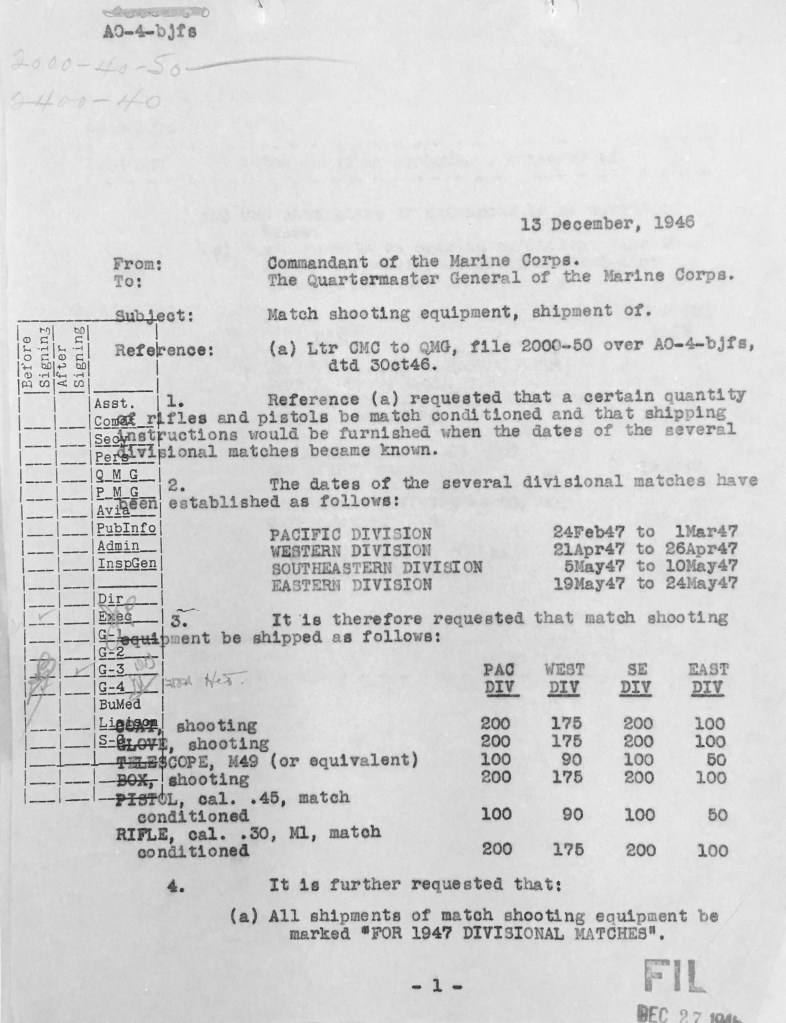
Request for match-conditioned M1 Garands to be assembled and dispersed for Division matches following World War II (NARA).
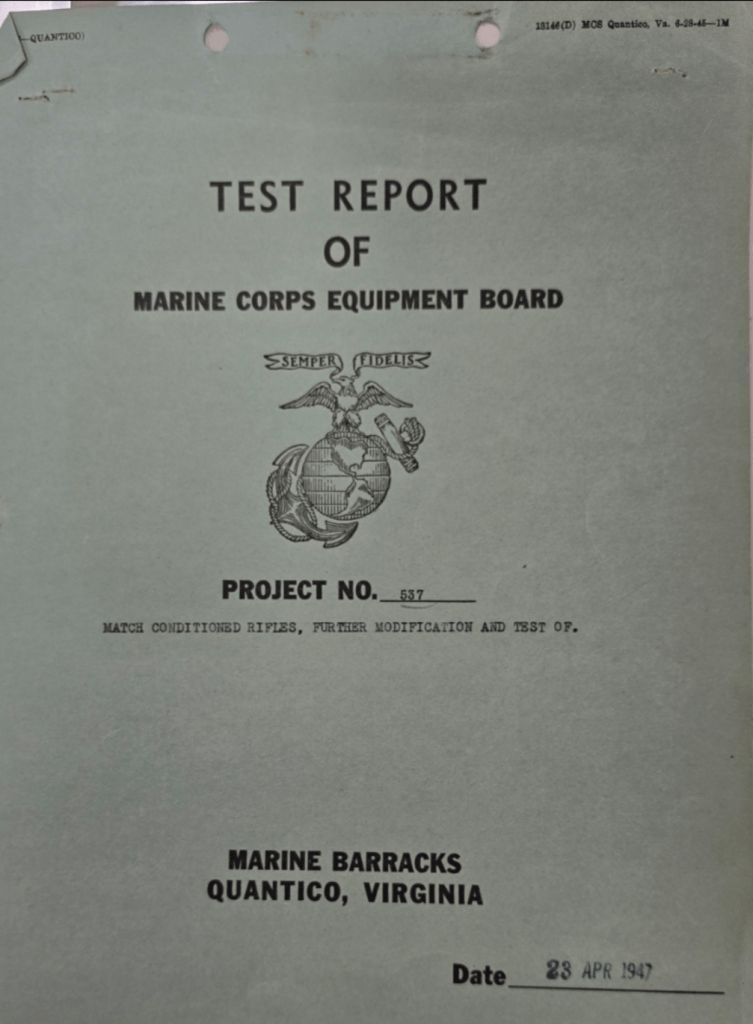
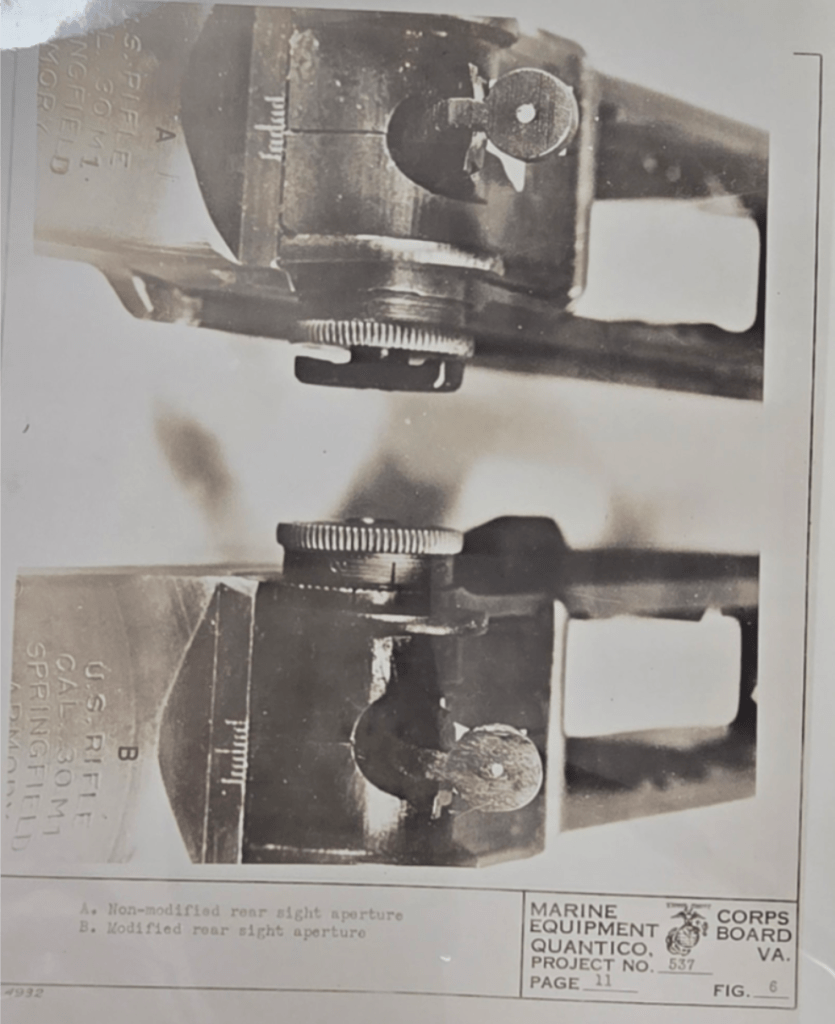
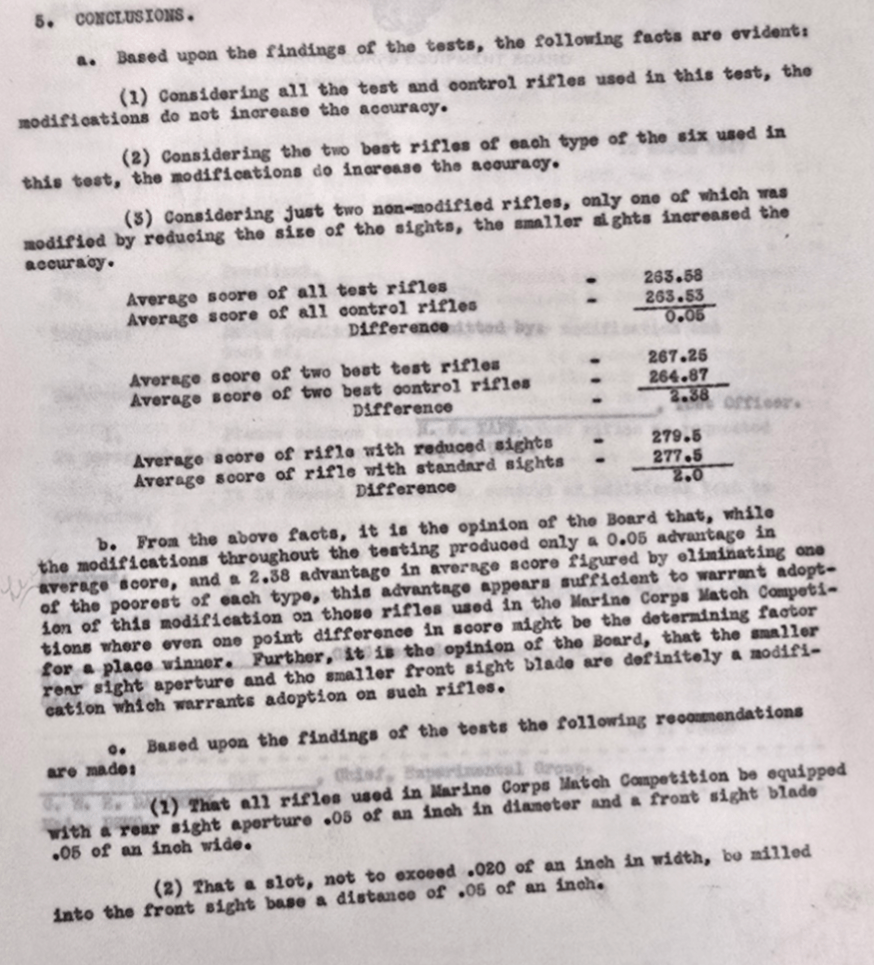
The Marine Corps began testing modified M1 Garands in 1946, with special considerations to improving accuracy.
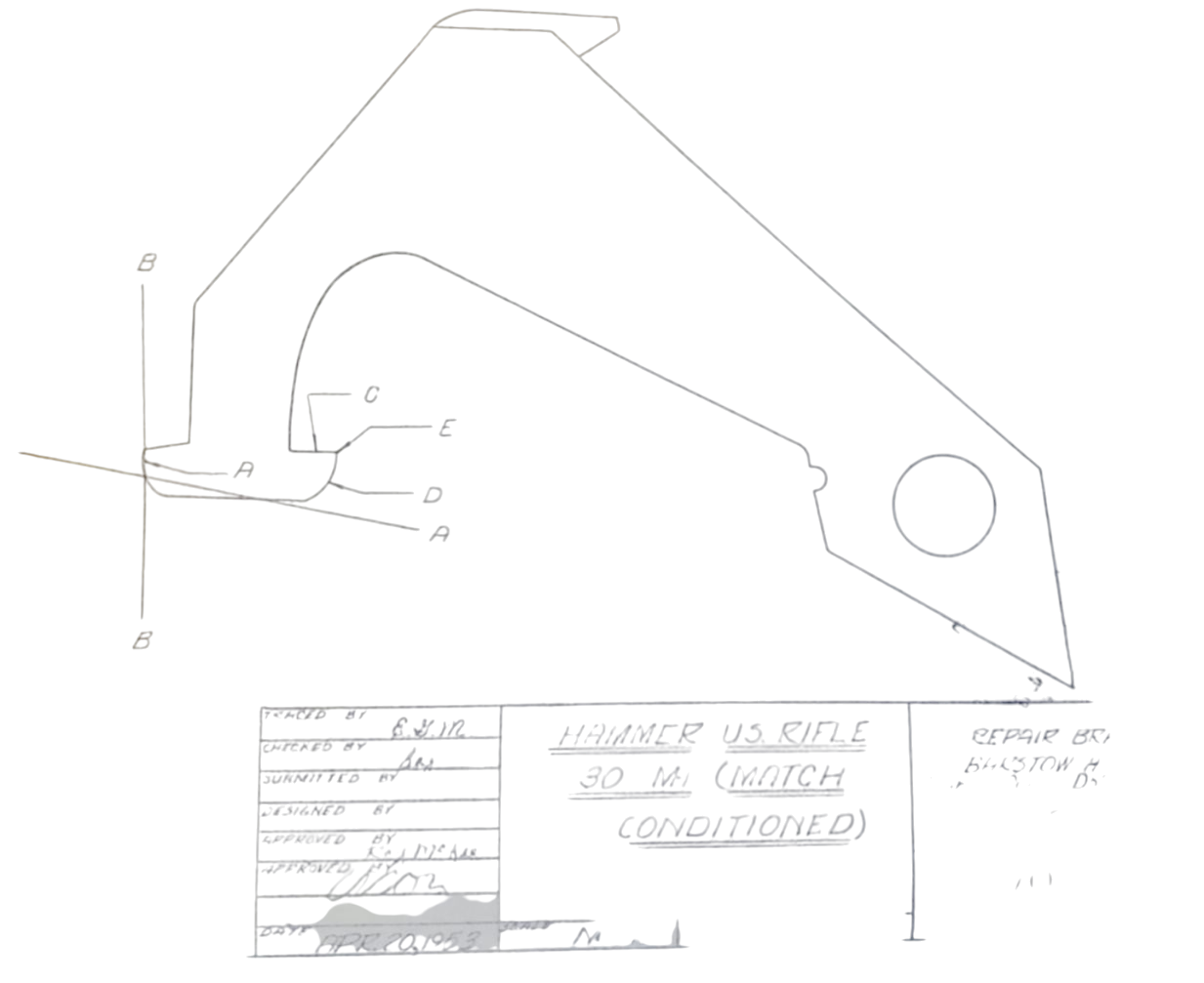
A 1953 manual addendum from Marine Corps Service Center Barstow details some of the in-house conditioning procedures of that era. As just this addendum and not the entire match-conditioning manual was found at NARA, only a partial glimpse into 1950s tuning techniques is known as of now.
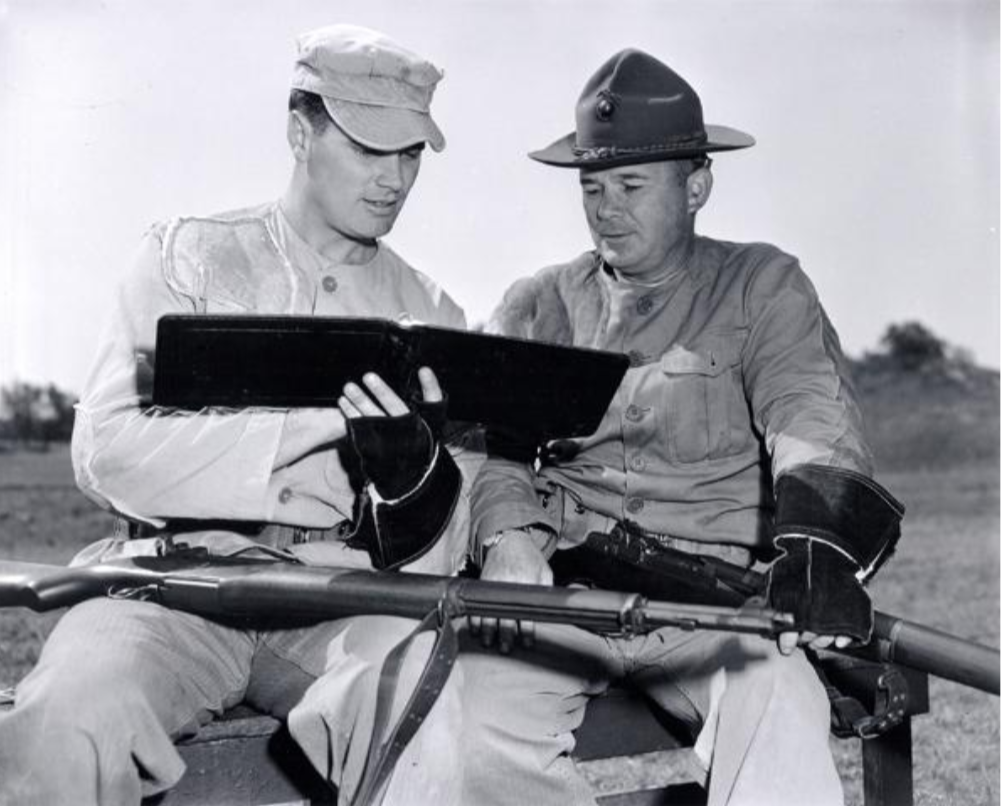
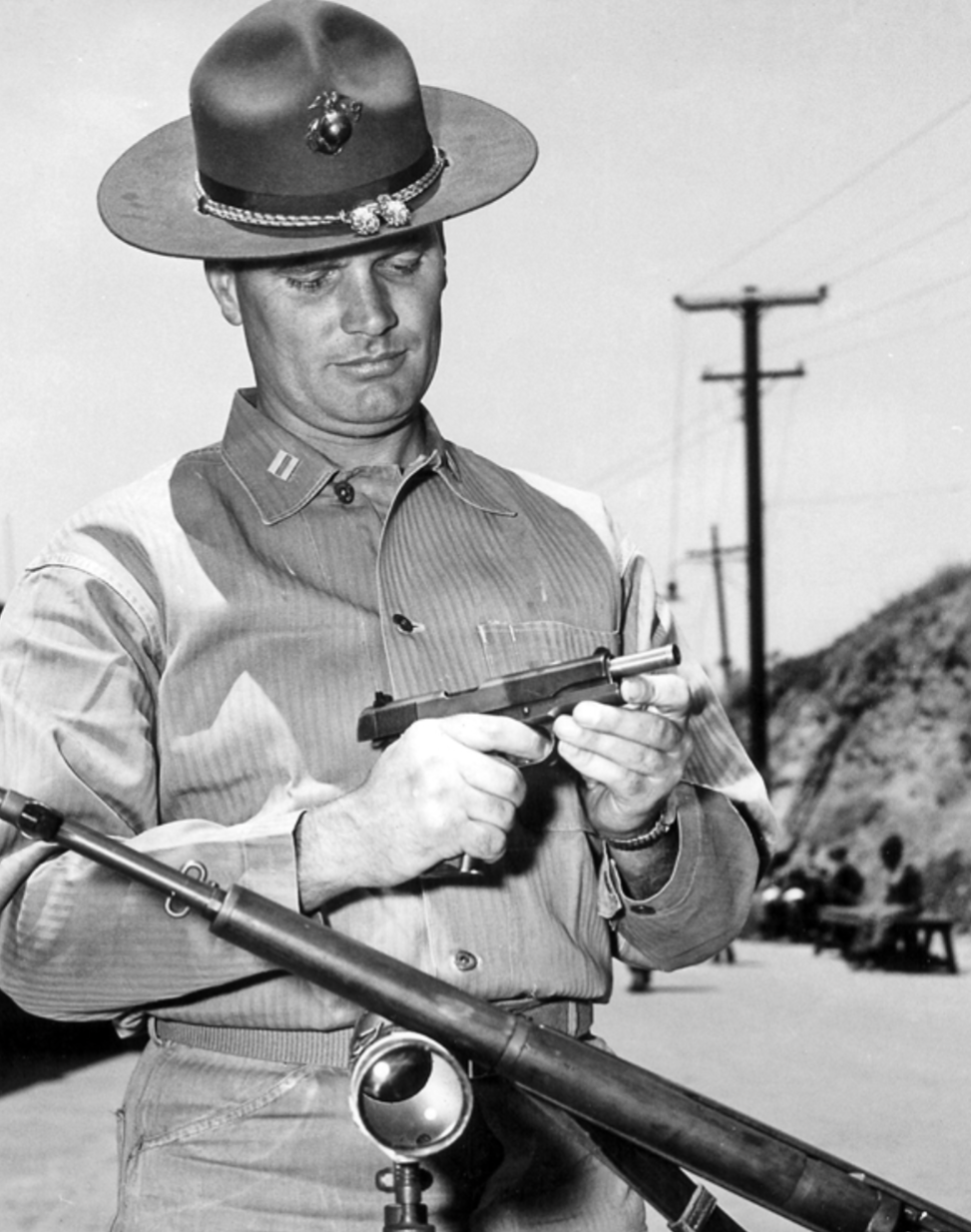
Top Marine Corps team shooters 2nd Lieutenant William McMillan and Lieutenant Colonel Walter Walsh comparing notes on the rifle range in 1952 (USMC).
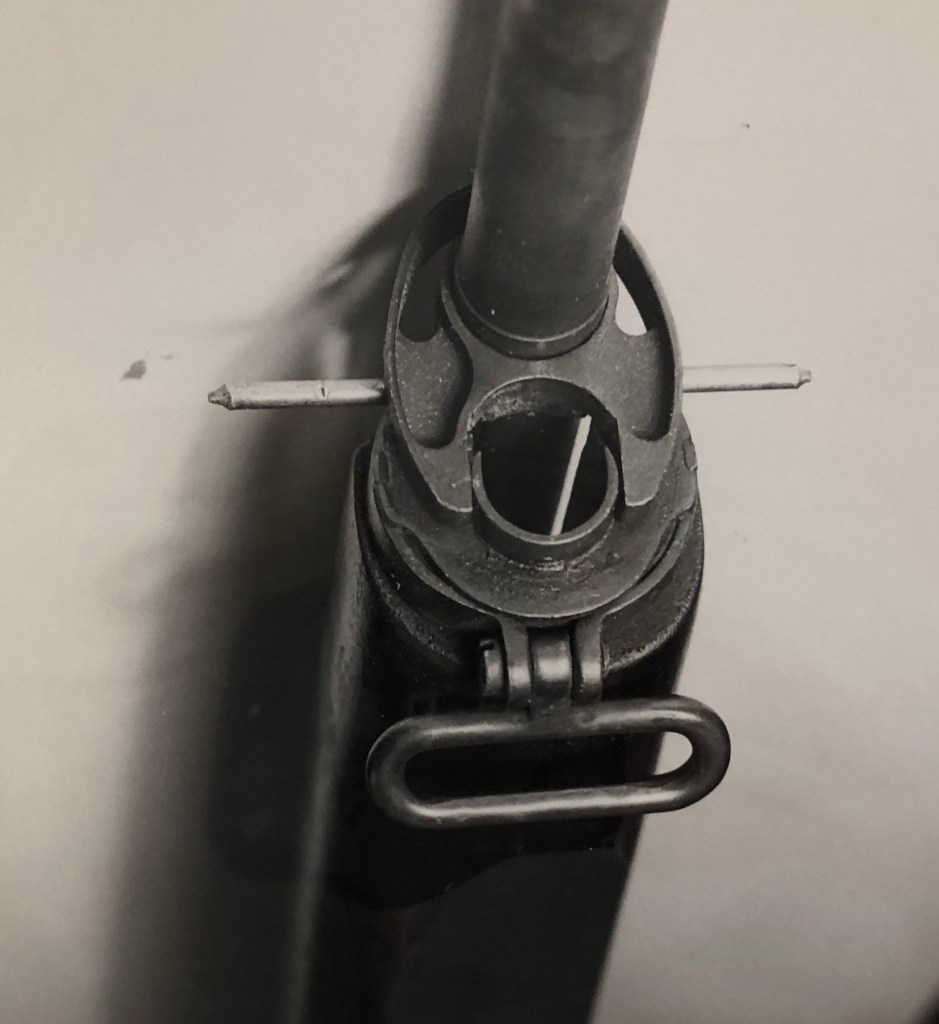
Selection of the highest quality standard issue parts was a major emphasis in this era. Much of the addendum specifies the precise way the hammer could be tuned. Straight-grained stocks and handguards were selected for match conditioned M1s. Barrels had to meet strict star gauge and headspace standards, with a gas port located in the center of a groove between lands. The lower band retaining pin hole was slightly enlarged, and the standard roll pin replaced with a .136” drill rod to prevent any lateral movement. For gas pressure consistency, the older style “single slot” gas screws were also used.
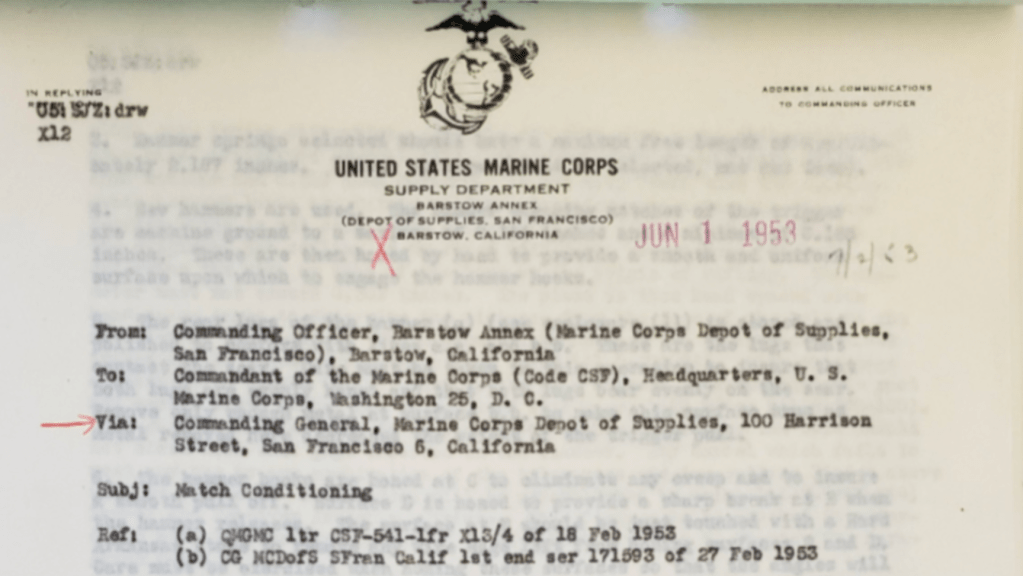
1953 Barstow match-conditioning addendum (NARA).
While research on Type I USMC Match-Conditioned M1 Garands is new and documents and examples are light, there are some attributes these rifles will have had:
- Hand selected parts of the highest condition
- Straight-grain wood stock and handguards
- Barrel that star gauges and head spaces to manual specifications and has a gas hole that is centered in a groove between lands
- Modified lower band with enlarged, solid retaining pin
- Modified hammer to manual specifications
- Gas lock counterbored at 45 degrees for tight fit
- Solid “single slot” gas screw
- Rear handguard staked at the clip to keep forward of receiver
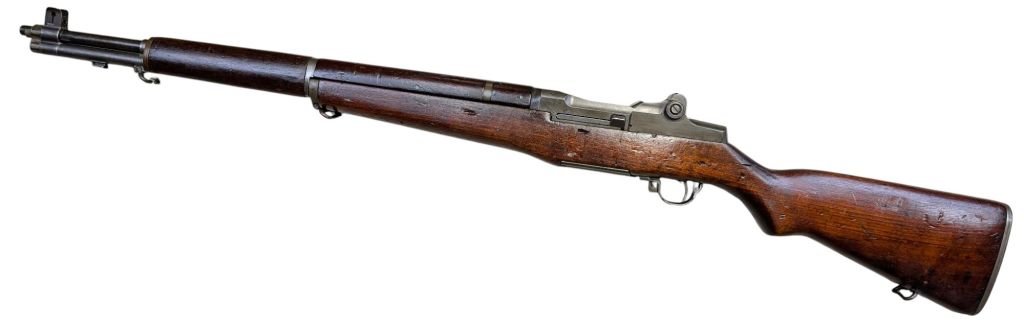
Type I USMC Match-Conditioned M1 Garand #2250959 (Plowman collection).
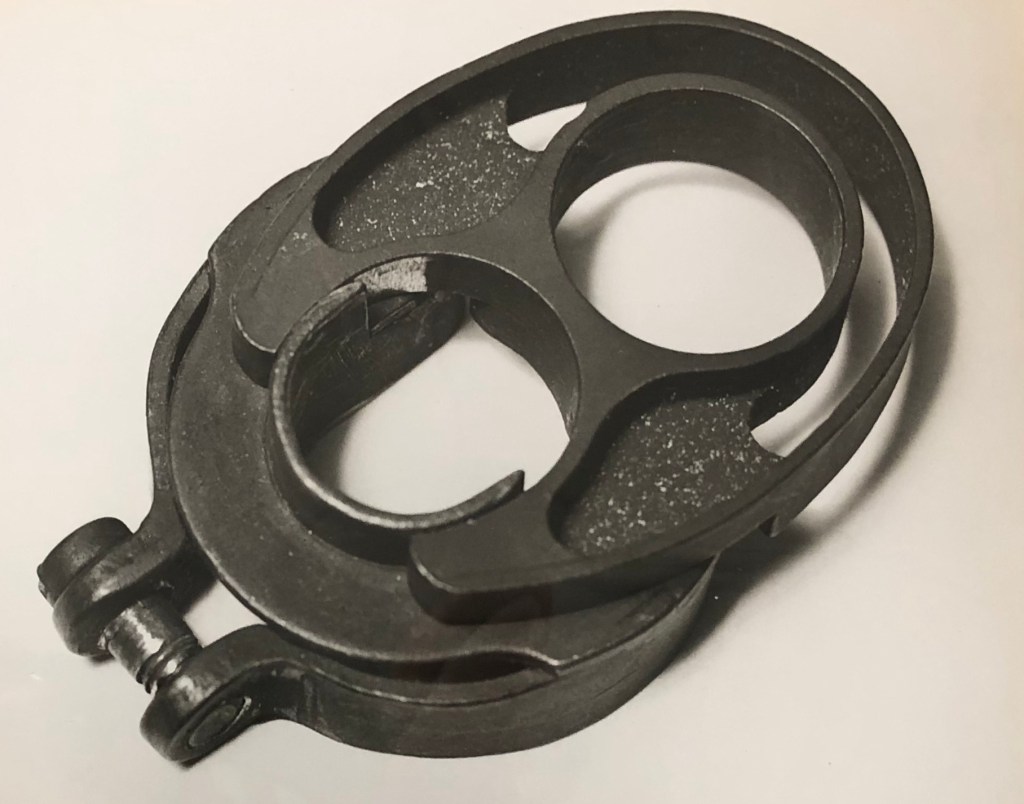
A good example of a Type I USMC Match Conditioned M1 Garand exists with Springfield Armory rifle 2250959. This rifle was purchased from the Civilian Marksmanship Program North Store in early 2020, during a brief period when a batch of Marine Corps M1 Garand hang tag turn-ins were available. This rifle bears all the modifications listed in the 1953 Barstow manual addendum, as well as others indicative of later match conditioning. In 1958, the NBPRP allowed competitors to modify the gas cylinder ring to minimize or reduce contact with the front handguard cap and barrel. By 1959, the NBPRP would allow modifications that would eventually encompass the Type II National Match M1 Garand: bedded stocks, 1/2-minute sights and unitized handguards. Rifle 2250959 has modifications that indicate it was in use in the late 1950s. The gas cylinder has had metal removed to ensure no contact is made with the handguard cap, as well as within the ring minimizing barrel contact. The stock has not been routed out, but rather surface bedded to create a better lockup, likely a stop-gap modification made right as the rules change in 1959 came about. Another interesting USMC Albany Match Conditioned M1 attribute with an unknown timeline is the last four digits of the serial number being stamped on the bottom of the pistol grip, as well as the distinctive Albany “A” on the inside pistol grip. The trigger housing includes a BZO “DOPE tag”, a well-known Marine Corps practice but likely applied after this rifle’s competition history and at the School of Infantry during the Vietnam era.
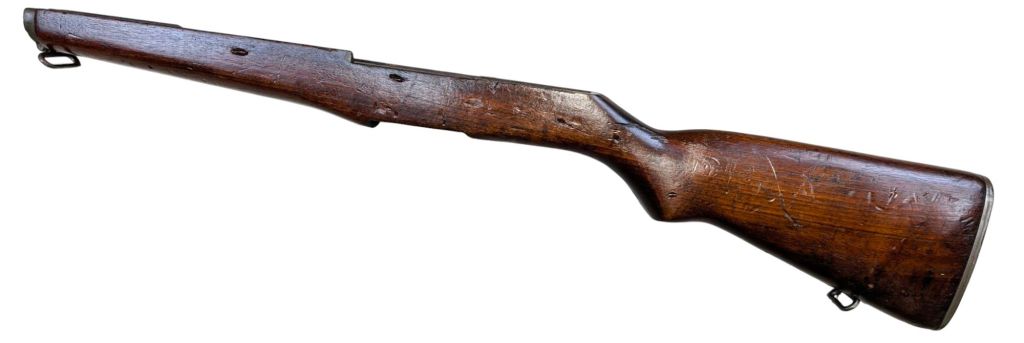
Straight-grained stocks were selected for their natural strength.
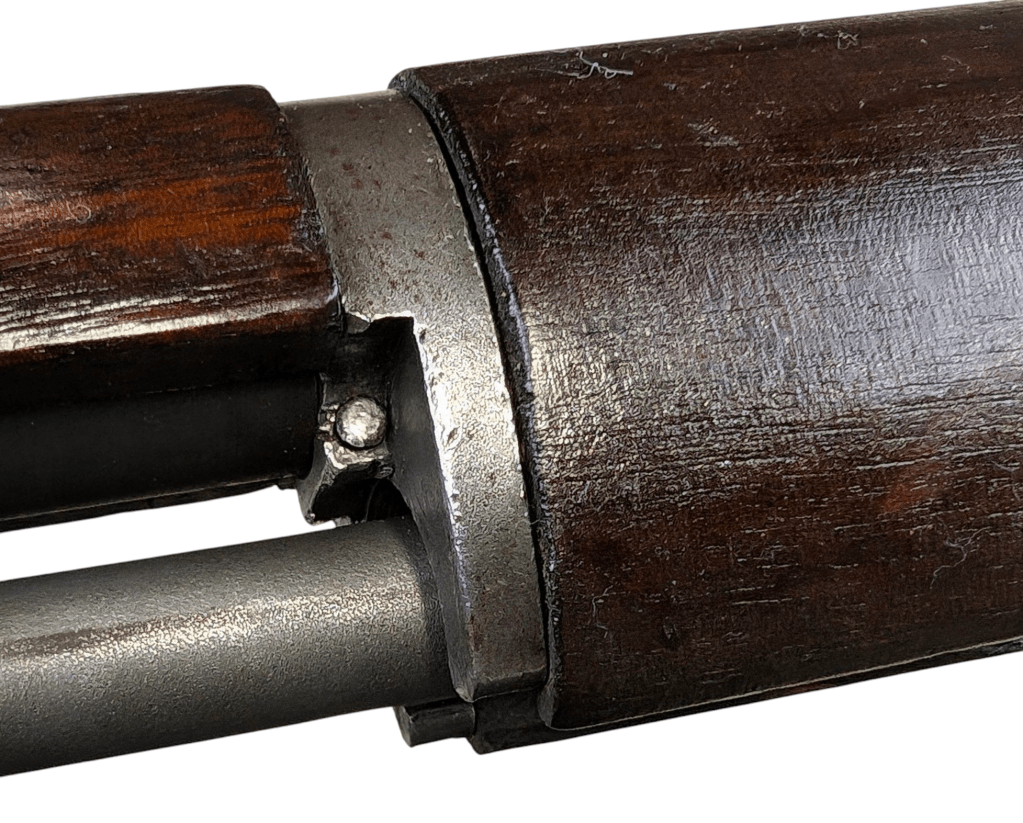
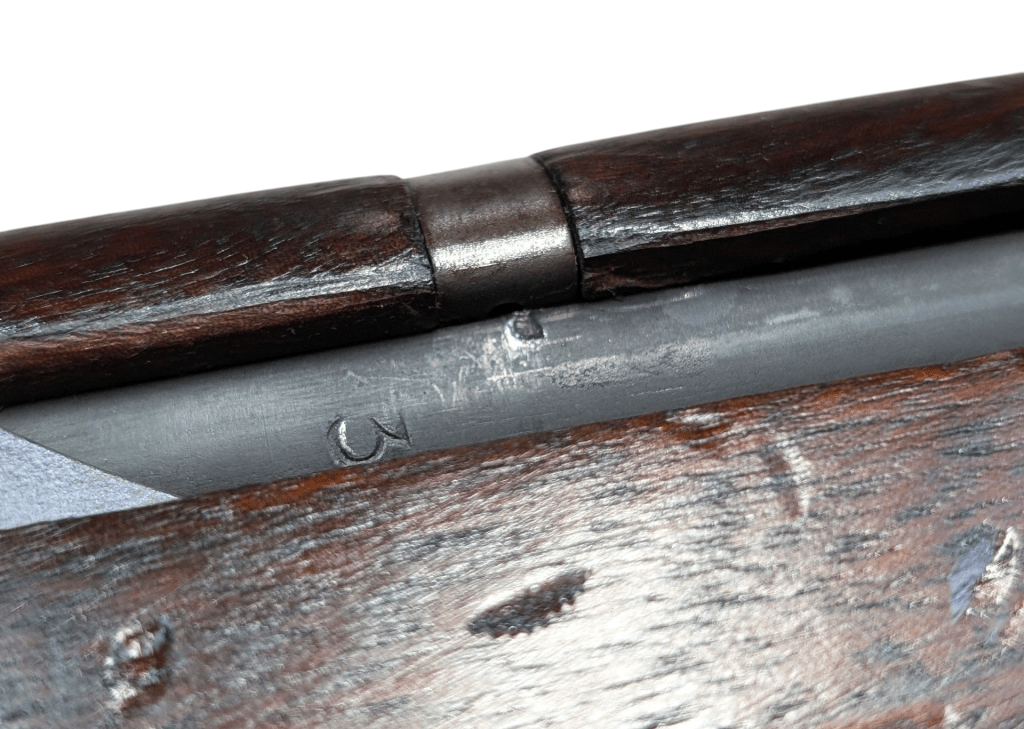
Straight-grained handguards, with enlarged lower band and .136” drill rod for retaining pin. The rear handguard has been staked in place to eliminated contact with the receiver.
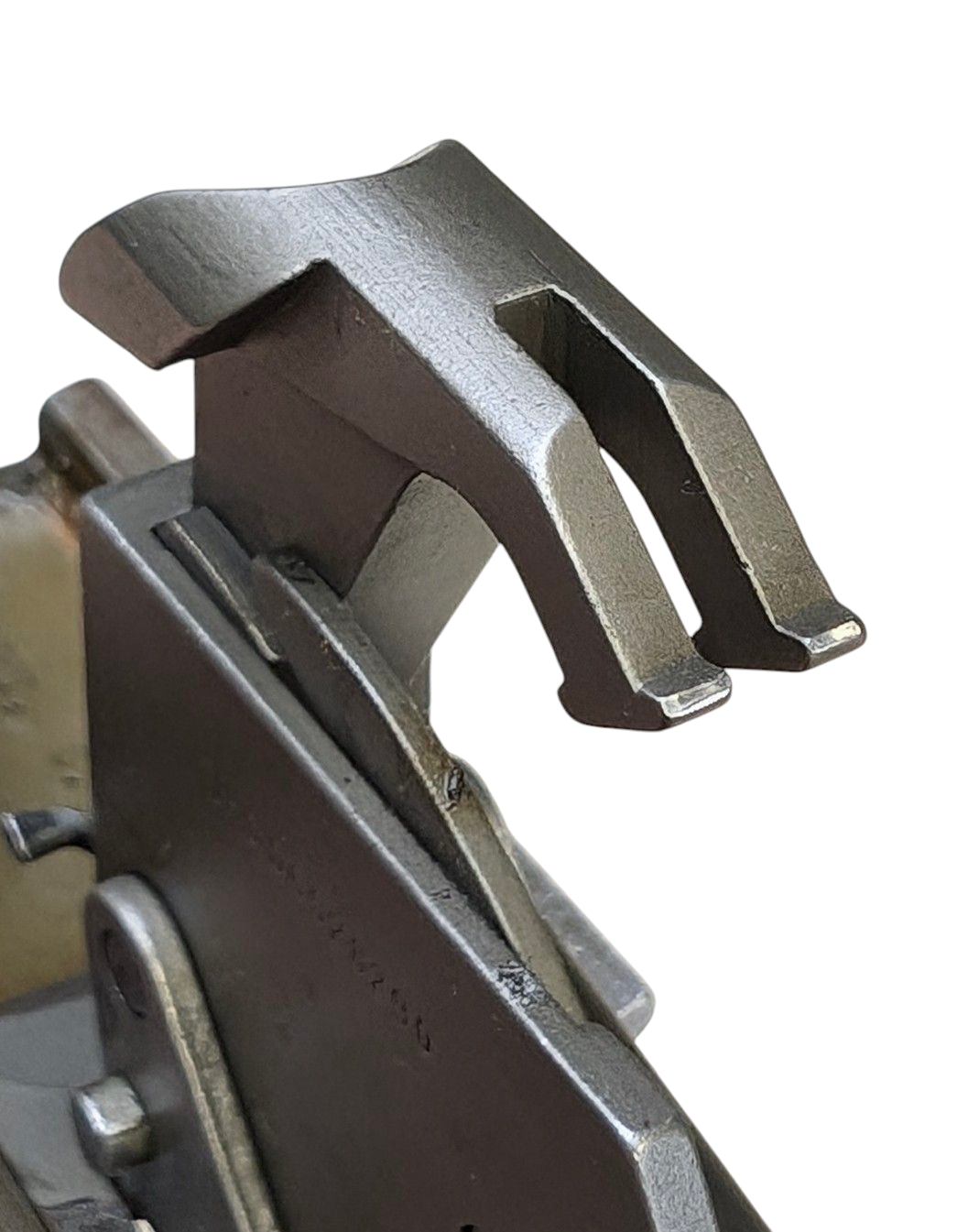
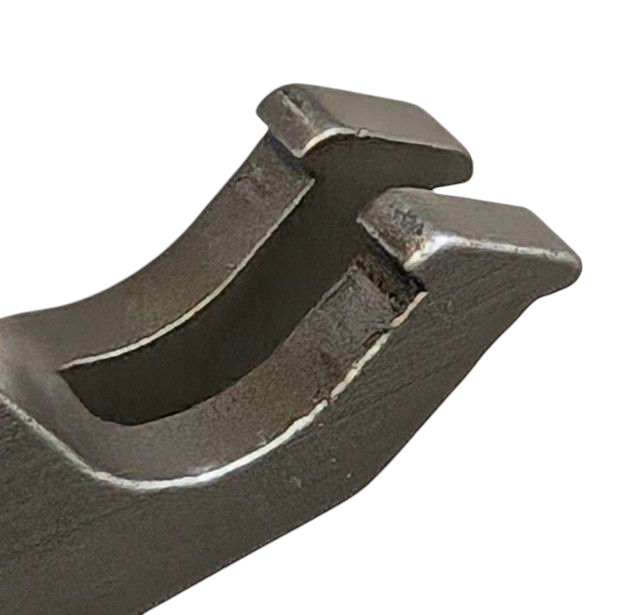
Hammer modified to 1953 Barstow manual addendum specifications.
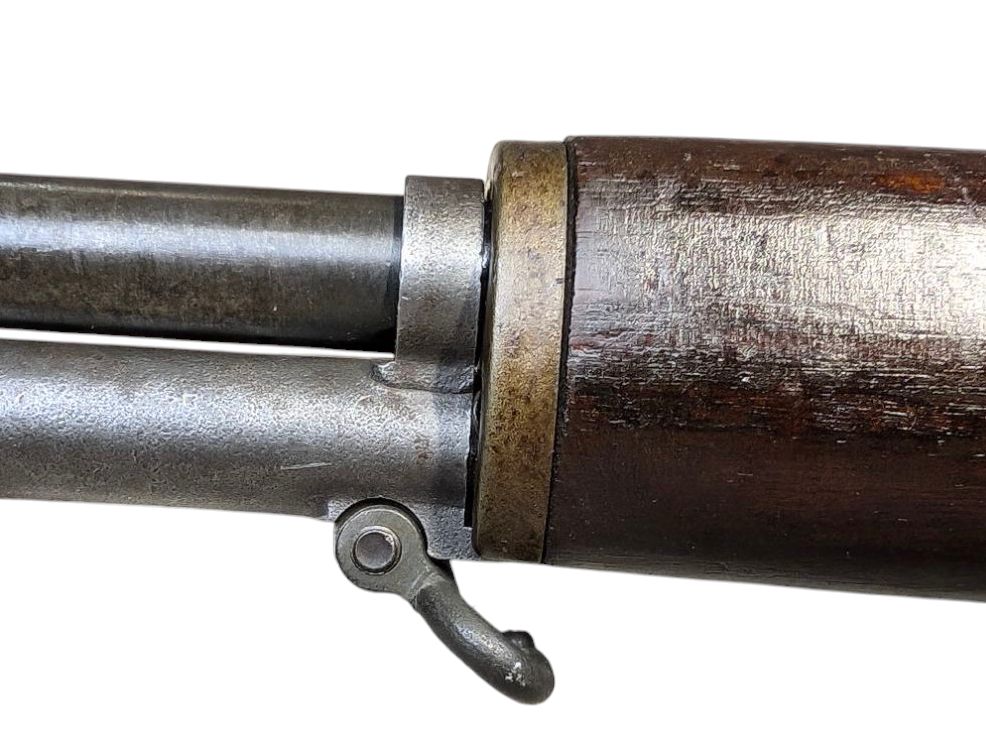
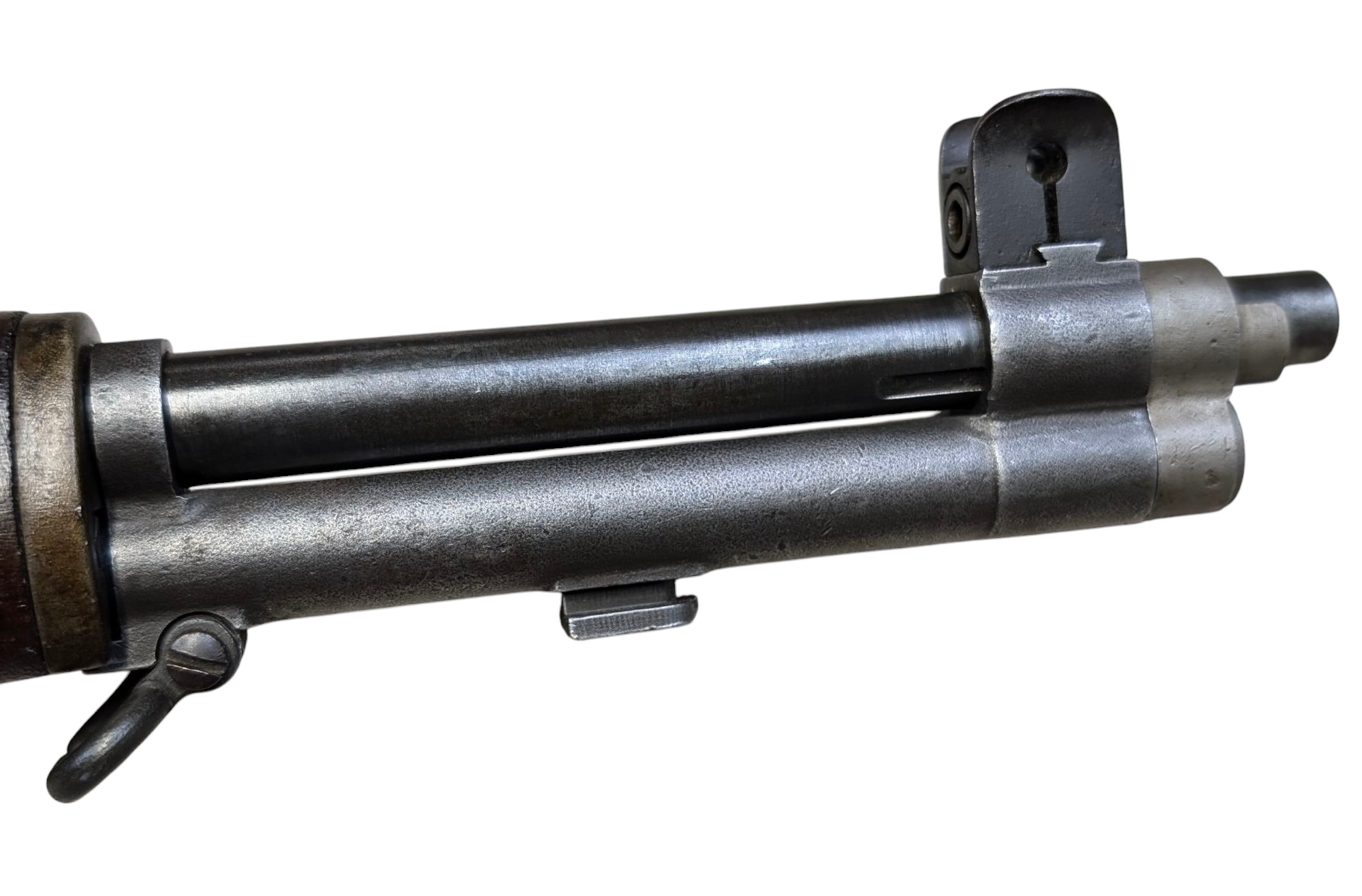
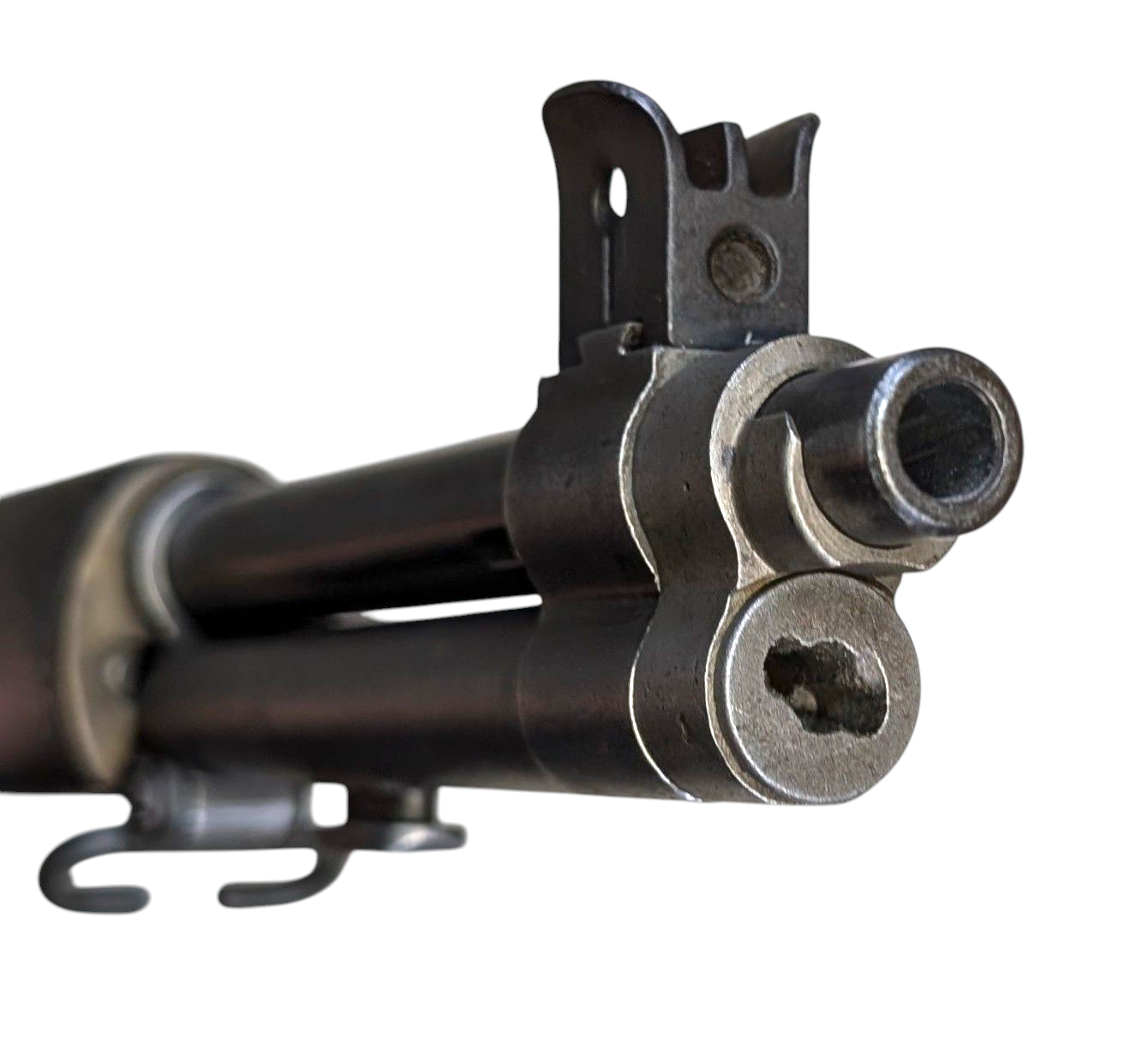
Gas cylinder with solid “single slot” gas screw, peened to stay forward of the rear handguard and contact the barrel at 6 o’clock.
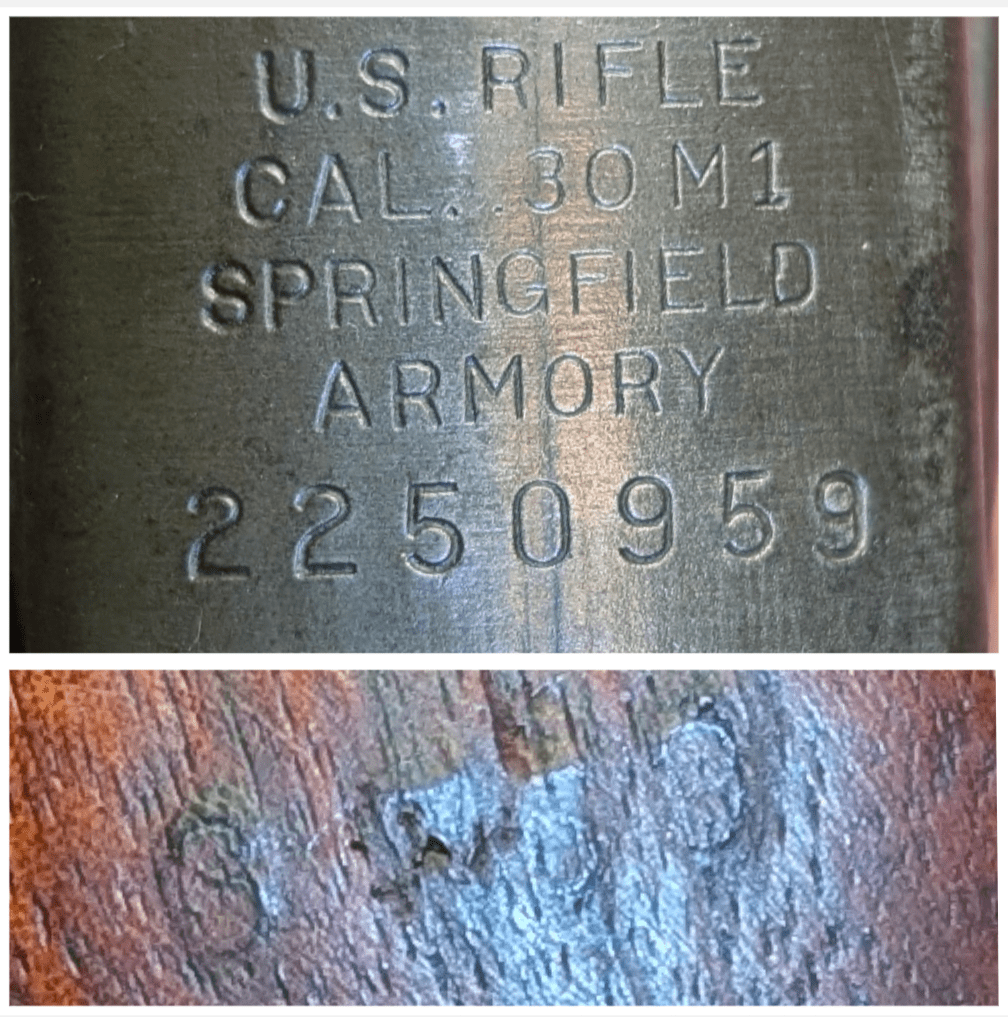
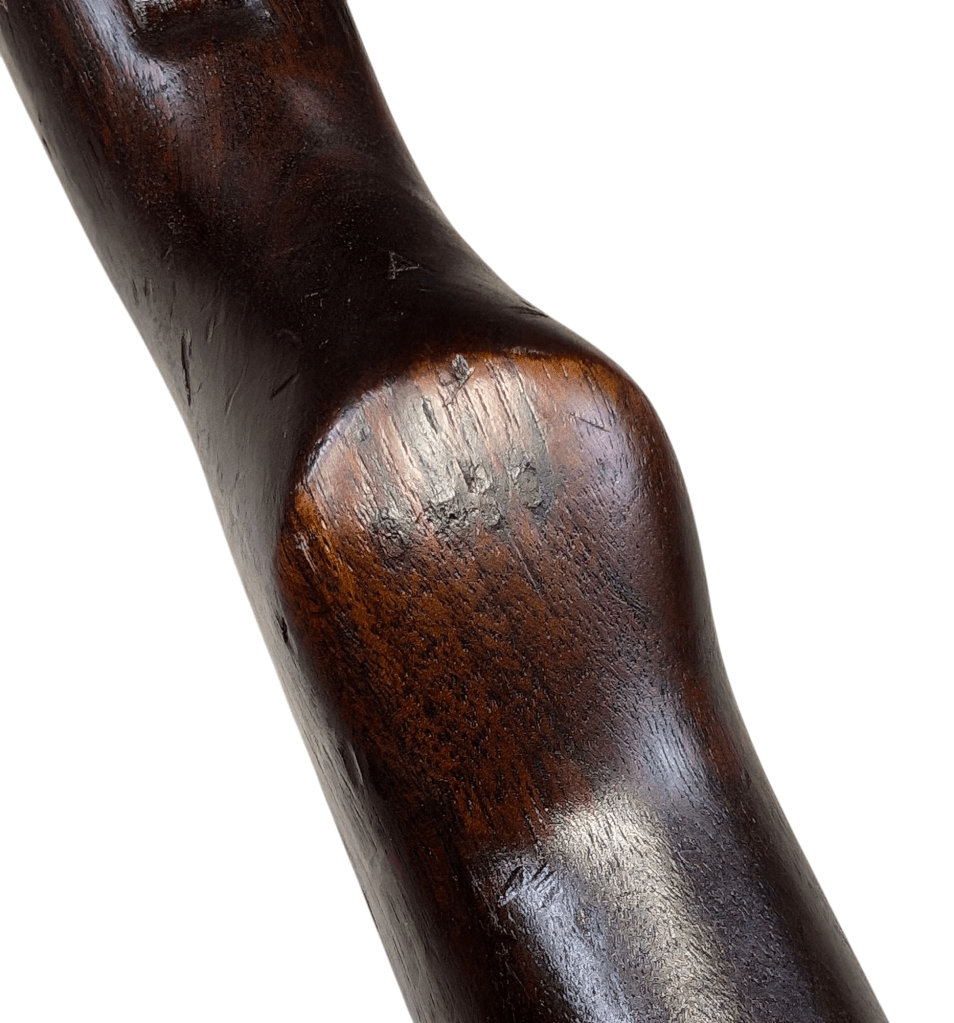
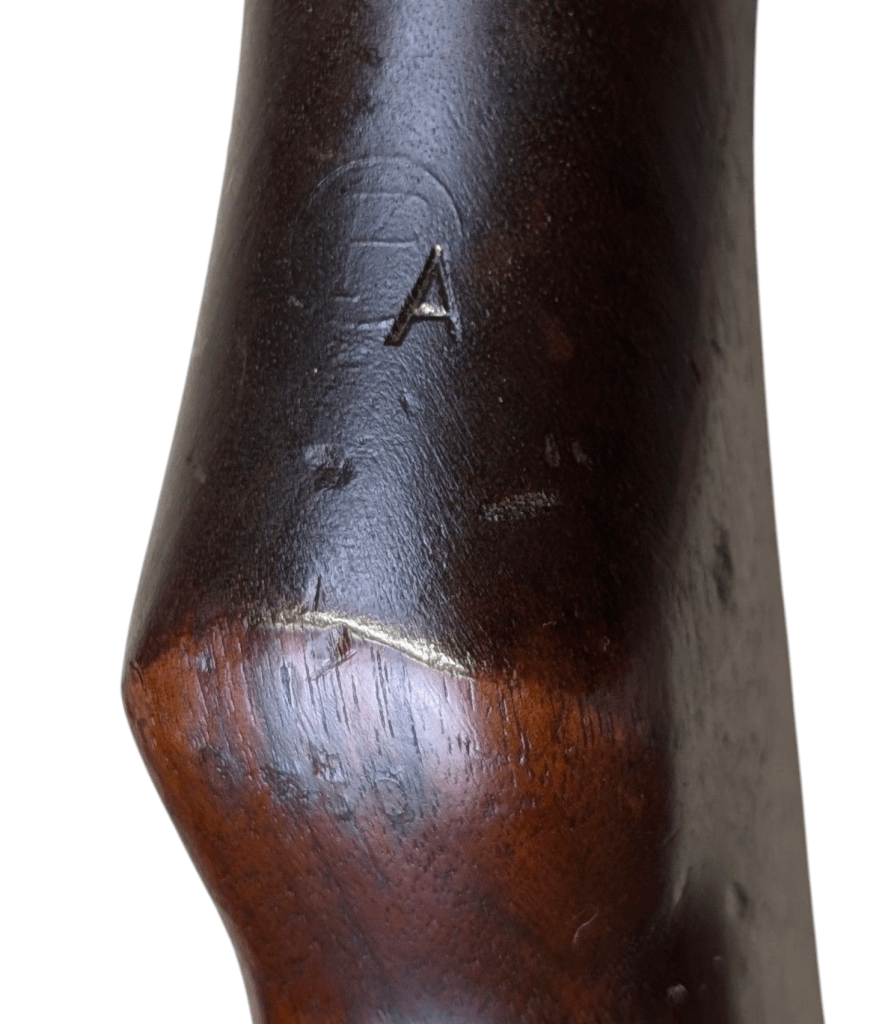
Last four digits of the serial number on the bottom of the stock, as well as an Albany “A” on the wrist. Stamping the last four digits on the bottom of the stock is a practice quoted in the 1963 Albany match-conditioning manual.
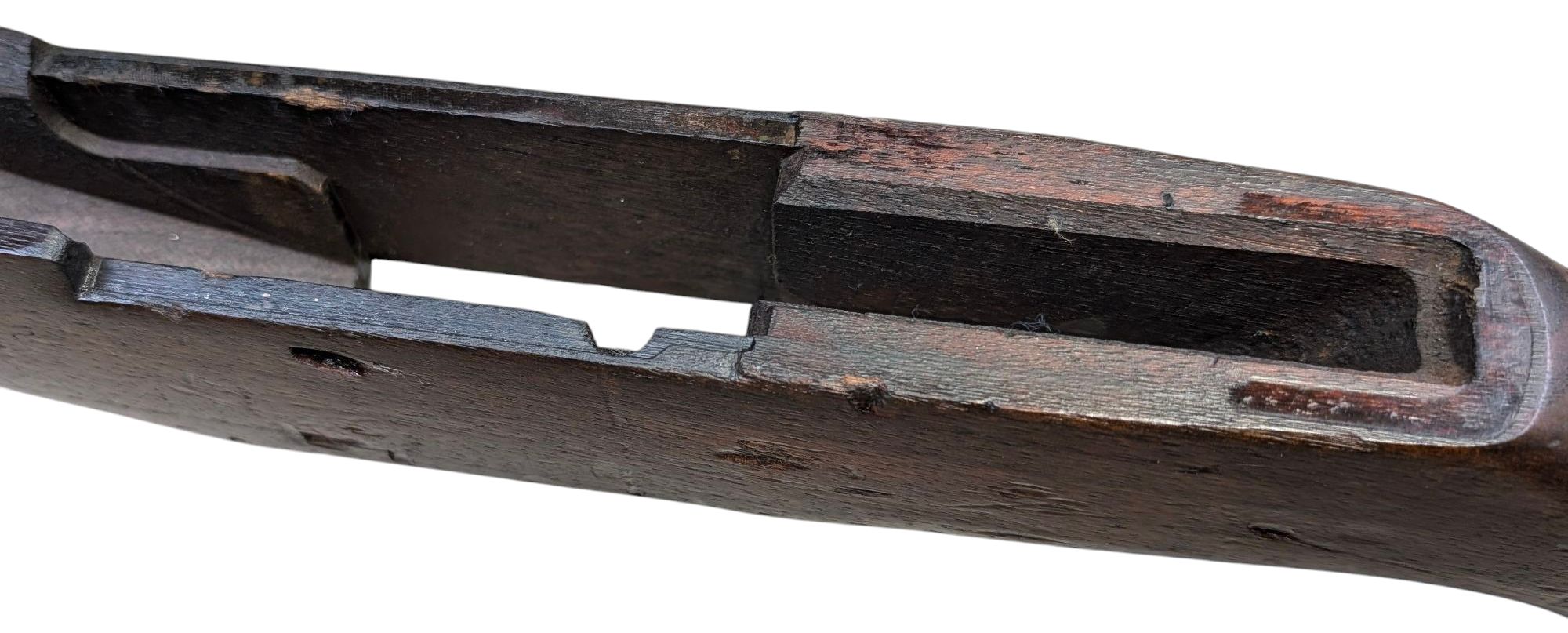
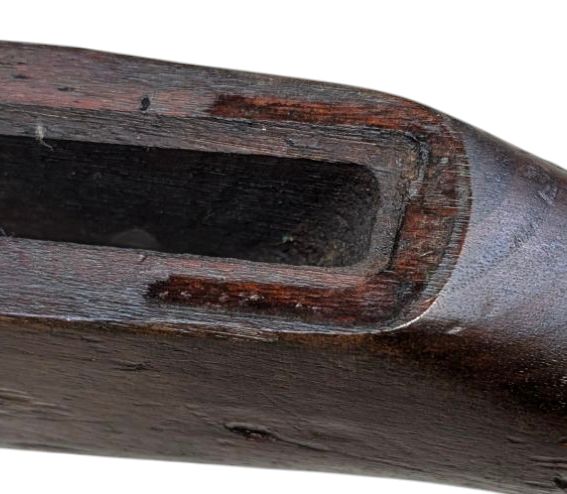
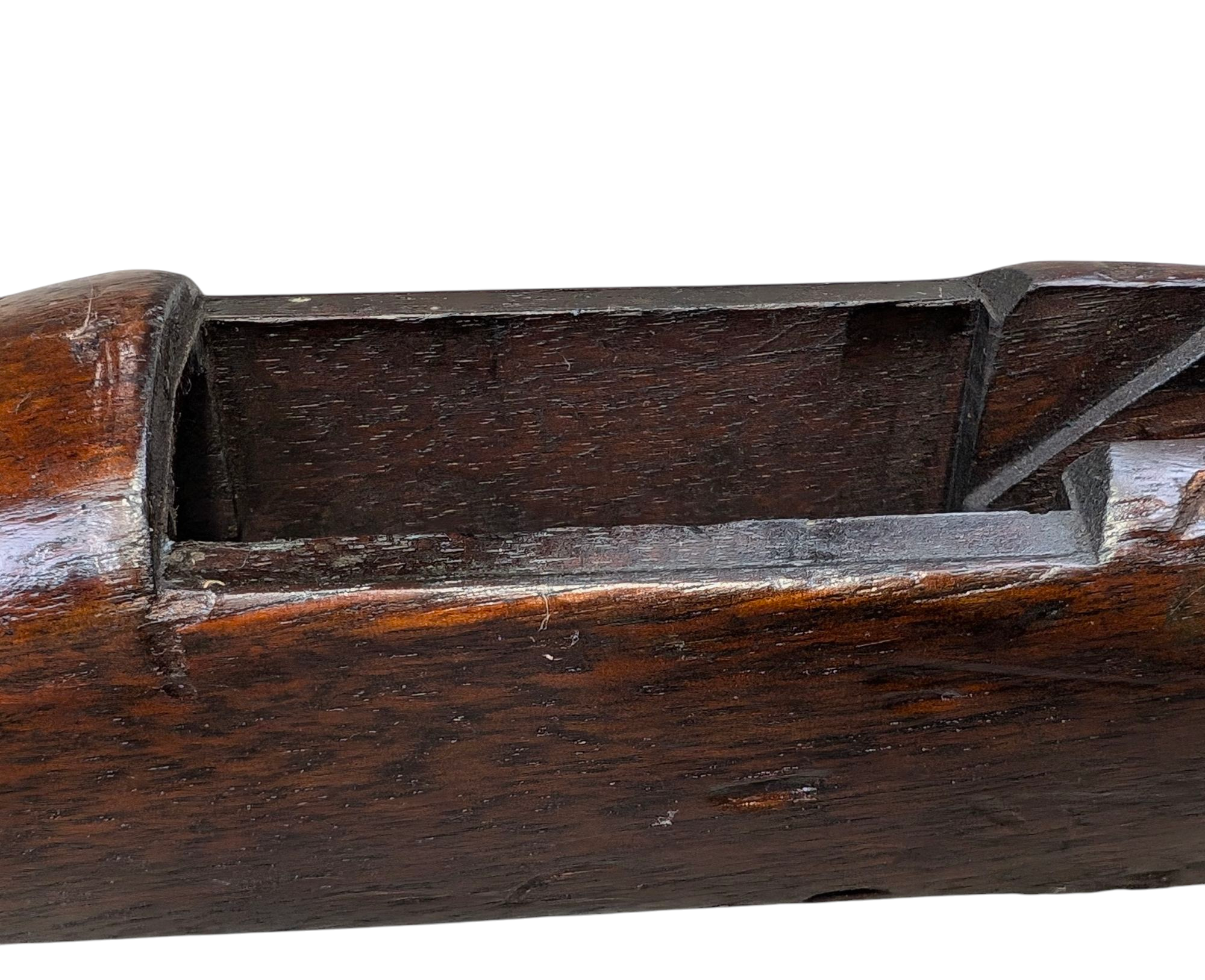
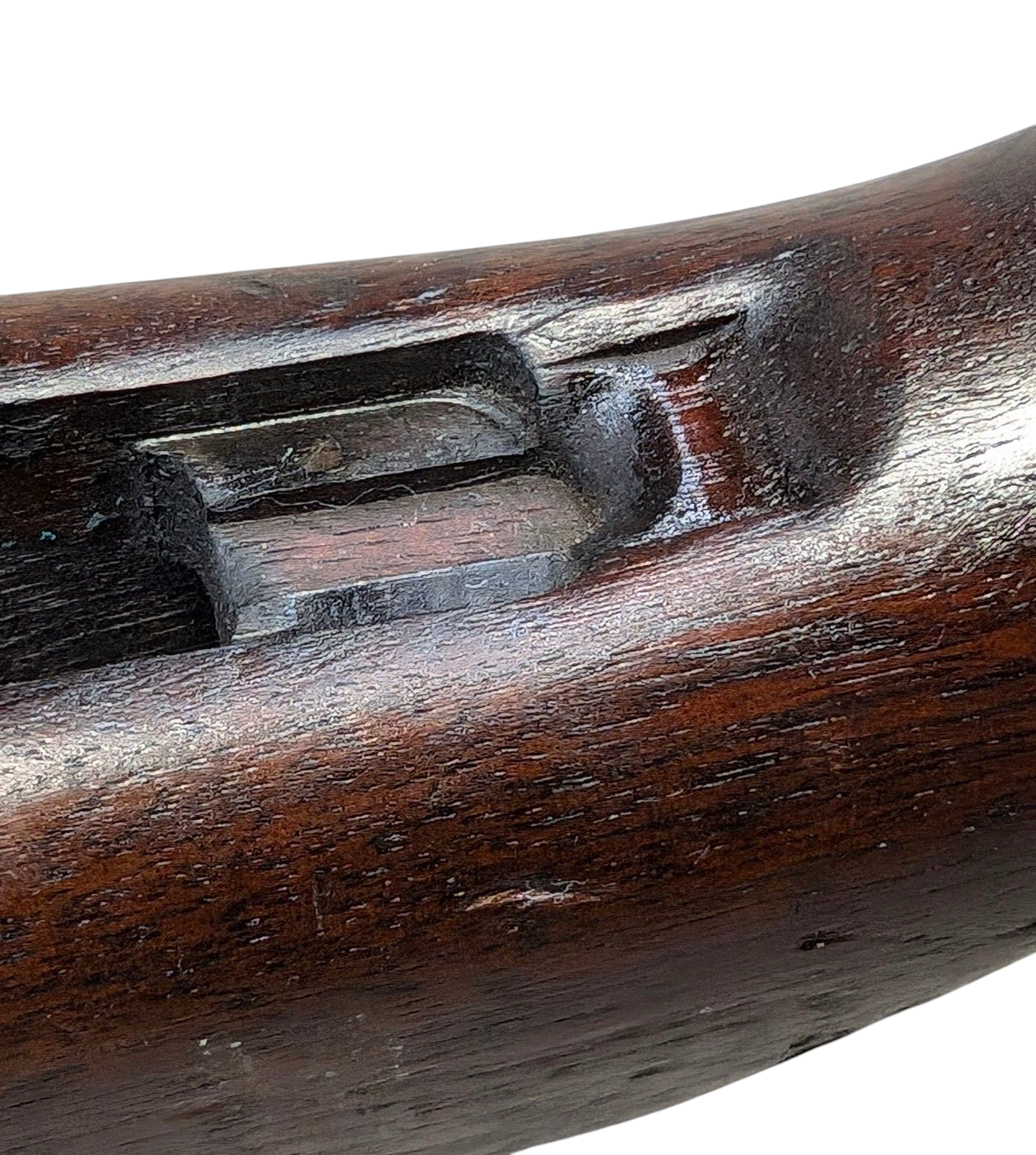
The stock has not been routed out, but rather bedding compound applied on the top and bottom surfaces that contact the receiver and trigger housing.
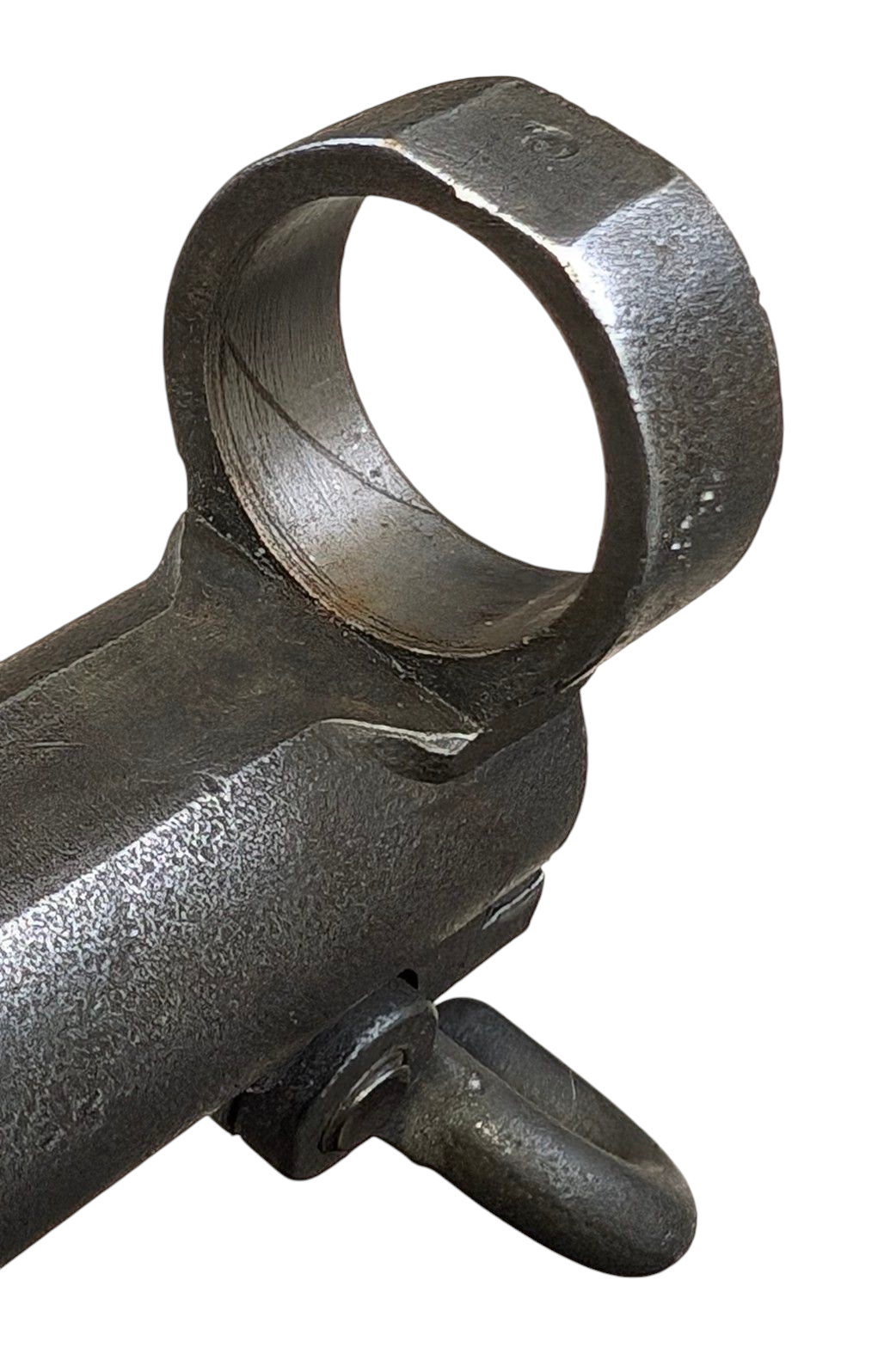
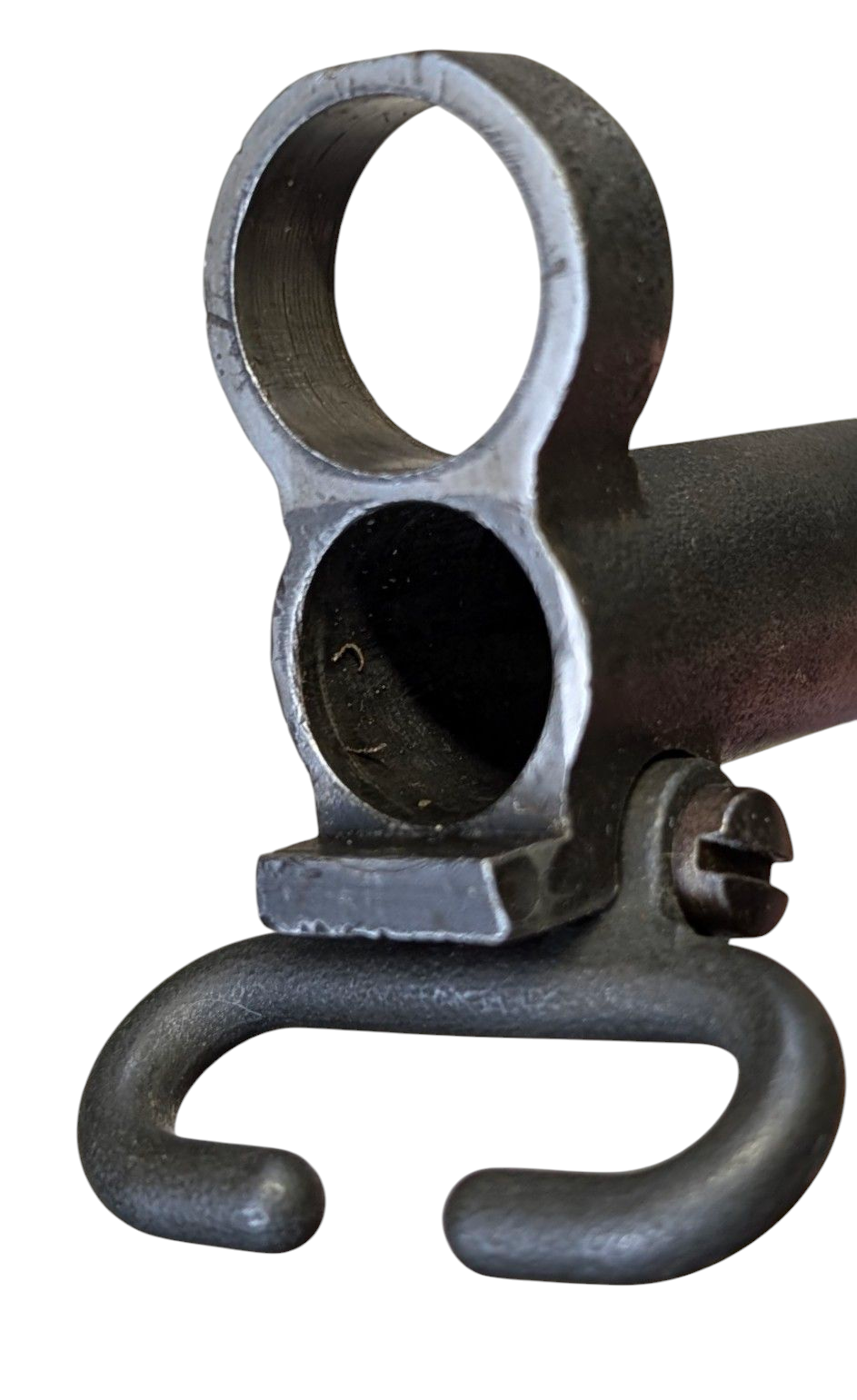
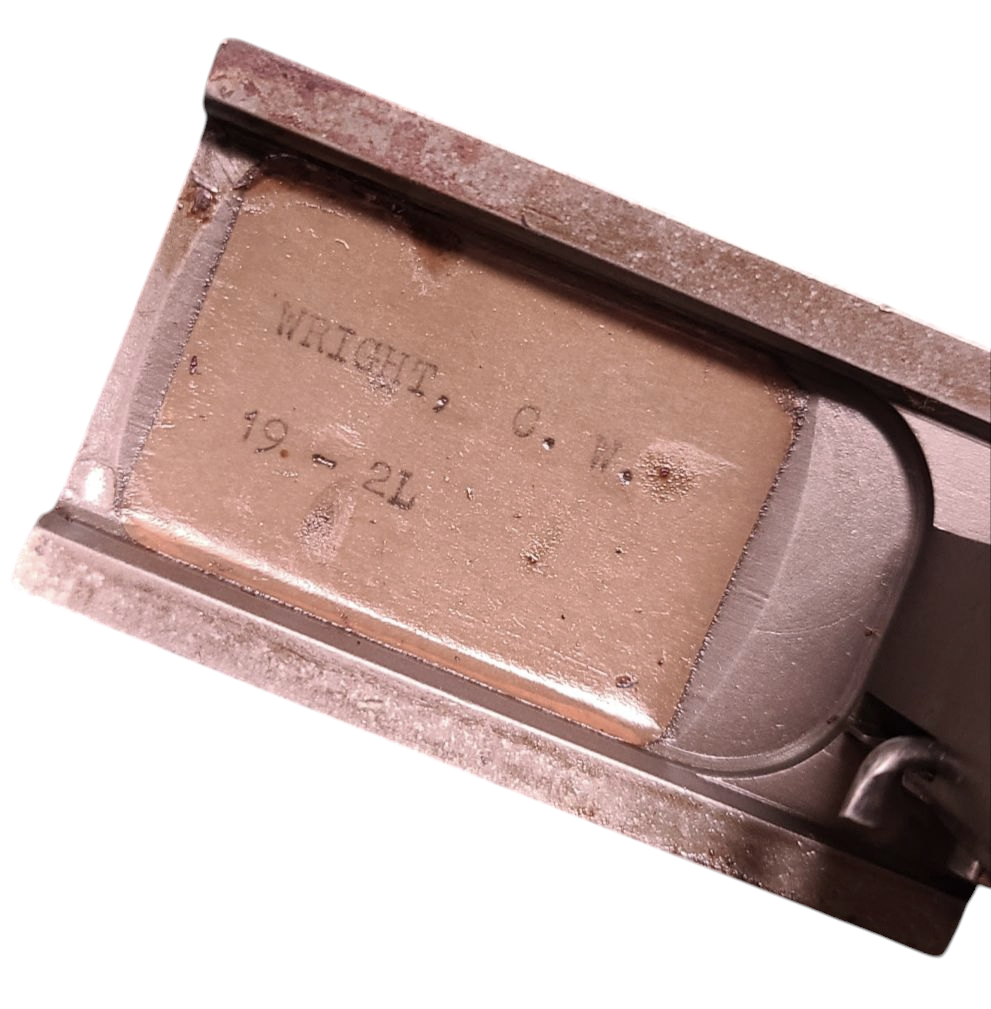
Gas cylinder with metal removed from the rear and inside ring portions in compliance with the 1958 NBPRP rules changes. DOPE tag on the inside of the trigger housing with zero and name of the last Marine this rifle was issued to.
The Type I USMC Match Conditioned M1 Garand is best considered a product of an era when Marines from the USMC Rifle Team down to the division level were conditioning standard issue M1 Garands to the best of their ability and resources, within the strict confines of the NBPRP requirements. Identifying a Type I relies on the presence of the modifications listed prior, which is admittedly incomplete. Variations in modifications will be present, as these rifles were being made across the Corps in a non-standardized fashion. As more time is spent researching the matter, hopefully a complete Type I era match conditioning manual will surface and shed further light on these rifles, and more examples will be found to further our understanding of the earliest Marine Corps match M1 Garands.
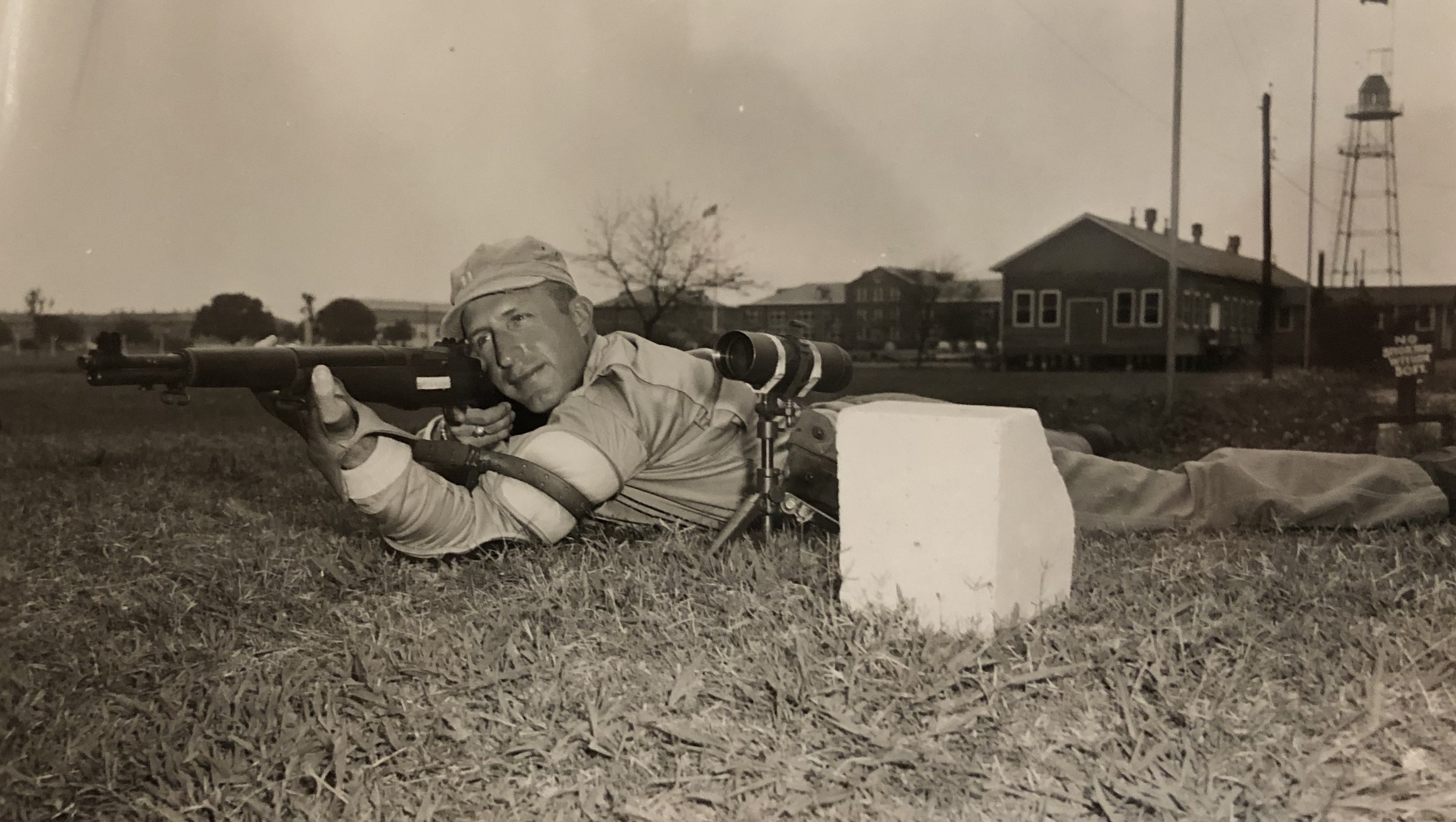
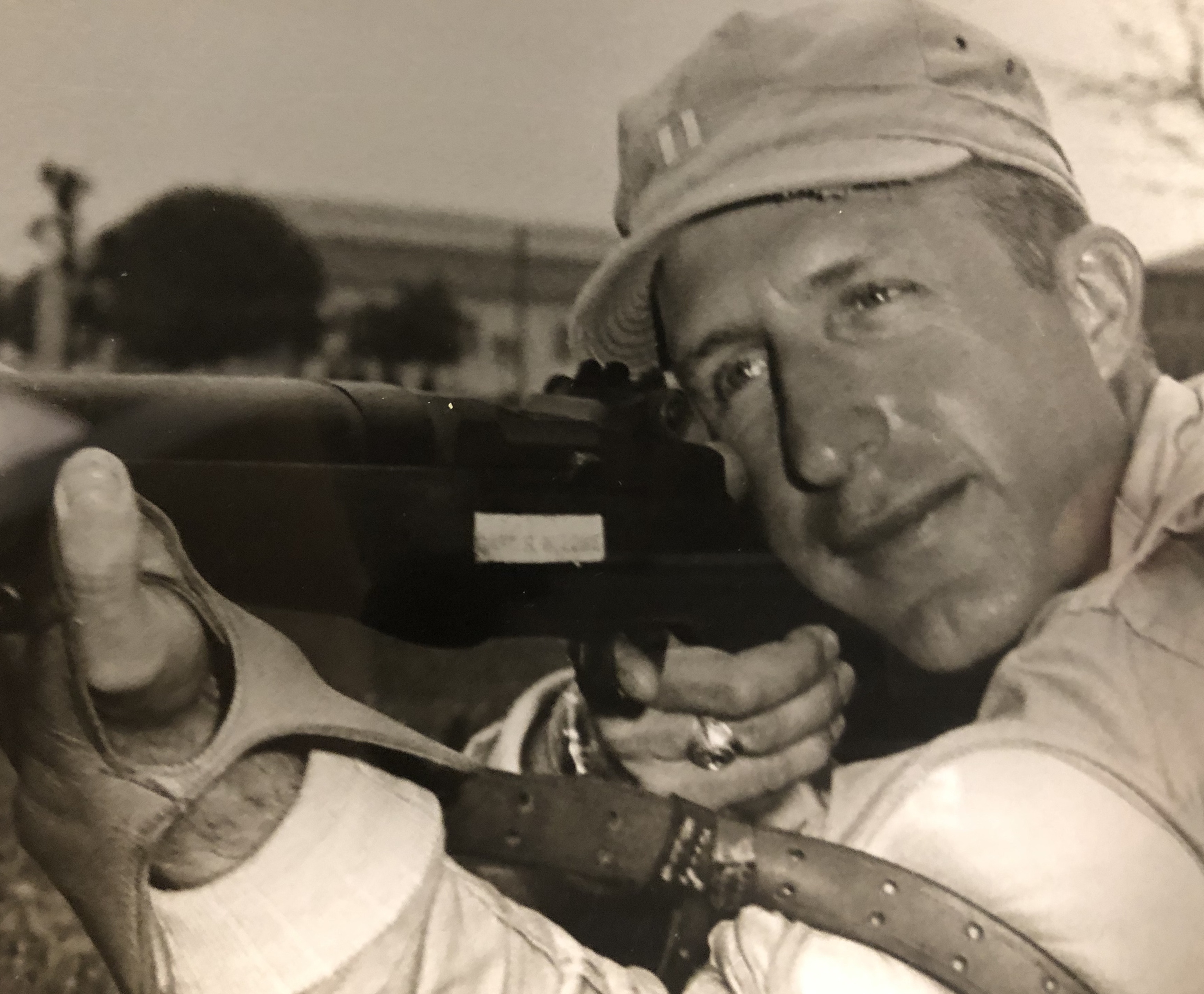
During match competition, white tags were often placed on the side of rifles where the competitors name and DOPE could be recorded (USMC History Division Archives).
THE TYPE II USMC MATCH CONDITIONED M1 GARAND
The Type II USMC Match Conditioned M1 Garand was born from the NBPRP adjusting Service Rifle rules to accommodate some match modifications. With the relaxing of the rules in 1959, Marines began modifying competition rifles from the division to national level, and they varied considerably in attributes and performance.
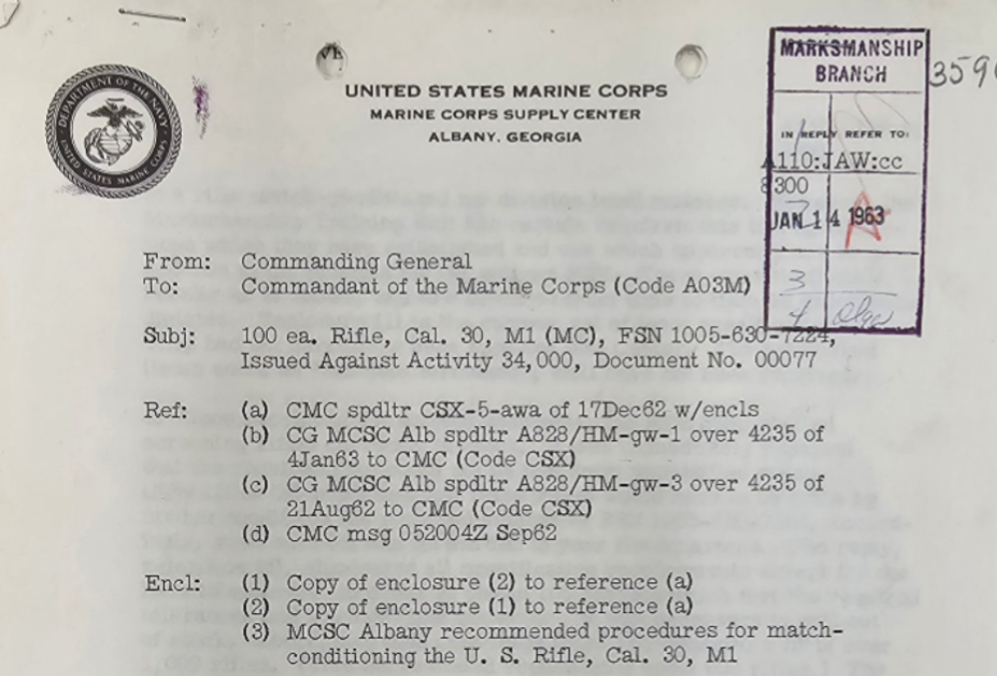
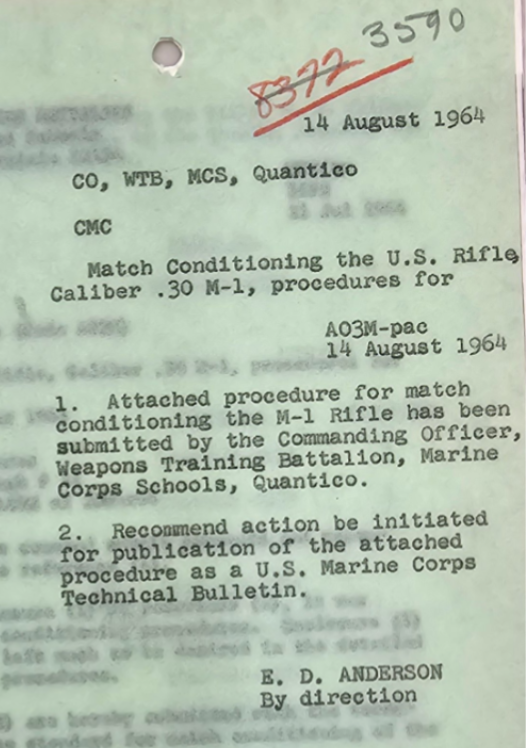
1963 Albany & 1964 Quantico match conditioning manuals (NARA).
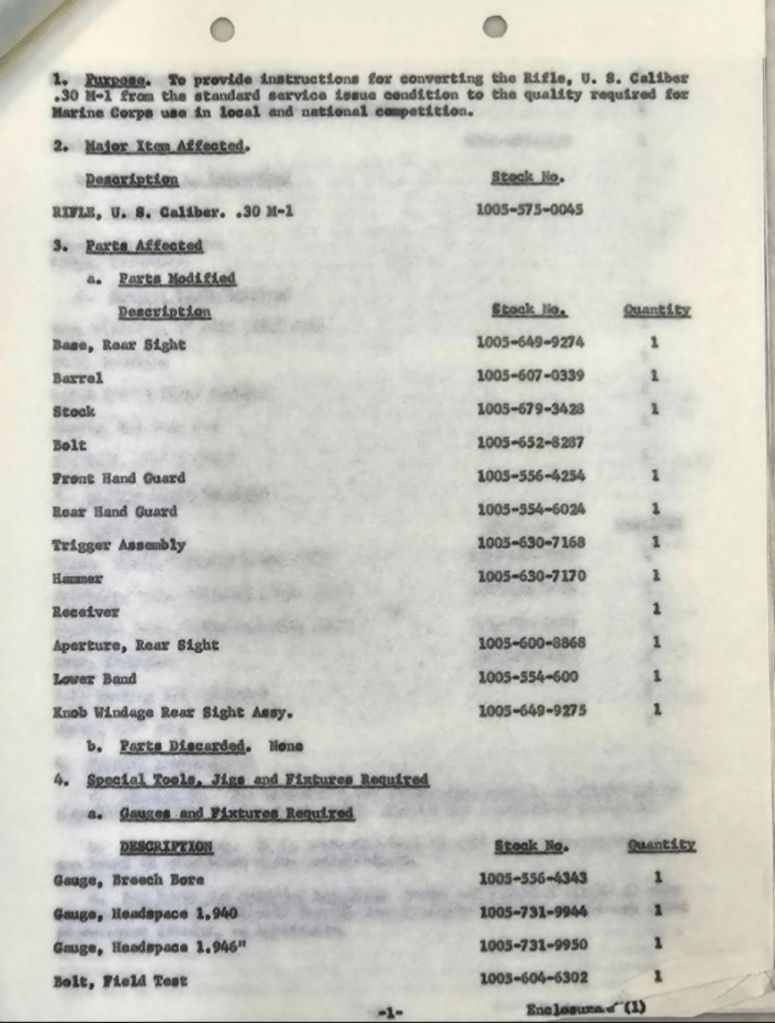
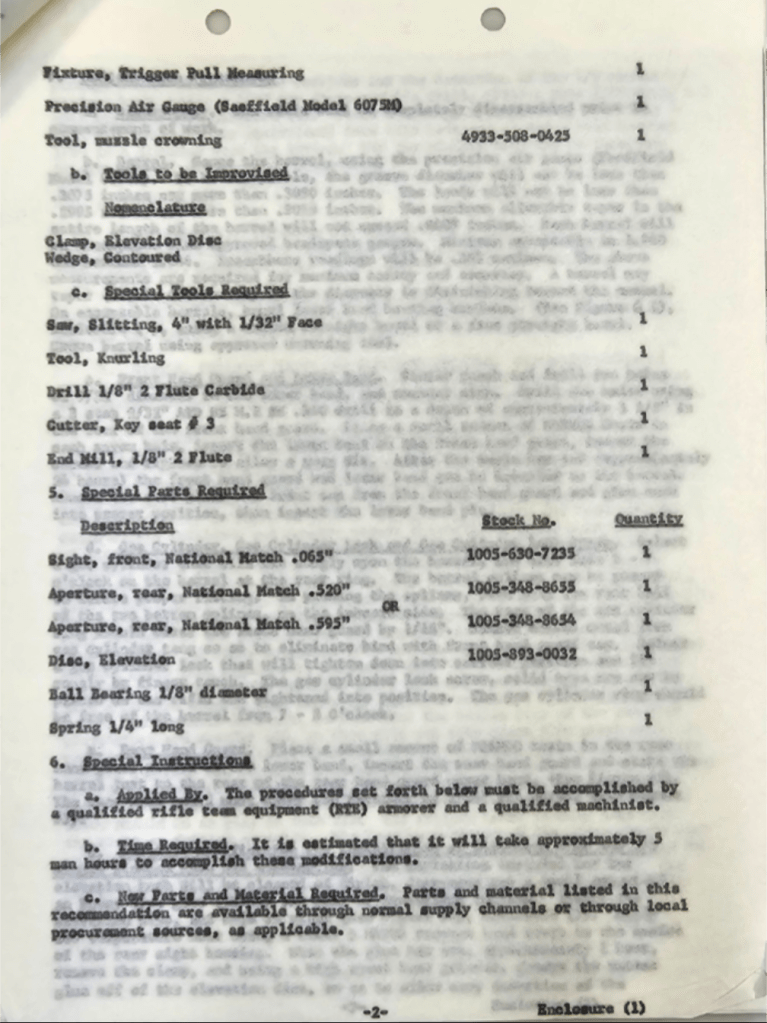
Parts list to build an FSN 1005-630-7224 USMC Match Conditioned M1 Garand (NARA).
The 1963 Albany Rifle Team Equipment (RTE) Manual begins with a directive to standardize FSN 1005-630-7224, the Federal Stock Number for the Type II USMC Match-Conditioned M1 Garand. The RTE Marines, having examined match conditioned M1s in stock, found an unacceptable level of variability. It was clear a standardized conditioning manual was necessary for armorers throughout the Corps to perfect their in-house Type II M1s. To this end, the USMC would find success. The Type II would come to embody the epitome of M1 Garand performance. USMC Type II Match-Conditioned M1 Garands would have:
- Hand selected parts of the highest condition
- Straight-grain wood stock and handguards
- Stock glass bedded to manual specification and stamped with last four digits of its rifle’s serial number
- Rear handguard staked at the clip to keep forward of receiver
- Unitized handguard system with minimal barrel contact
- Barrel (preferably Line Material) that star gauges and head spaces to manual specifications and has a gas hole that is centered in a groove between lands
- Barrel splines and gas cylinder peened to ensure cylinder ring only contacts the barrel at 6 o’clock
- Solid “single slot” gas screw
- Modified hammer to manual specifications
- Receiver modified to allow 1/2 Minute-of-Angle (MOA) sight adjustments
- Receiver legs rounded to prevent chipping the glass bedded stock when removed
- National Match front sight and rear aperture
- National Match operating-rod
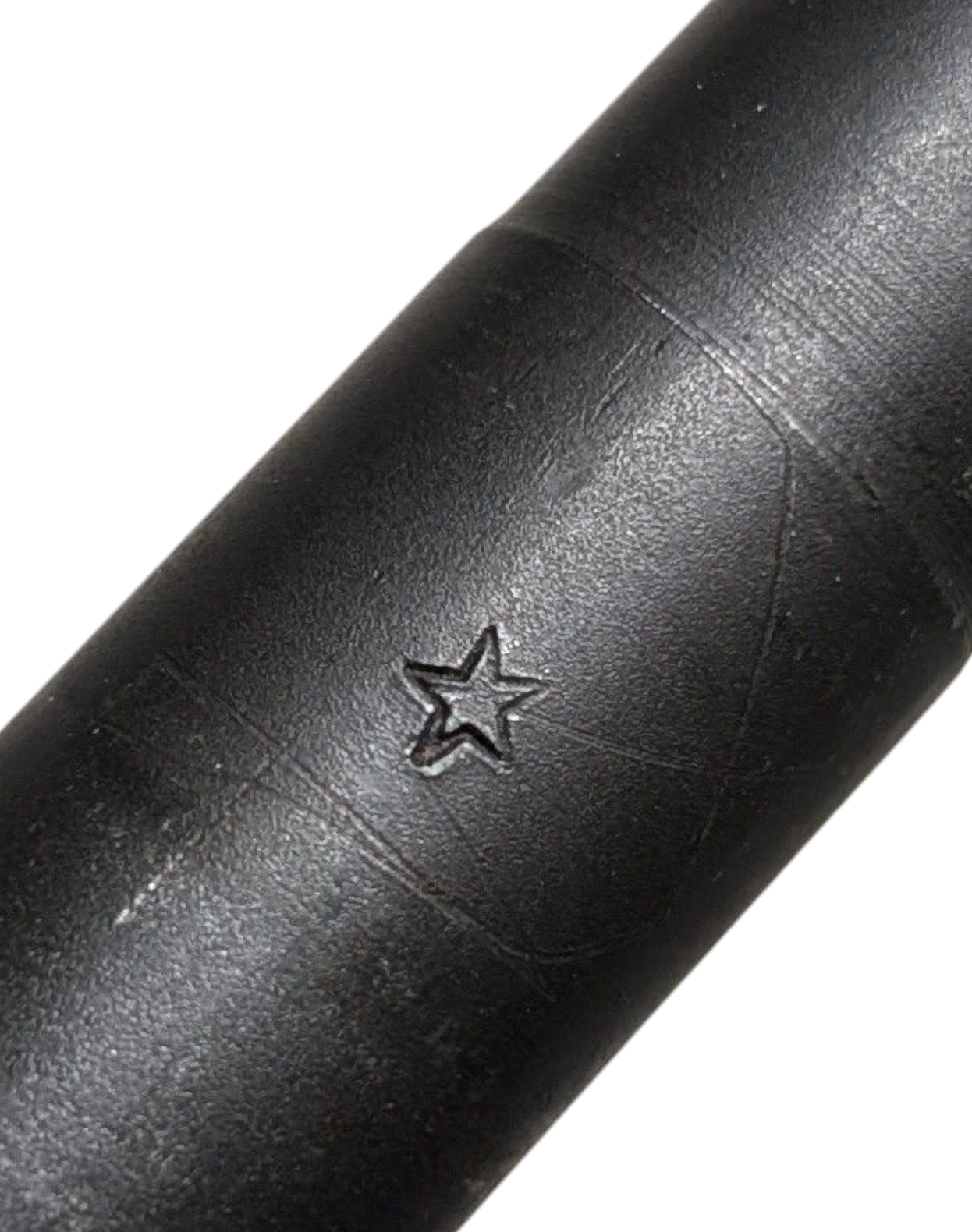
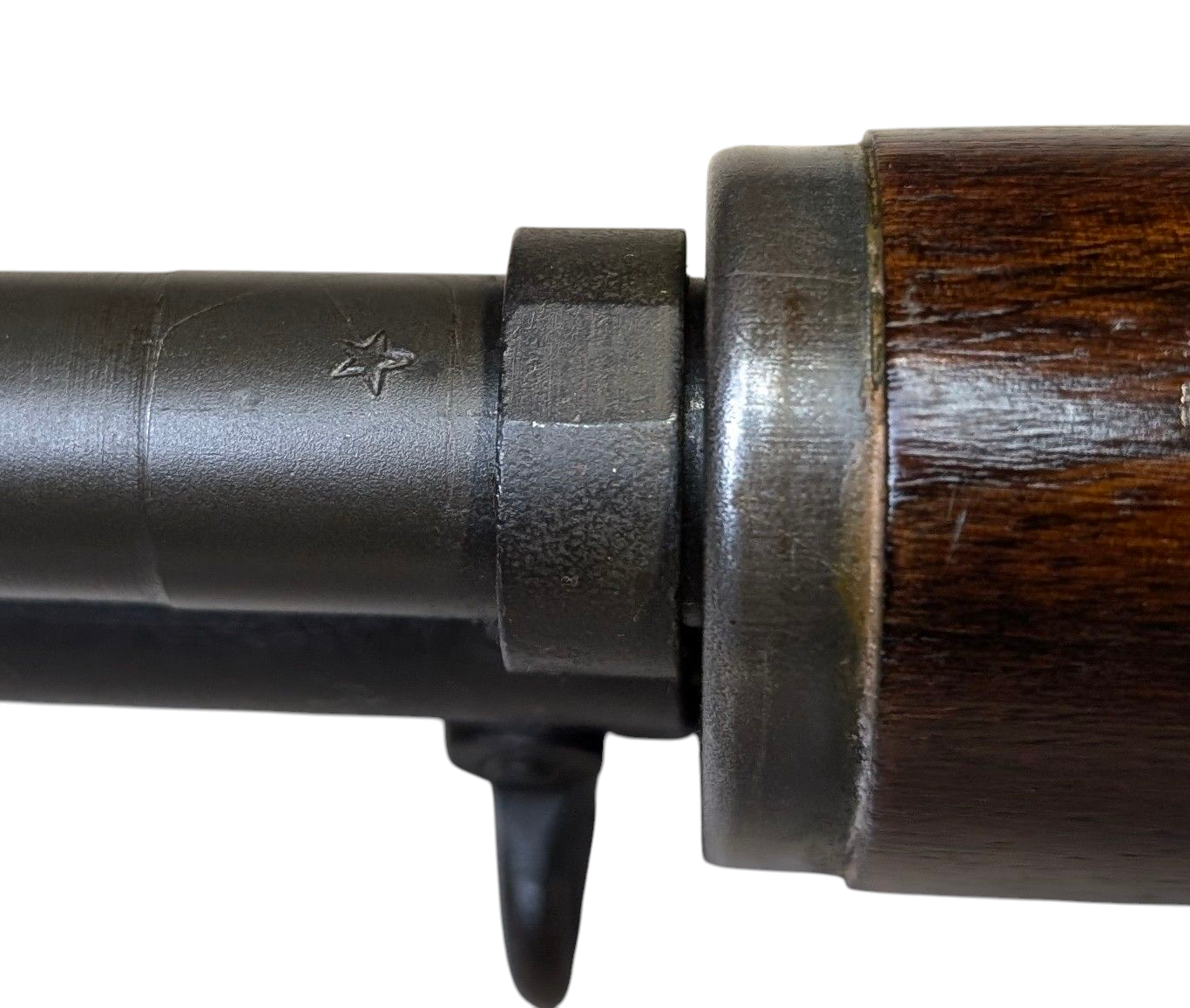
- 5 Point Star stamped on barrel to signify completed match conditioning
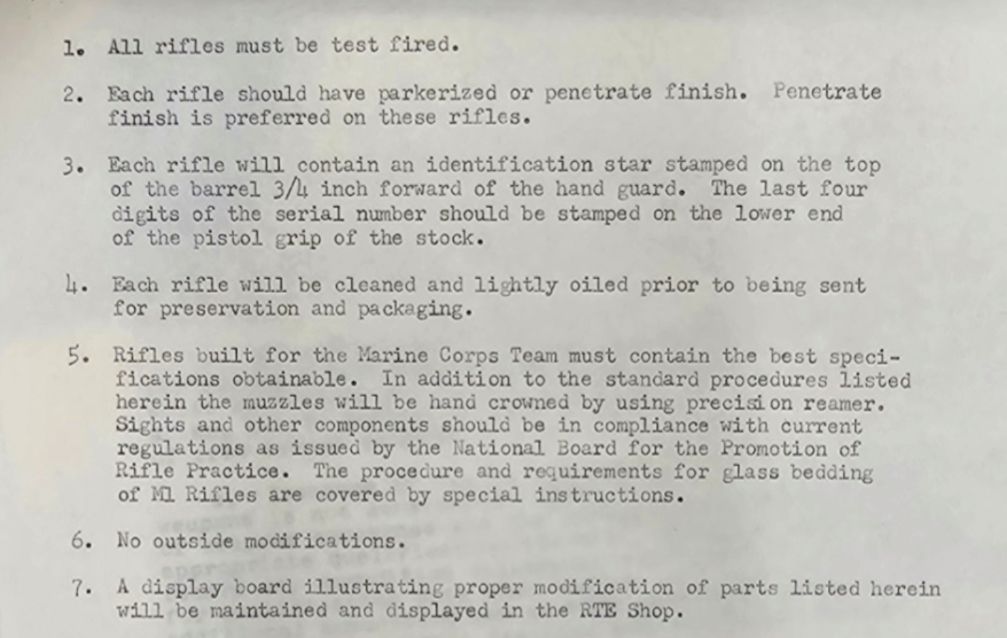
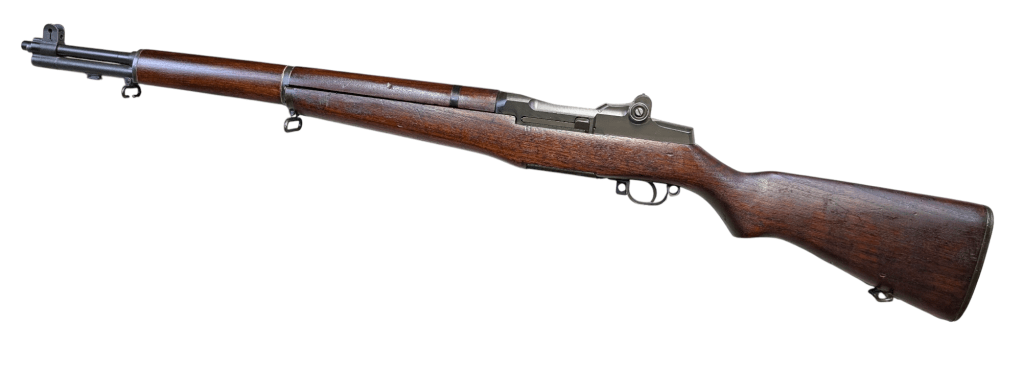
Type II USMC Match-Conditioned M1 Garand #6085183 (Plowman collection).
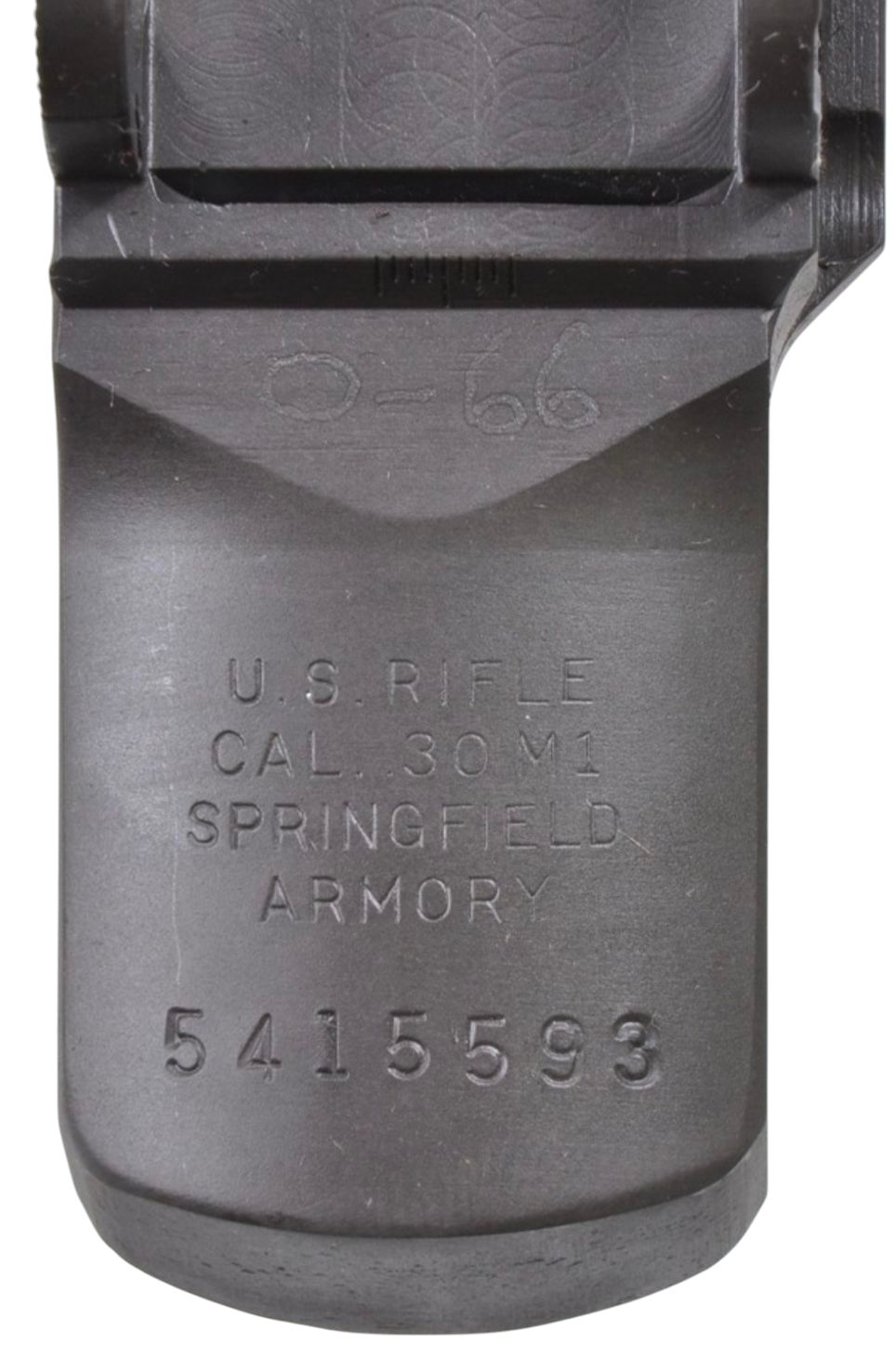
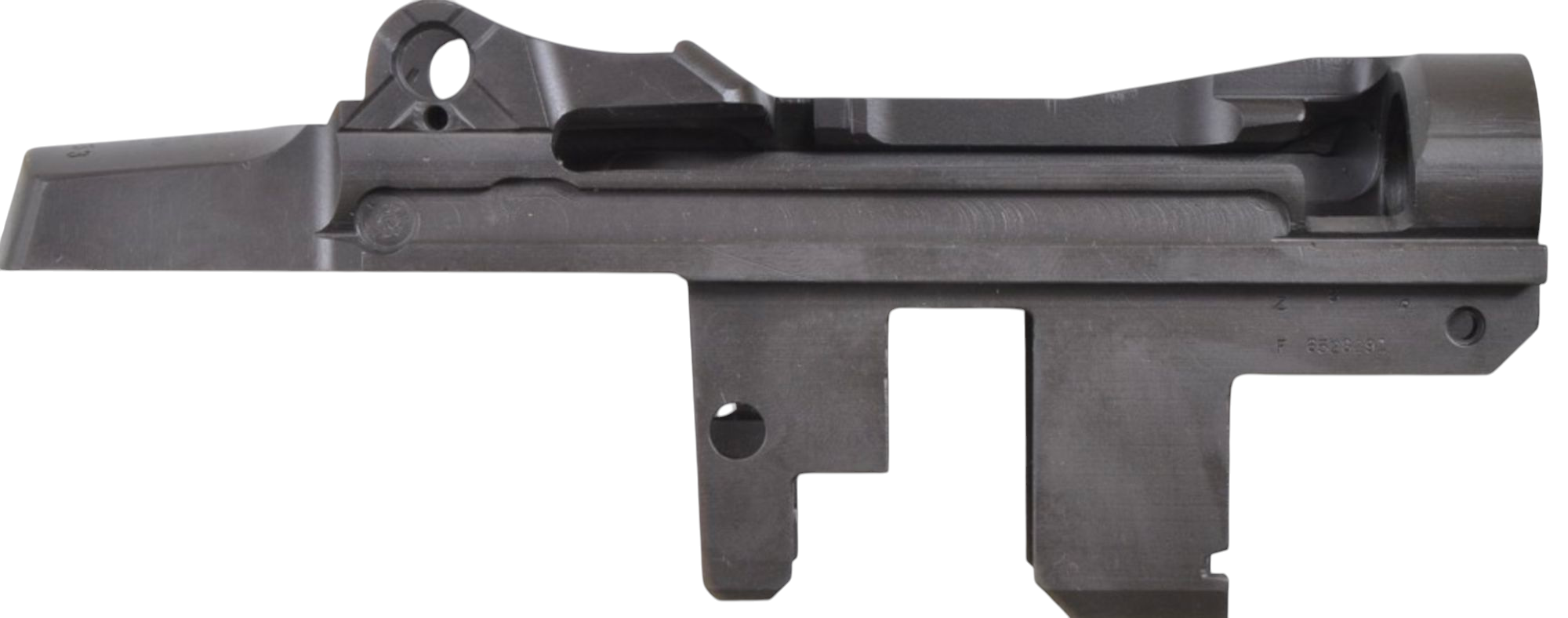
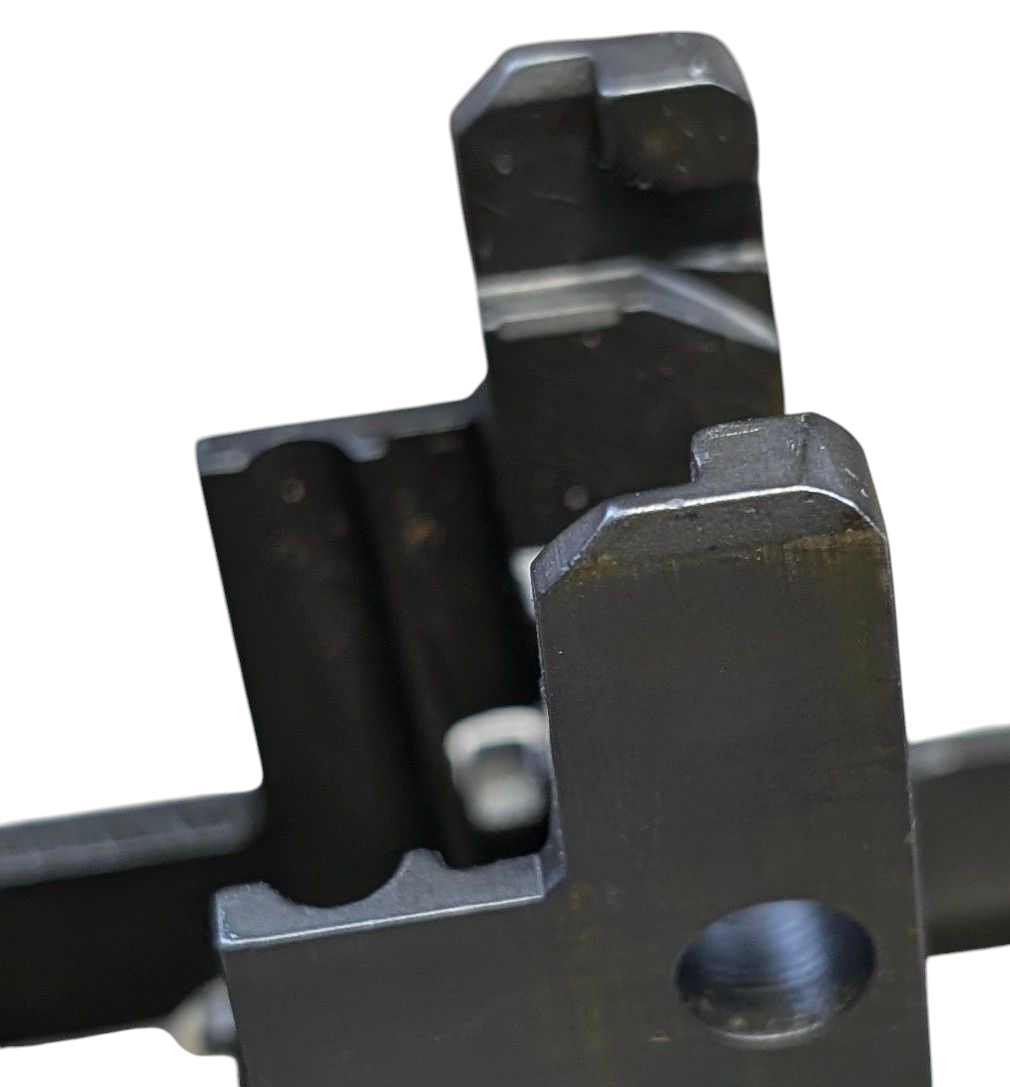
Type II USMC Match Conditioned M1 Garand #5415593, showing rounded receiver lugs to prevent chipping the glass bedding during removal (CMP & NARA).
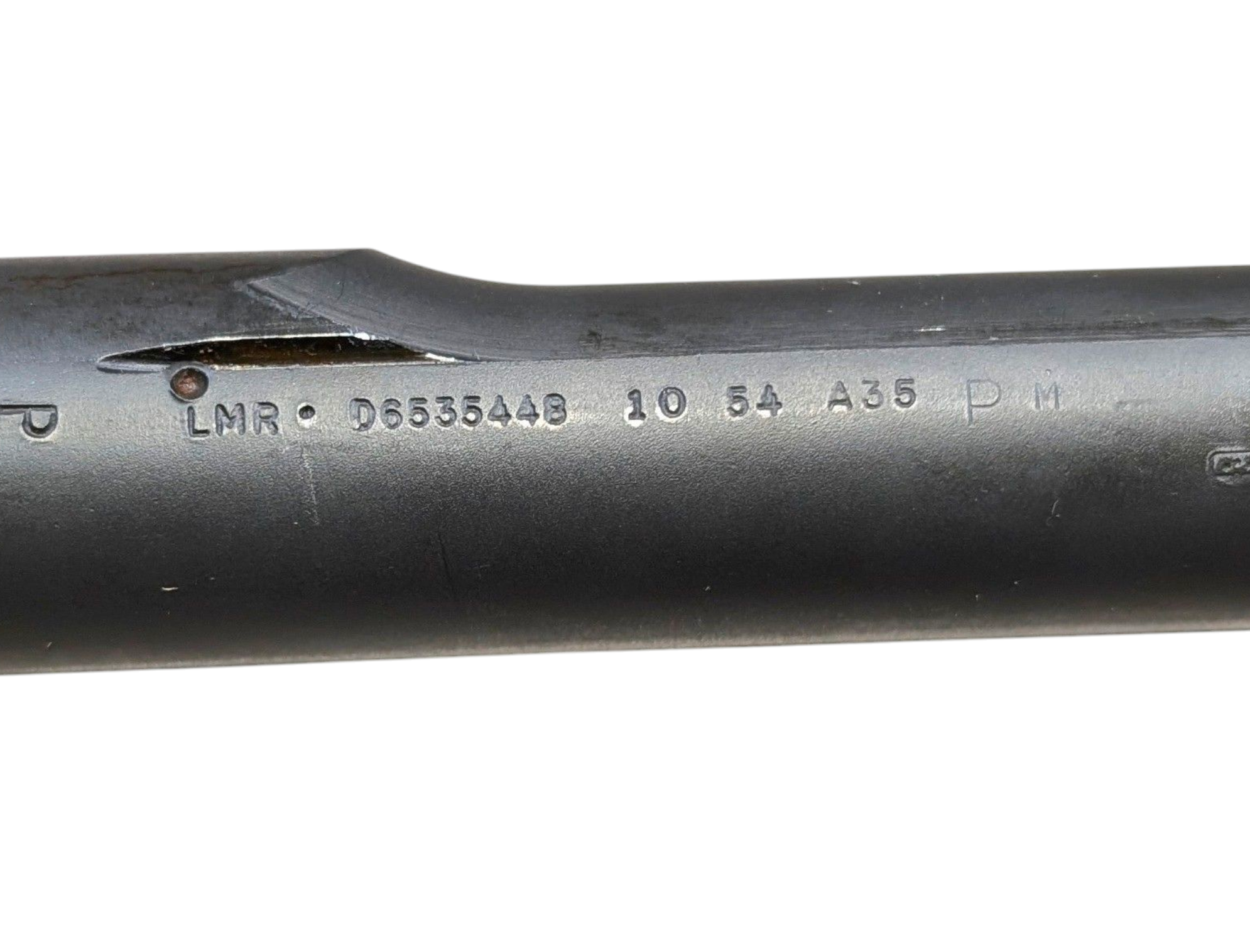
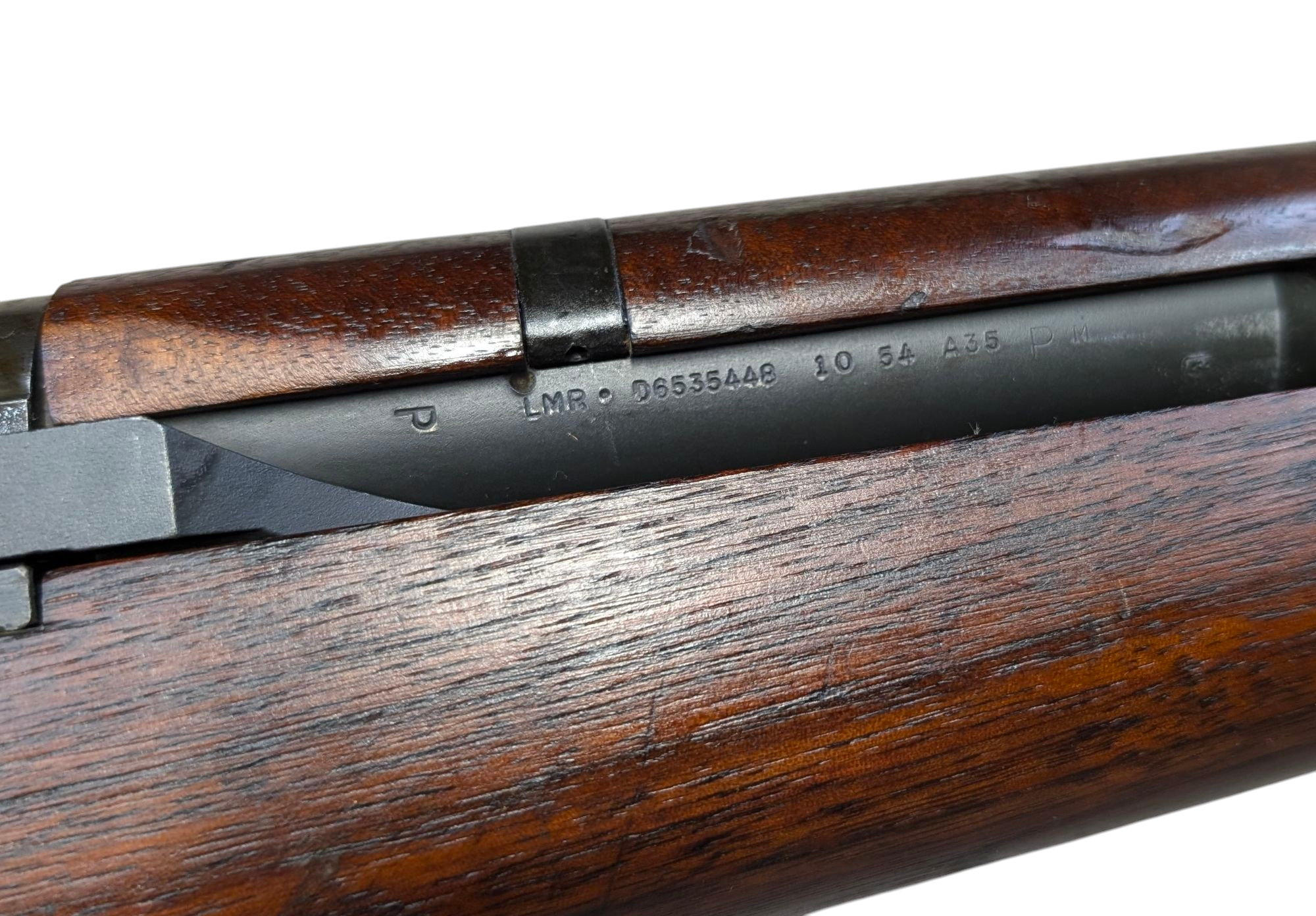
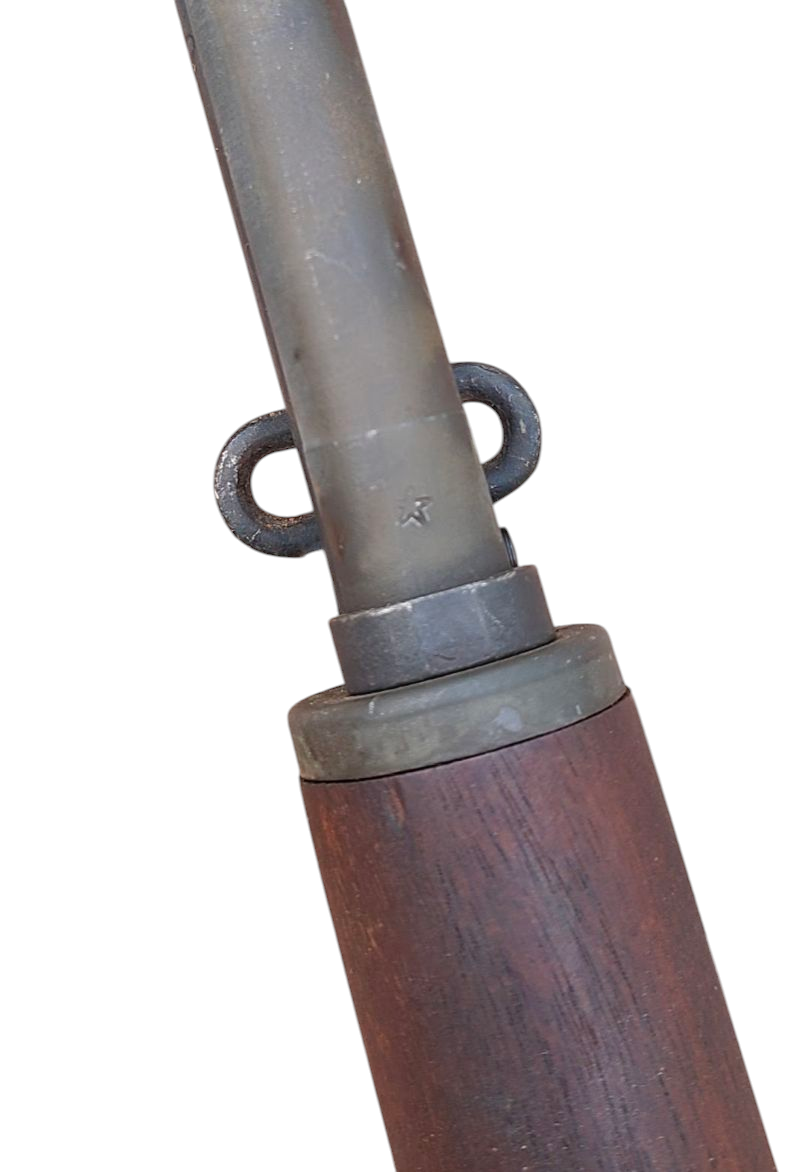
LMR barrels were preferred by the USMC for match purposes. After acceptance for match conditioning barrels were staked to keep the rear handguard from touching the receiver. A 5-point star would be stamped just in front of the gas cylinder ring to indicate FSN1005-630-7224 acceptance (NARA).
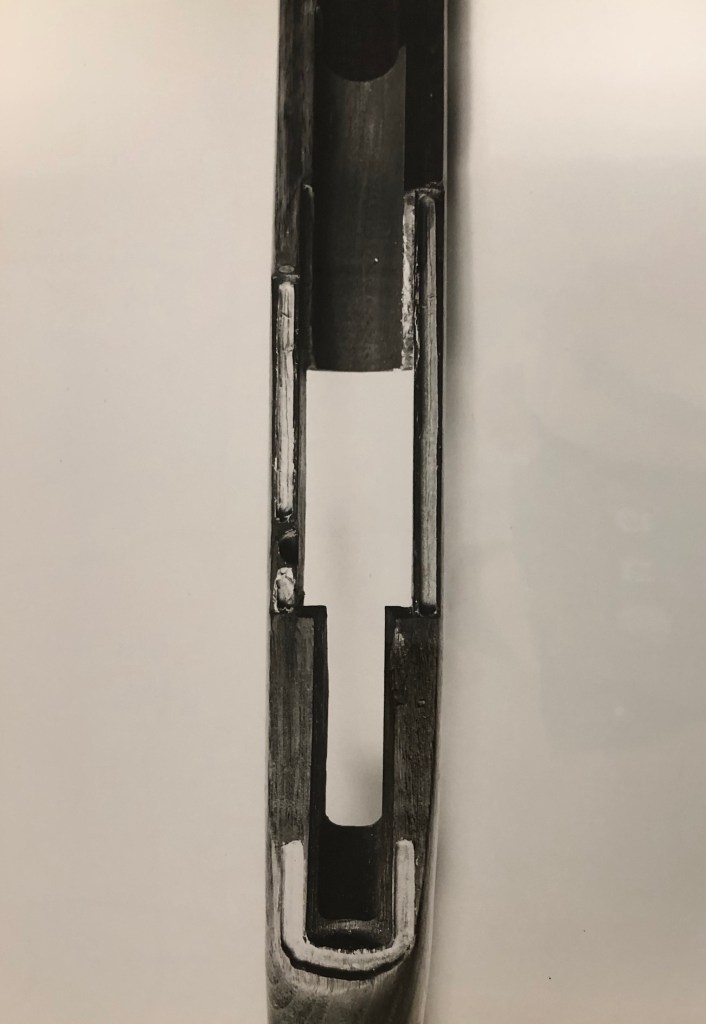
The most significant upgrades from the Type I to the Type II were the unitized handguards, bedded stocks and 1/2 minute windage adjustments. Unitizing the handguards consisted of drilling holes into the lower band and attaching it to the front handguard with wood screws, then epoxying the front and rear handguards to the lower band with epoxy. The rear handguard would be cut to ensure it did not touch the receiver, and any wood that might contact the barrel or operating rod was removed.
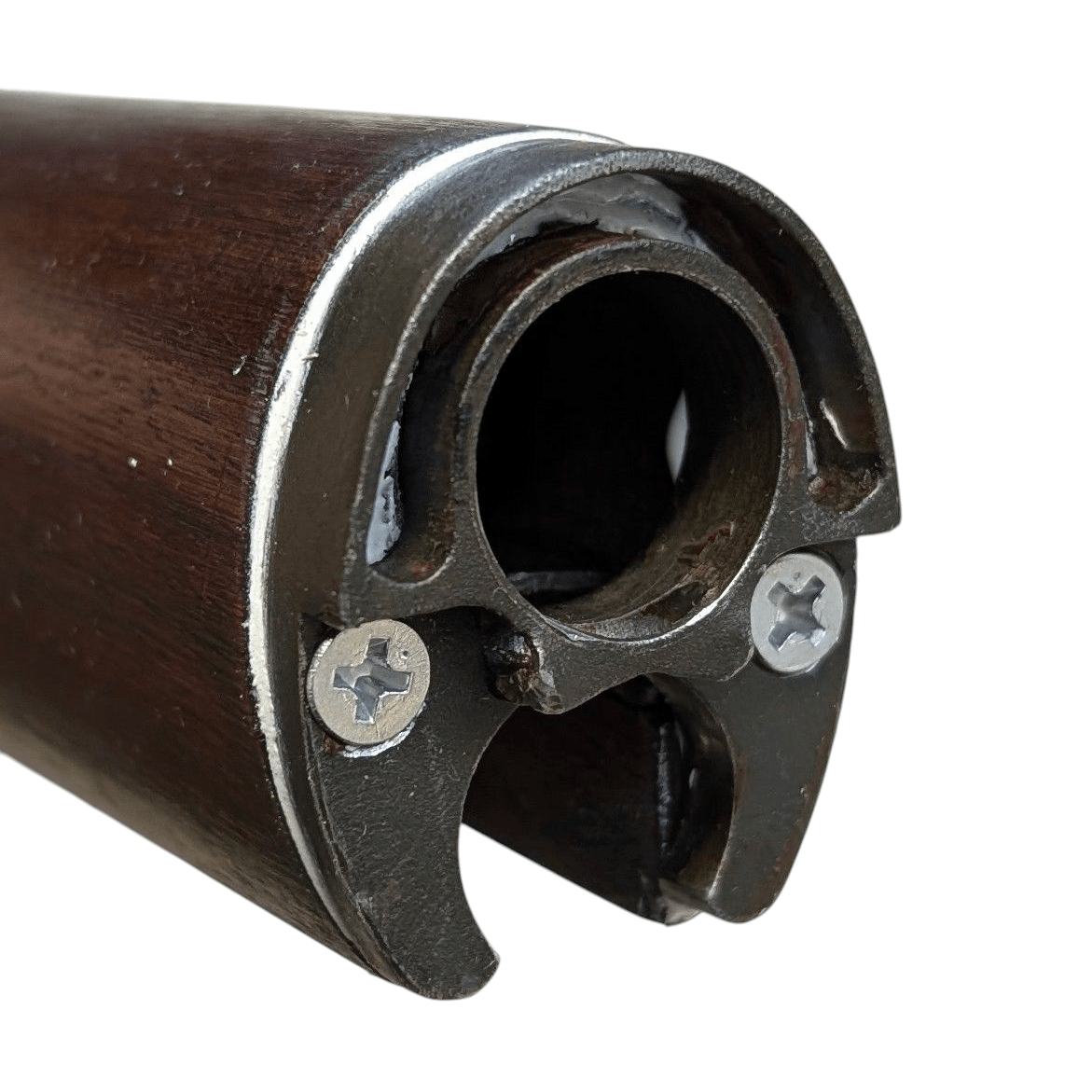
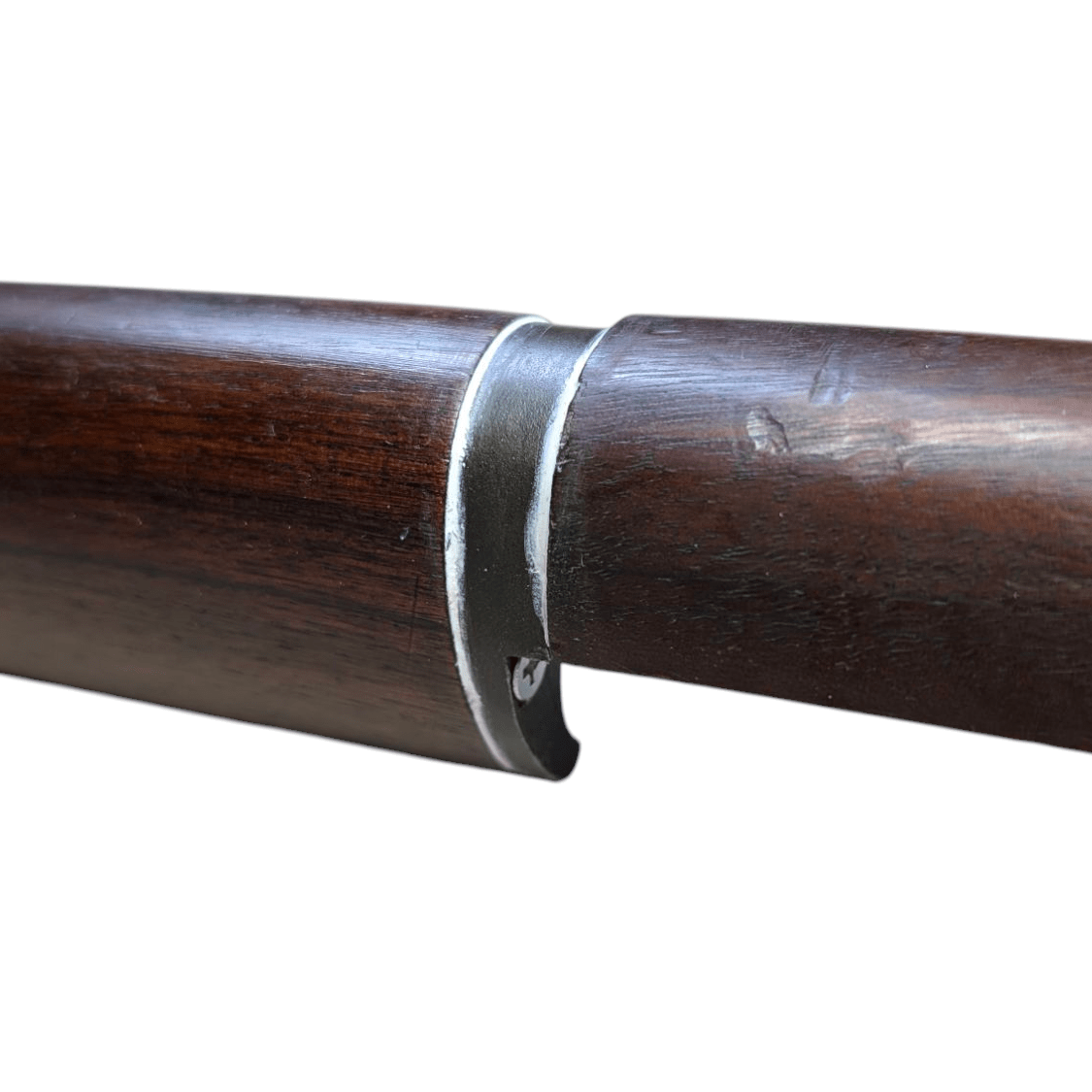
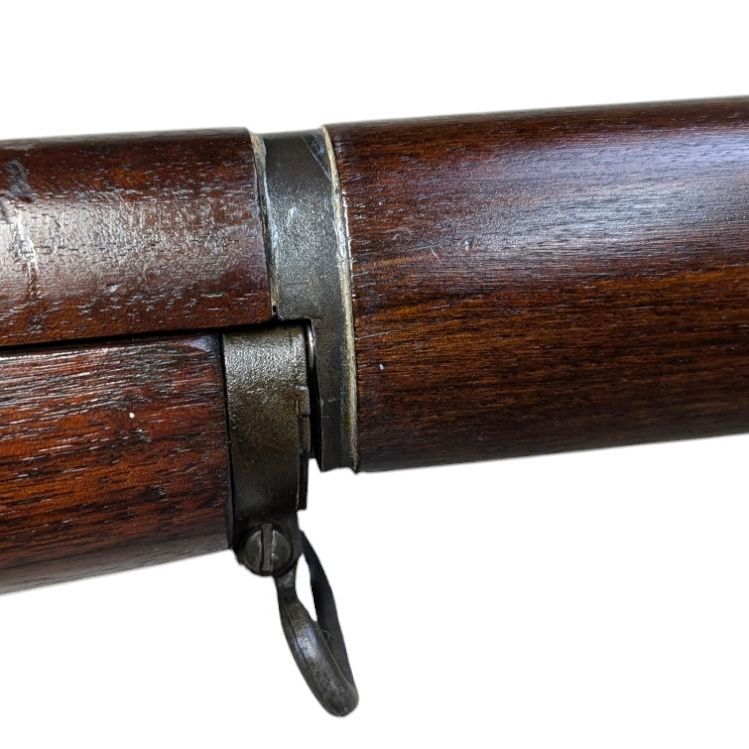
The rear handguard secured by epoxy into the lower band, unitizing the handguards.
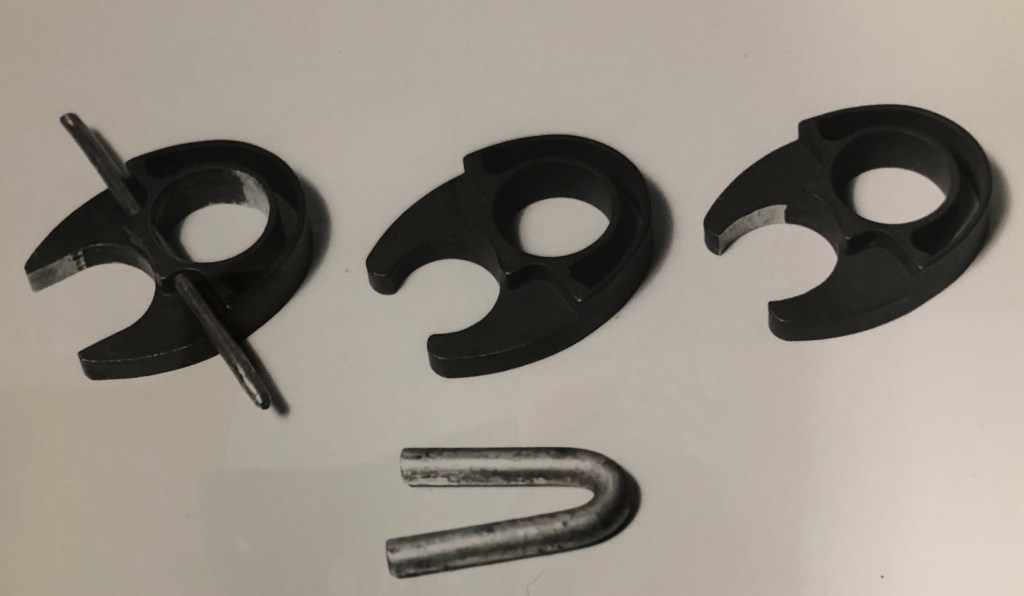
The USMC’s most significant deviation from Springfield Armory’s factory National Match M1 Garands was the rear sight system. While Springfield Armory used a special base and hooded aperture to achieve 1/2-minute adjustments, the Marine Corps used an elevation disc and ball bearing system instead. The elevation discs had 1-minute serrations on the inner side that fit snugly into the existing receiver ear, and twice as many serrations on the outer side for 1/2-minute adjustments. To install, the receiver ear was heated with a handheld propane torch, and epoxy applied to the outside of the disc. The use of resin for the rear sight disc had obvious drawbacks, as this was not a permanently secure application. With the Springfield Armory design 1/2-minute elevation was achieved by simply turning the sight hood left or right for a final adjustment. It is safe to say Springfield Armory’s sight hood system was superior, as the Marine Corps would incorporate it for their National Match M14s.
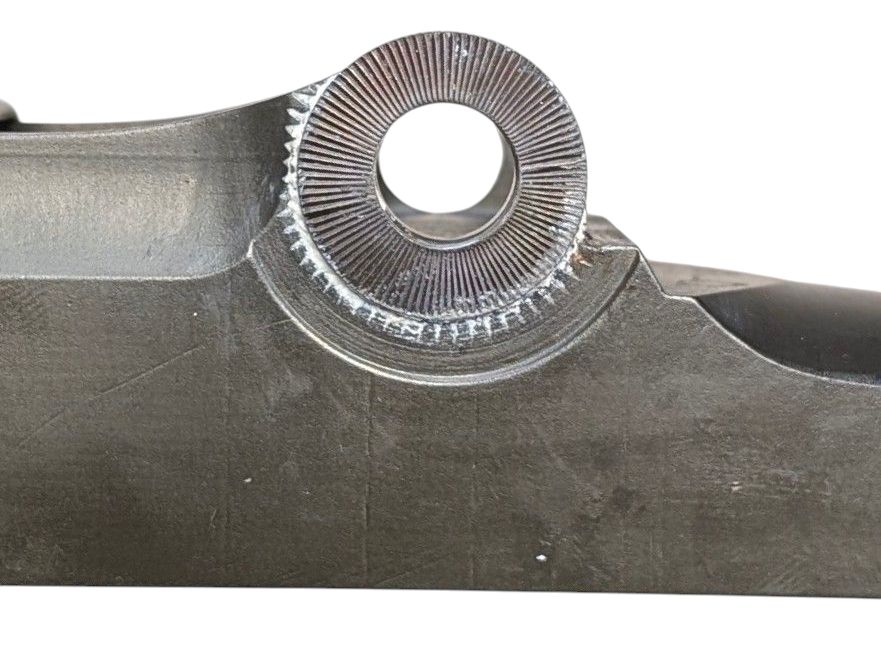
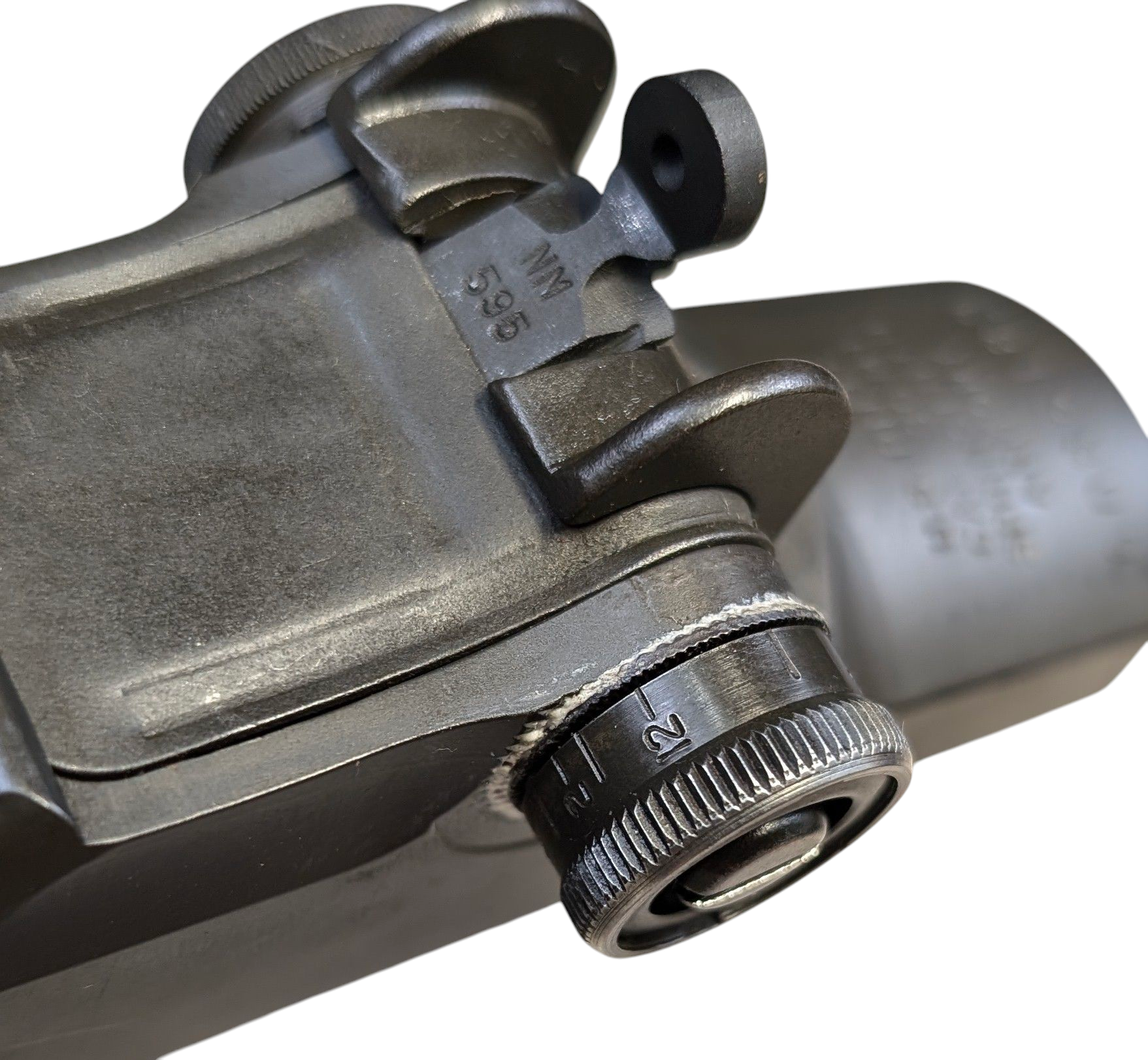
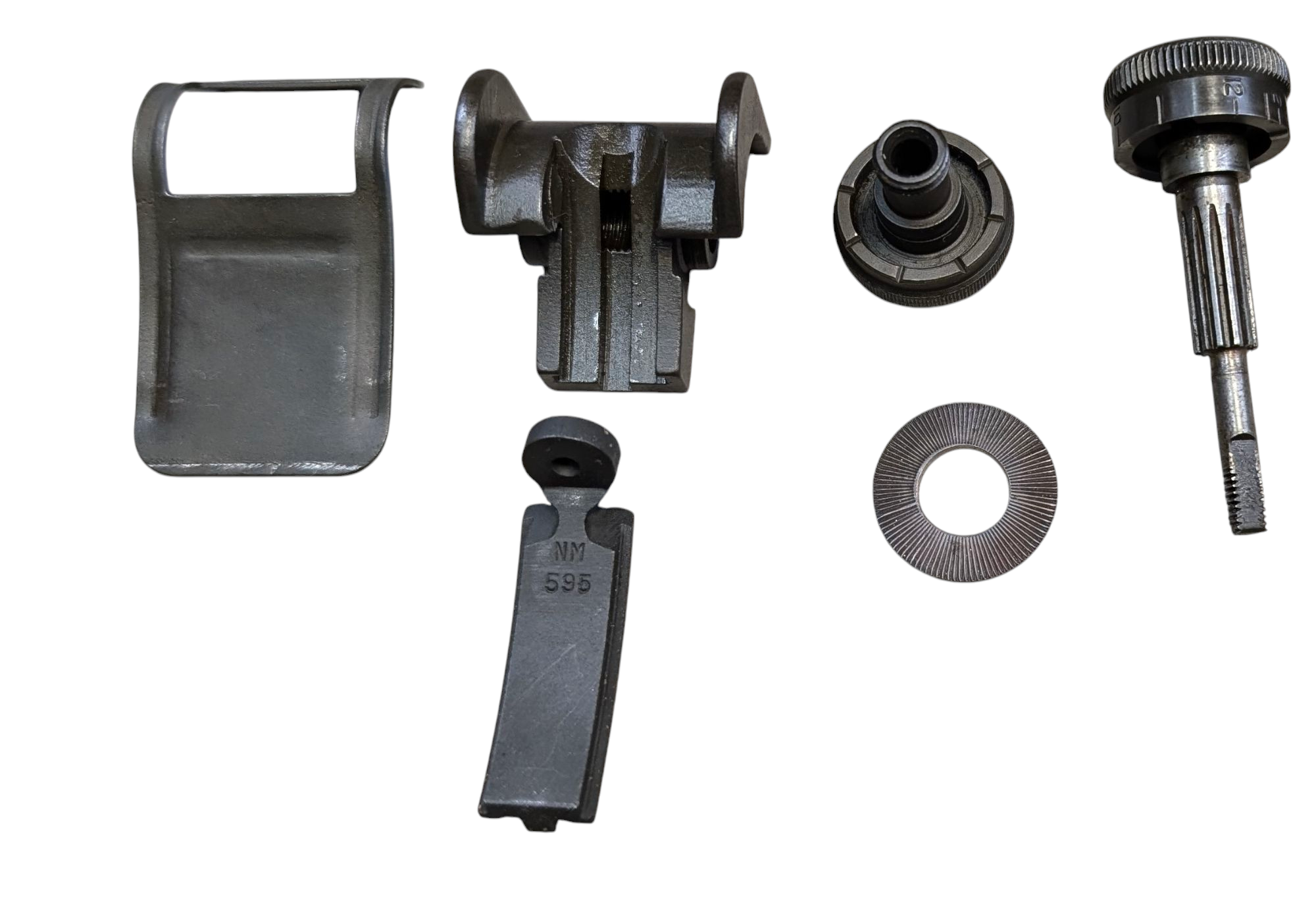
USMC spec NM rear sight parts, notably the eight-notched ½ MOA windage knob and the ½ MOA elevation disc which is attached by epoxy or heated resin.
The 1/2-minute windage conversion process began with a 1/8” hole being drilled 1/4″ deep at the 6 o’clock position in the receiver’s 1-minute rear sight notches. A 1/8” ball bearing and 1/4” spring were inserted into the drilled hole, and an original, modified 8-cut windage knob installed. While standard windage knobs have four flats that match the factory 1-minute rear sight notches, the modified elevation knob has eight small notches that catch the ball bearing every “click”, creating 1/2 -minute windage. Adjustments with the ball bearing are crisp and seamless, giving the best feel for the shooter. For a long time, this system was considered the hallmark of Air Force Premium Grade (AFPG) M1 Garands, but the reality is the Air Force adopted this practice from the Marine Corps. The Air Force would use M1 Garands on their rifle team after the Marine Corps had transitioned to the NM M14, and would combine the USMC’s 1/2-minute windage design with Springfield Armory’s 1/2-minute elevation system. In this regard, AFPG M1s combined the best parts of USMC and army match-conditioned M1s creating an exceptional product.
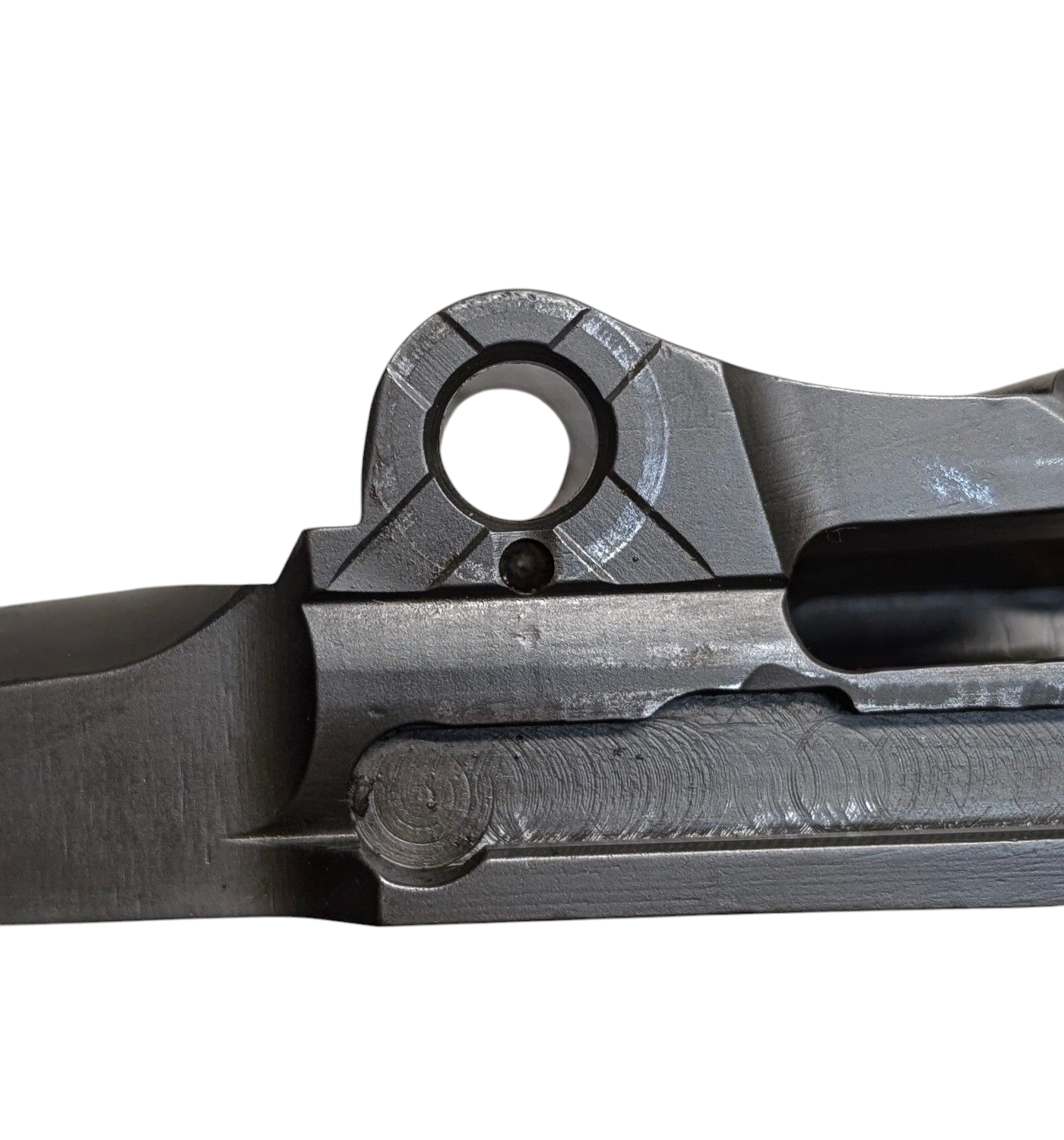
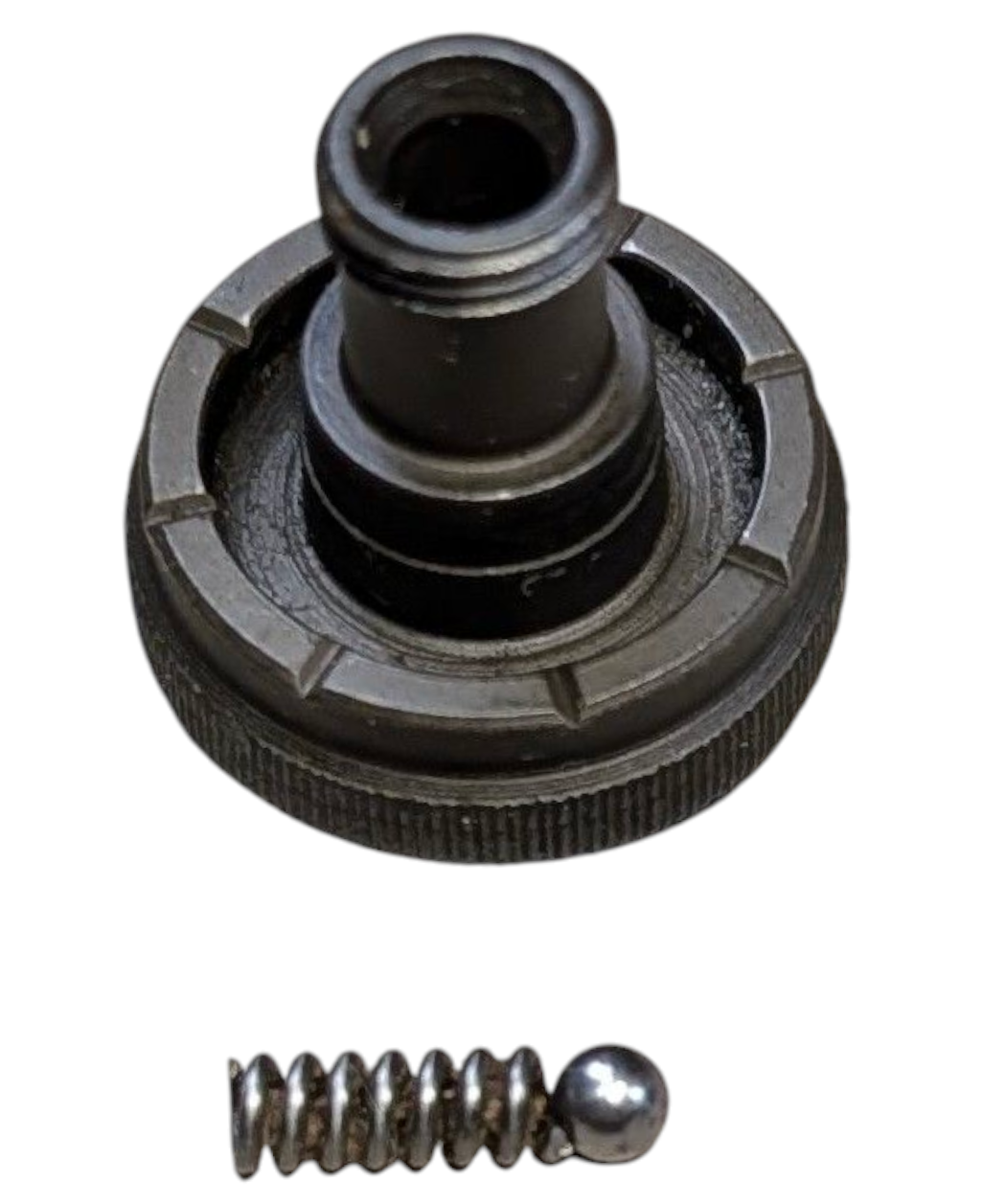
Type II receivers have a hole drilled under the windage ear to allow the installation of a 1/2 MOA adjustment system. Previously thought to be only an Air Force practice, the Marine Corps would create and utilize this design first with the Air Force following suit (NARA).
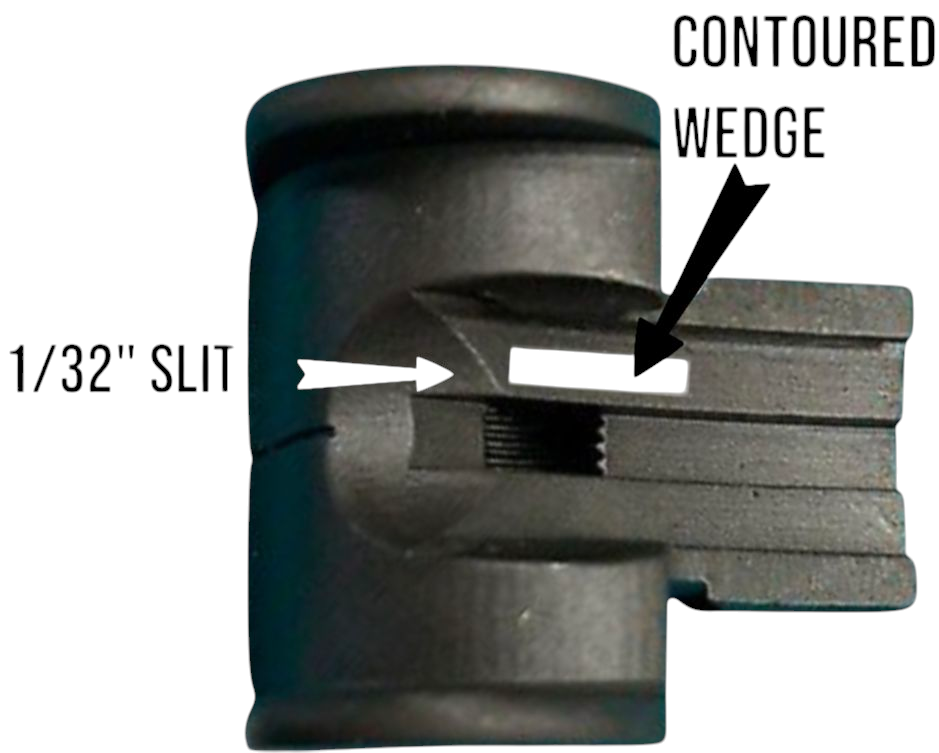
Perhaps the most unique modification the manuals contained was the cutting and wedging of the rear sight base to increase aperture tightness in the guideway. As many who have rapid-fired the M1 Garand in competition know, the aperture can be prone to “jump” around. To remedy this, a 1/32” slit was cut 3/32” deep into the left side of the rear sight base, and a contoured wedge driven into the slit to increase the tension on the aperture in the rear sight base guideway. The rear sight base was annealed prior to cutting and hardened following installation of contoured wedge. Lapping compound is then used to fit the aperture into the rear sight base. According to former RTE armorer Gus Fisher the modification of the rear sight base was problematic. The cutting of the base, despite annealing and hardening, would severely weaken it. The benefit of aperture tightness did not last long, and the process had to be repeated frequently.
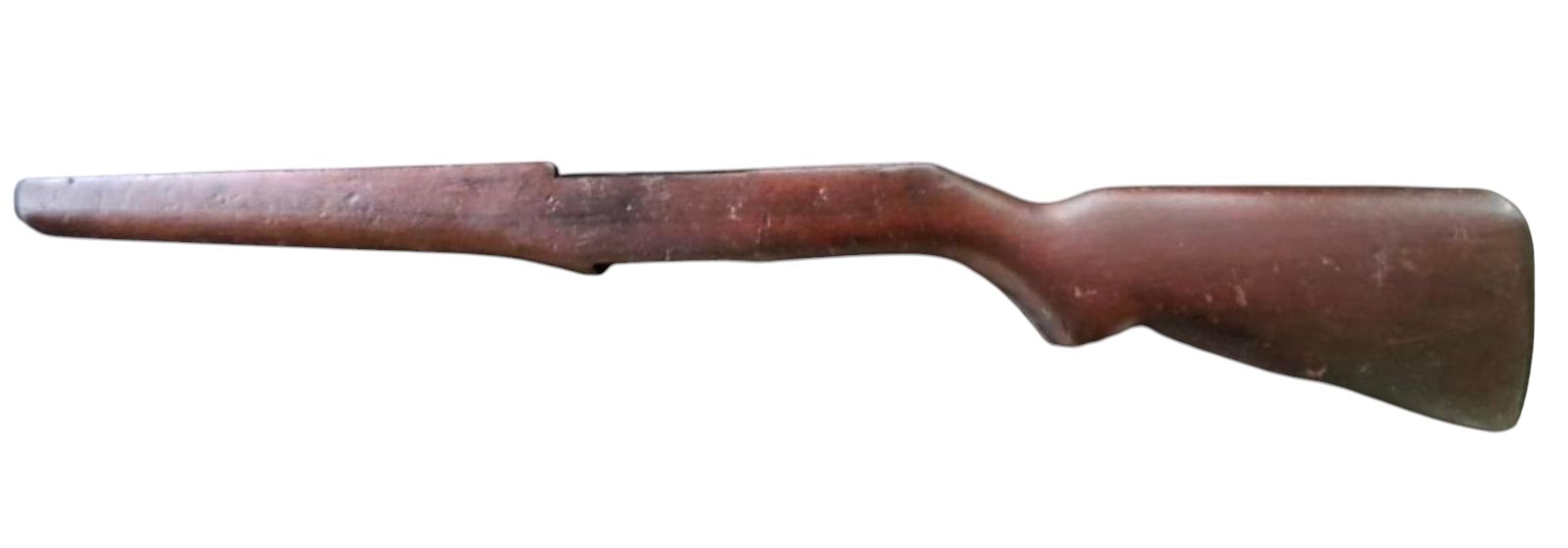
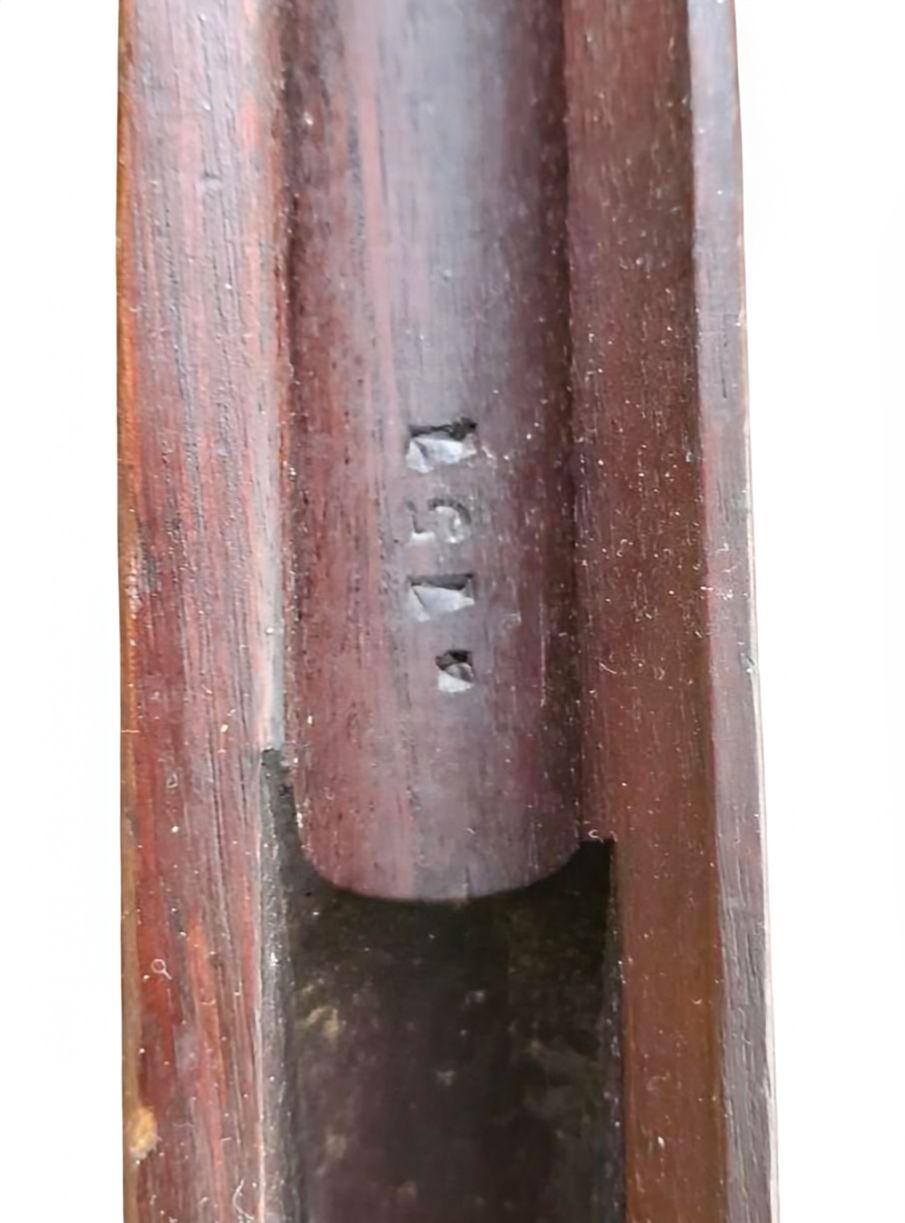
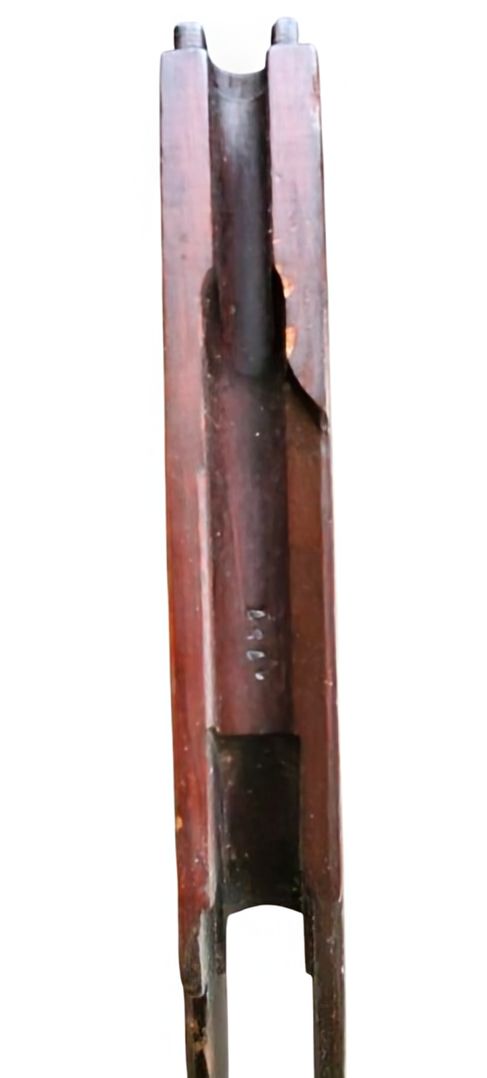
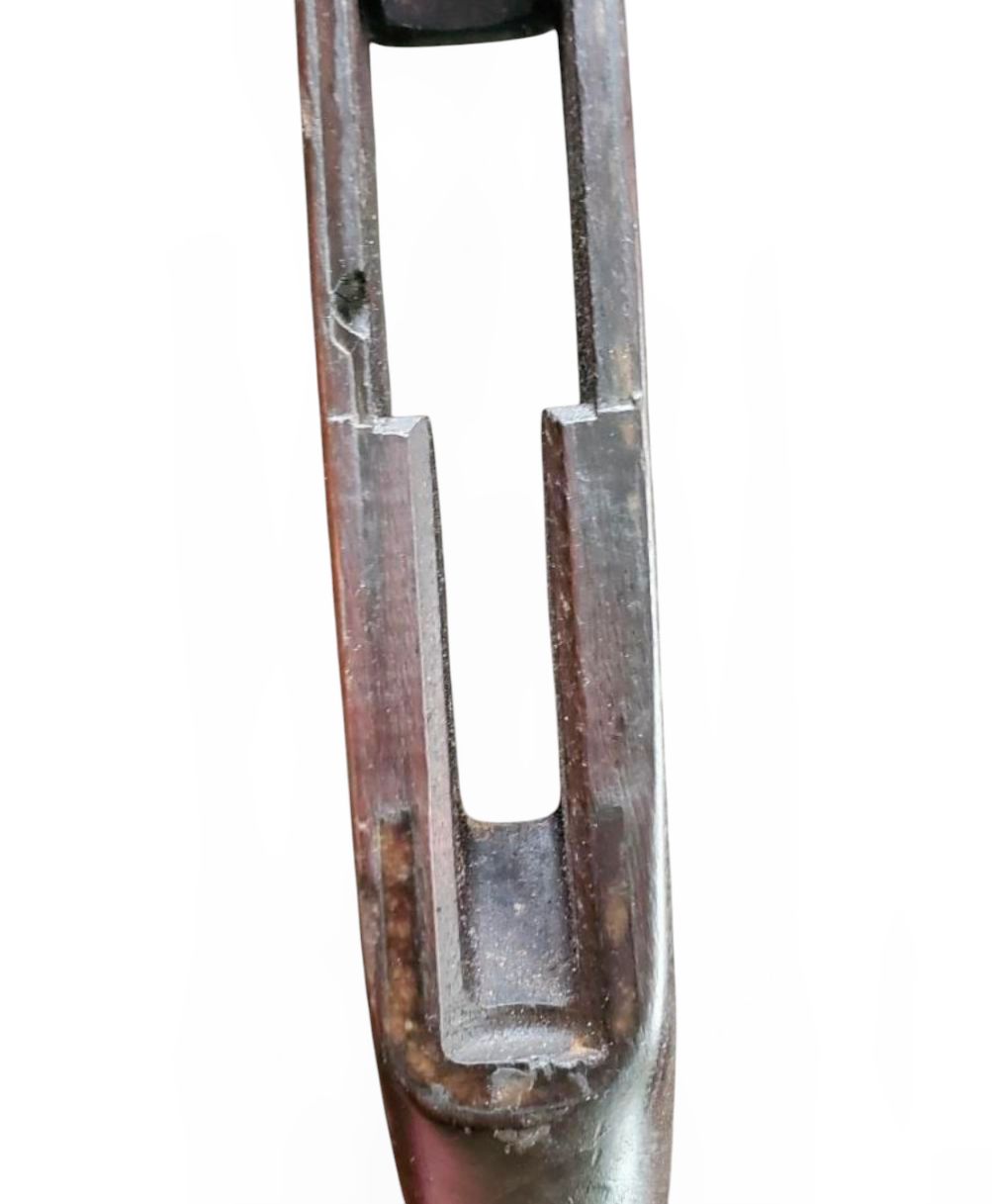
Glass bedded USMC Type II Match-Conditioned M1 Garand stock (Philbeam collection).
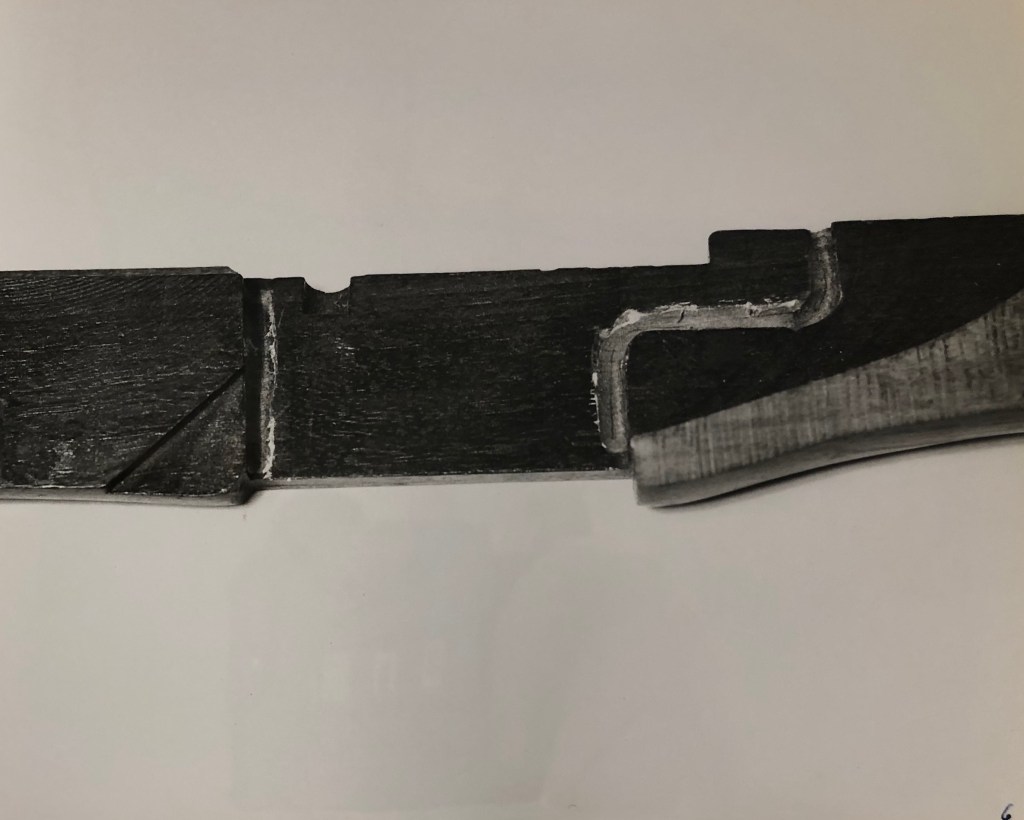
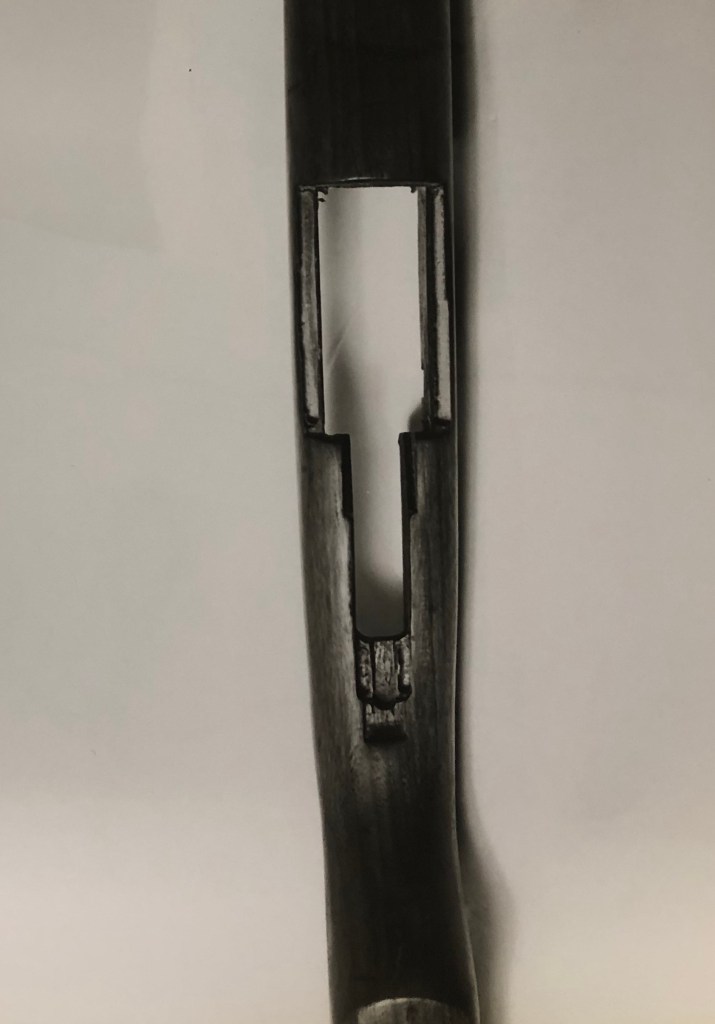
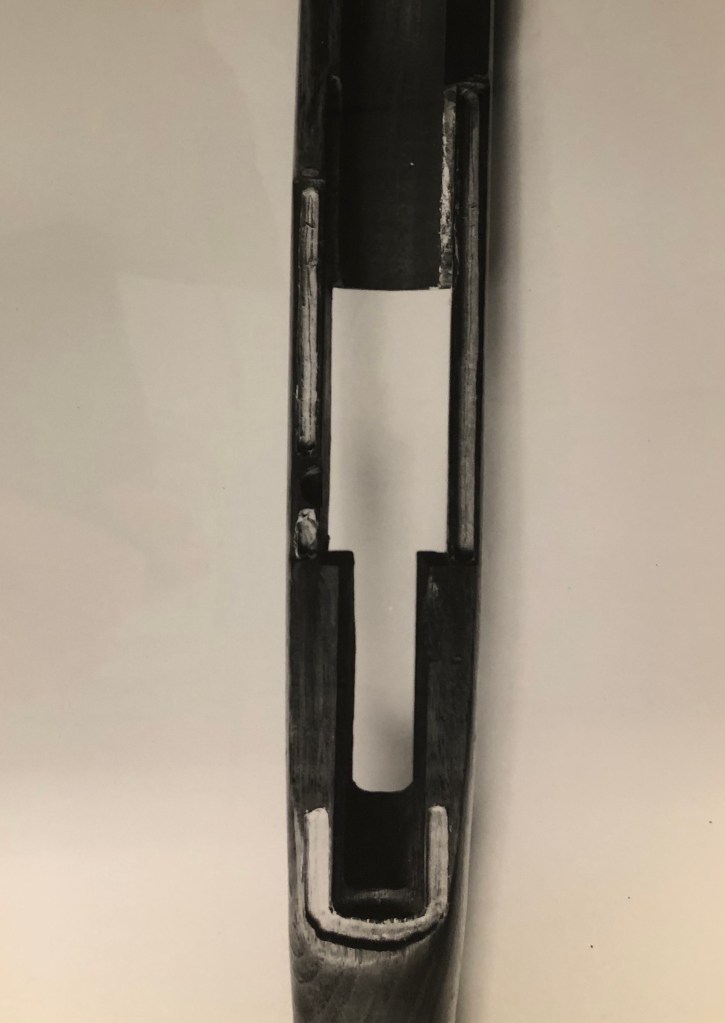
Both the ’63 Albany and ’64 Quantico manuals called for the selection of a straight grained stock, a practice used since Type I rifles as these stocks were considered stronger. Once selected the stock would be secured in a drill press and the top rails, horseshoe, and trigger surfaces routed out by a 1/8” end mill to a depth of 3/16”, leaving enough wood particularly in the trigger-well area to ensure reinforcement. Next, the glass bedding compound was added to the routed areas. Prior to the insertion of the barreled receiver, the receiver’s rear recoil shoulders would be rounded off to guard from chipping the bedding during future disassembly and reassembly. The barreled receiver would then be inserted and the glass bedding allowed to set for twelve hours or more.
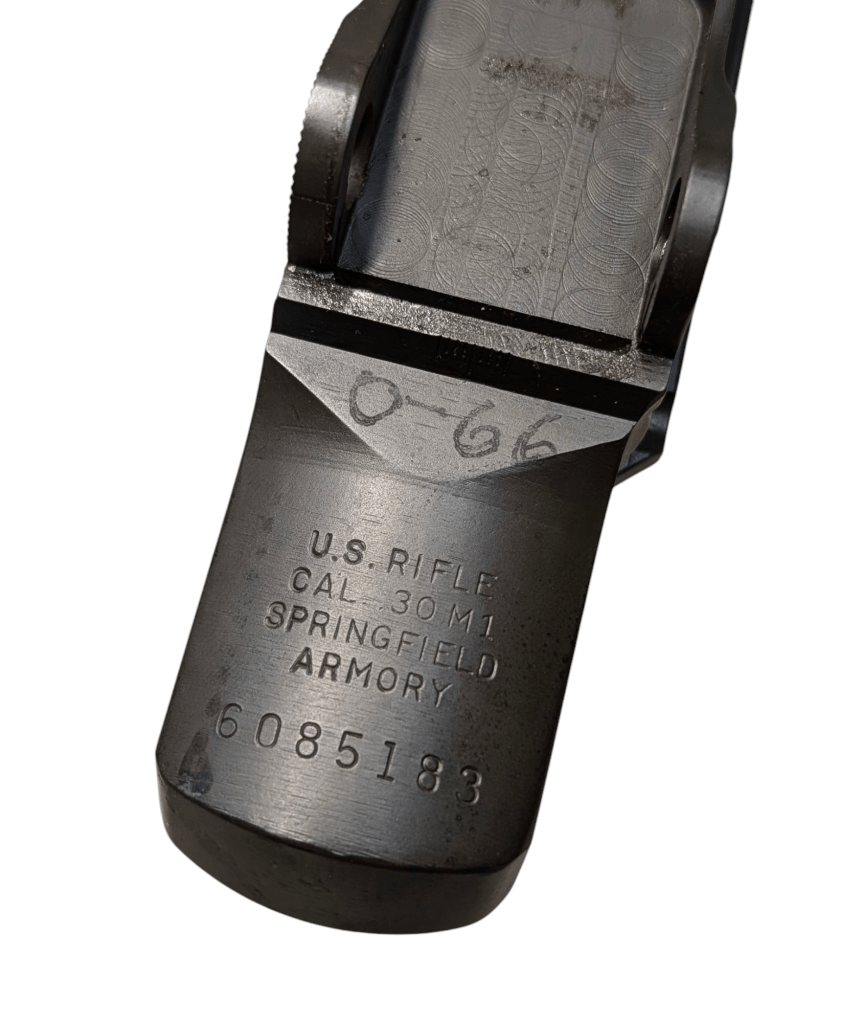
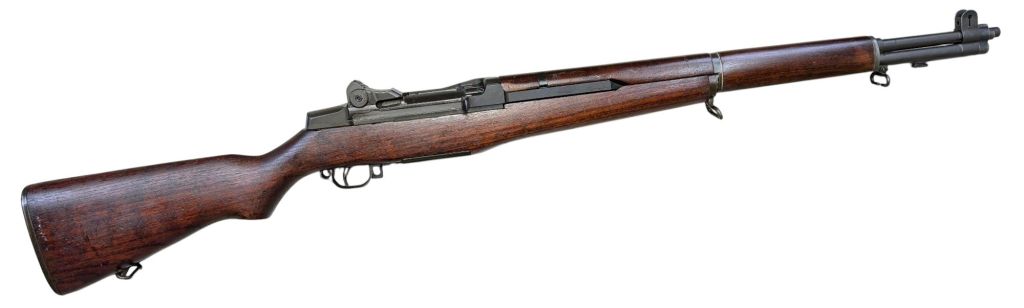
By the time the Type II program was in full swing, the M14 was already in service and being match conditioned for what would come to be a historic new level of performance. The vast majority, if not all the USMC’s Type II M1 Garands would be rebuilt into standard service rifles during the 1960’s rebuild and storage programs or sent overseas as Military Assistance Program (MAP) rifles. As such, finding a Type II in any condition is exceptionally rare.
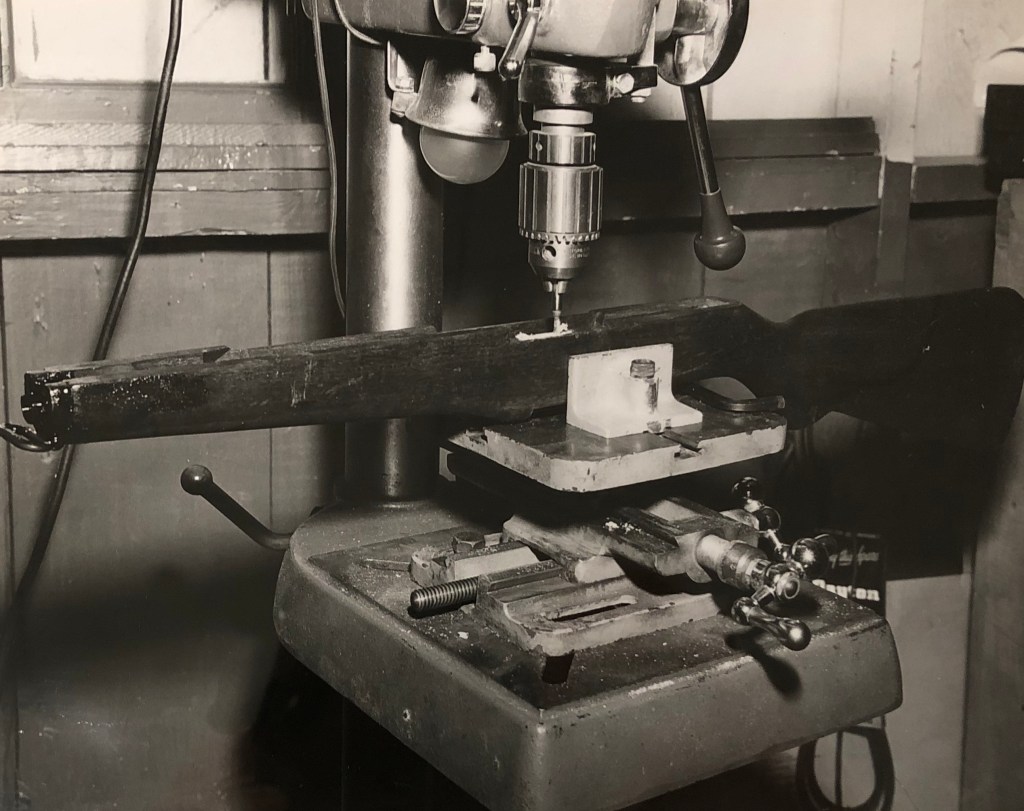
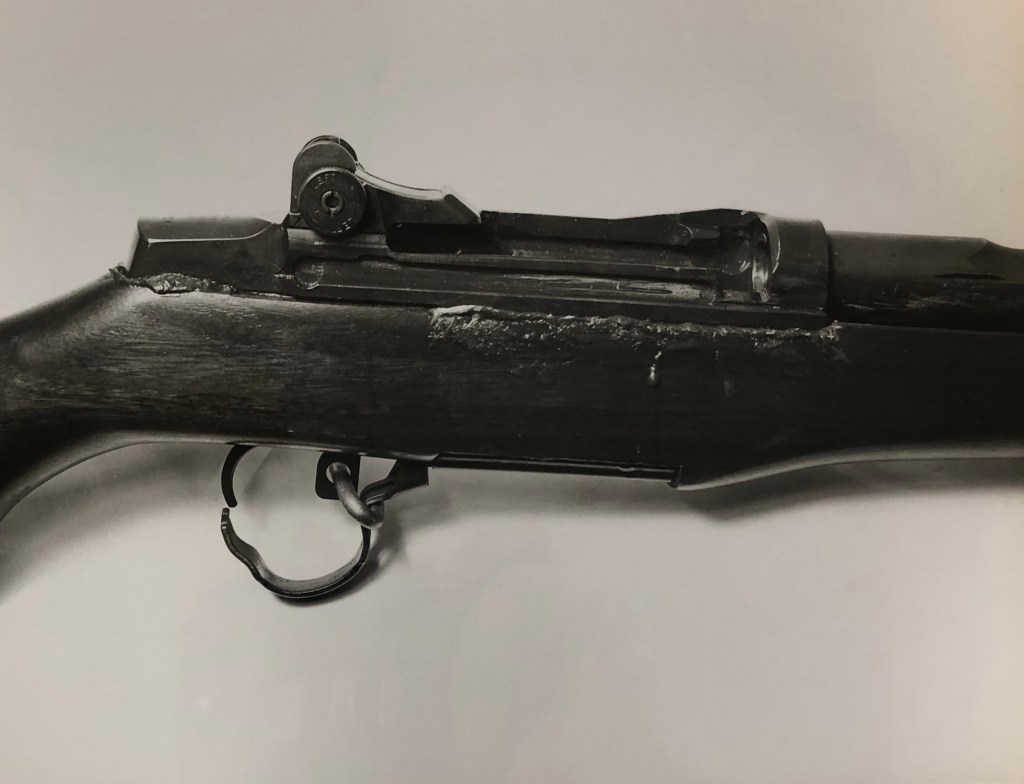
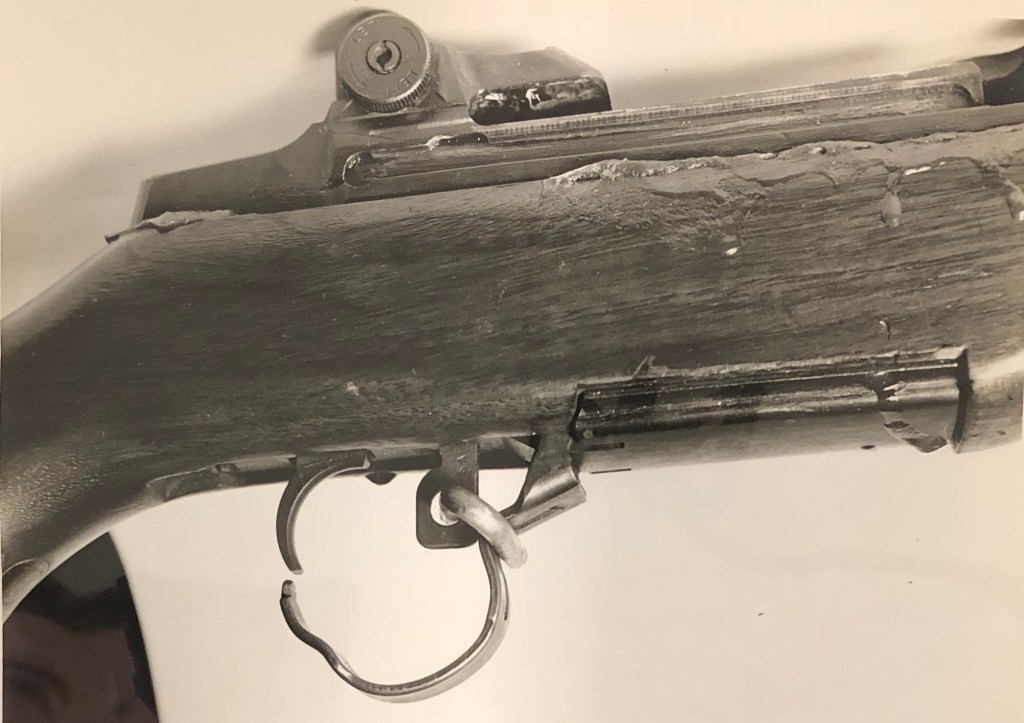
Photographs detailing the Match Conditioning process at a USMC armory (USMC History Division Archives).
 USMCWEAPONRY.COM