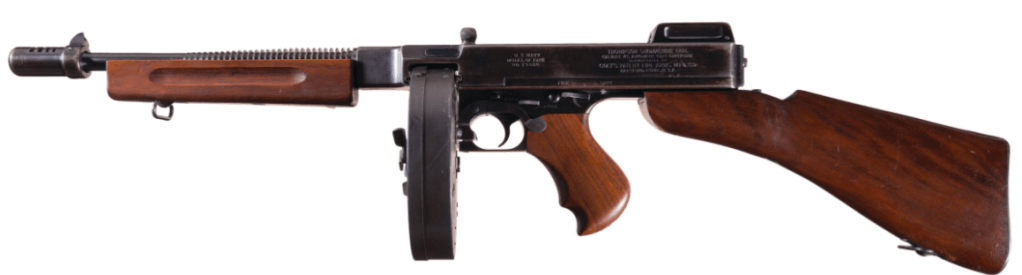
The Thompson Submachine Gun (TSMG) would begin its association with the Marine Corps during a demonstration in 1920. Impressed by the Thompson’s capability, Colonel Cyrus S. Radford would privately purchase three TSMGs for the Marine Corps to test in the fall of 1921. Several small orders of Model 1921A Thompsons would be placed in 1923 & 1925, for testing and service in Haiti with the 2nd Marine Regiment. Large scale service would not begin until the fall of 1926 when it was decided that the standard Model 1921A was to be modified to better fit military needs. Marine Colonel Robert Cutts’ recoil reducing compensator was to be attached to the barrel, creating a variant known as the Model 1921 AC.
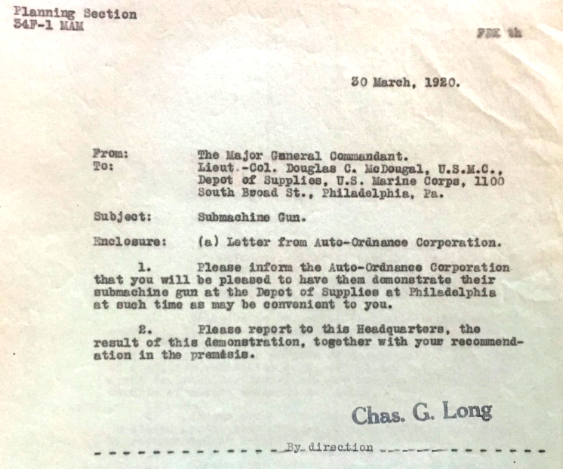
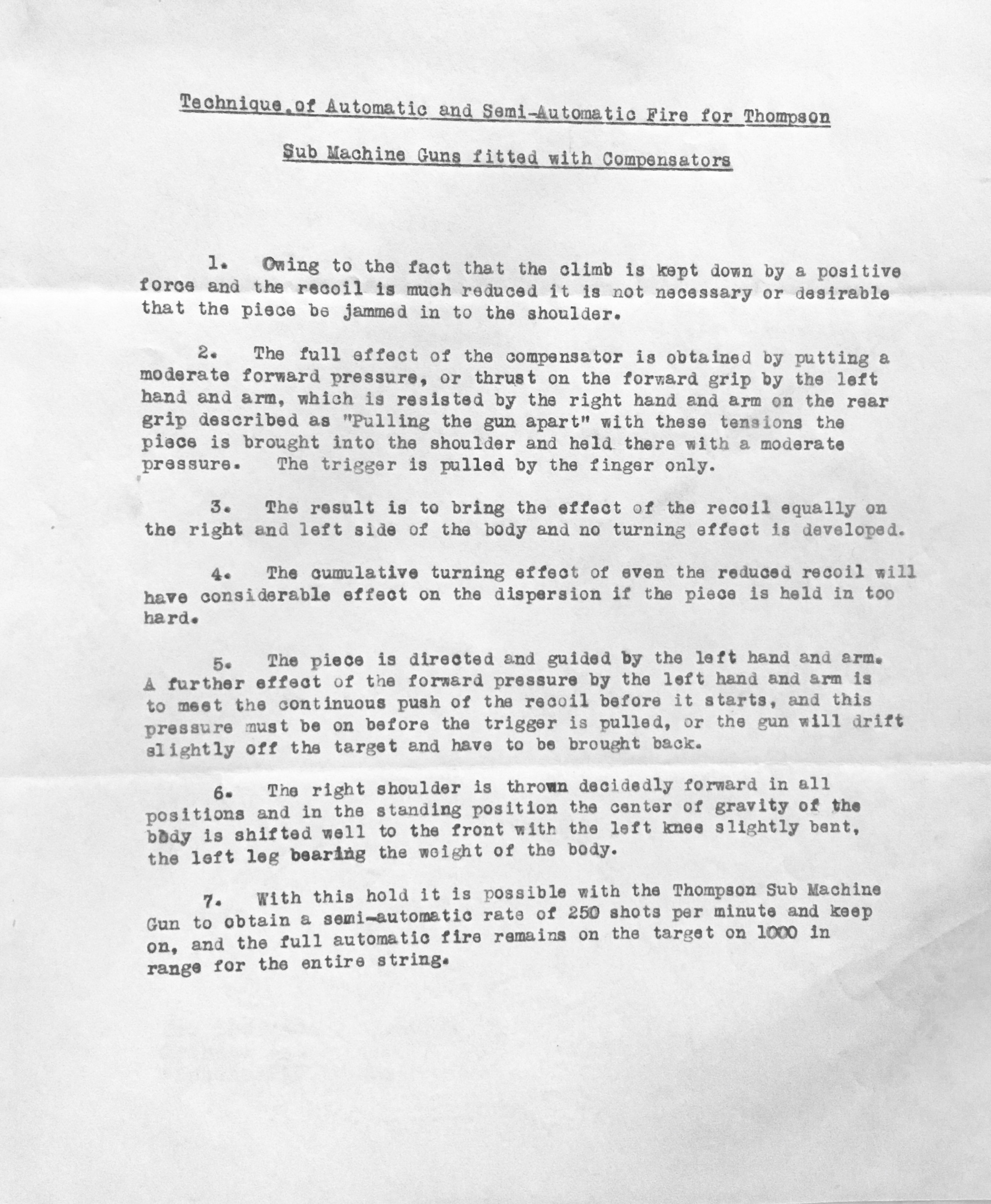
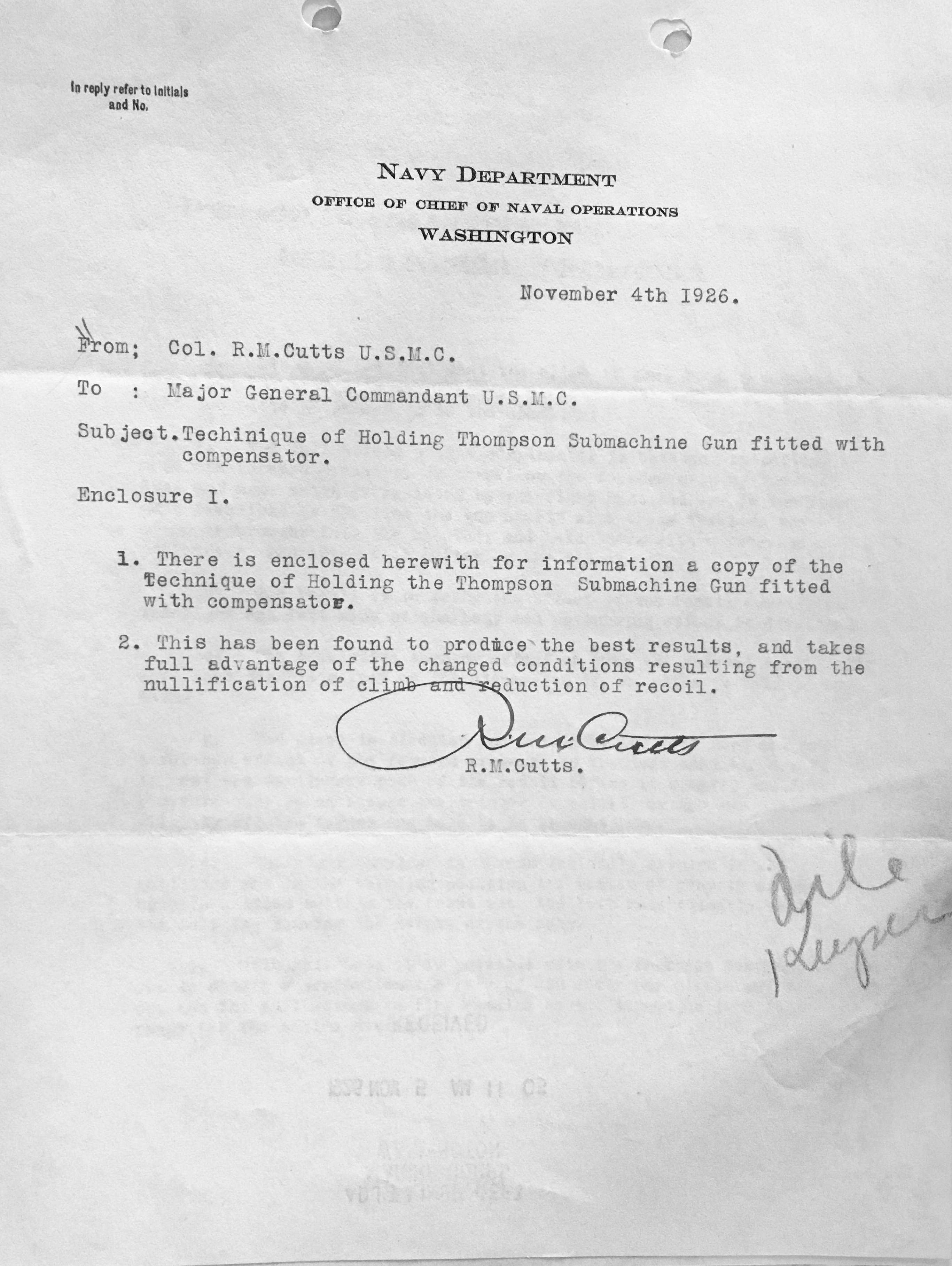
Instructions from Colonel Cutts on the proper employment of the TSMG with his compensator (NARA).
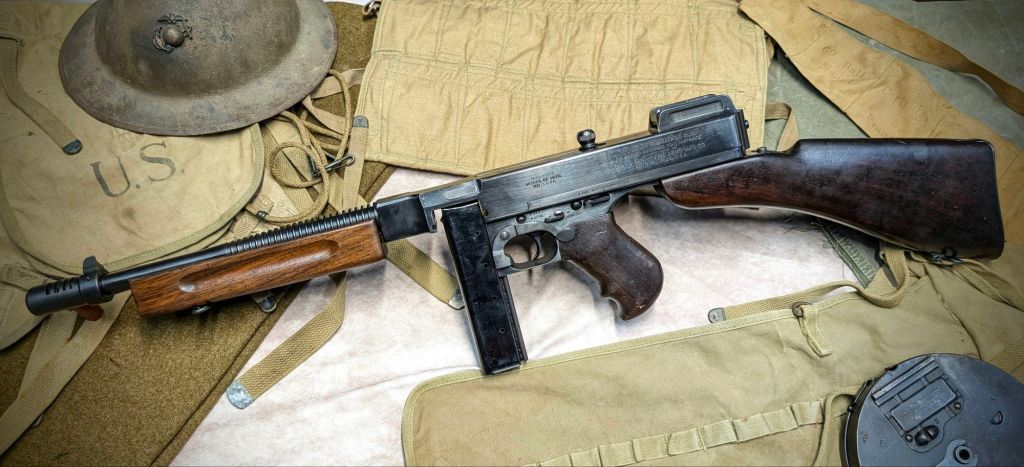
The first order of TSMGs would be placed on the 22nd of October, 1926, for a total of 250. Of note, not all of these first Thompsons were converted from M1921As to M1921ACs, with a minority of the Thompsons leaving the Auto-Ordnance factory with the desired Cutts Compensator attached. The plan was for the Marine Corps to exchange the M1921As at a later date.
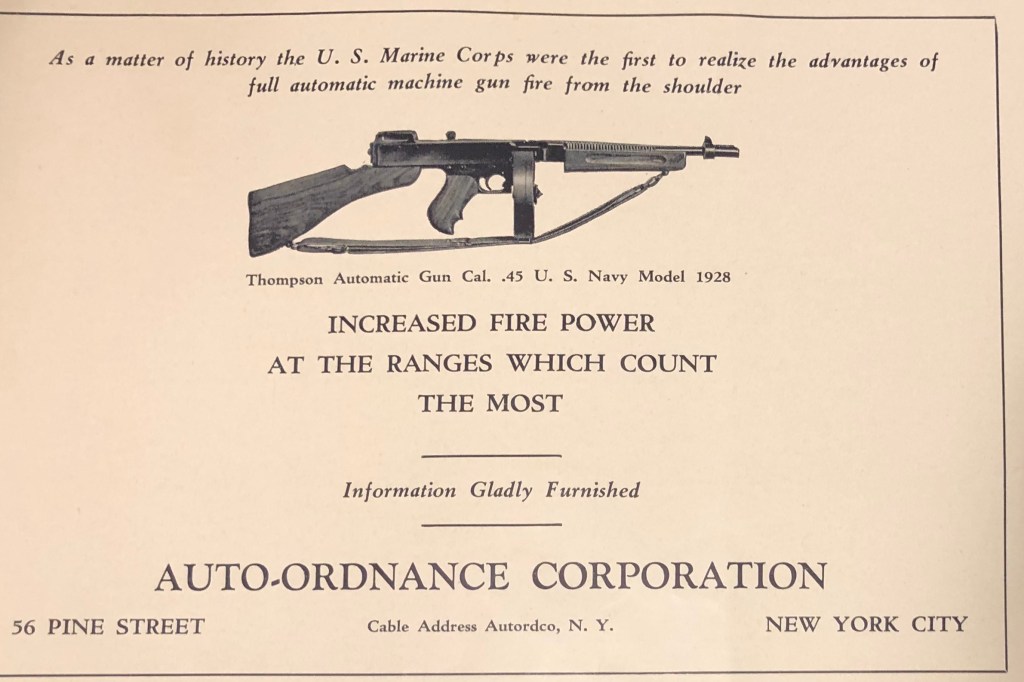
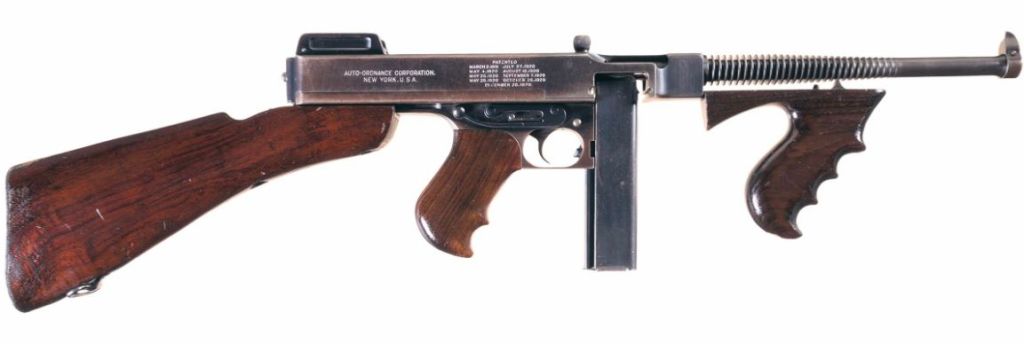
First Contract USMC TSMGs
- Most first contract TSMGs came with Cutts Compensators, and were referred to as the Model 1921AC.
- A minority of the first 250 Thompsons ordered by the Marine Corps were the first production type, the Model 1921A without a Cutts Compensator.
| Unit | Number |
| 3rd Brigade in China (4th & 6th Marines) | 182 |
| 5th Marines in Nicaragua | 42 |
| Parris Island | 18 |
| San Diego | 5 |
| Quantico | 3 |
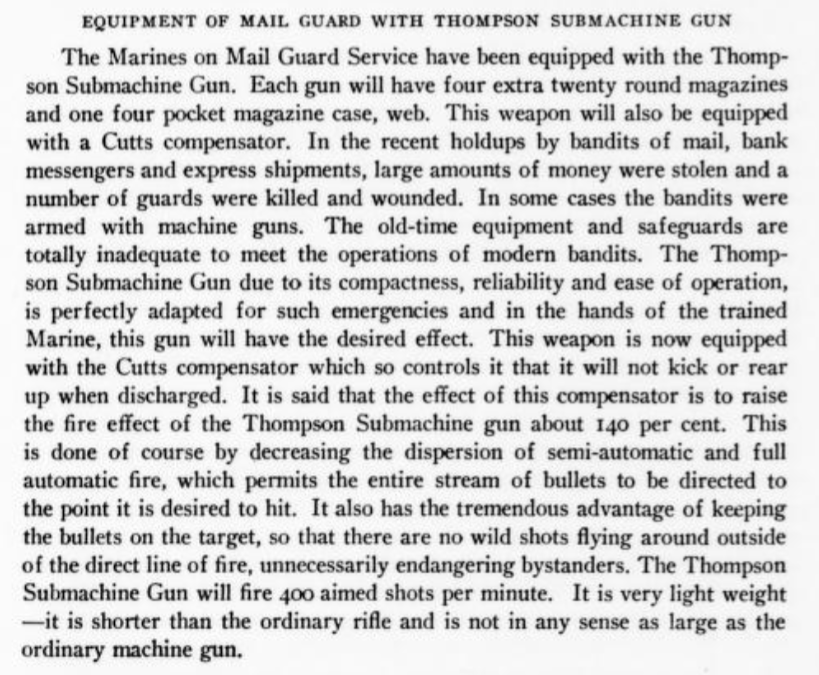
Marine Corps Gazette article from the Winter of 1926 mentioning the adoption of the TSMG (NARA).
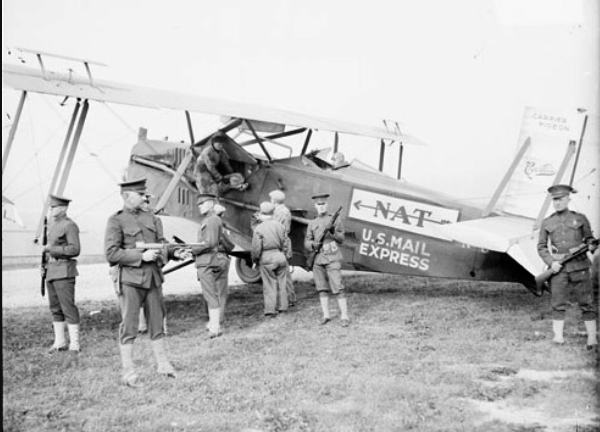
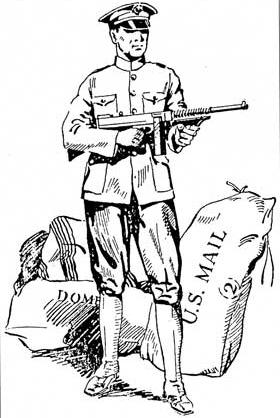
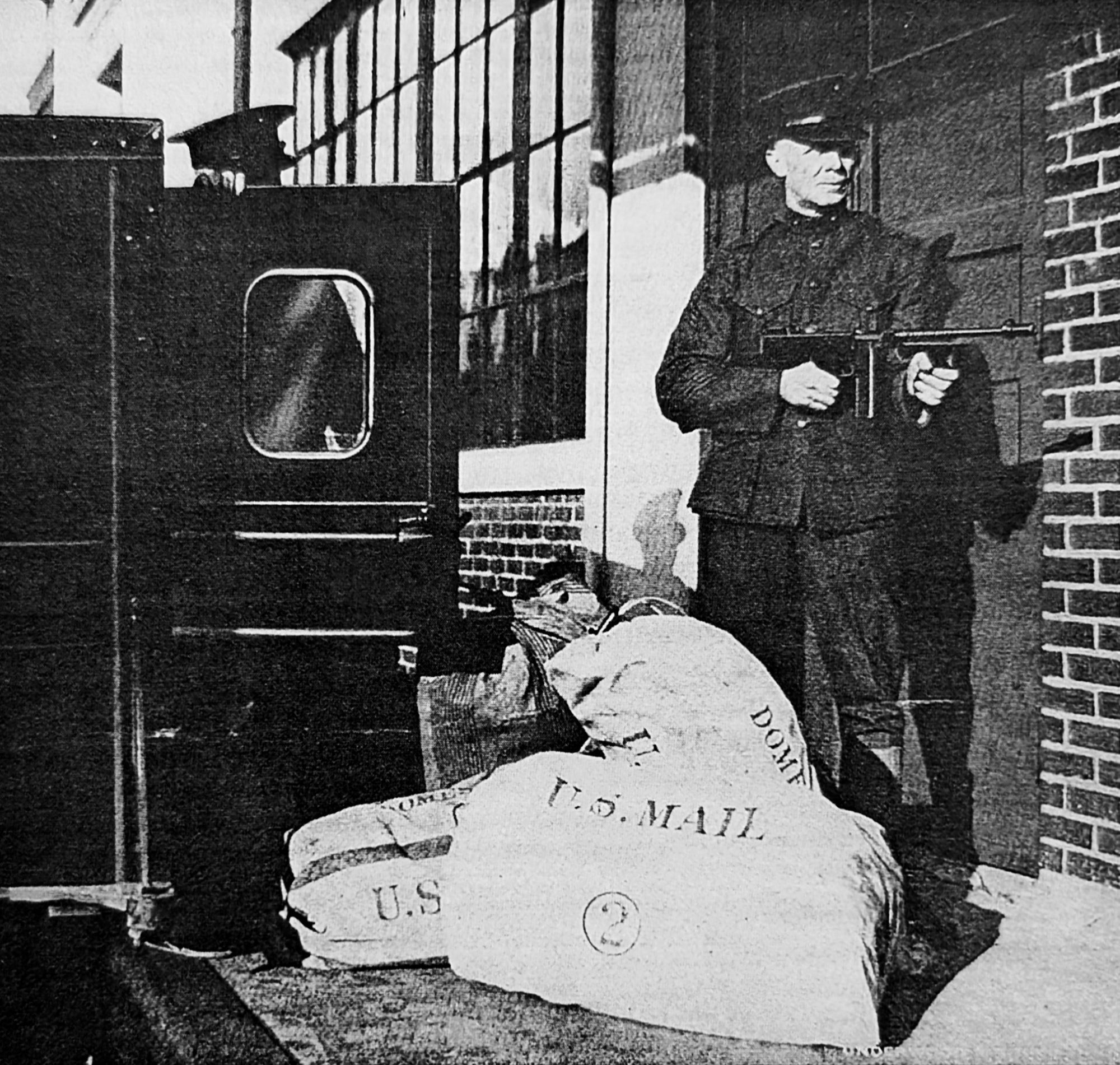
In order to protect U.S. Postal Service deliveries from frequent robberies, Marines were dispatched with the TSMG and M1897 Trench Gun supplementing their standard arms. While this duty would only last for several months, it was well publicized. Legends that the Postal Service purchased the first 250 TSMGs for the Marines to guard the mail with have been disproven by archival documentation, but still persist amongst the general firearms collecting community.
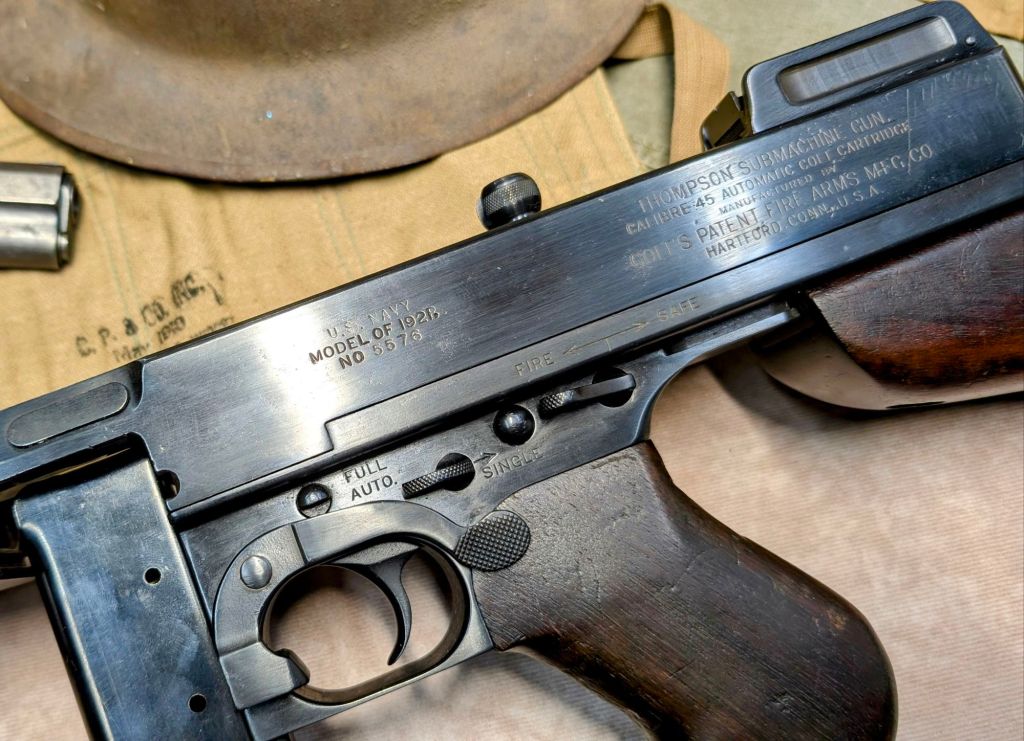
M1928 Navy TSMG #5576, one of five shipped from the USMC Depot of Supplies in Philadelphia to the Depot Quartermaster in Corinto, Nicaragua on June 14th, 1928 for service with the 51st Company, 2nd Battalion, 5th Marine Regiment as documented by Gordon Herigstad in his book “Colt Thompson Submachine Gun Serial Numbers & Histories” (Plowman collection).
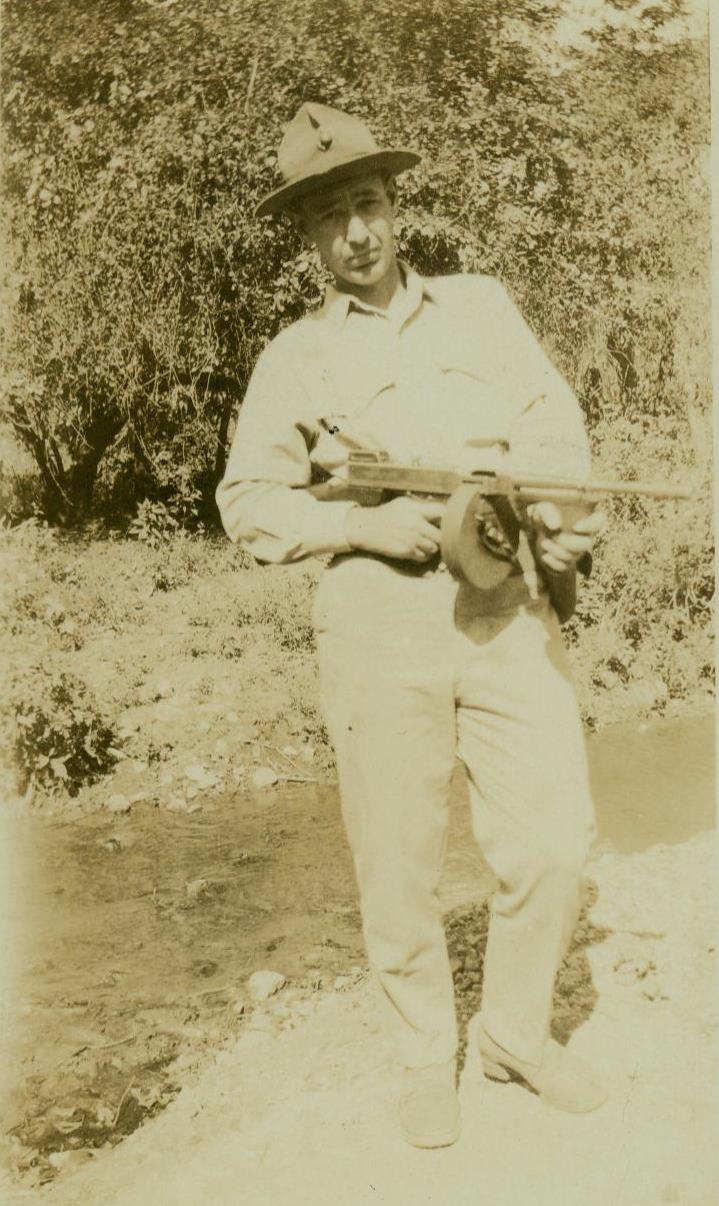
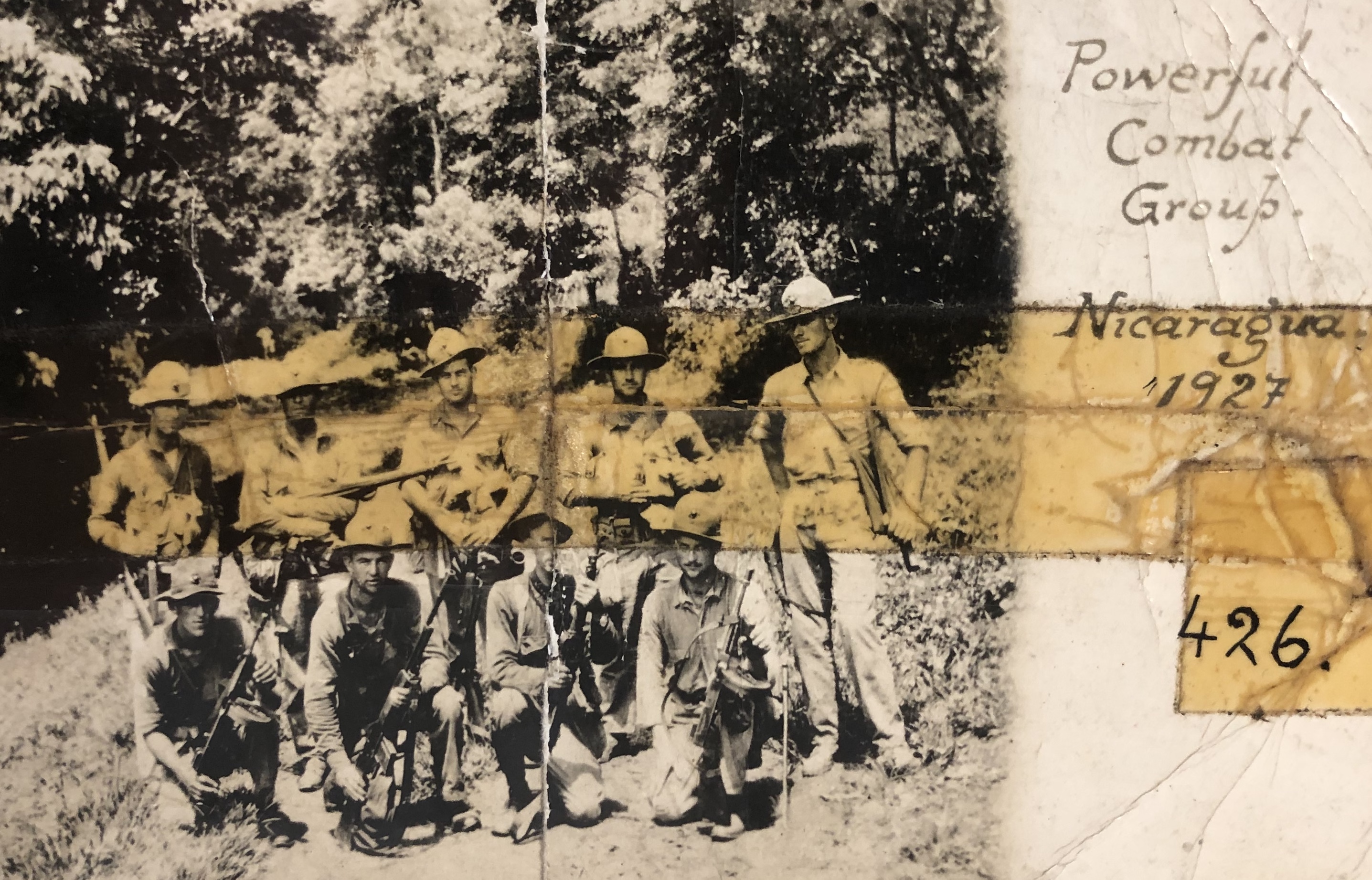
Early photos of Marines in Nicaragua with pistol grips on their TSMGs (NARA & USMC Archives).
After the first contract, the Marine Corps and its parent Naval Department requested the 900 rounds per minute rate of fire of the M1921s be reduced. This would be accomplished by using a heavier actuator, stiffer spring and single piece buffer, and the rate of fire was slowed to around 650 rounds per minute. These changes would culminate with a new Thompson known as the Model 1928 Navy. As all M1928s were originally M1921s, once the conversion process was complete the last year on the receiver was over-stamped from its existing “1” to an “8”, and “U.S. Navy” markings added above.
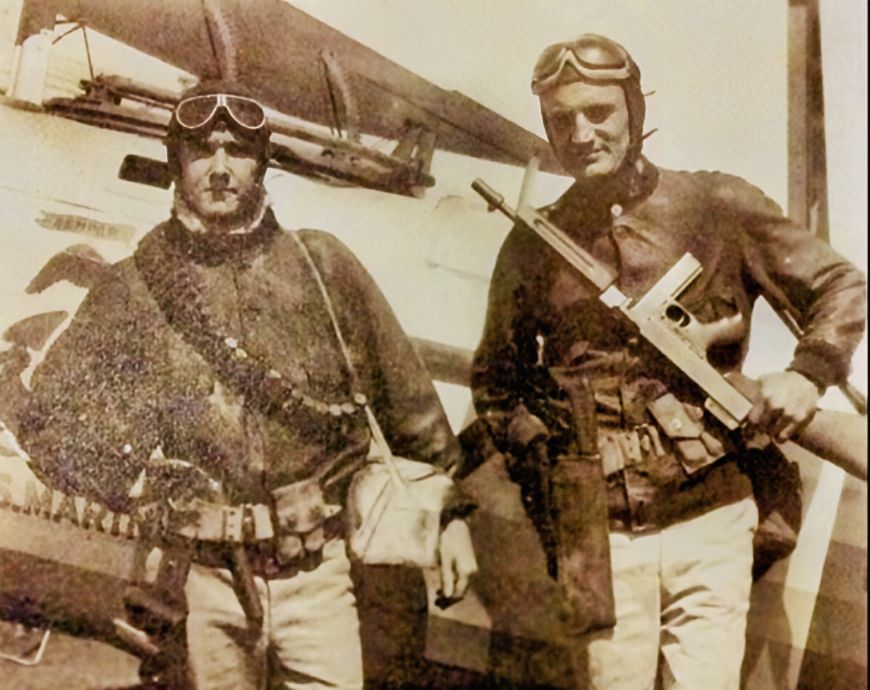
KNOWN USMC COLT THOMPSON CONTRACTS
| DATE | CONTRACT | MODEL | SIZE |
| 12/23/1921 | Small Order | M1921A | 2 |
| 8/9/1923 | Small Order | M1921A | 4 |
| 5/2/1925 | Small Order | M1921A | 4 |
| 10/22/1926 | First Contract | M1921A & M1921AC | 250 |
| 11/21/1927 | Second Contract | M1928 Navy | 25 |
| 1/6/1928 | Third Contract | M1928 Navy | 50 |
| 1/24/1928 | Small Order | M1928 Navy | 2 |
| 2/25/1928 | Fourth Contract | M1928 Navy | 200 |
| 4/10/1928 | Small Order | M1928 Navy | 5 |
| 5/8/1928 | Small Order | M1928 Navy | 2 |
| 6/14/1928 | Small Order | M1928 Navy | 5 |
| 6/21/1928 | Fifth Contract | M1928 Navy | 46 |
| 6/27/1928 | Sixth Contract | M1928 Navy | 100 |
| 8/21/1928 | Nicaraguan Guard | M1928 Navy | 10 |
| 9/25/1929 | Haitian Guard | M1928 Navy | 5 |
M1928 Navy
- Rate of fire slowed down from 900 to 650 rounds per minute.
- Receivers over-stamped to denote modification.
- Use of pistol grip is generally earlier, with straight grip being more prevalent in subsequent years.
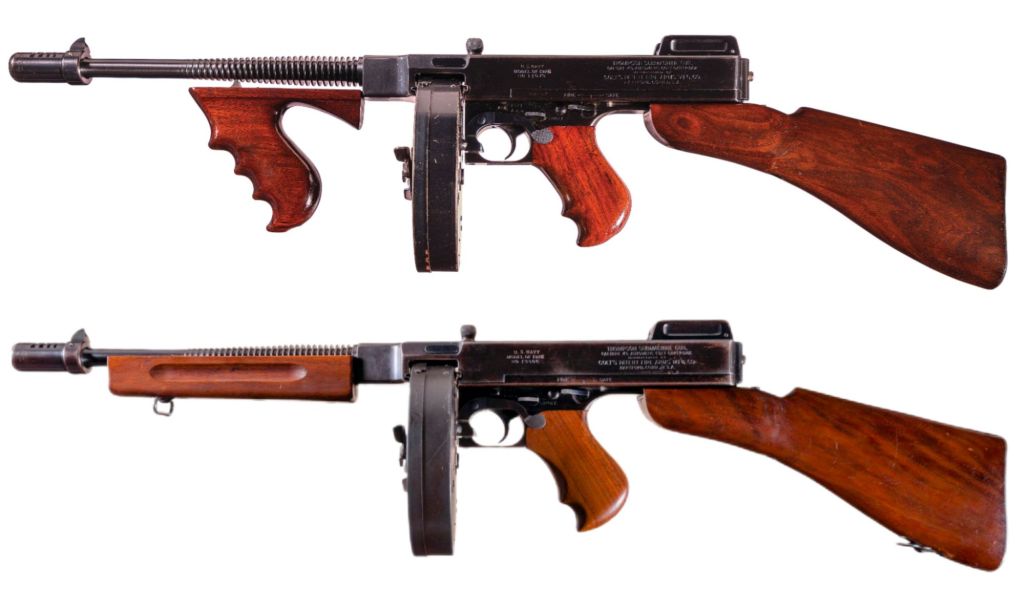
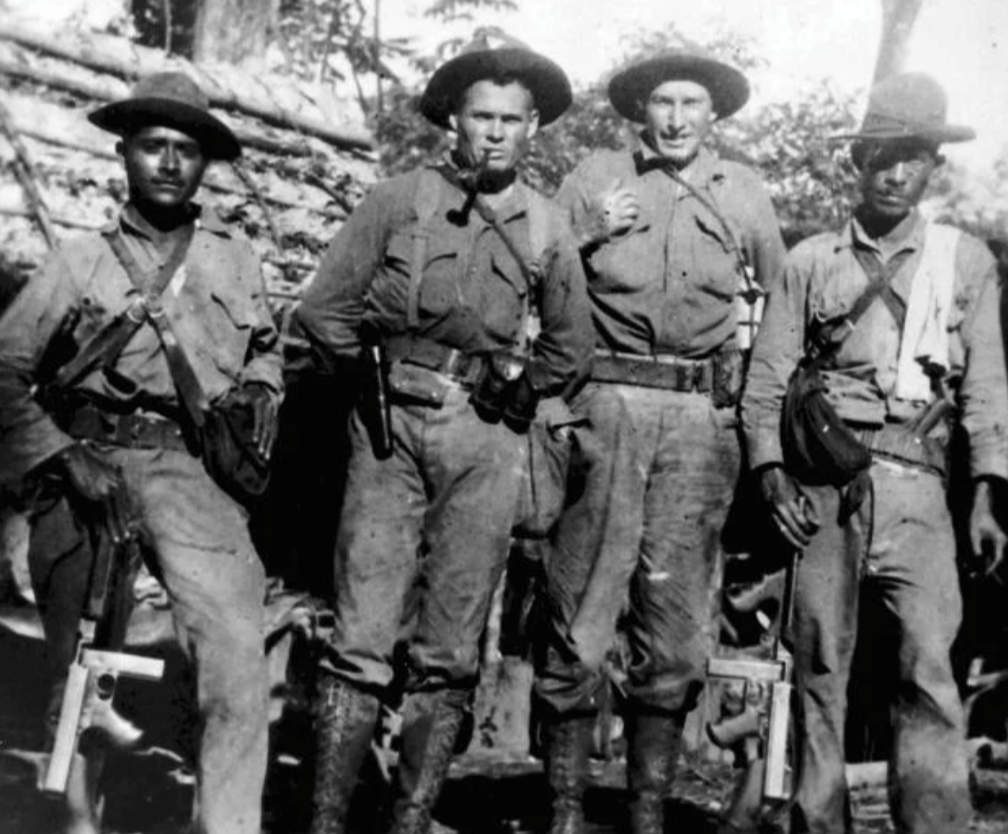
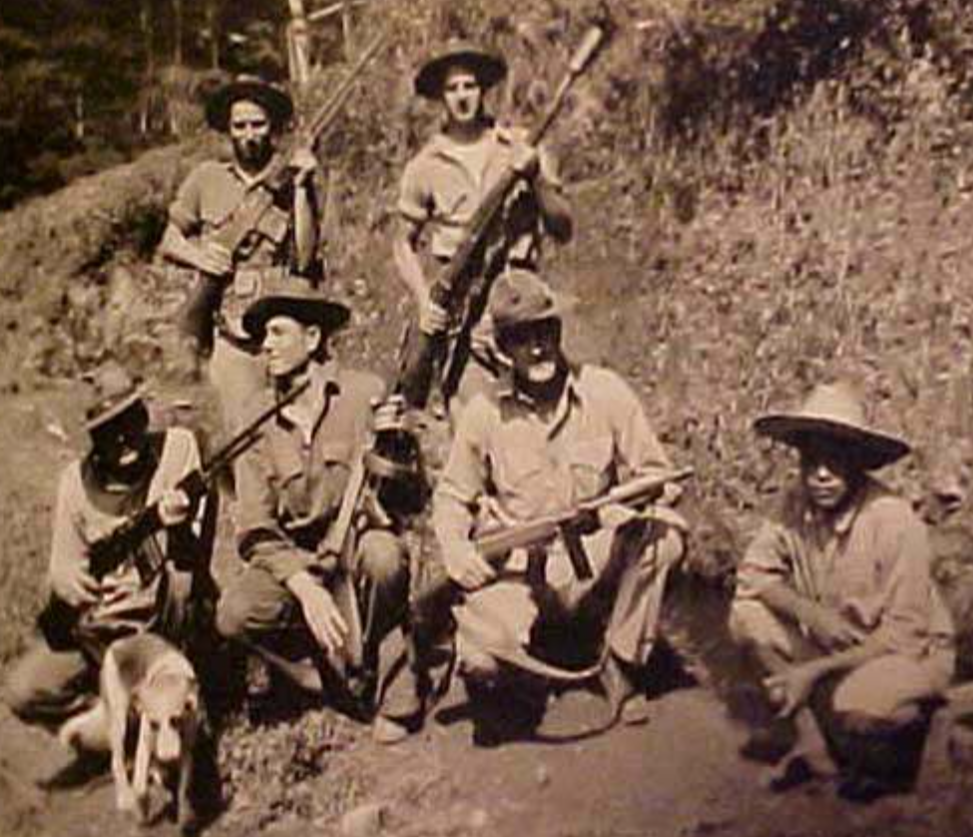
Left: Marine 1st Lt Lewis B. “Chesty” Puller and Gunnery Sergeant William “Ironman” Lee with Guardia Nacionale troops in Nicaragua, armed with M1928 Navy’s, one with a pistol grip and another with a straight grip (NARA). Right: Marines in Nicaragua with a variety of weapons: a M1918 Browning Automatic Rifle, a Springfield M1903 with a VB Grenade Launcher, and two M1928 Navy TSMGs. One has a 50 round “L Drum”, while the other has a 20 round stick magazine (USMC).
The Marine Corps would receive a total of 790 Colt TSMGs, 671 through official, known contracts and the remainder through replacement frames and contracts not yet discovered. The vast majority of these Thompsons would see considerable use by the 2nd, 5th and 11th Marine Regiments during the Banana Wars in Haiti and Nicaragua, and the 4th and 6th Marine Regiments in China. Some would be left with National Guard units after the Marines ended these endeavors. In 1957, Interarms was able to import 24 of the Thompsons left for the Nicaraguan Guardia Nacionale by 2nd Battalion, 5th Marines when they departed the country in 1934. Of the 24, only a minority appear to have been registered prior to the Gun Control Act of 1968. One is in the possession of the United States Marine Corps Museum. The remaining few are amongst the rarest documented USMC firearms known to exist.
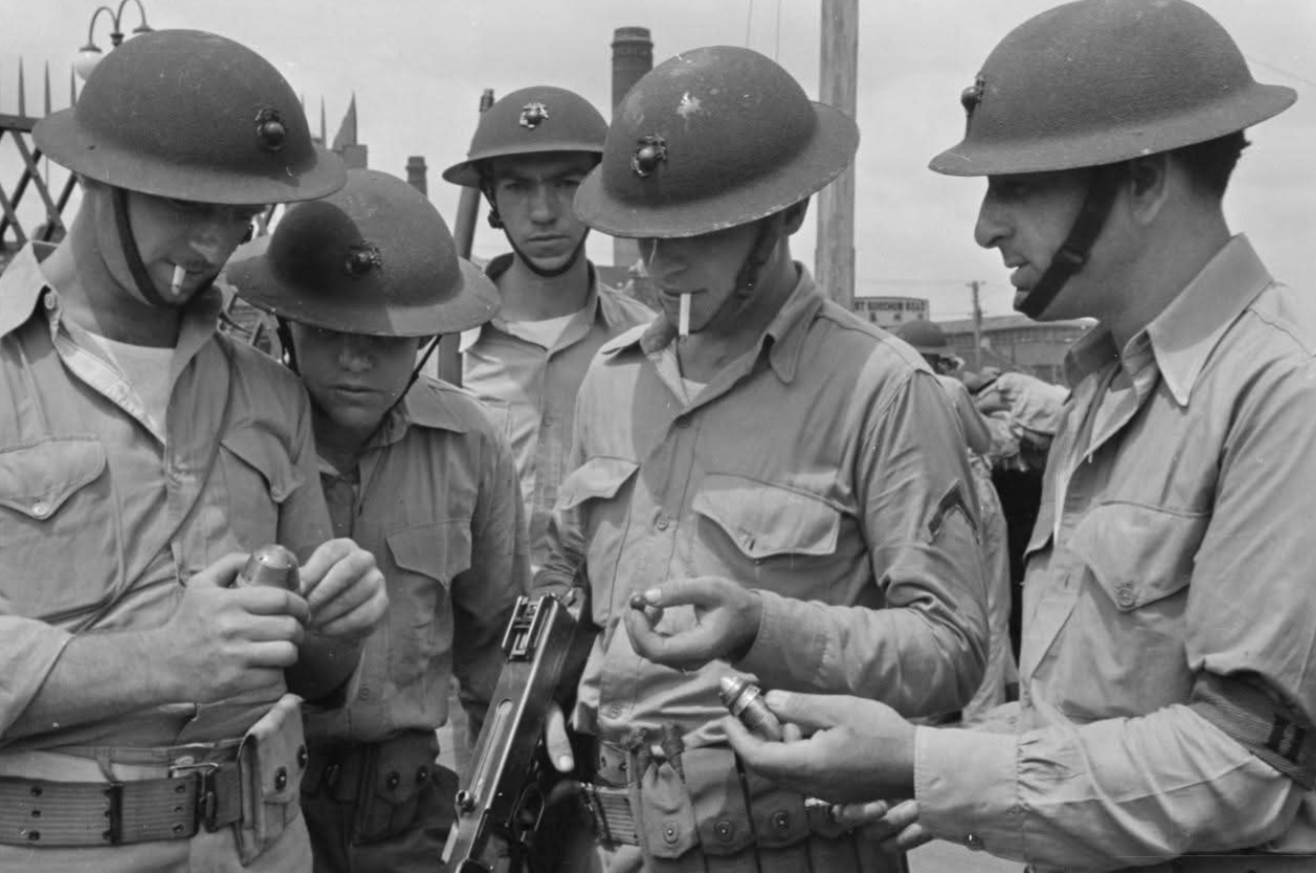
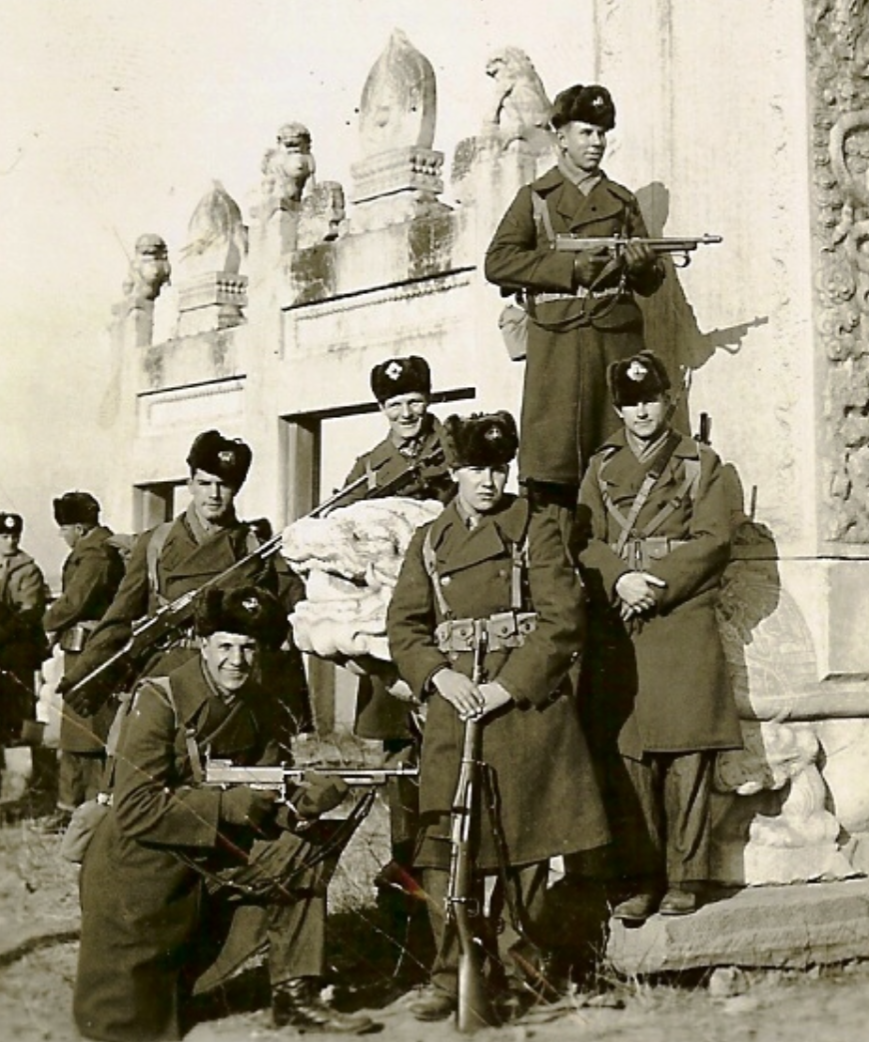
China Marines with M1928 Navy TSMGs in the years leading up to WWII (USMC).
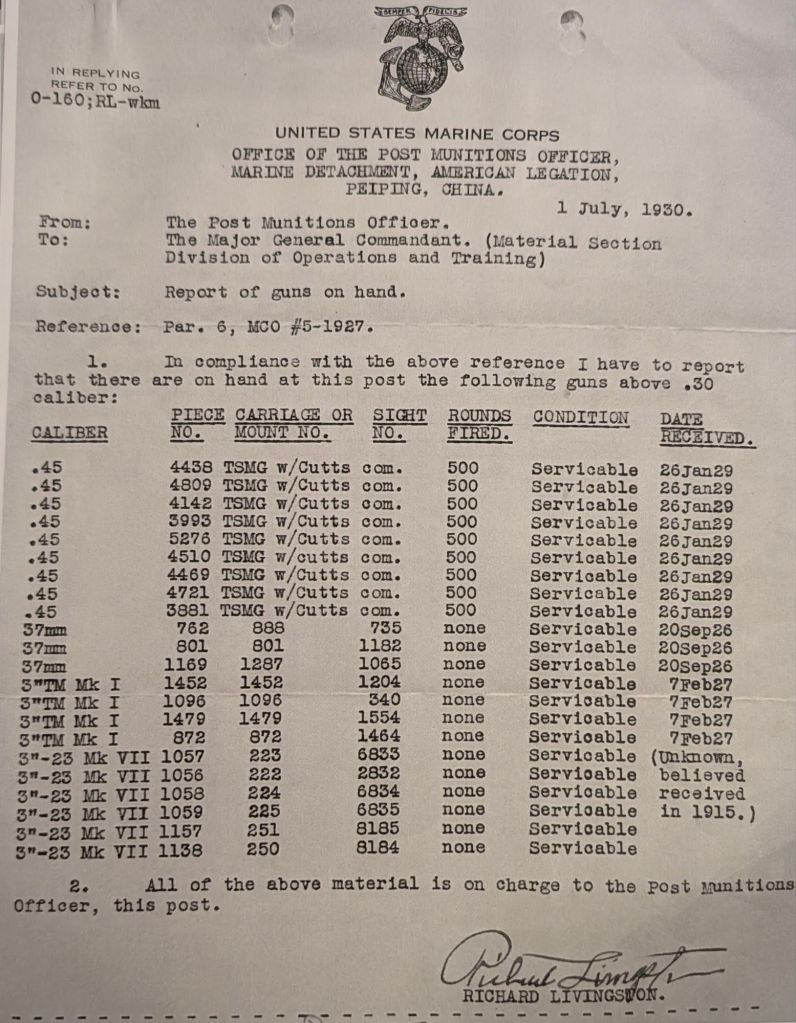
Ordnance report from the Marine Detachment in Peiping, China detailing 9 M1928 Navy TSMGs in inventory in 1930 (NARA). The Marines in China received a considerable amount of Thompsons.
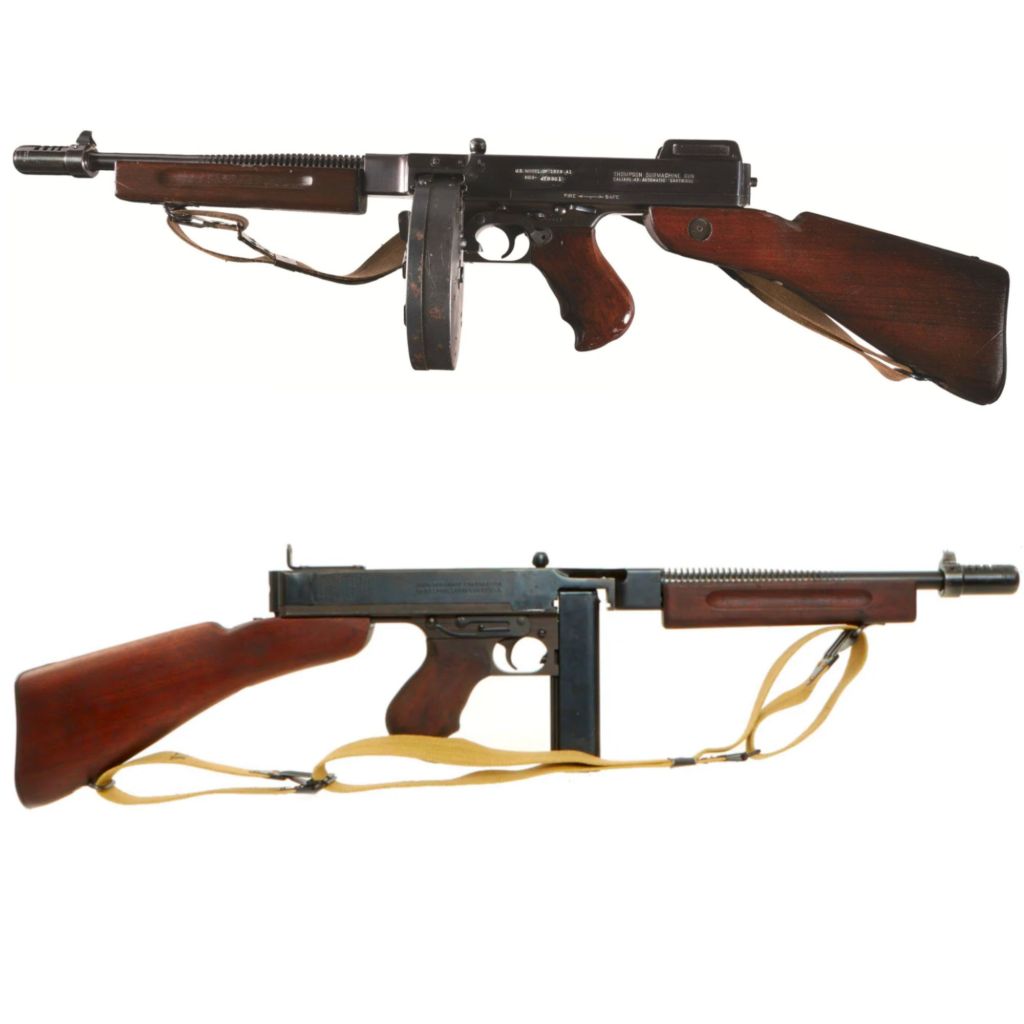
M1928A1 Thompson
- Produced by Auto Ordnance through their Bridgeport facility as well as through Savage.
- Simplified with time, with the following features being changed:
- Lyman sight replaces with a stamped, fixed peep sight.
- Barrel fins removed.
- Checkered small parts and selector levels smoothed and simplified.
- Photographic evidence shows all of these variants in USMC use during WWII.
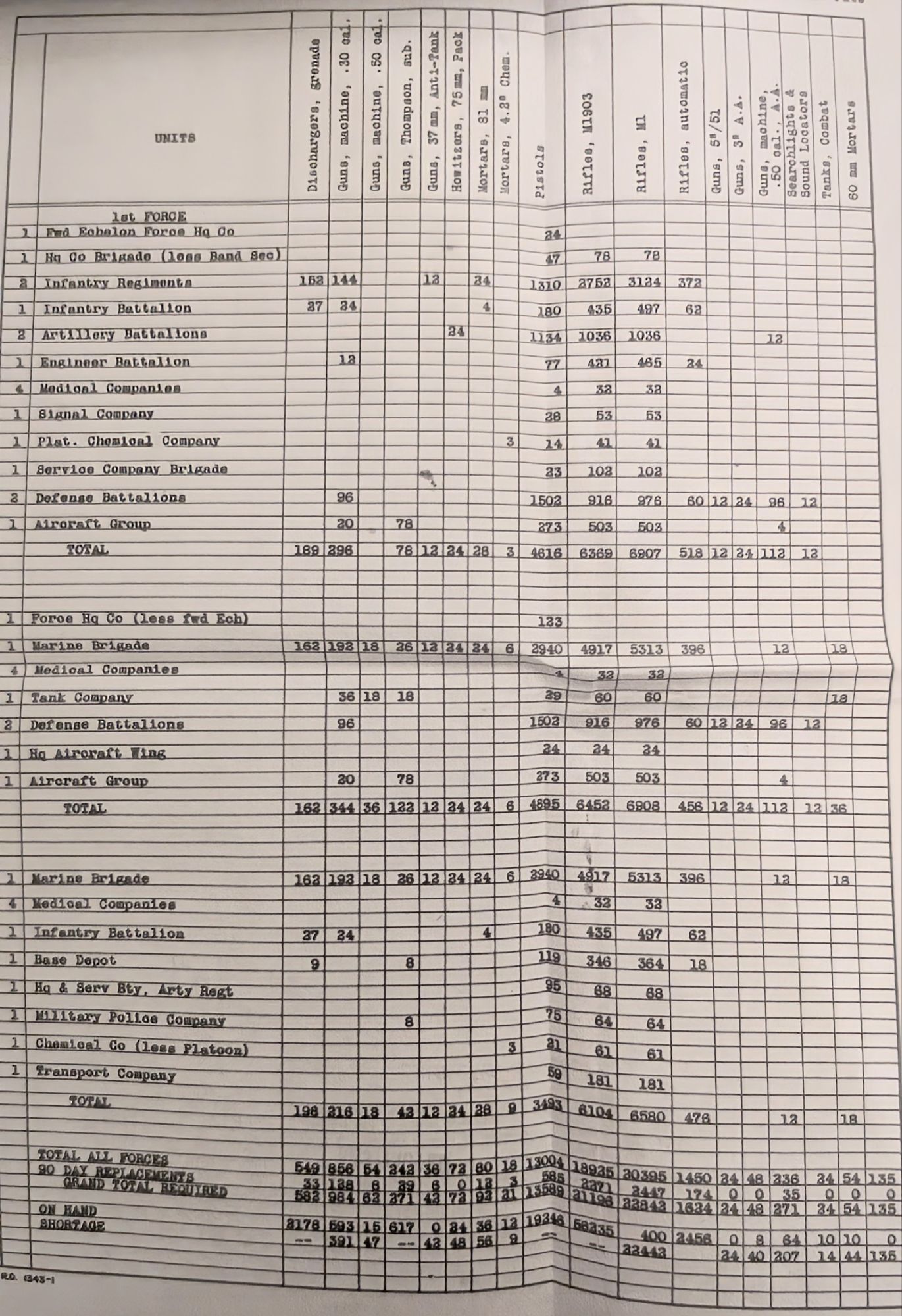
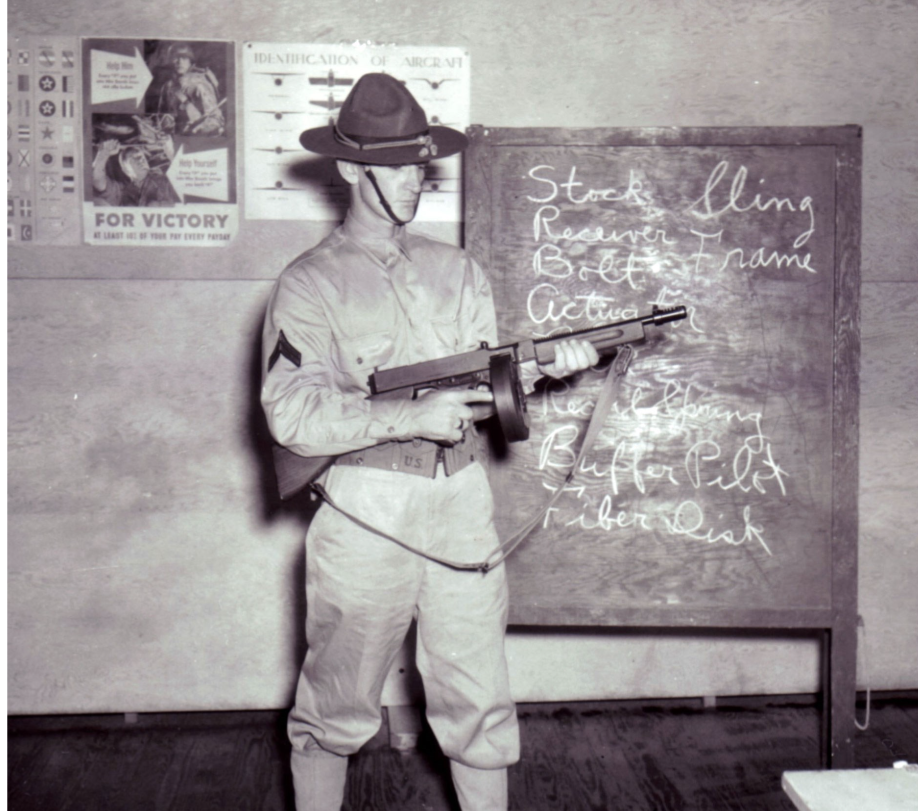
Left: Marine weapons counts prior to WWII, showing most TSMGs were distributed amongst Aviation units for perimeter guards. Right: A Marine Corporal gives instruction on the TSMG. The variant he has is a later production M1928A1 with a fixed peep sight (NARA).
In the lead up to World War II, Most TSMGs were issued in an as-needed basis for jungle warfare or the defense of USMC aviation assets. When the Banana Wars concluded, the majority were returned to the Philadelphia Depot of Supplies where they would remain until 1942. At this point, the 1st and 2nd Marine Divisions would be supplied with Thompsons for the invasion of Guadalcanal. Thompsons were typically issued to pointmen, small unit leaders and tank crews, and would perform well in jungle warfare.
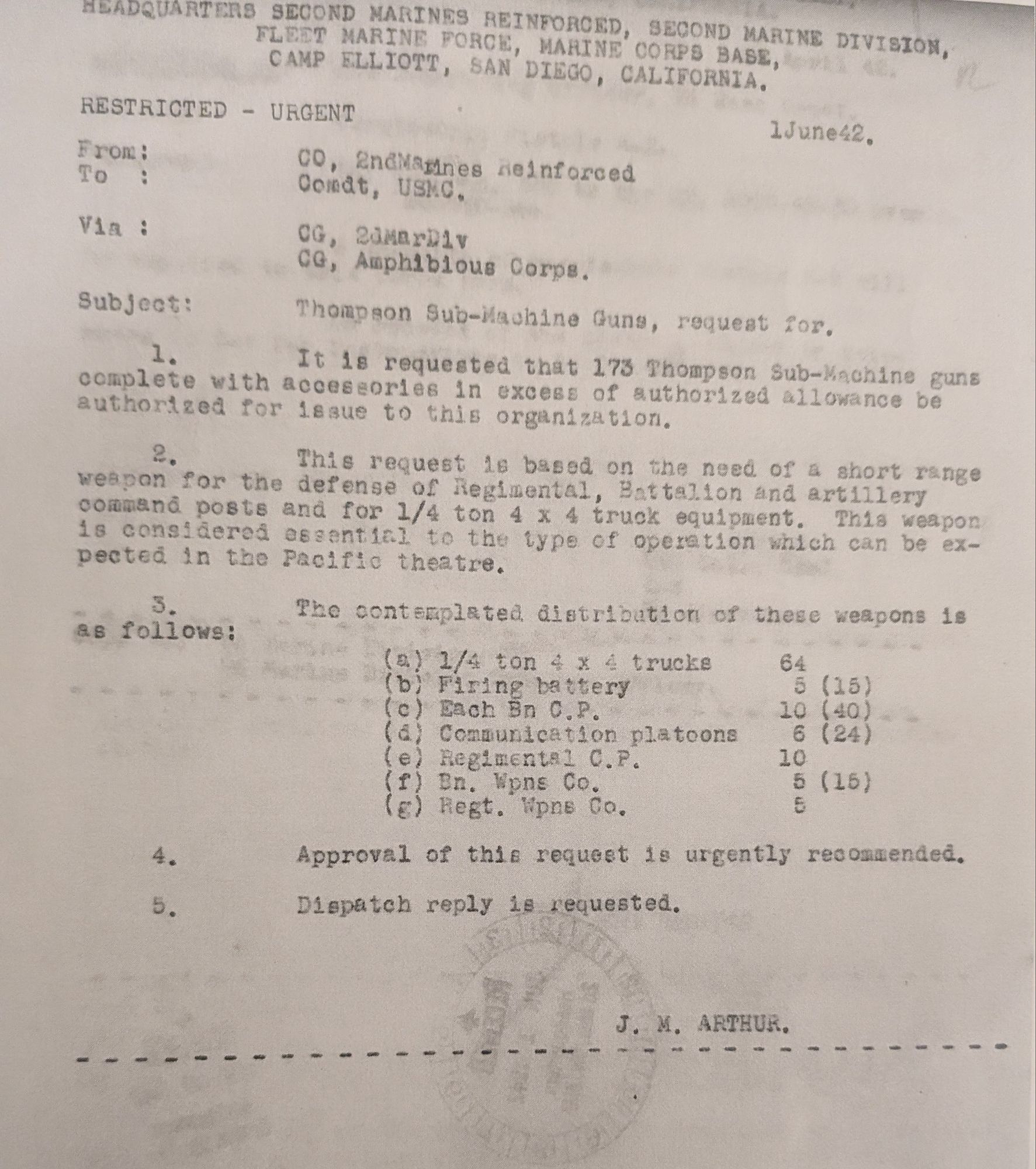
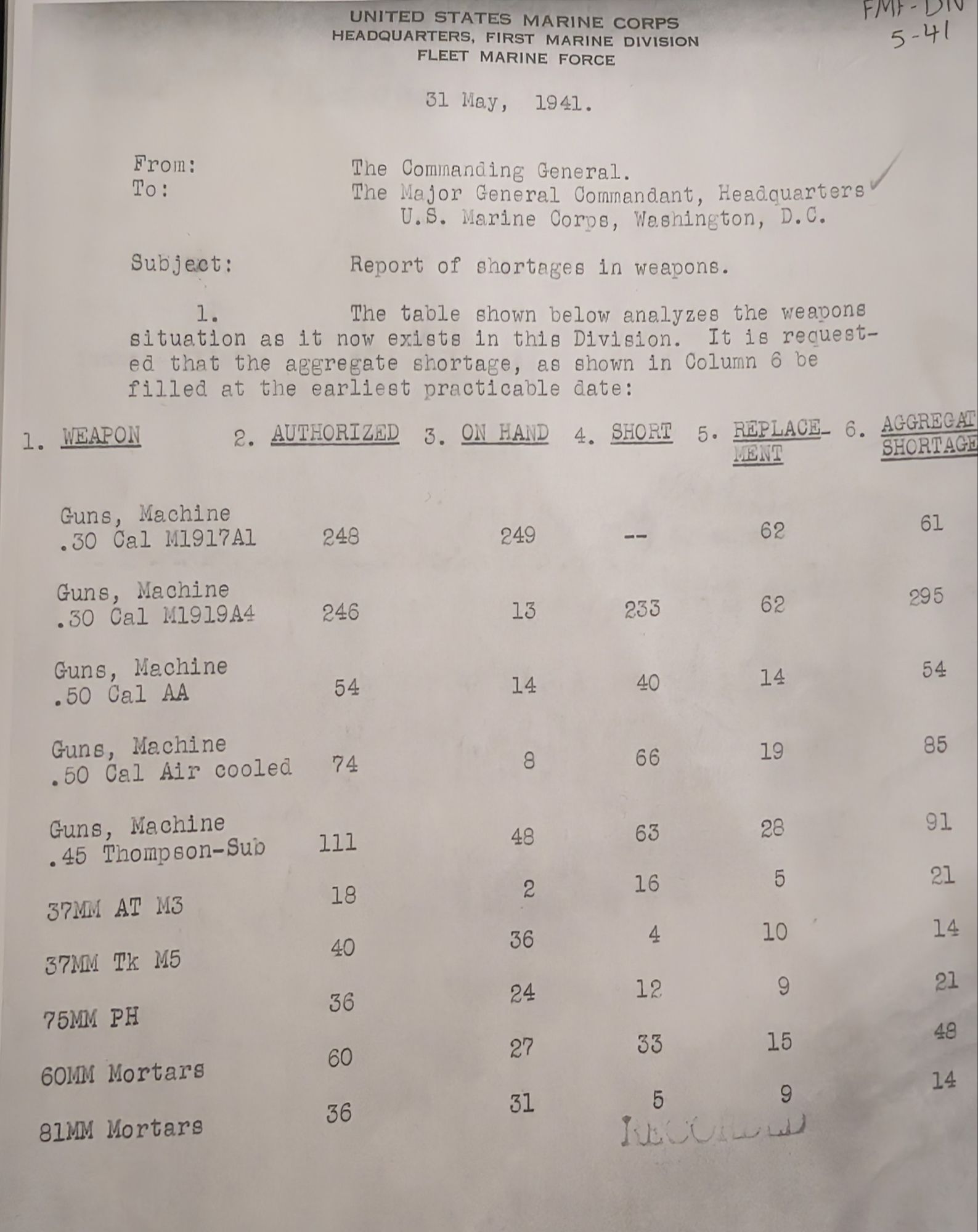
The 1st and 2nd Marine Divisions both were short of TSMGs and requesting more prior to combat on Guadalcanal (NARA).
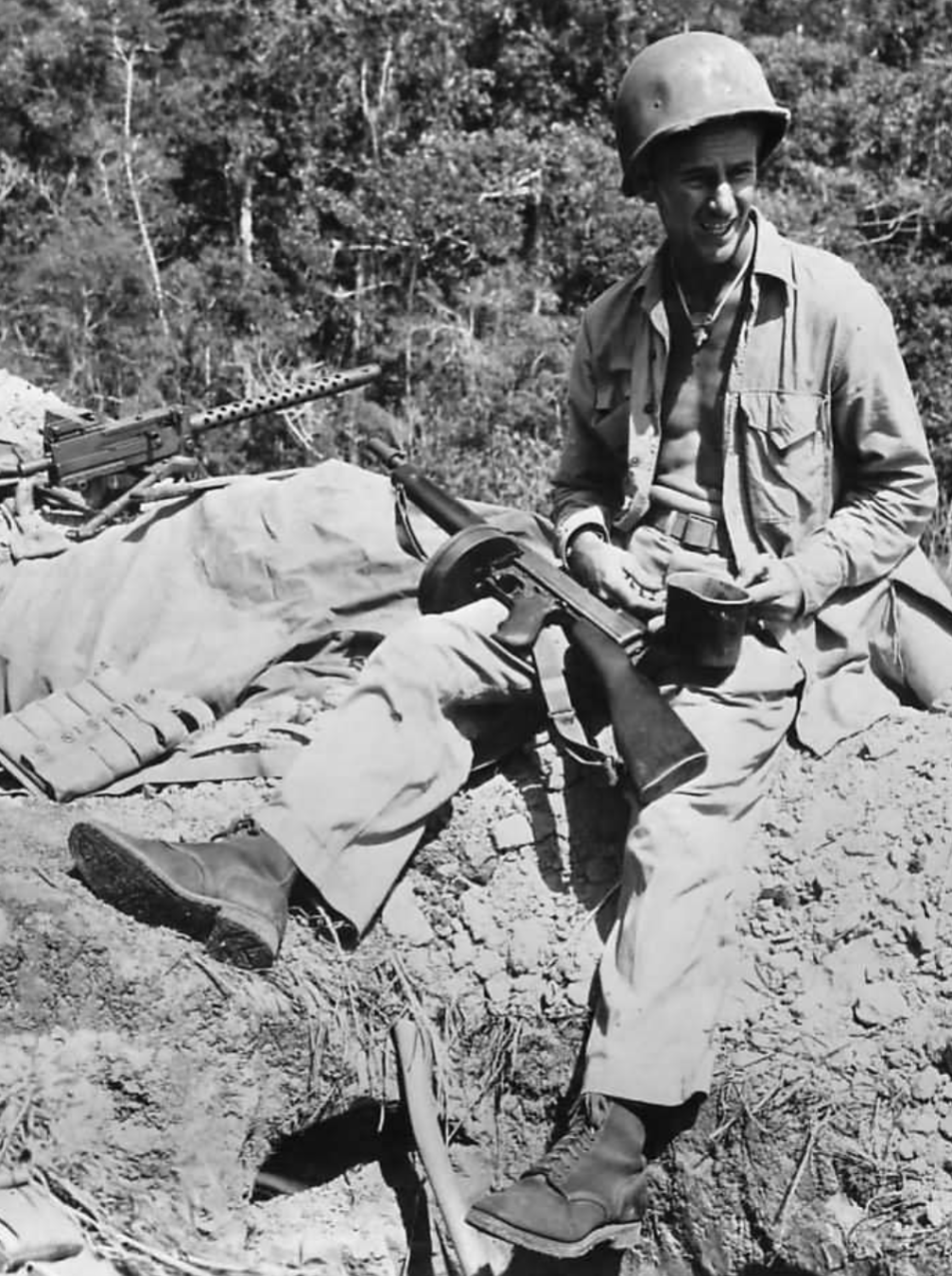
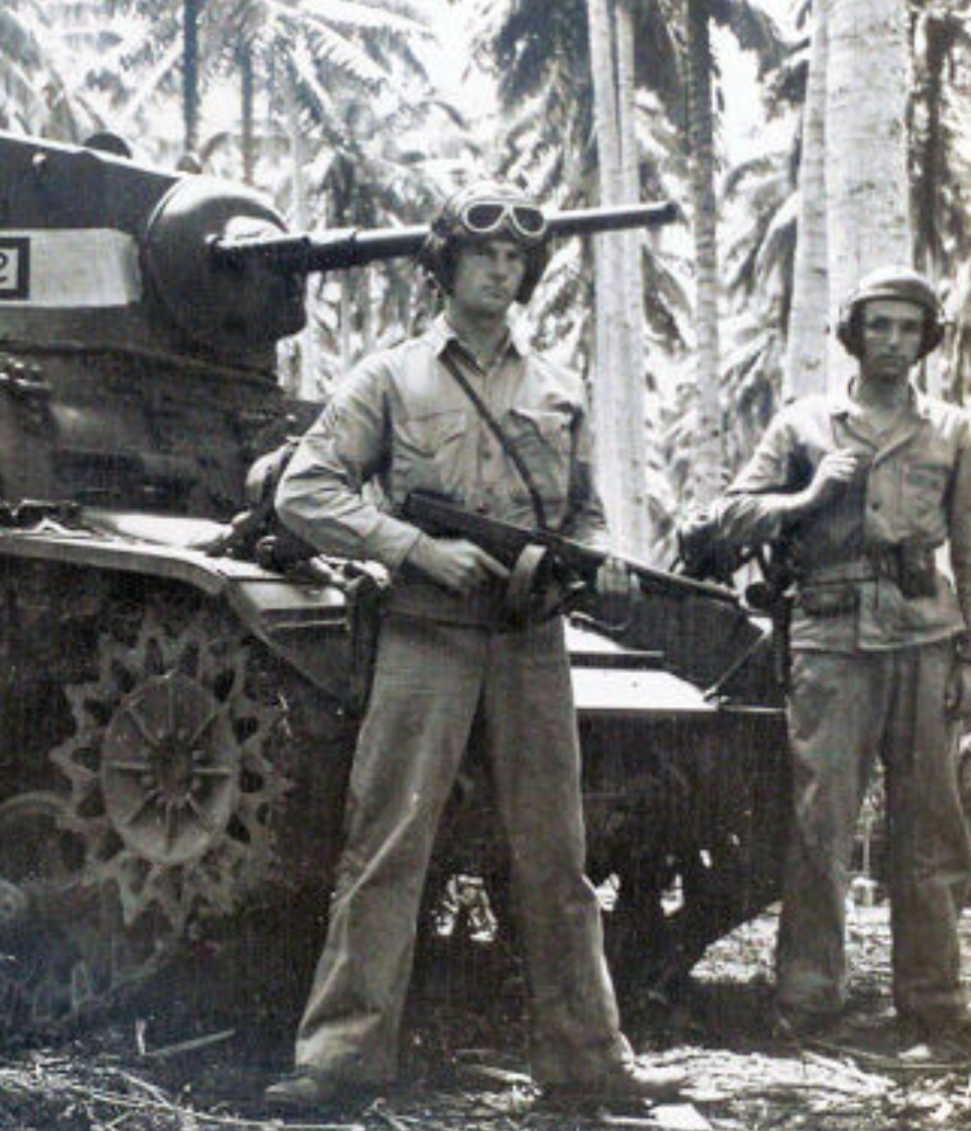

Marines with M1928s on Guadalcanal (NARA).
An interesting angle to the Thompson’s service in World War II was a desire by the Marine Corps to eliminate the .45 ACP round and any weapon that used it entirely. The Marine Corps had intently followed the development of the M1 Carbine, but production delays rendered it unavailable for the Guadalcanal campaign. The Marine Corps believed the M1 Carbine would be able to take the place of sidearms and submachine guns, making .45 ACP platforms obsolete and streamlining the logistical situation. The delay in M1 Carbine production would present a major roadblock to this plan, and the TSMG would instead be joined by the Reising M50 and M55 submachine guns. While the Reising would prove problematic in combat due to functionality issues, the Thompson would perform well, particularly in close combat. That said, in 1942 and 1943, the Marine Corps still intended to replace all .45 ACP firing weapons with the M1 Carbine as soon as practical.
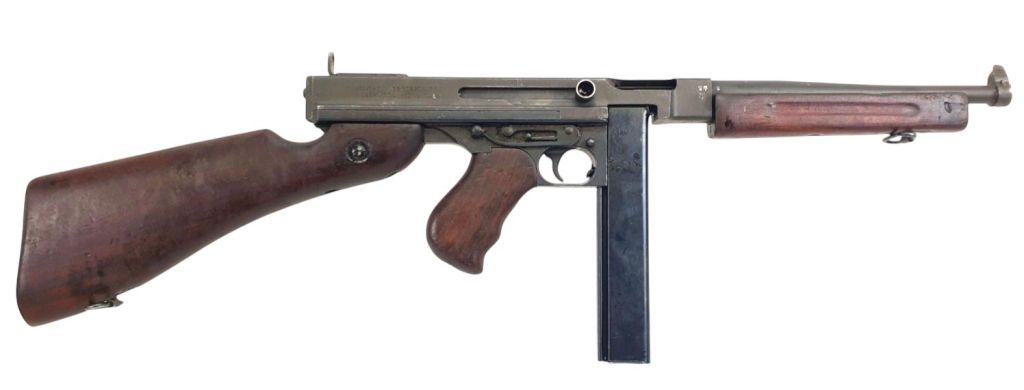
M1 Thompson
- Result of a receiver redesign by Savage replacing the Blish locking device with a blowback system.
- Visually, the most notable difference is the cocking handle moved from the top to the side.
- Could utilize 20 and 30 round magazines, but not the 50 or 100 round drums.
- Produced from early 1942 – early 1943.
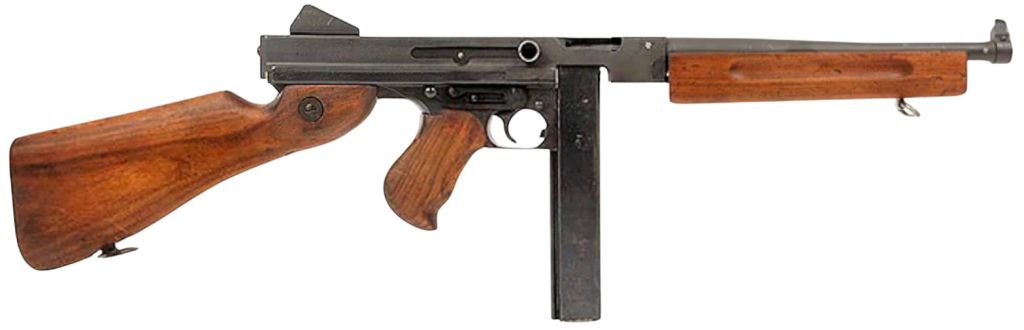
M1A1 Thompson
- Identical to an M1 Thompson, but with protective “ears” added to protect the peep sight.
- Produced in much larger numbers than any other variant of TSMG.
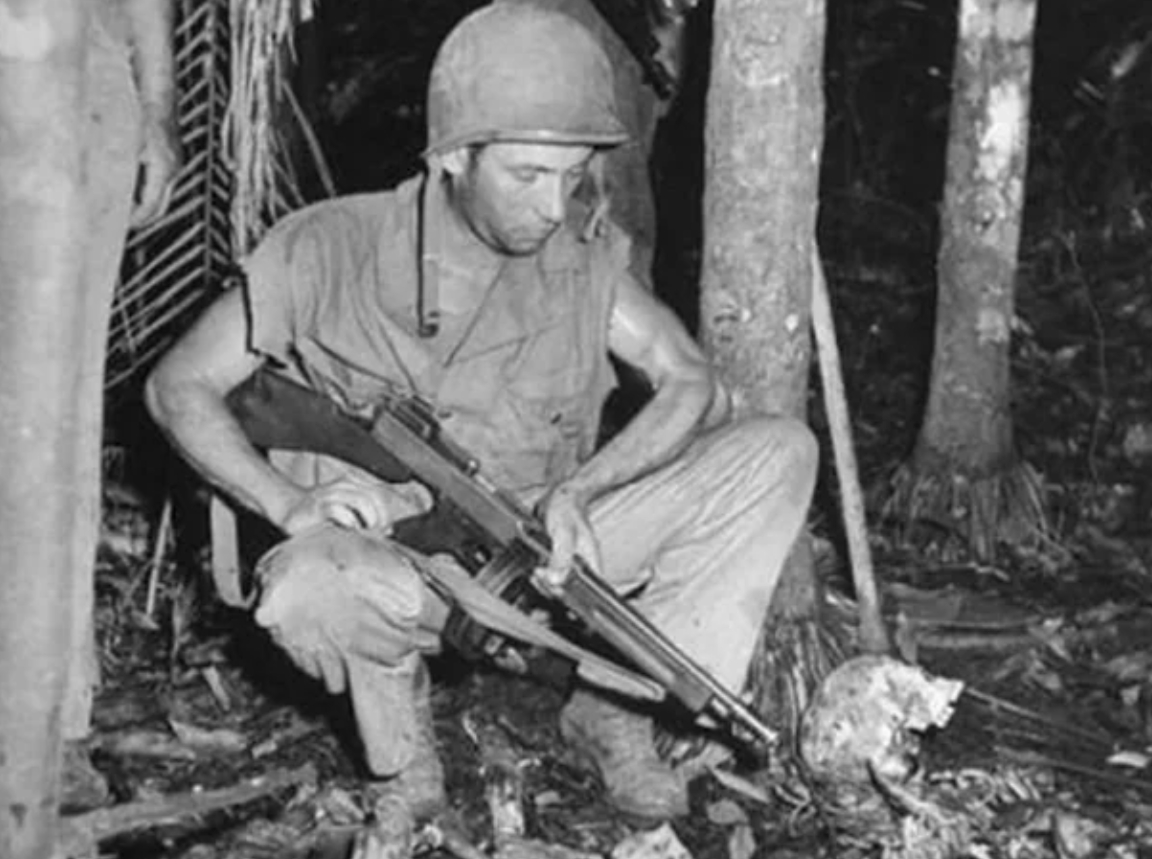
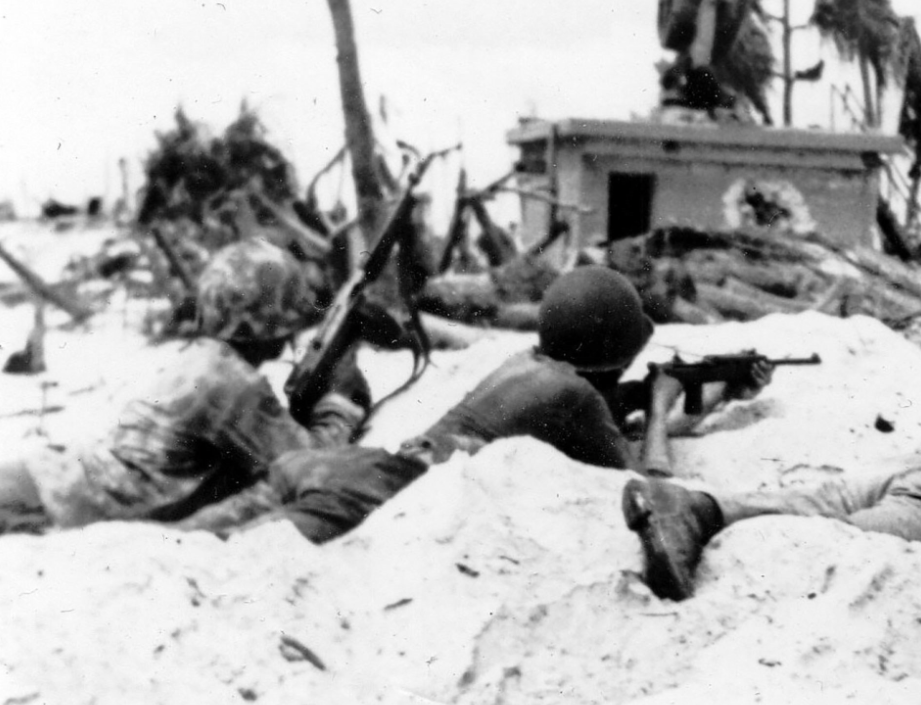
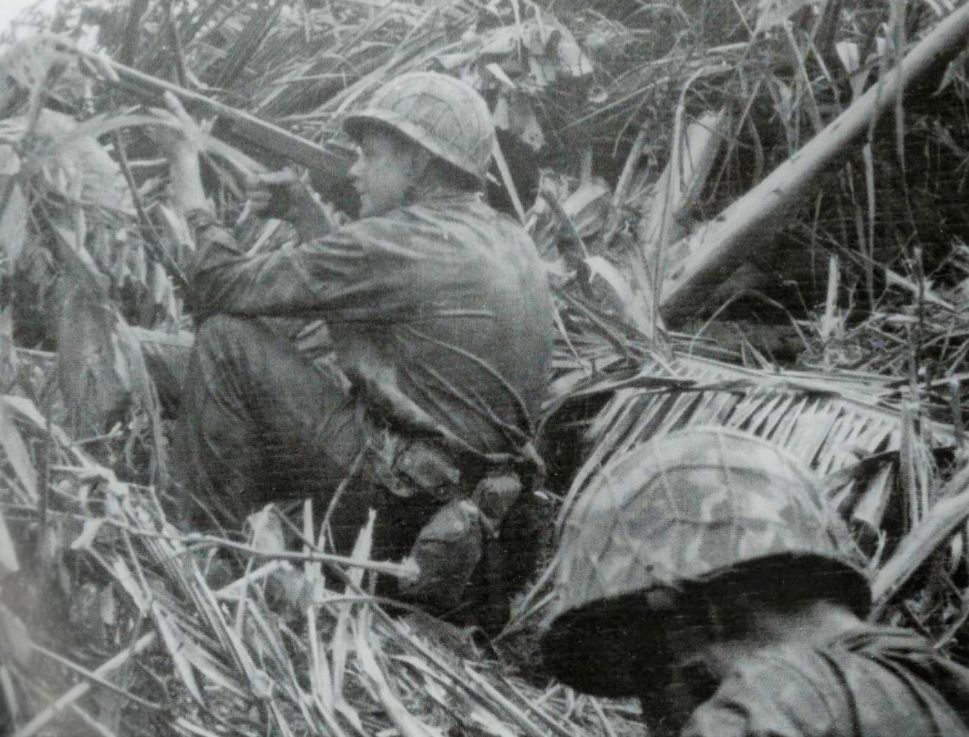
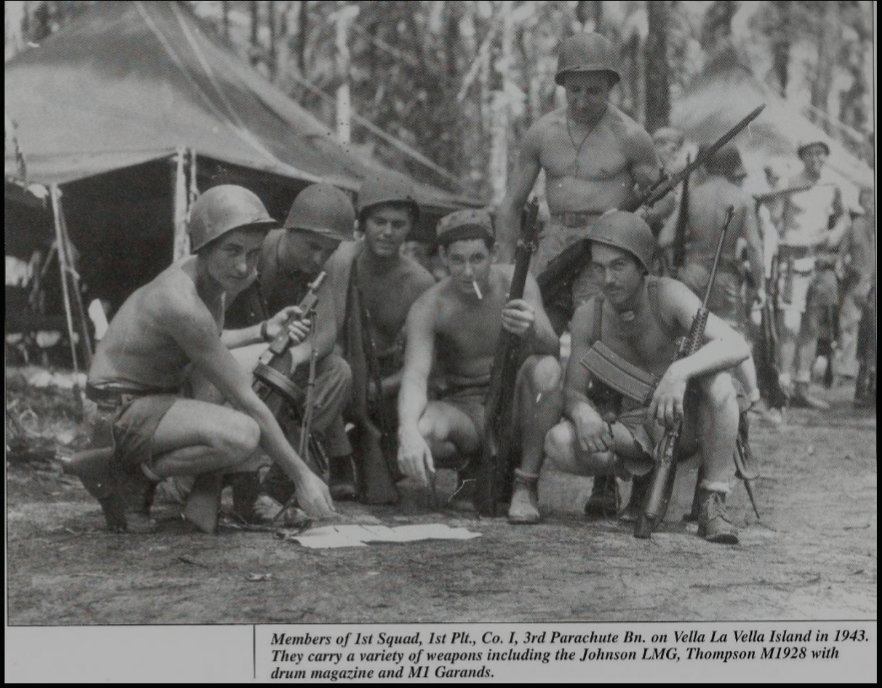
1943 would be a year of close combat for the Marine Corps, where the TSMG would prove very well suited (NARA). Bottom: Division reports from 1943 & 1944 requesting additional TSMGs, often for small unit leaders, scouts, and demolitions Marines (NARA).
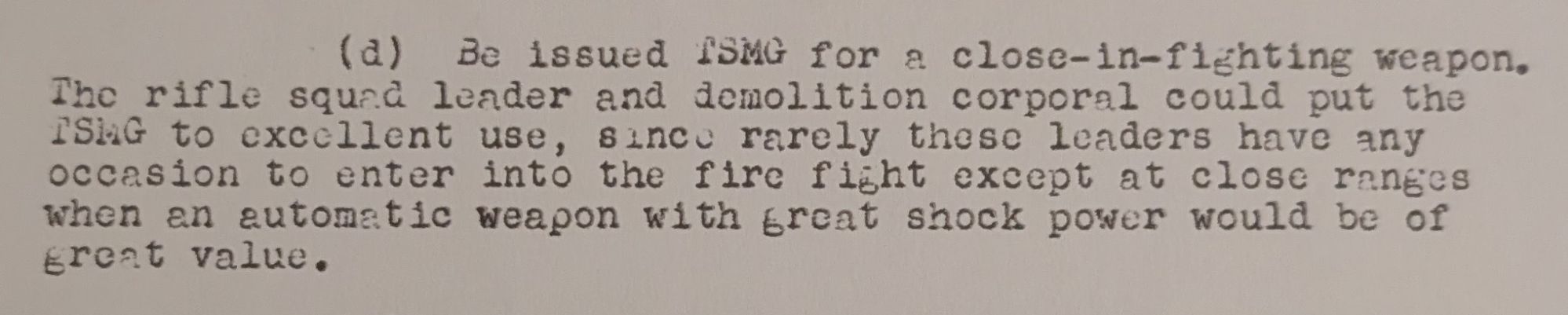
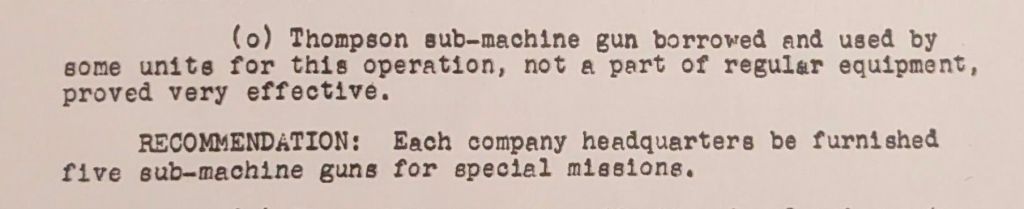
The dense jungles and amphibious assaults the Marine Corps would experience in 1943 and 1944 would reinforce the value of submachine guns. Reports from lower level commanders would call into question the plan to replace all .45 ACP platforms, especially as the M1 Carbine underperformed in the salt and sand during the Tarawa assault. The Marine Corps would listen, and scrap replacement plans. New M1 and M1A1 Thompsons would flow into the service, and the Marine Corps would receive more Thompsons in 1945 than any year previous. While not a great weapon at distance, the difficult task of eliminating Japanese defenders in caves and bunkers in late 1944 and 1945 would prove ideal for TSMG employment. Widespread USMC service for the Thompson would end with World War II, as the fully automatic M2 Carbine would be released in 1945.

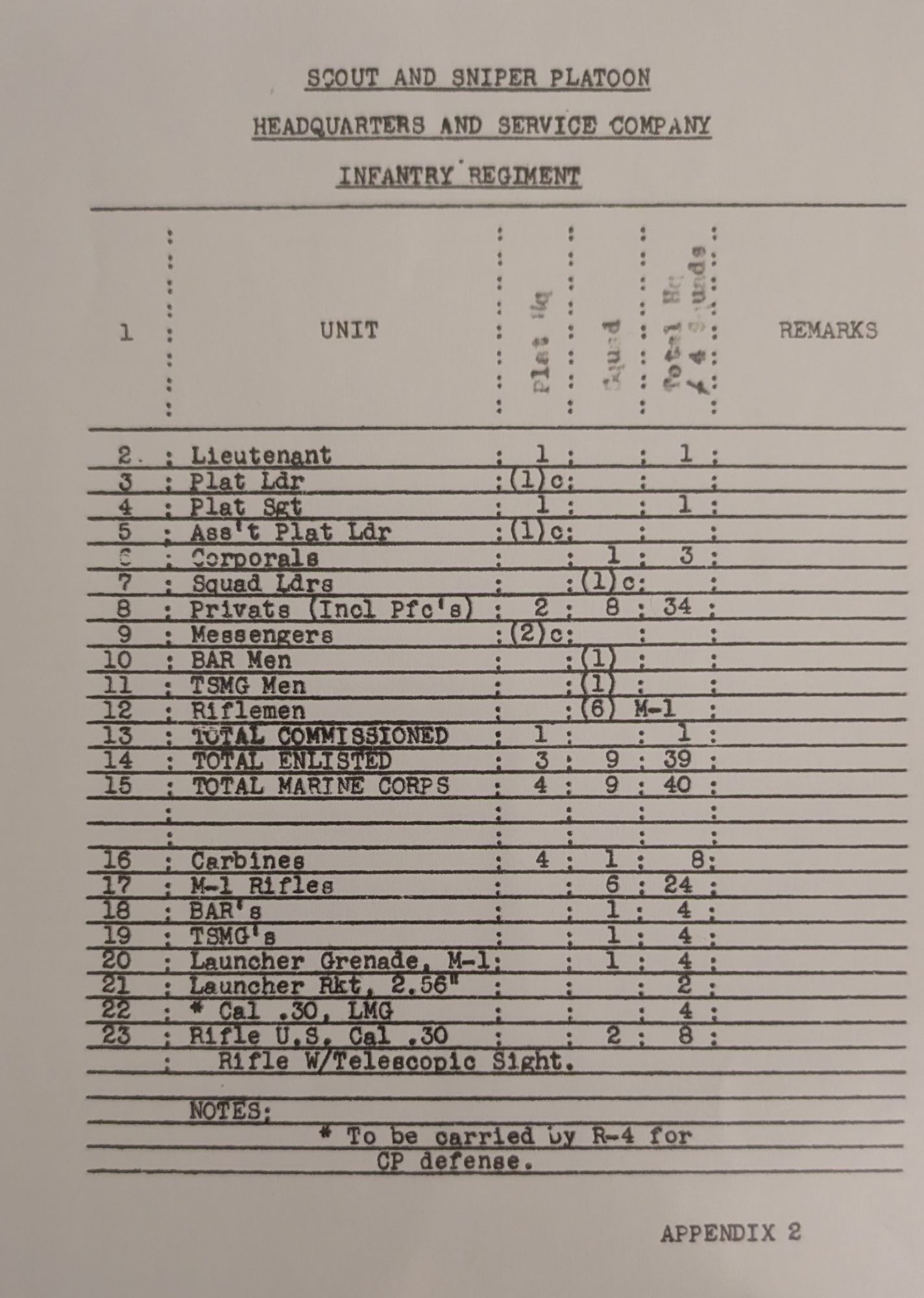
2nd Marine Division Recon Company requesting additional TSMGs in 1944 (NARA).

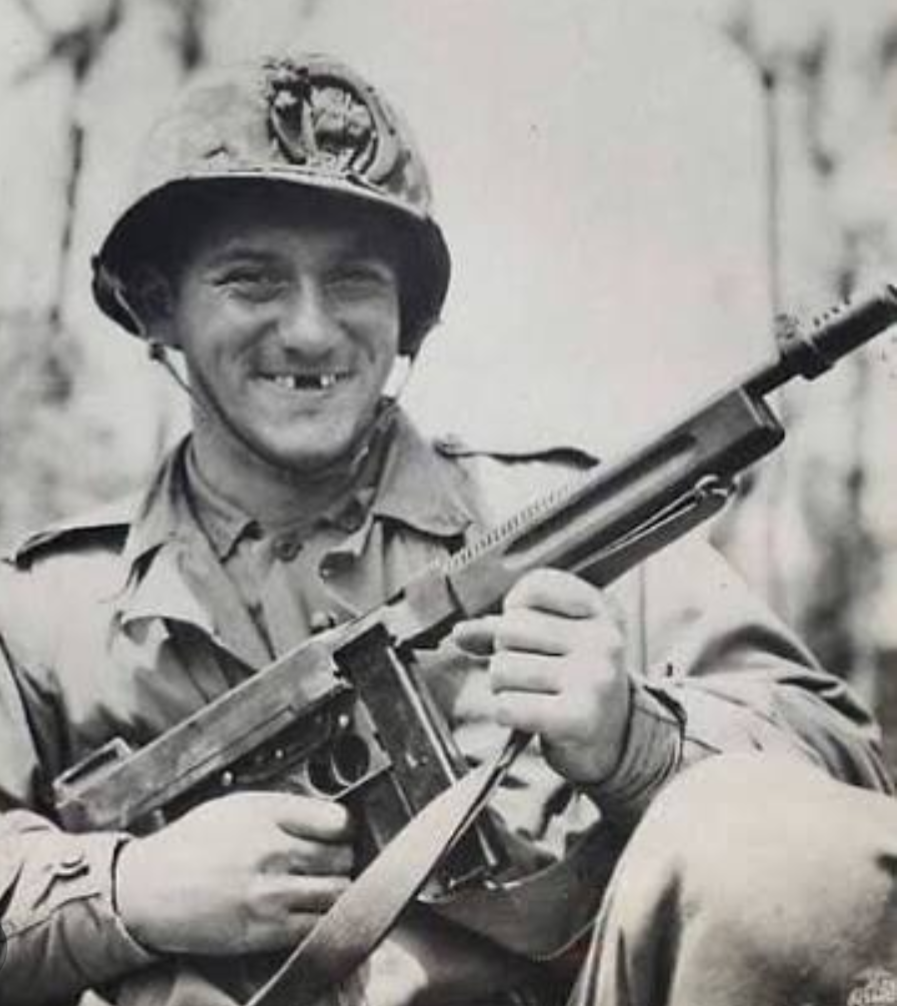
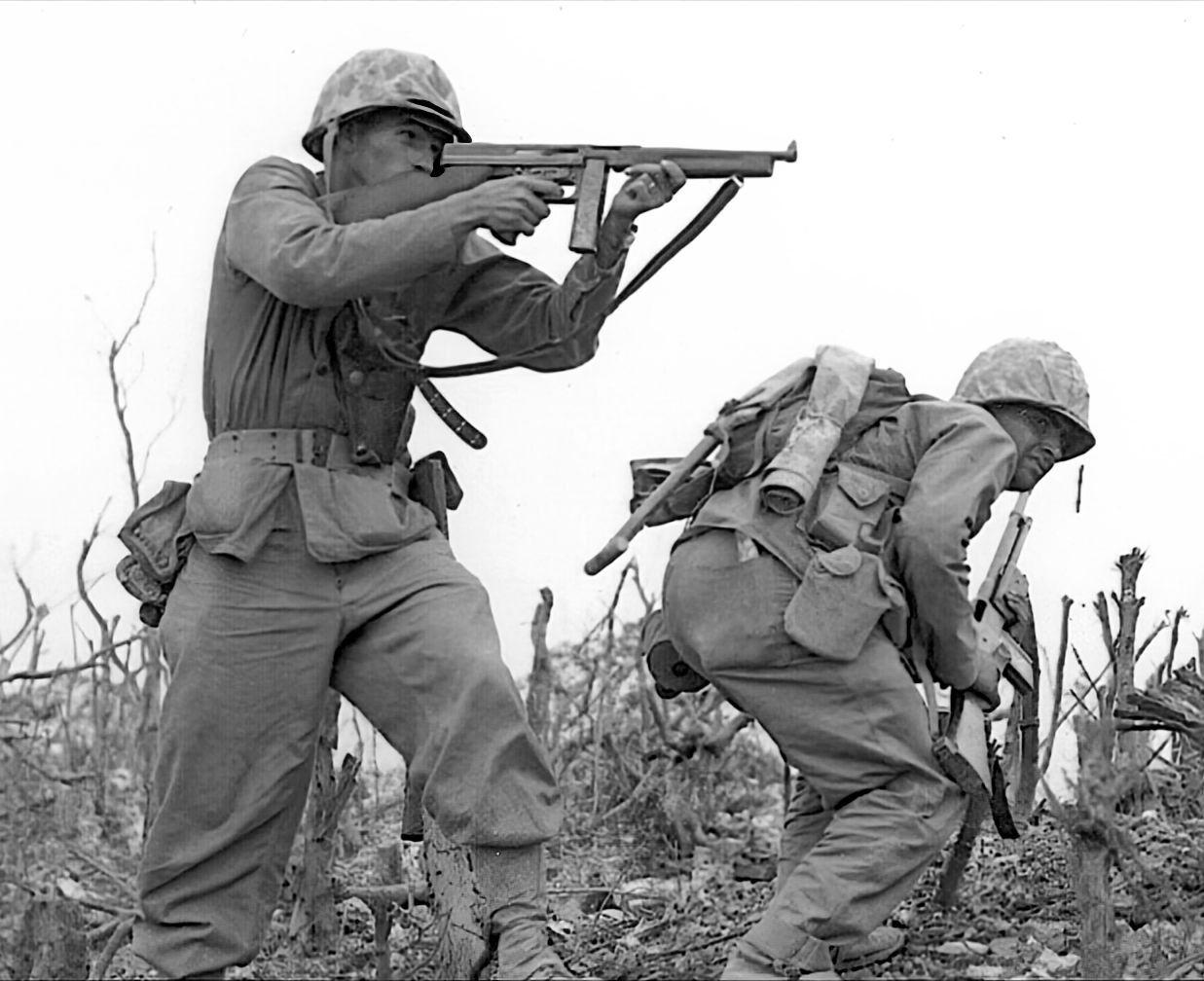
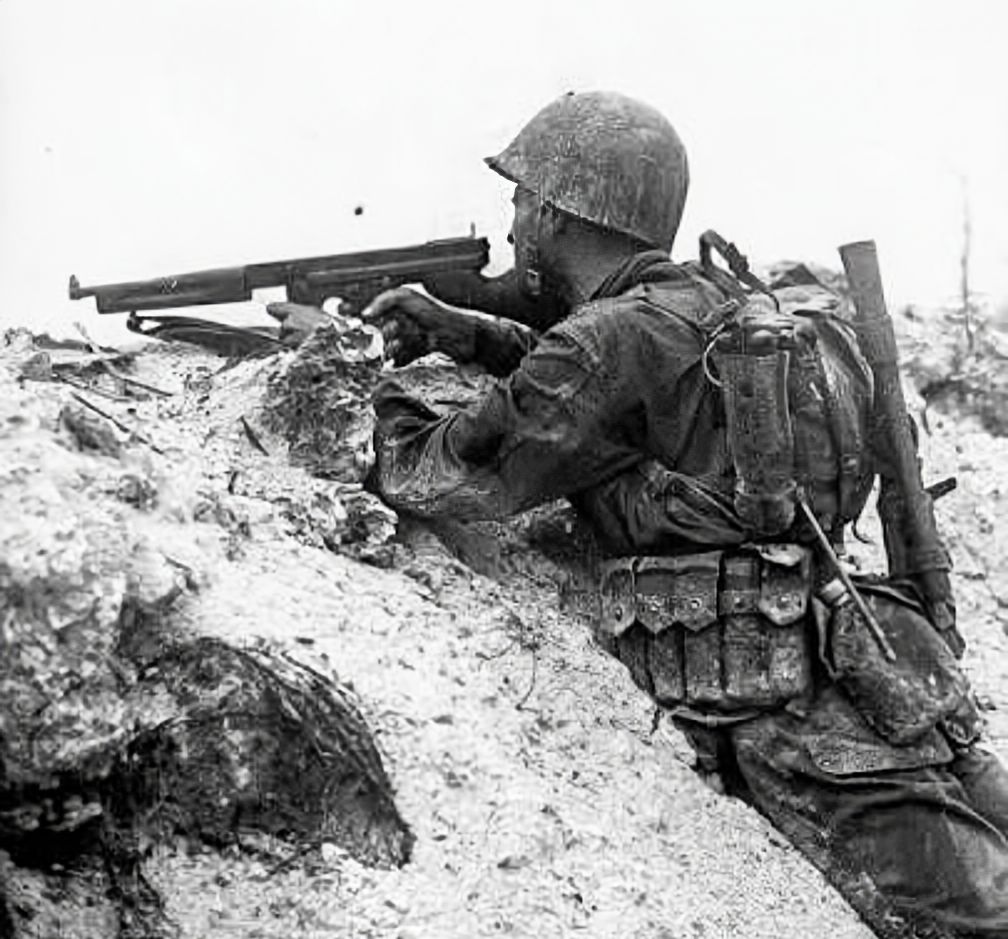
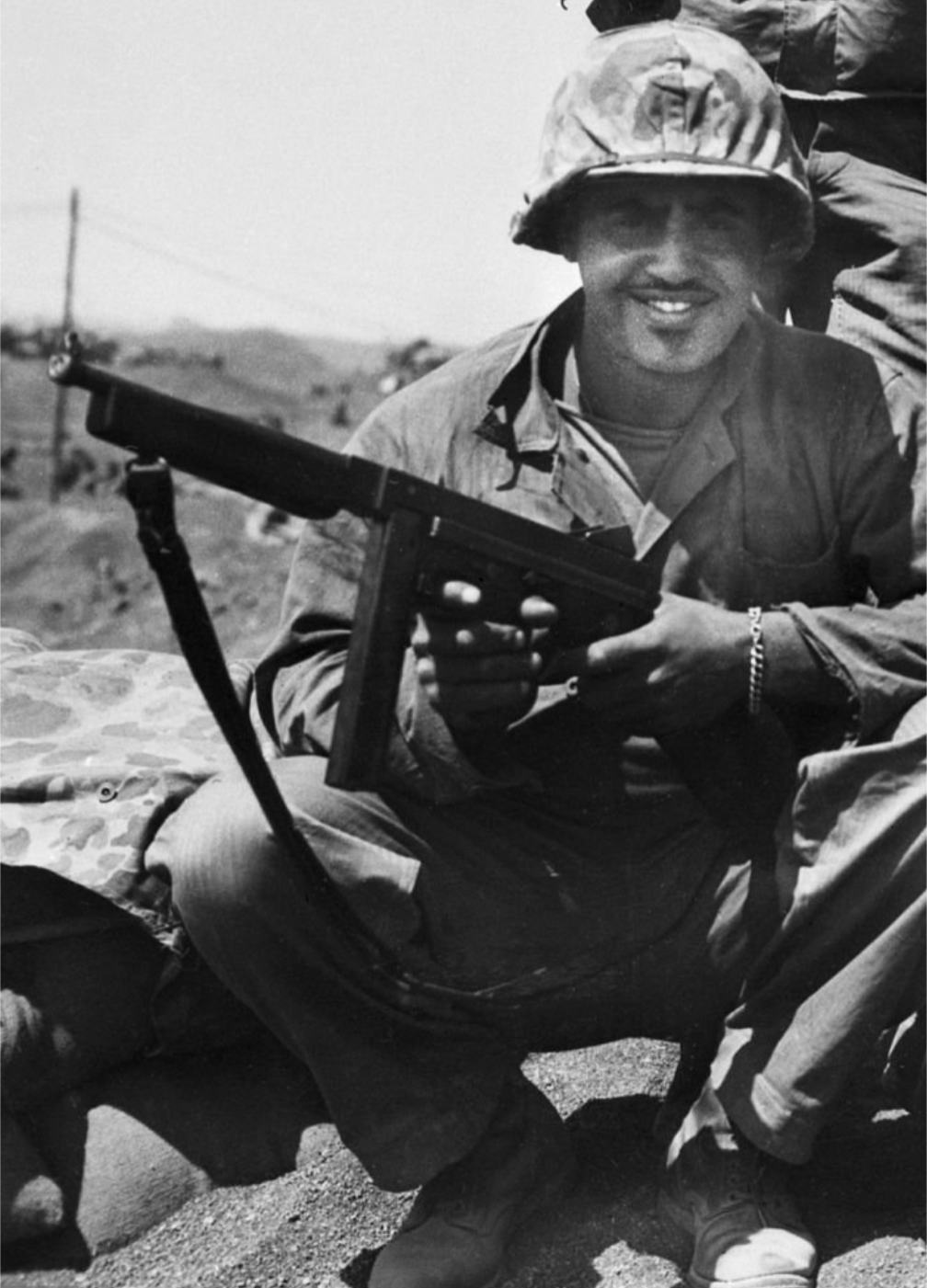
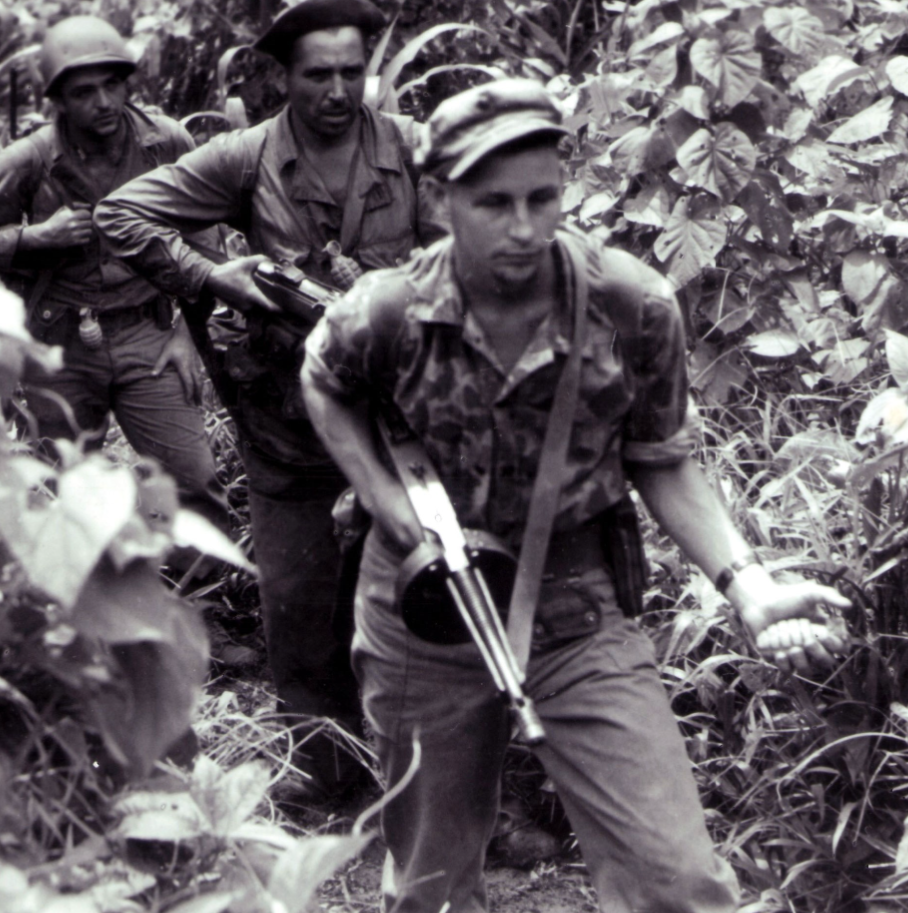
The Marine Corps would use every variant of TSMG in combat during WWII. Top Left: a wounded Marine with a late M1928A1 is carried to the rear by his buddy. Top Right: Marine with a M1928 Navy on Okinawa. Bottom Right: a pointman carries a late M1928A1 with a smooth barrel on Cape Gloucester. Bottom Middle Right: M1A1 on Iwo Jima. Bottom Middle Left: Marine firing an M1 Thompson on Tarawa. Bottom Left: a Marine fires an M1 Thompson on Okinawa (NARA & USMC).
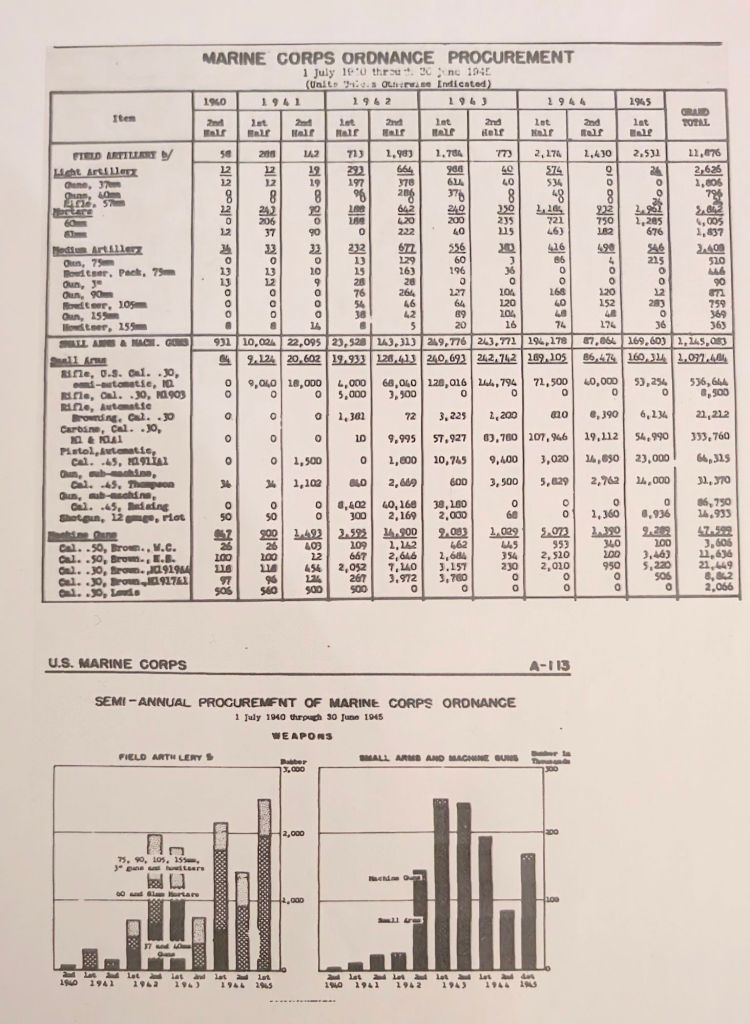
Post-war ordinance procurement report showing the Marine Corps would receive 31,370 Thompsons of all varieties from 1941-1945 (USMC).

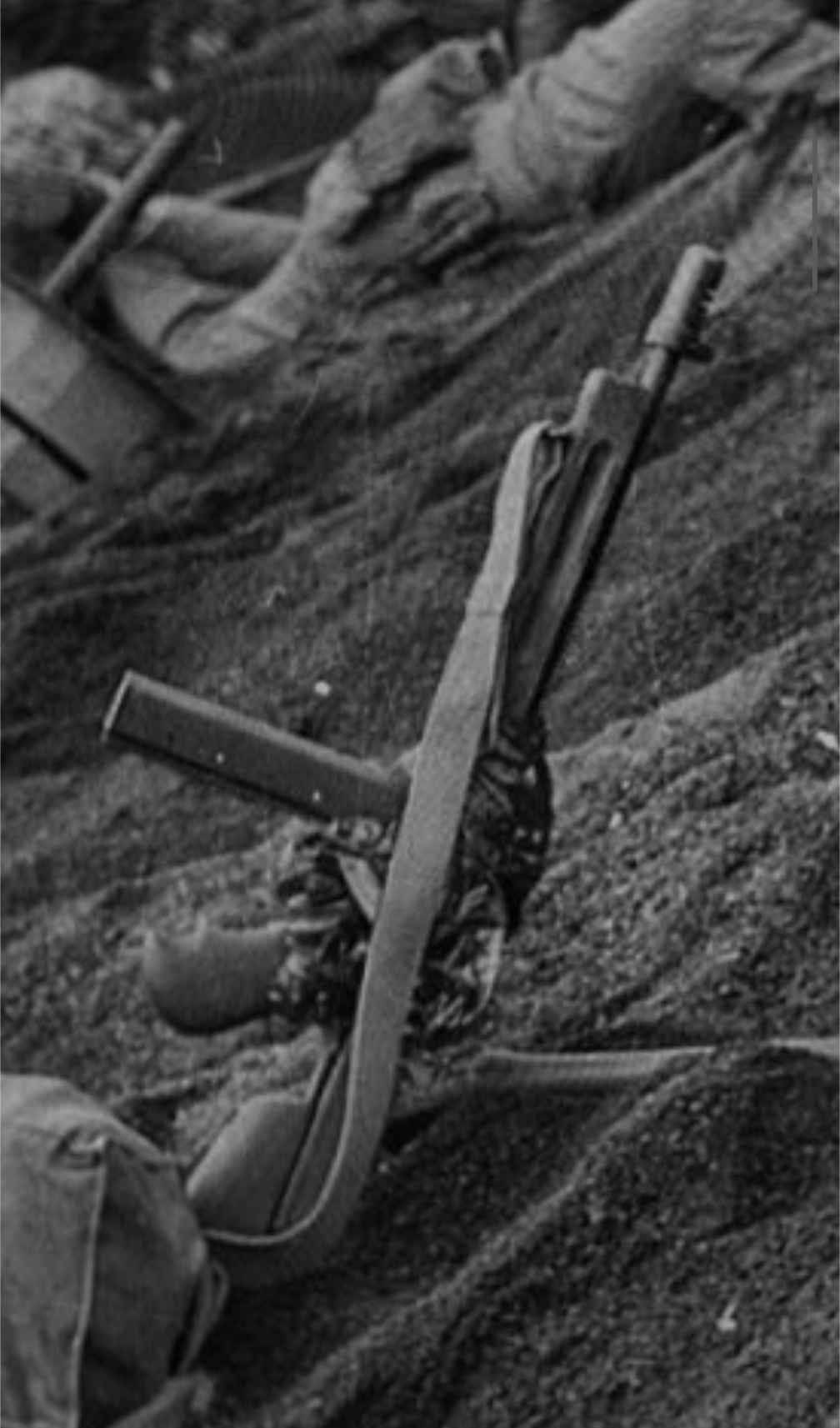

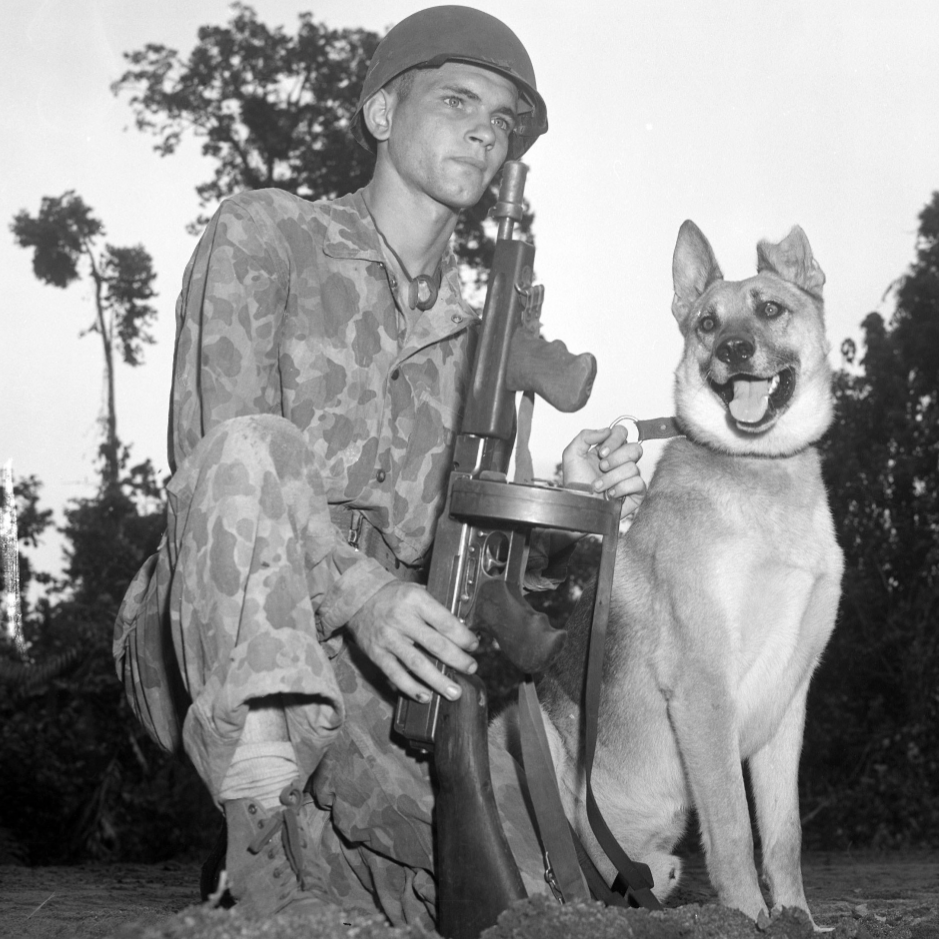
Just as varied as the model of Thompson carried by the Marines were the slings and personal modifications applied to them. Many photos show Marines using leather M1907 slings, M1 Carbine slings, and M1 web slings on their TSMGs in addition to the Kerr sling commonly associated with the Thompson. Other photos show Marines adding pistol grips to the straight handguard, or removing it all together. Further photos show makeshift action covers being employed during D-Day of amphibious landings (USMC & NARA).
 USMCWEAPONRY.COM