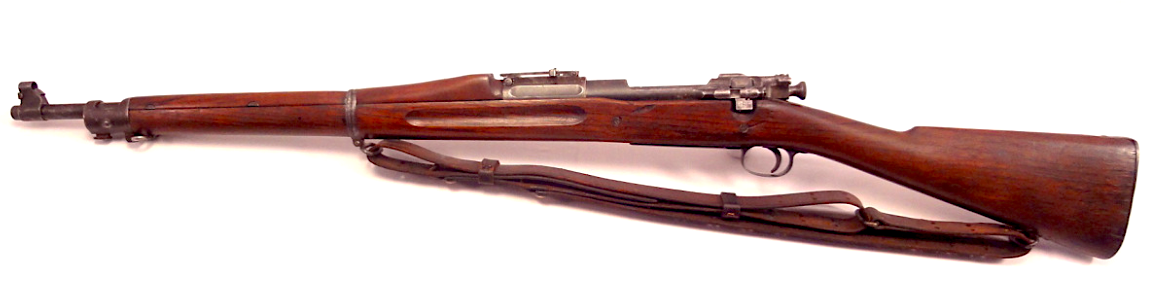
The late 19th Century saw vast improvement in service rifles, but the US military’s choice of the M1895 Winchester Lee Navy and M1898 Krag-Jørgensen performed poorly compared to the Mauser rifle. Ballistic deficiencies were put on display when American troops squared off against Spanish forces armed with Mausers in Cuba and the Philippines, leaving the Ordnance Department scrambling for a solution. The answer would come in the form of the United States Rifle, Caliber .30, Model 1903. While not a complete copy of the Mauser, the action and bolt were heavily incorporated, leading to copyright infringement lawsuits and the US government paying royalties to Mauser for a period of time. The M1903’s original chambering, in the .30 Caliber, Model of 1903 cartridge was greatly improved with the .30 Caliber Model of 1906 ball cartridge. A superior round with excellent ballistic performance for the time, this cartridge is known worldwide as the .30-06. The next few years would see US arsenals retrofit existing M1903s with the new .30-06 barrels, ballistically matched peep sights, and upgrade the internal rod-bayonet rifles to the exterior M1905 bayonet system. These improvements would render the M1903 into the rifle whose accuracy and ruggedness were renowned worldwide.
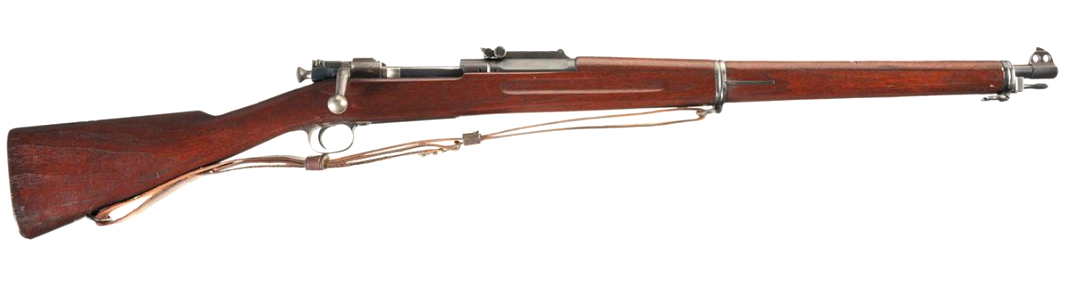
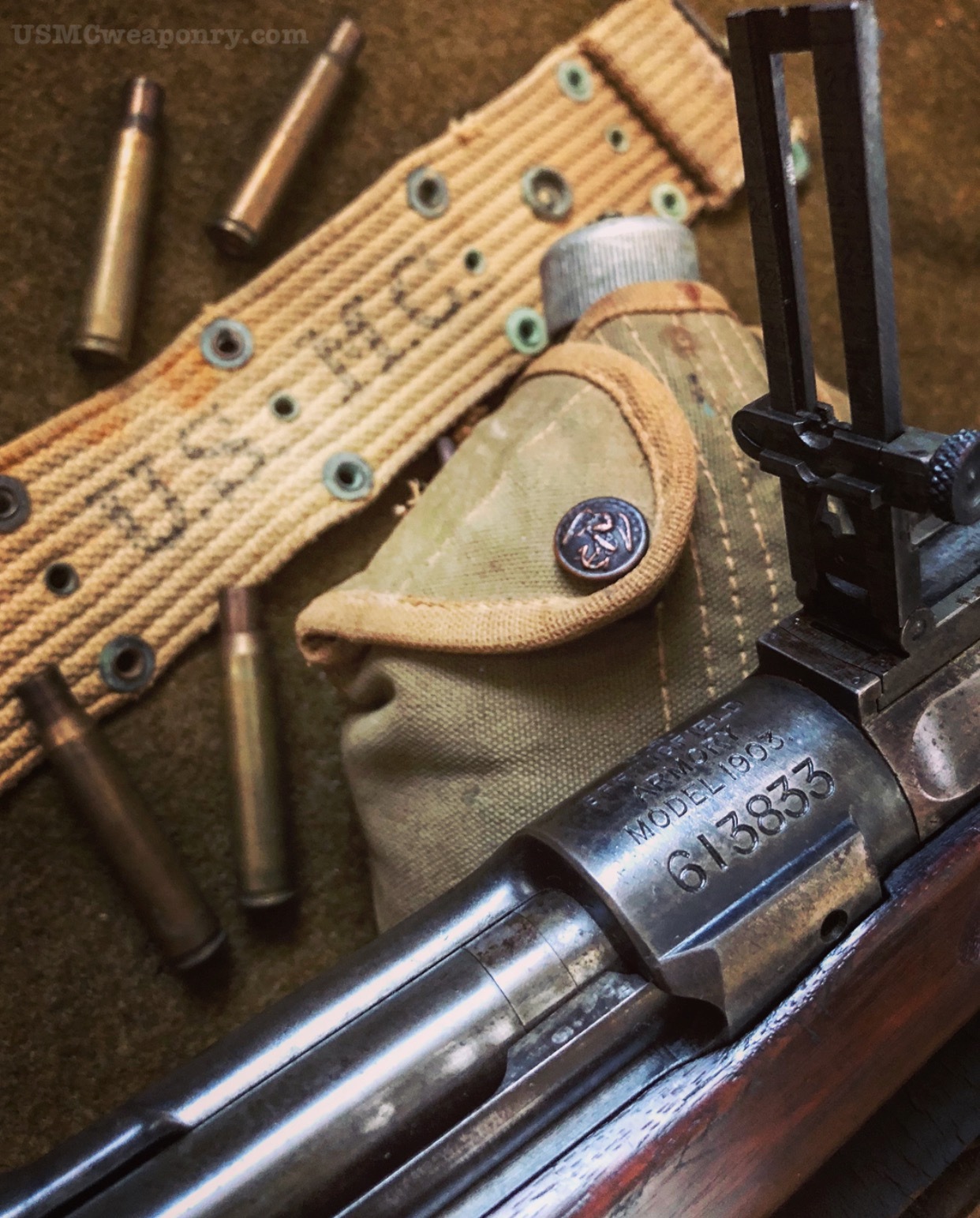
Springfield Armory Model 1903, chambered in .30-03, with Mauser style ladder sights and the early rod bayonet design. The improvements of the 1905 and 1906 would make the M1903 much more appealing to the Marine Corps (photo: www.icollector.com).
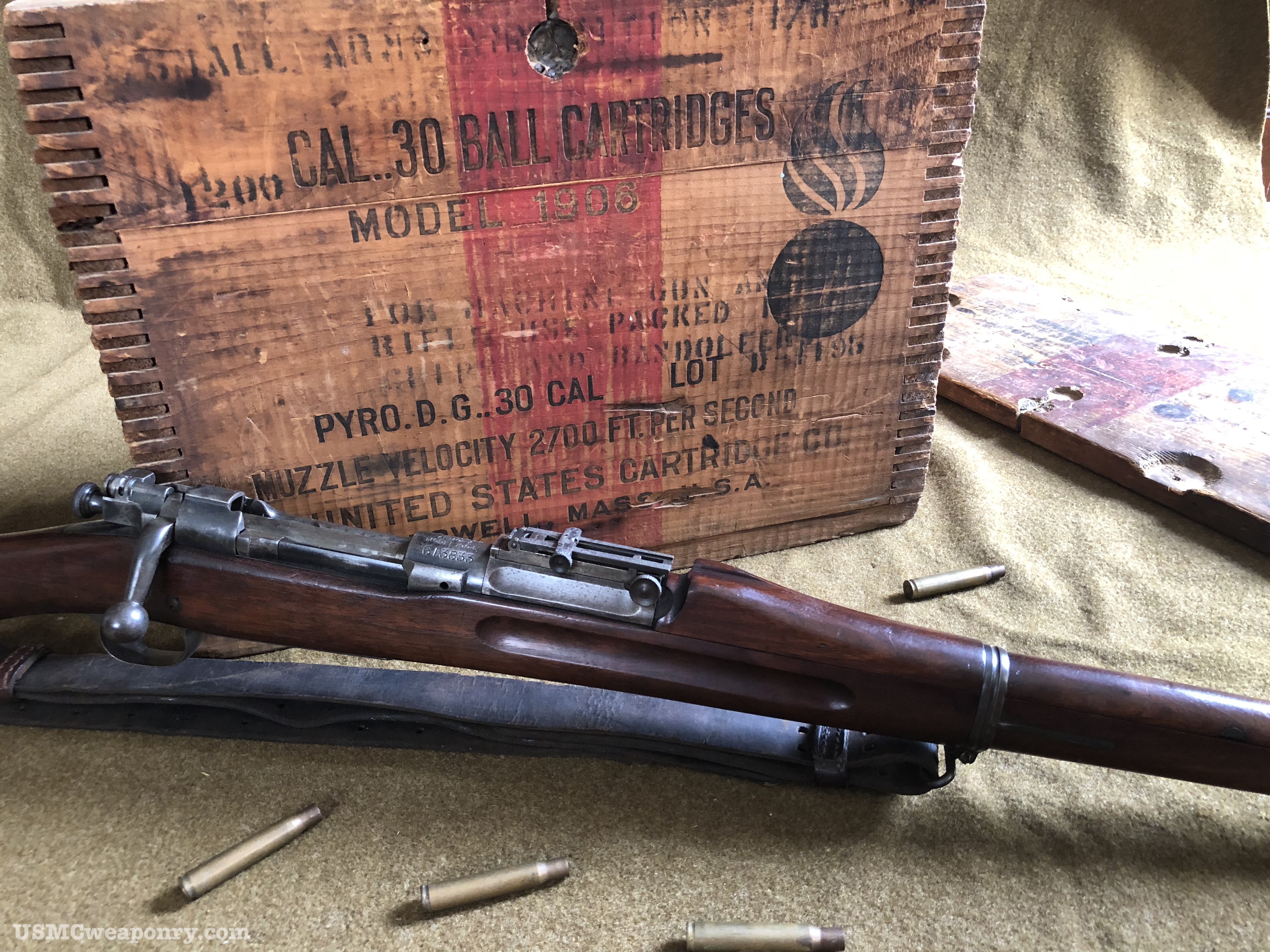
With the advent of the Model 1906 .30 Caliber Ball Cartridge, the American military finally had a rifle and round that could match the performance of the Mauser. The two rifles would square off against one another just a decade later (Kost collection).
After a decade of service with the M1898 Krag-Jørgensen, the Marines made the switch to the refined M1903 Springfield in the summer of 1909. The plan was for the Marine Corps Rifle Team to receive the first batch of M1903 in the National Match variety. These skilled marksmen would cycle through Marines in leadership billets, training them in the operation of the new rifle. The newly trained leaders would then go back to their units and train the Marines in their charge how to operate the M1903. The plan was successful, and soon after came several large procurement orders. In 1910 and 1911 enough M1903s would be obtained to outfit the entirety of the still very small Marine Corps. Despite the Marines not procuring standard issue M1903s until 1910, serial number research has shown that many rifles were manufactured considerably earlier, suggesting that the Marines received a considerable amount of re-arsenaled early M1903s that were available for re-issue at government depots.
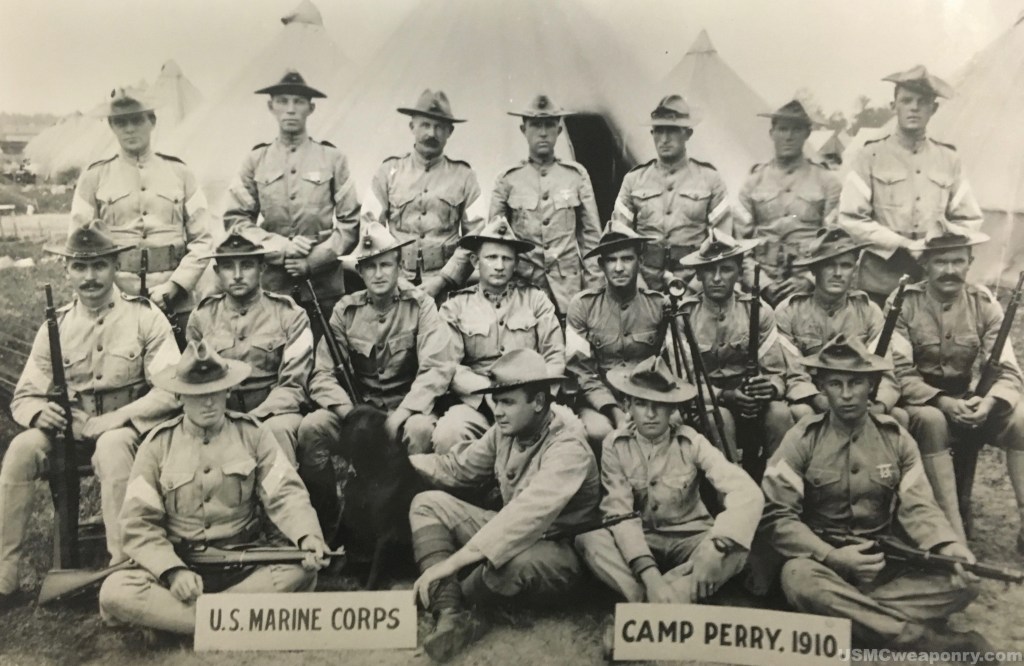
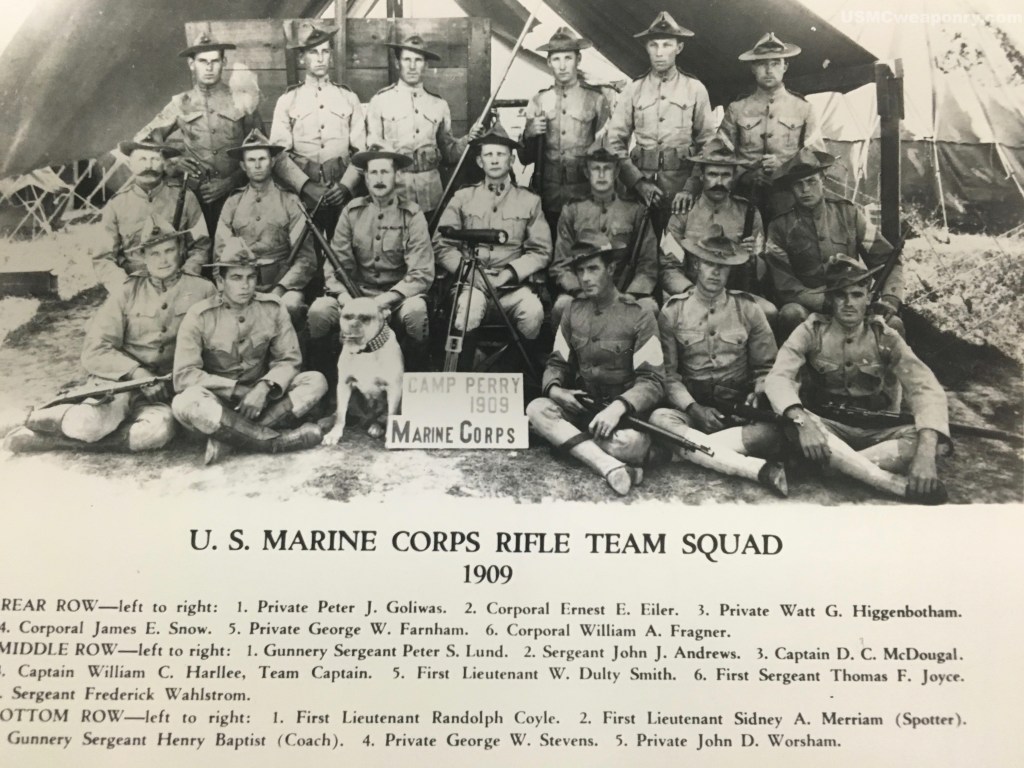
Marines at Camp Perry for the National Matches early in the service history of the M1903 (NARA).
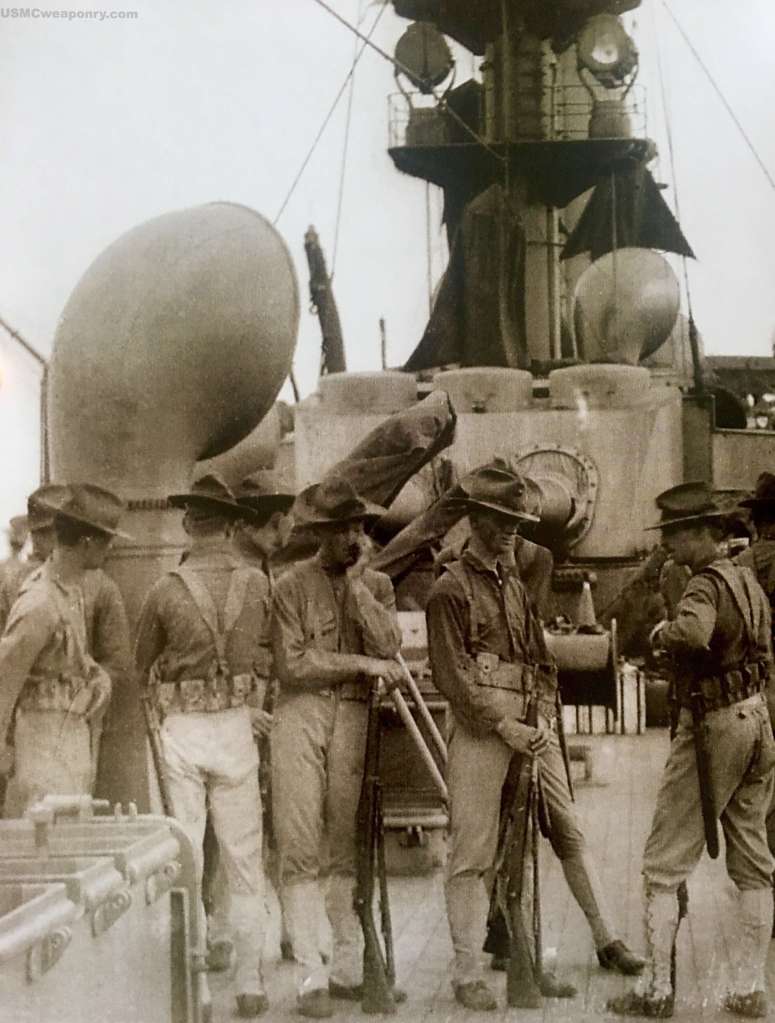
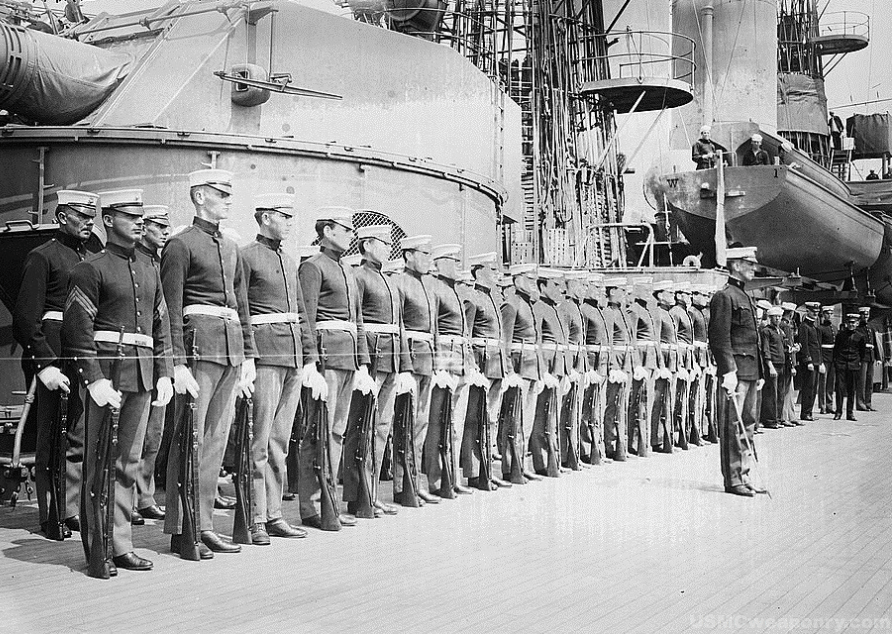
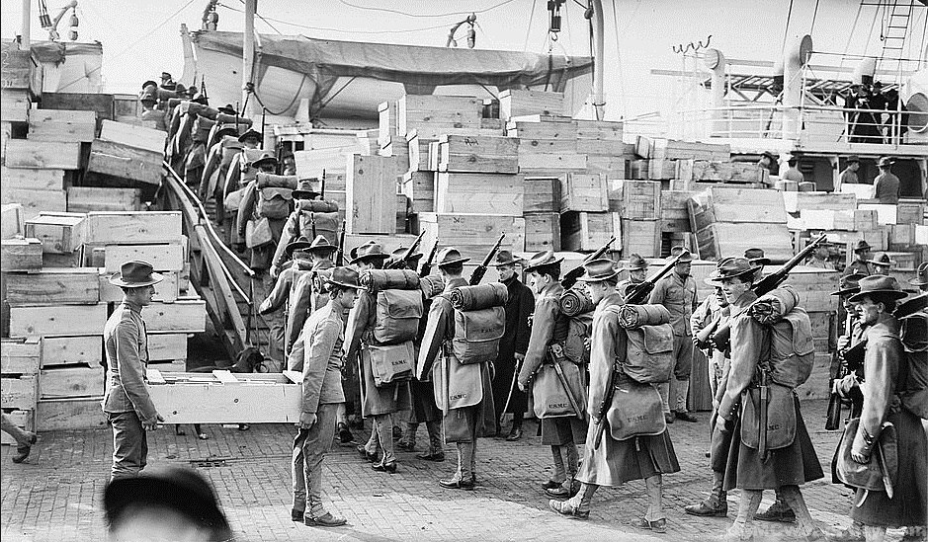
Left: Marines with their new M1903 Springfield rifles on the USS California and USS Wyoming, late 1912 – early 1913. Right: Marines bound for the Punitive Expedition to Mexico in 1913 (USMC).
The following years saw the the Marines putting their new service rifle to good use. In the time between the M1903’s adoption and the beginning of American involvement in Europe for World War I, the Marines would employ the M1903 in a variety of small-scale conflicts in the Central Americas. The combat experienced in these “Banana Wars” would lend expertise to the men would would later fight in France, of which expert employment of the M1903 would become a Marine hallmark.
Marines would learn to appreciate the accuracy of the M1903 early on in its service history (Kost collection).
From the onset of procurement, the Marine Corps desired to develop the M1903 into a sniper rifle variant. Eventually, the Marines would settle on the Winchester A5 as the scope to be used, and hire gunsmith Adolph Niedner to modify the M1903 to accept these scopes. Using Franklin Ware Mann designed tapered scope blocks and modified mounts, Adolph Niedner would create the first batch of sniper rifles for the Marine Corps in 1917. Shortly after, Winchester would collaborate with the Marines for another A5 sniper variant both types of rifles being sent into combat in France.
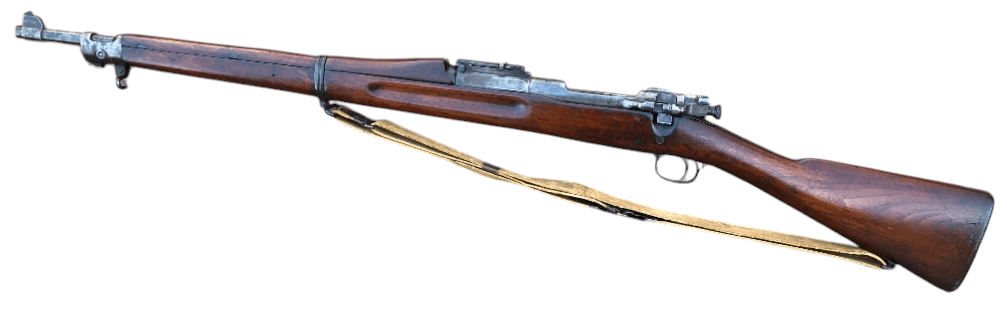
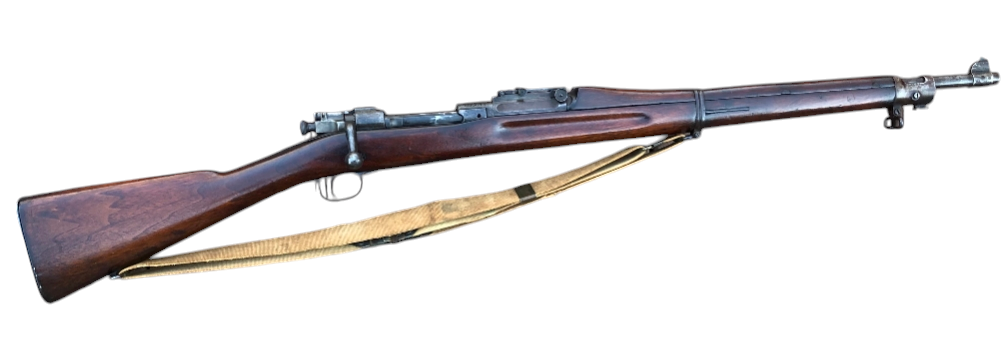
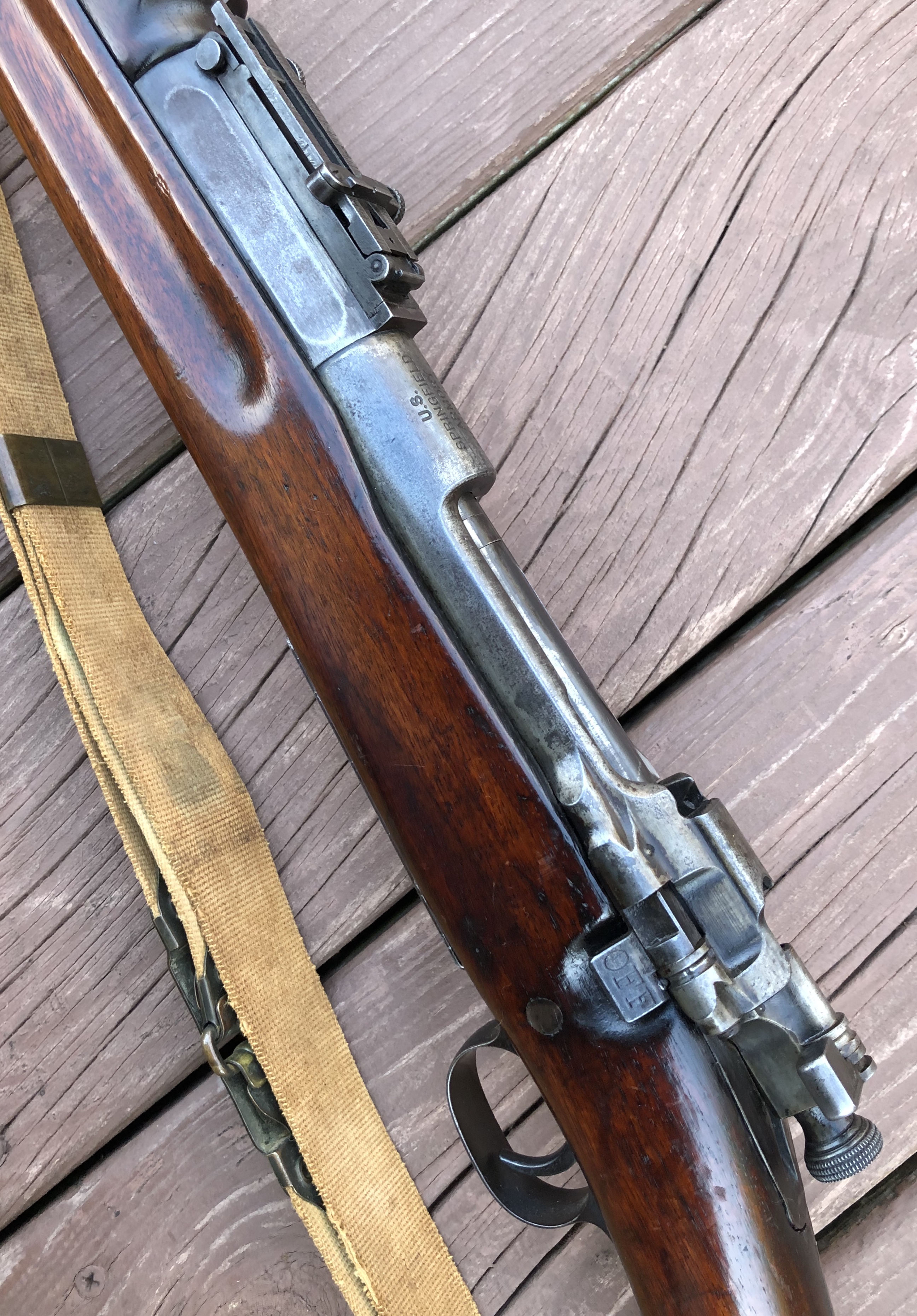
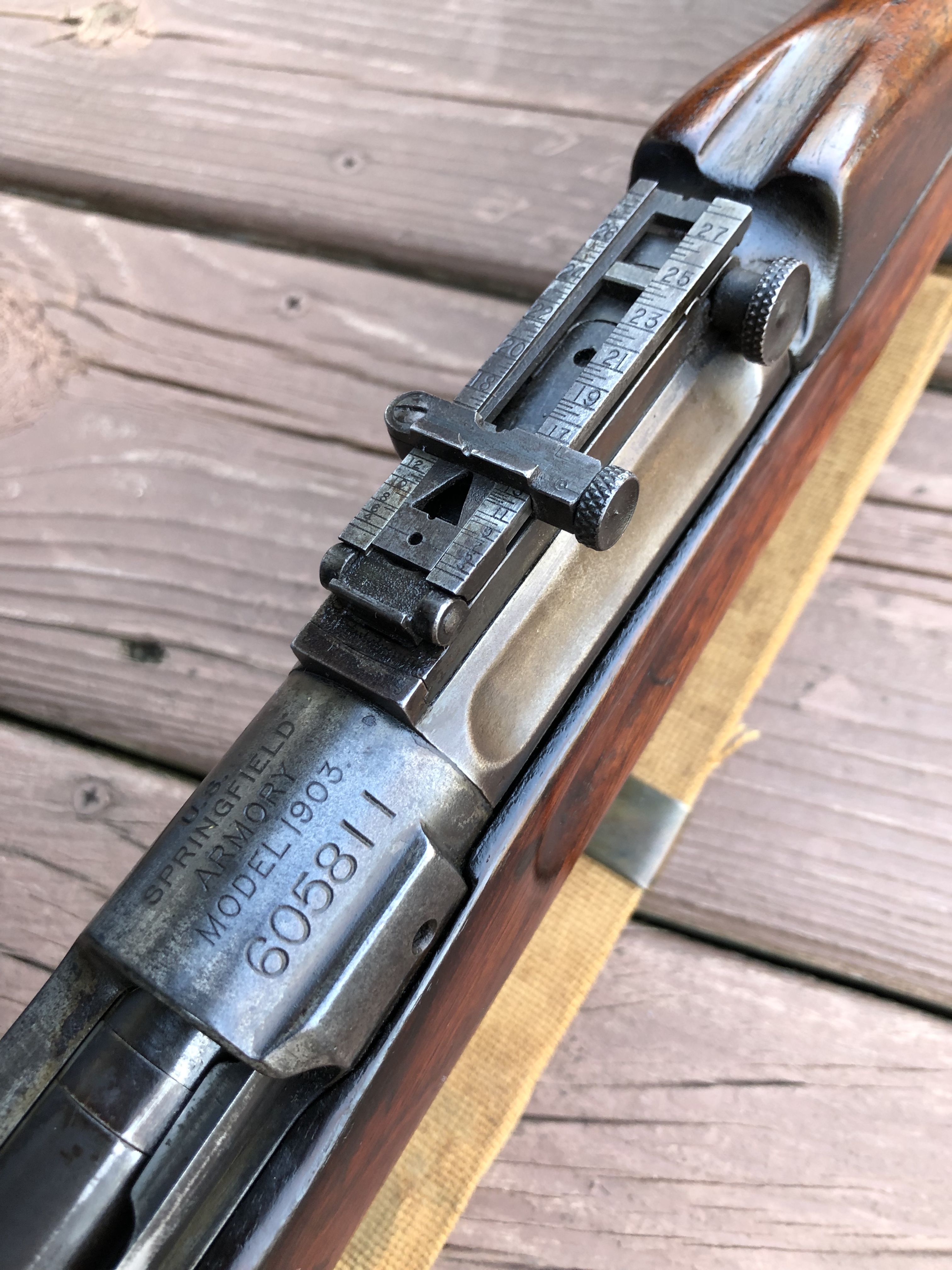
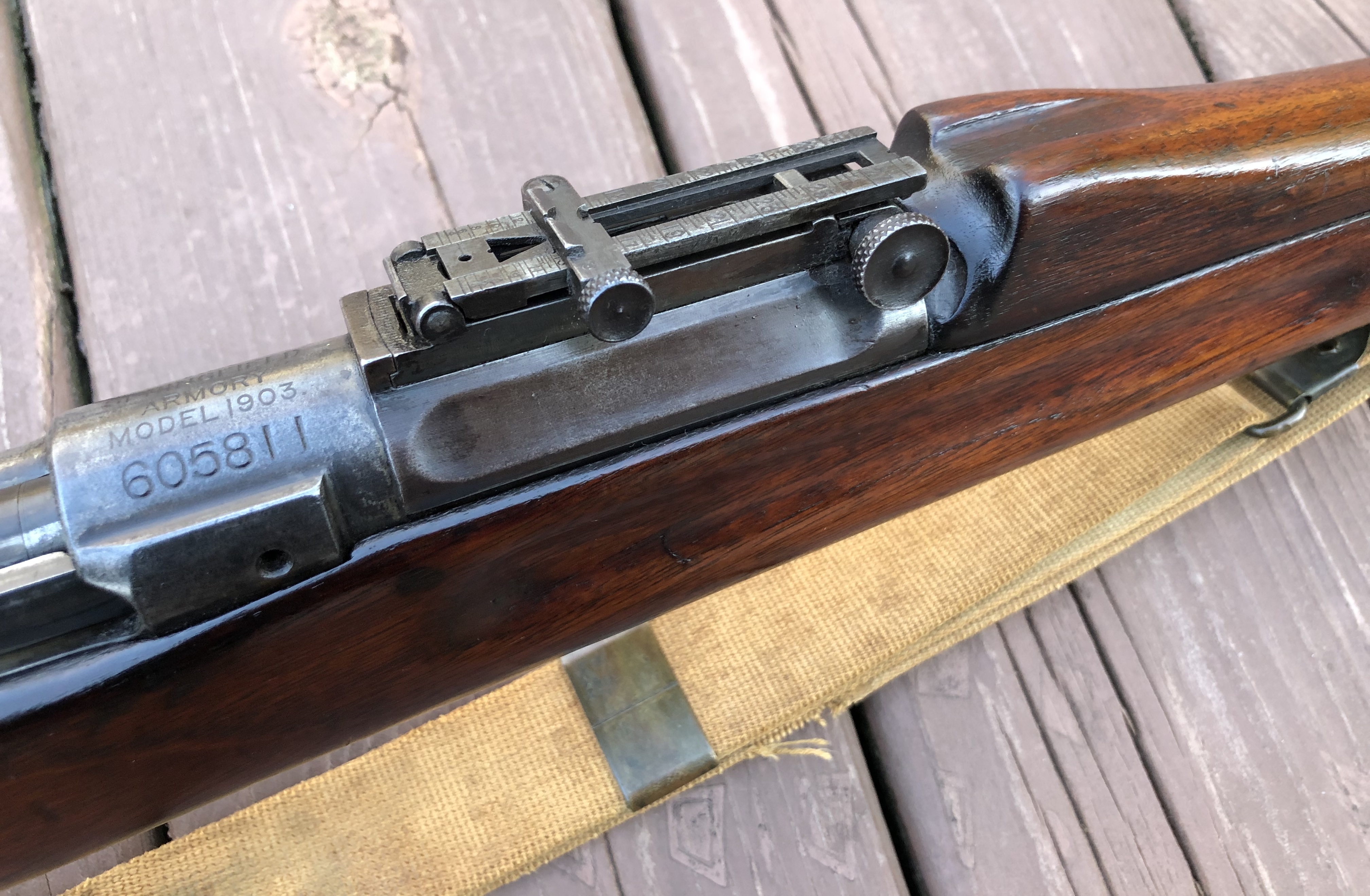
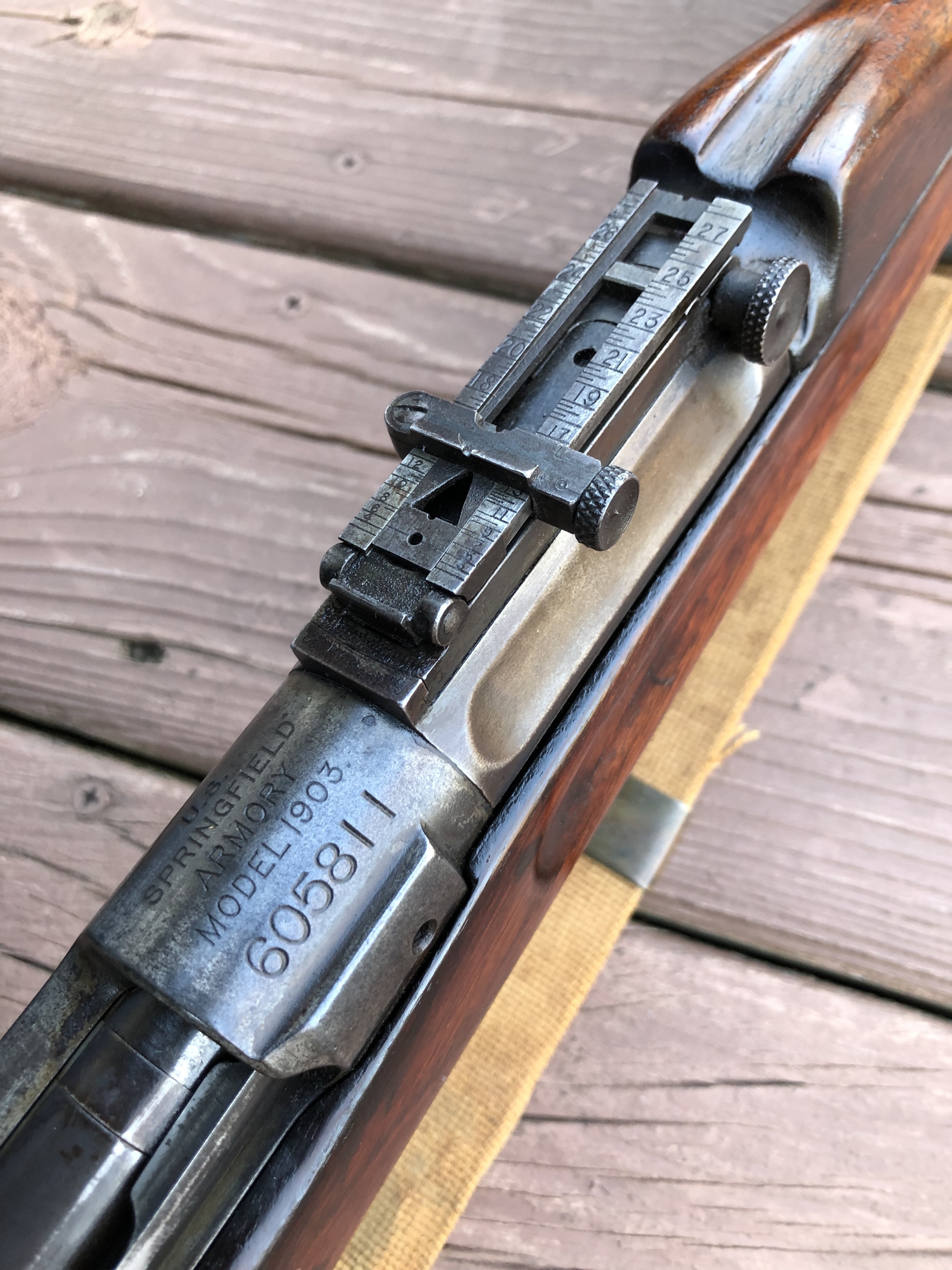
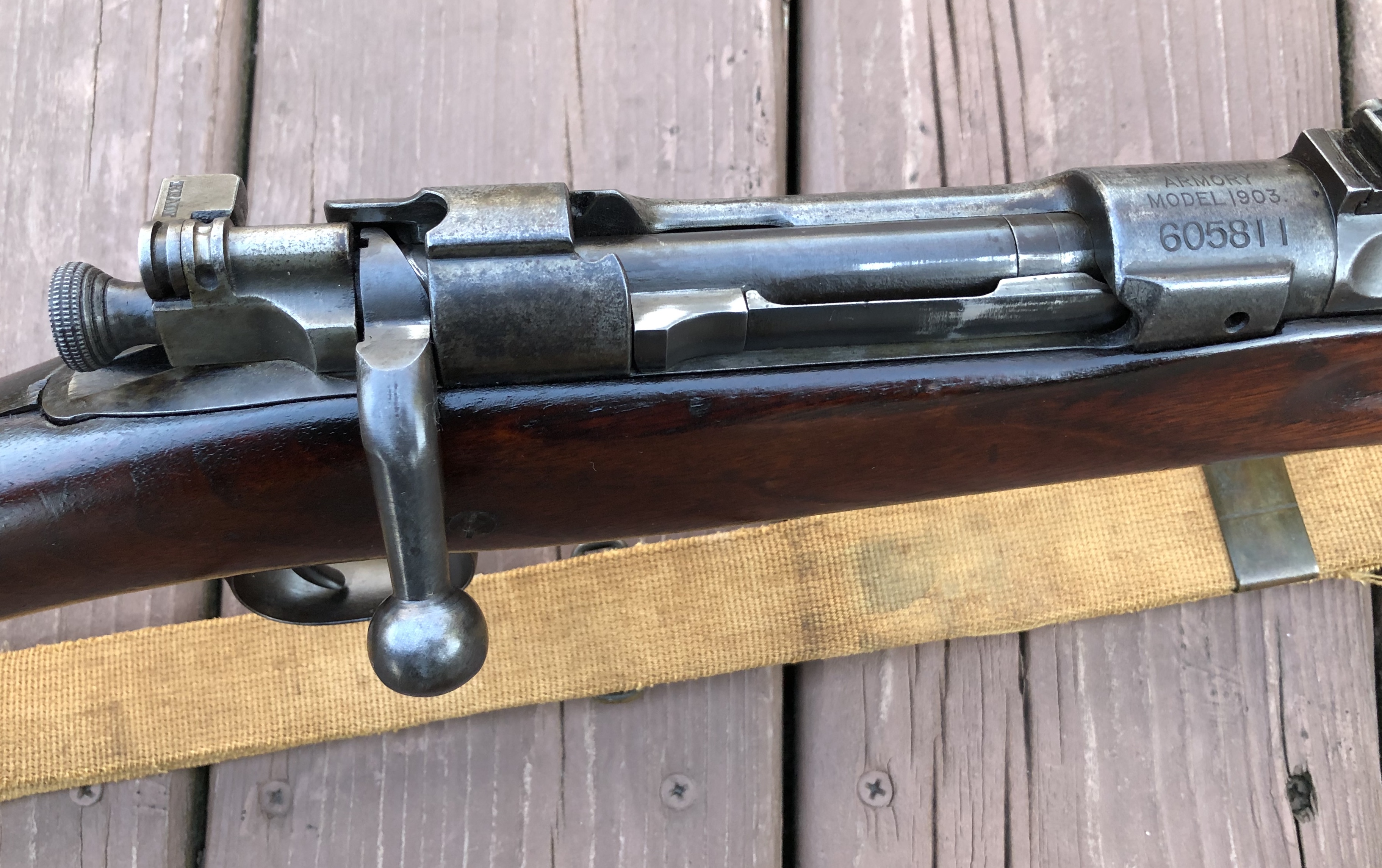
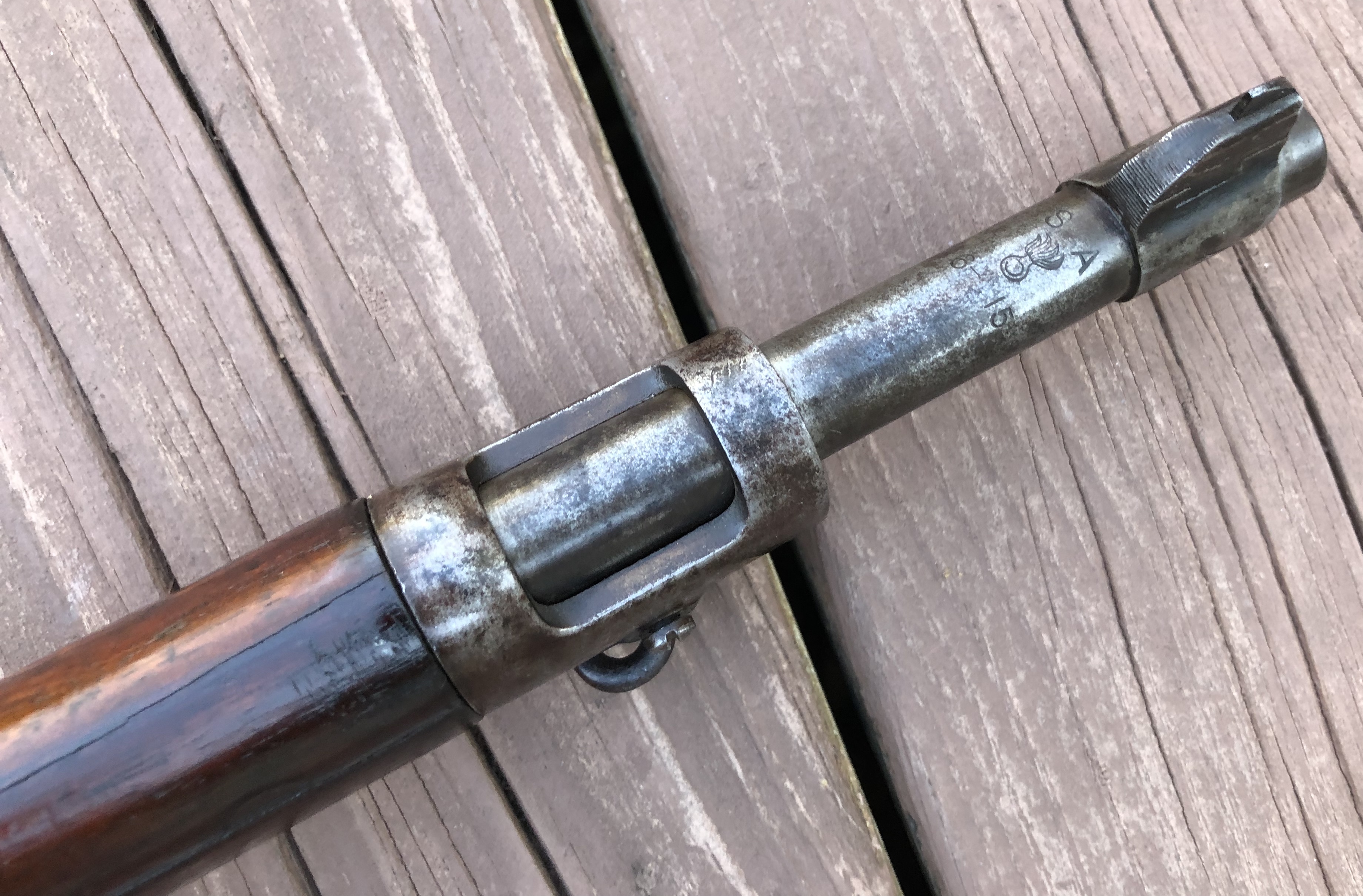
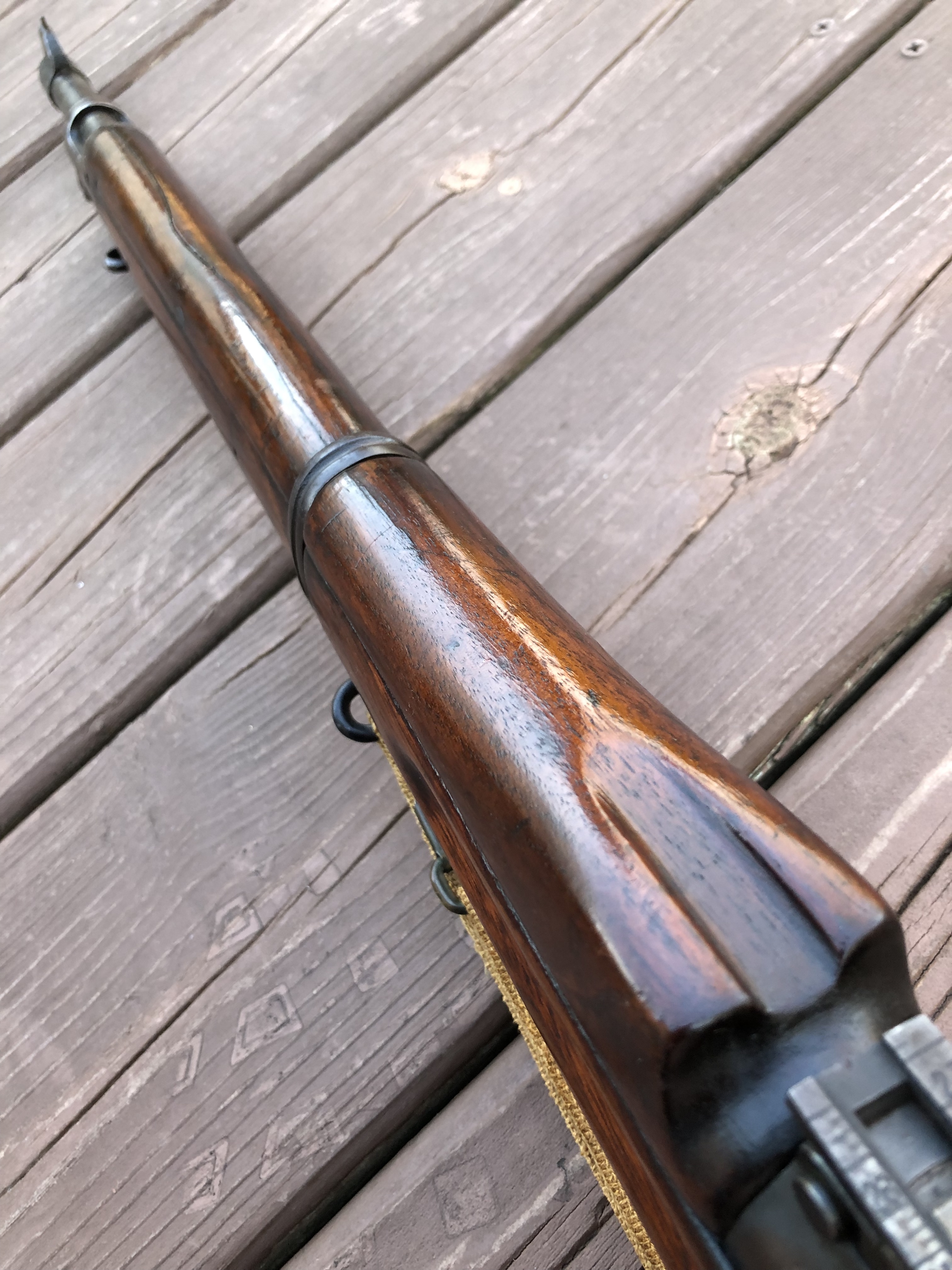
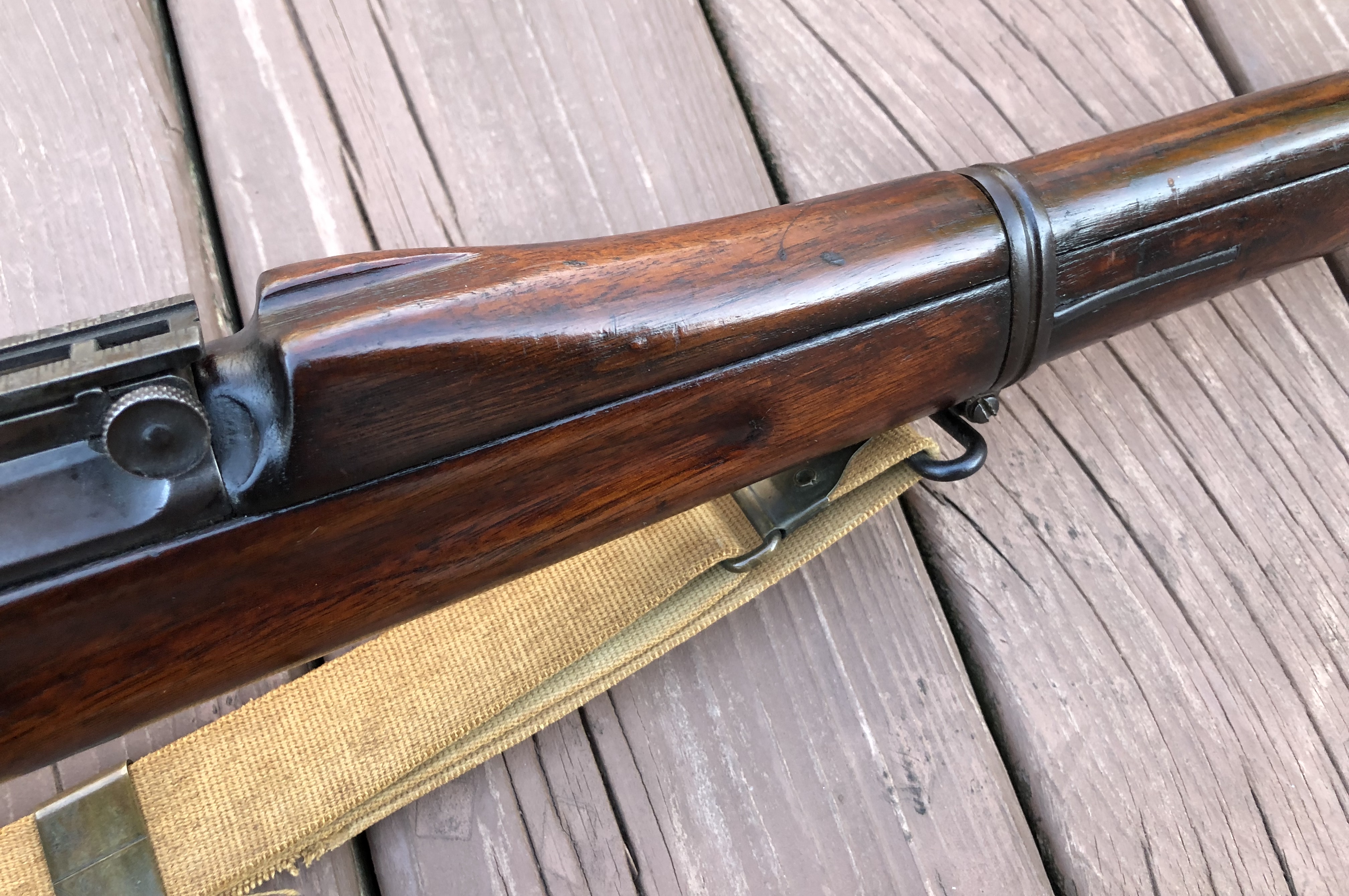
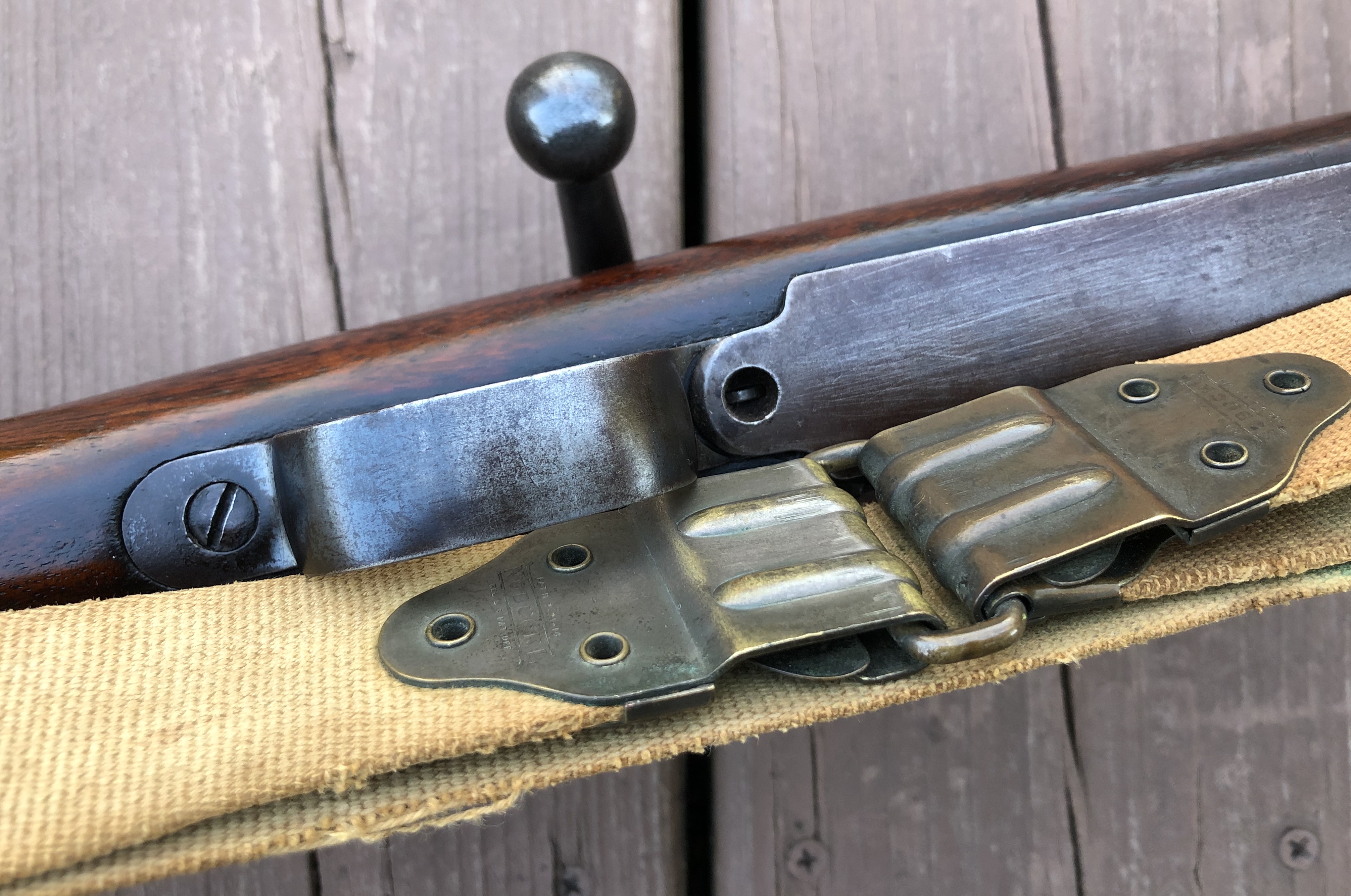
Springfield Armory M1903 #605811. An original example that shows heavy wear, this rifle is in a very dense serial number range for M1903s documented to the 4th Marine Brigade (Plowman collection).
The Great War found the Marine Corps, like the army, being rapidly filled with men and equipment. By the spring of 1917, Springfield Armory and Rock Island Arsenal were producing M1903 rifles at capacity and many of the men that would depart for France with the 4th & 5th Marine Brigades were issued rifles fresh off the production line. The 5th Marine Regiment had more “old salts” heading into the war, and would depart for France in the early summer of 1917. The freshly stood up 6th Marine Regiment would ship out in the fall of 1917, with a considerable amount of their Marines carrying new Springfields. That said, archival research has shown plenty of rifles carried in World War I were from the earliest years of Marine Corps procurement or prior. This can be further evidenced in period photos, with the early “high-wall” stocks on the rifles carried by Marines.
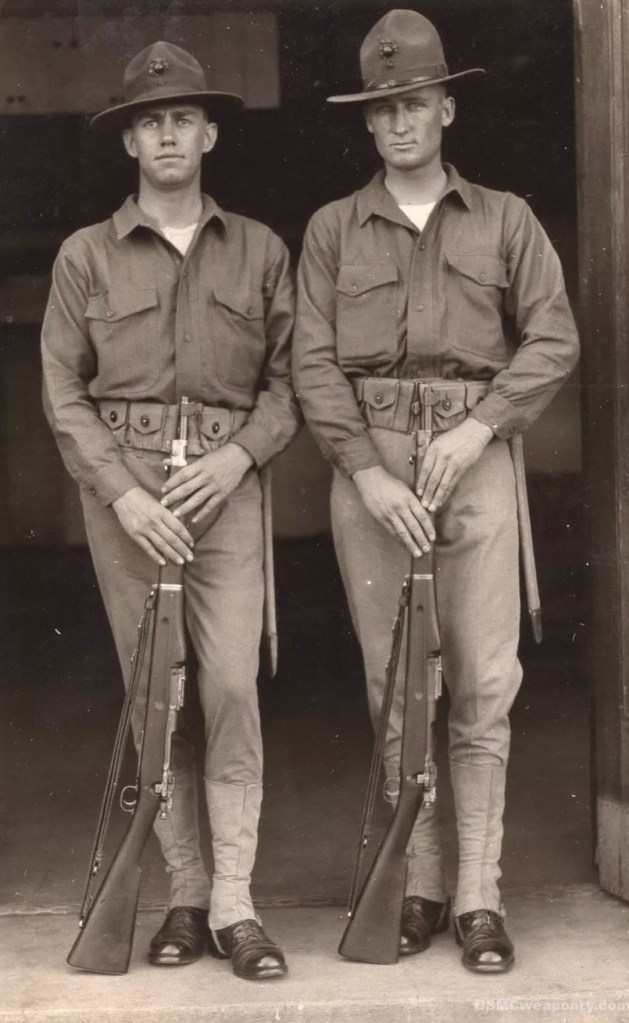
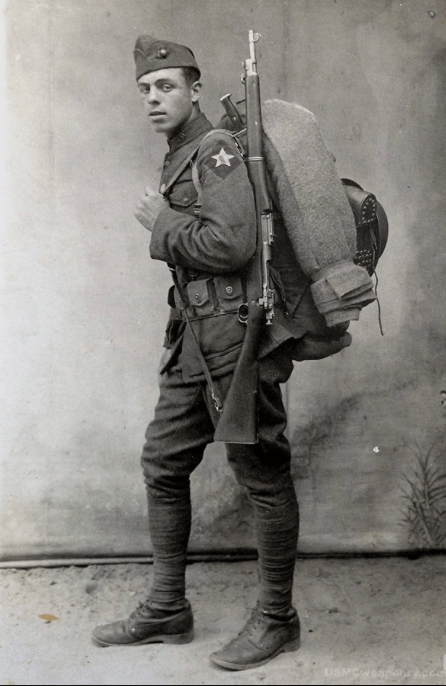
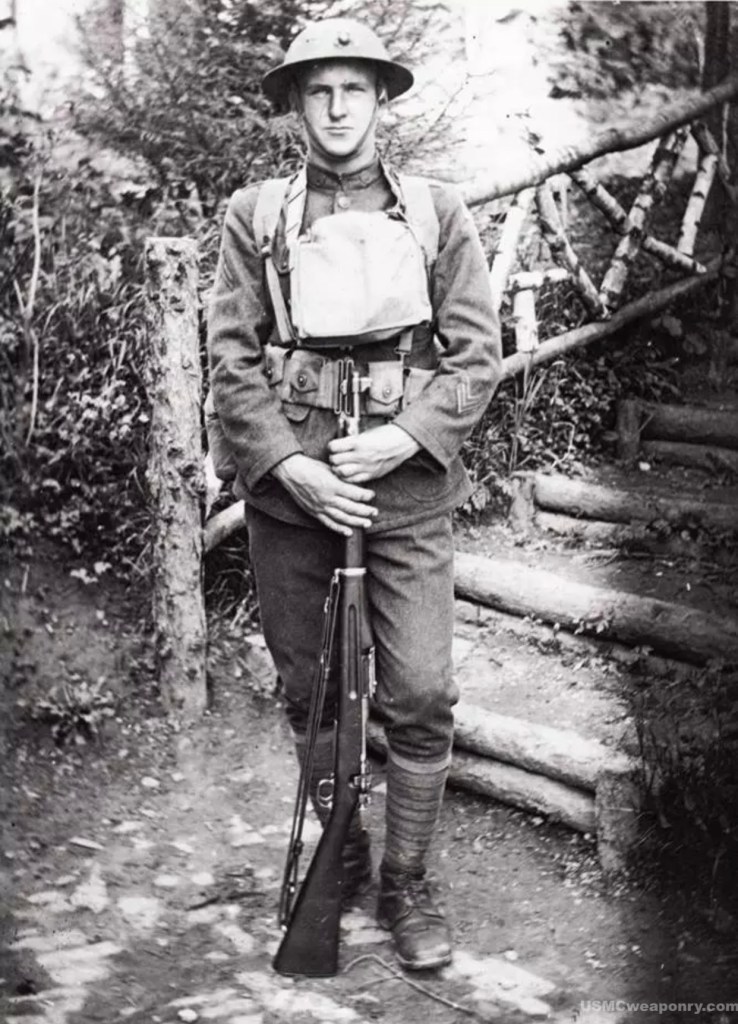
Both early and later stock varieties can be seen in these WWI-era Marine photographs (USMC/NARA).
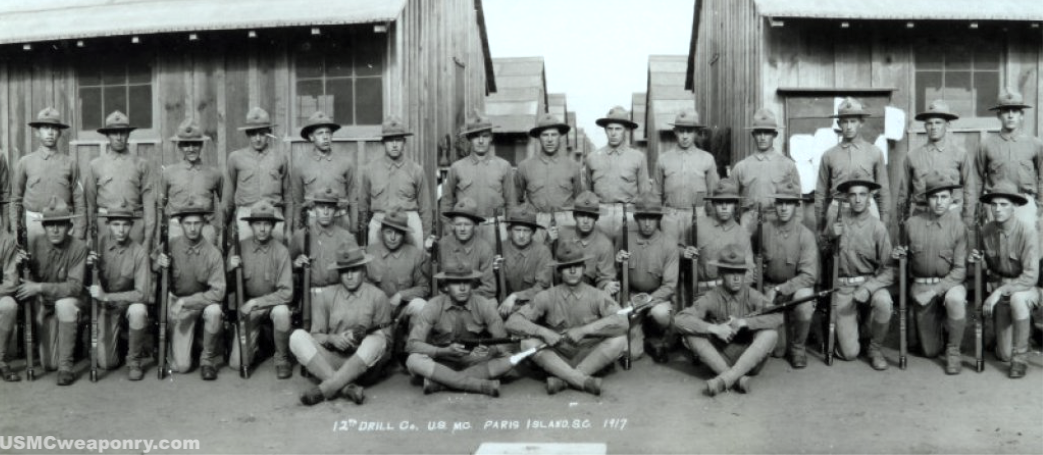
Marines at Parris Island, SC in 1917. Note the use of the Kerr Sling on the M1903s (USMC).
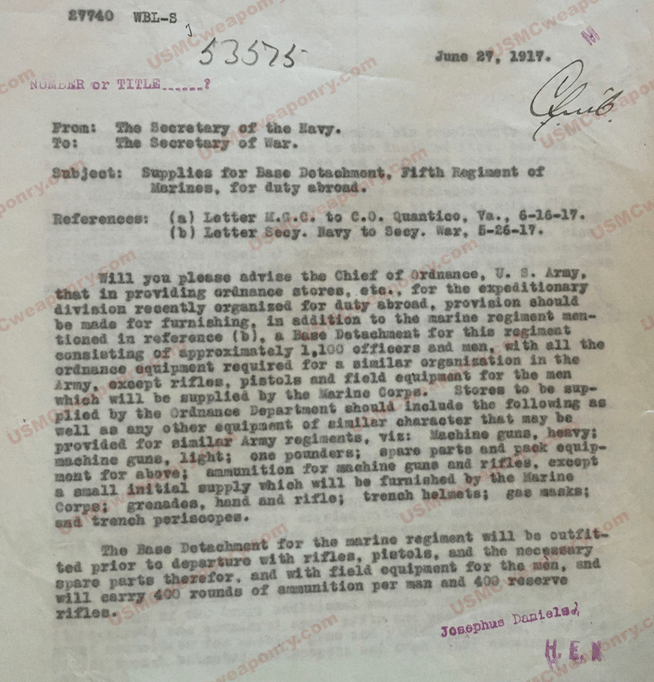
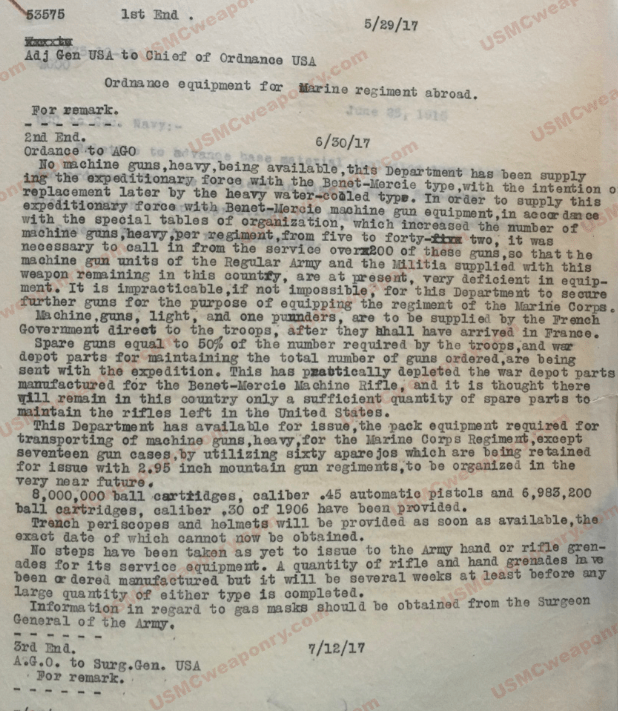
The 5th Marine Regiment would draw some supplies and ammunition from the army while a part of the Allied Expeditionary Force in France, but small arms would be issued from the USMC (Plowman/NARA).
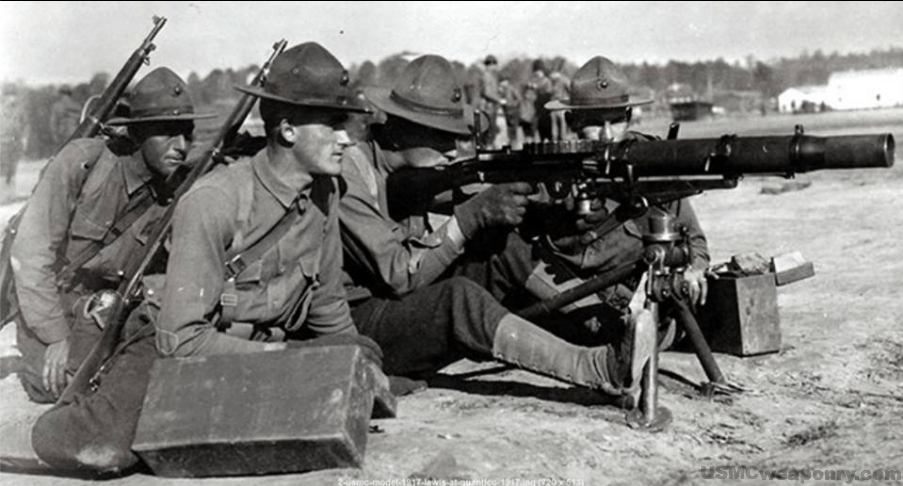
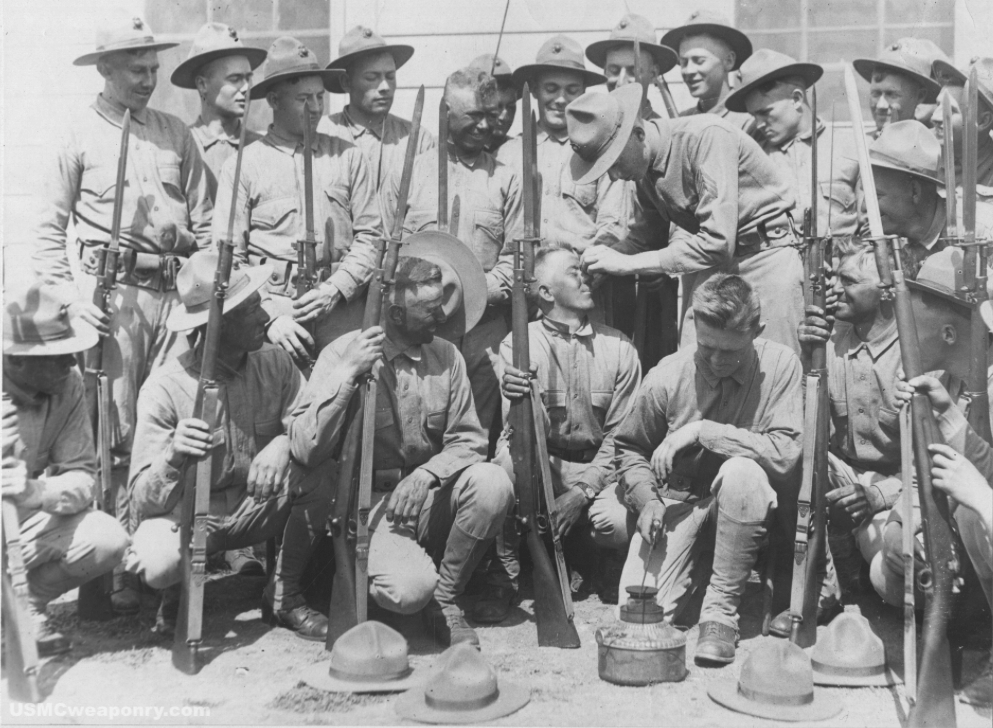
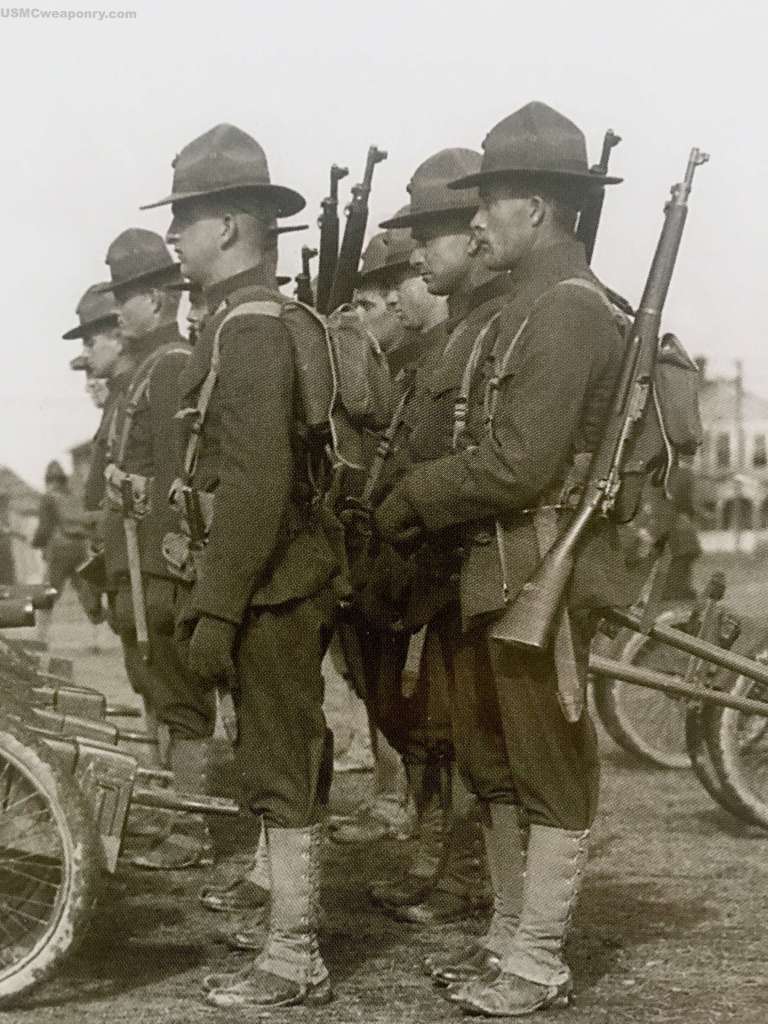
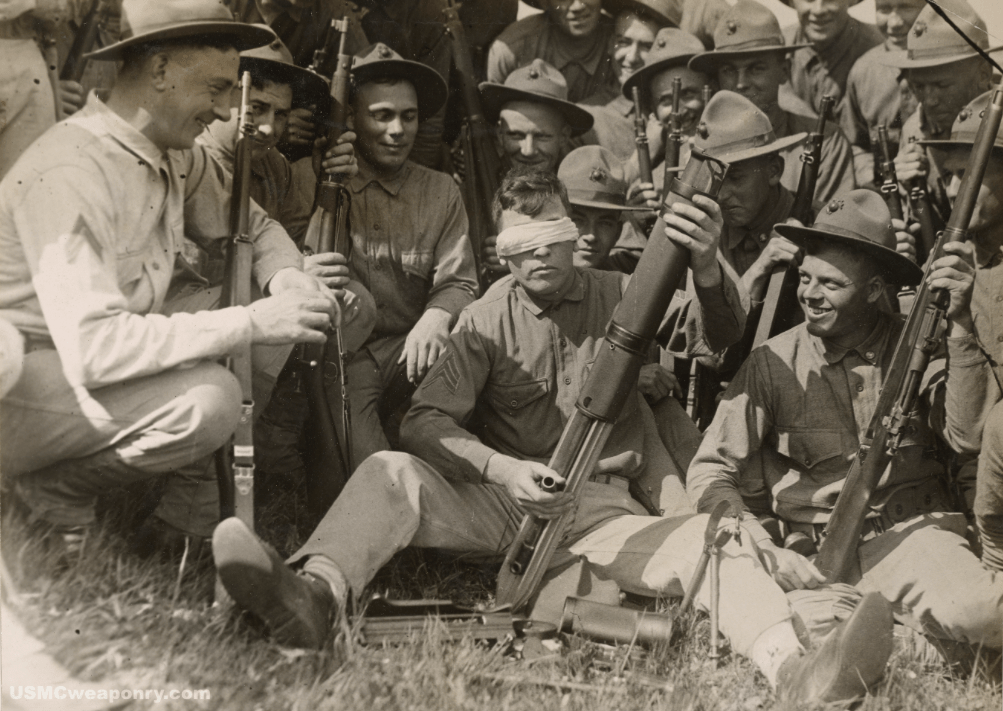
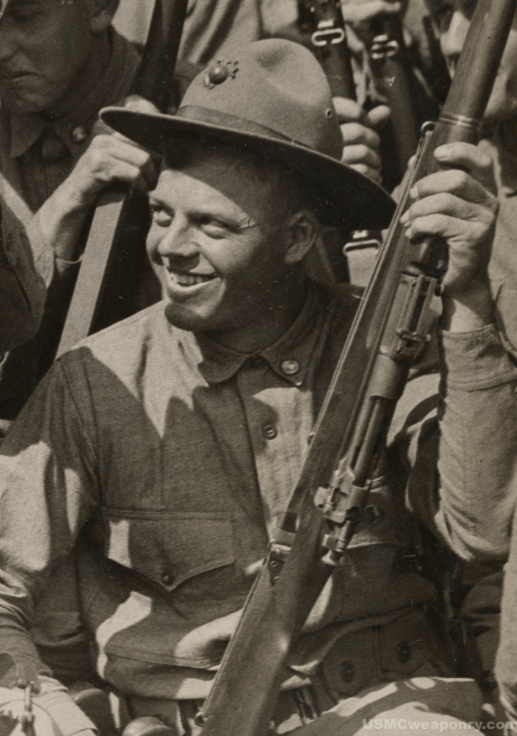
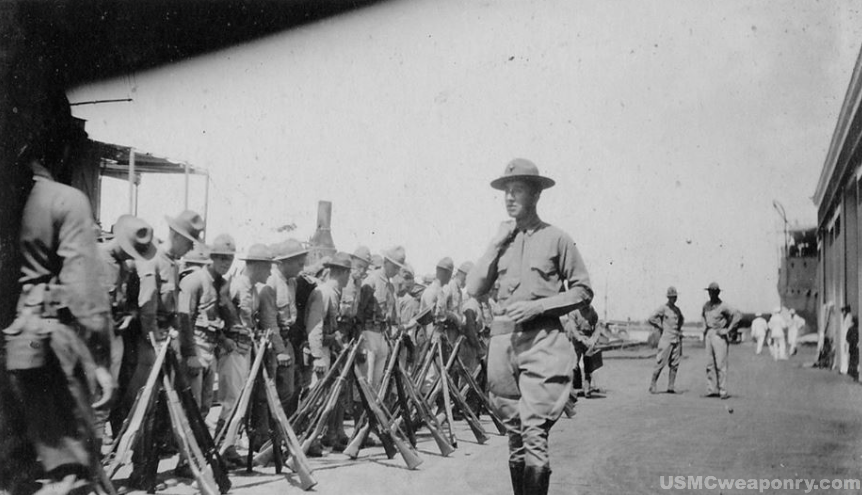
Marines training for combat, 1917 & 1918 (USMC & NARA).
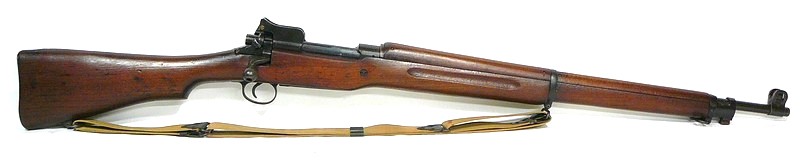
The M1917 “Enfield” rifle would be used by the Marine Corps in 1918 (Steven Norton collection).
An interesting side note to World War I Marine rifle history was the use of the M1917 “Enfield” rifle. Originally produced as “The Rifle, .303 Pattern 1914” by private American firms Winchester, Remington, and Eddystone for the British Empire, the Ordnance Department would modify the design for American issue. A switch in caliber to the standard .30-06 would birth the “United States Rifle, Cal .30, Model of 1917.” With tremendous production ability, these private firms could crank out many more M1917s than Springfield Armory and Rock Island Arsenal could produce M1903s. With a massive influx of new recruits, the need to keep them armed led to the Marine Corps’ adoption of the M1917 in early 1918. From documents recently discovered by Archival Research Group it appears that the majority, if not all of the M1917s the Marine Corps would receive were manufactured by Winchester. While it has been known for some time the Marines utilized the M1917 Enfield rifle stateside, recent discoveries have suggested they were also employed in combat by the men of the 4th Marine Brigade. A statement from Colonel B. Puryear, Jr., the Brigade Quartermaster states the Marine Corps also used the M1917 in combat. While the extent of this usage is unknown, not long after the armistice the Marine Corps would return their M1917s to the Ordnance Department, concluding a brief but interesting chapter in Marine Corps weapons history.
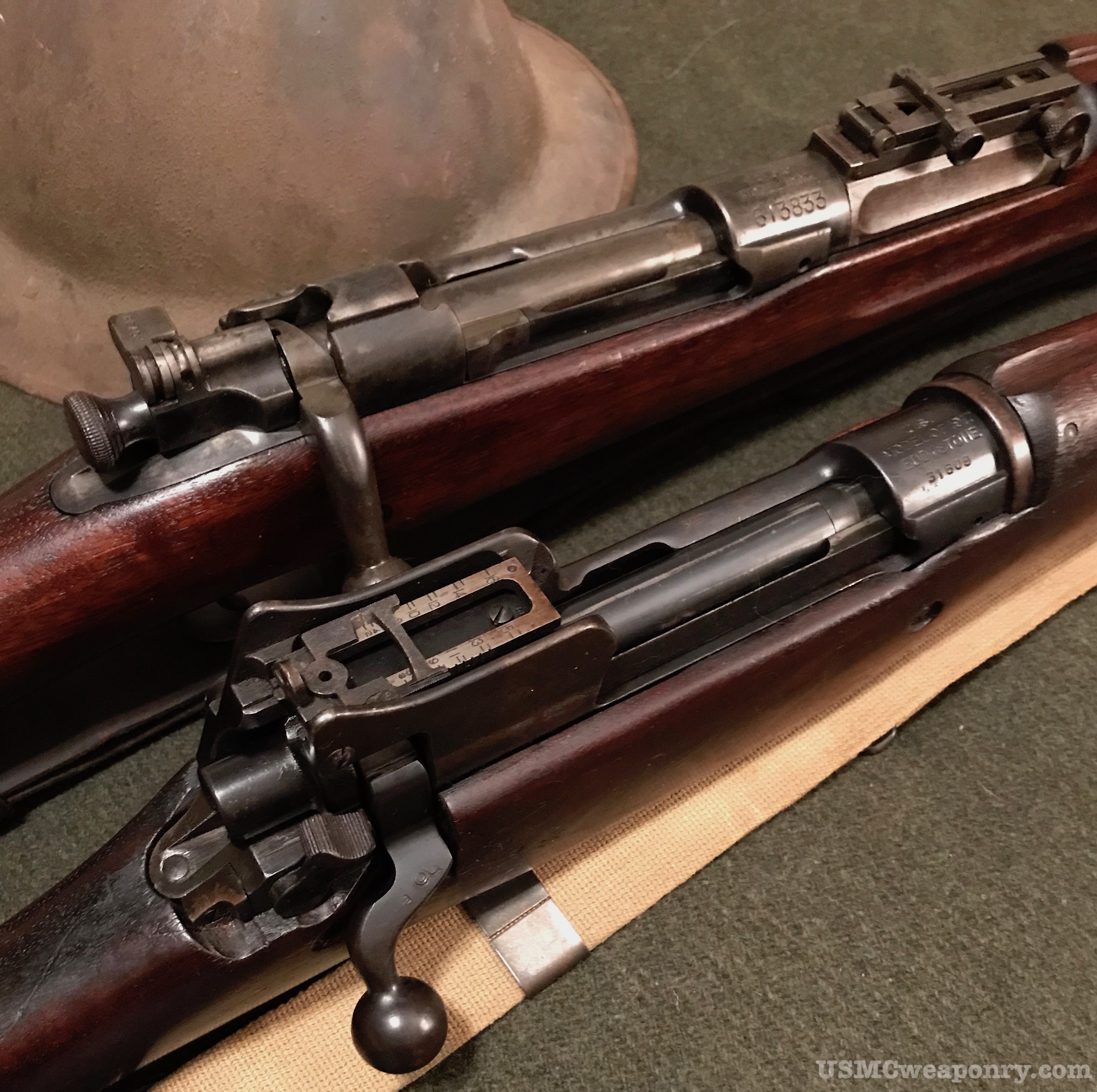
M1917 and M1903 rifles would serve side by side, to some extent, in WWI era Marine units (Plowman collection).
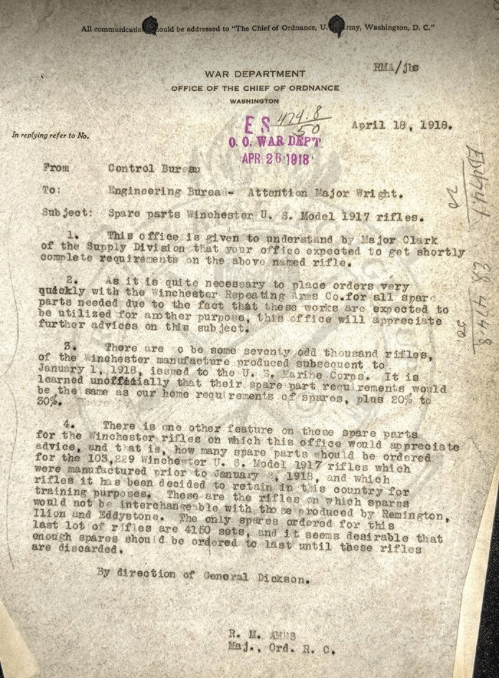
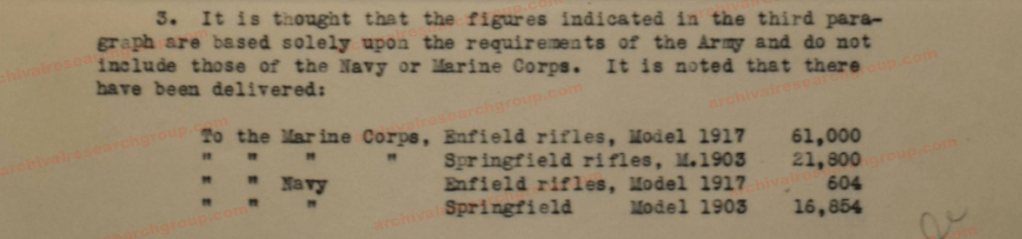
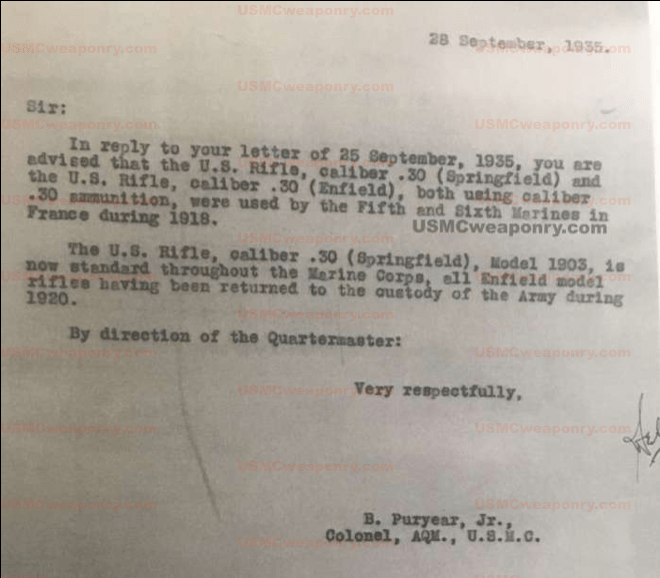
Left & Middle: Documents detailing the Marine Corps acquisition of Winchester M1917s and the number of rifles acquired in early 1918 (documents: www.archivalresearchgroup.com). Right: A statement from Colonel B. Puryear, Jr, USMC Quartermaster on the use of M1917 rifles by the 4th Marine Brigade in France during WWI (NARA, Plowman collection).
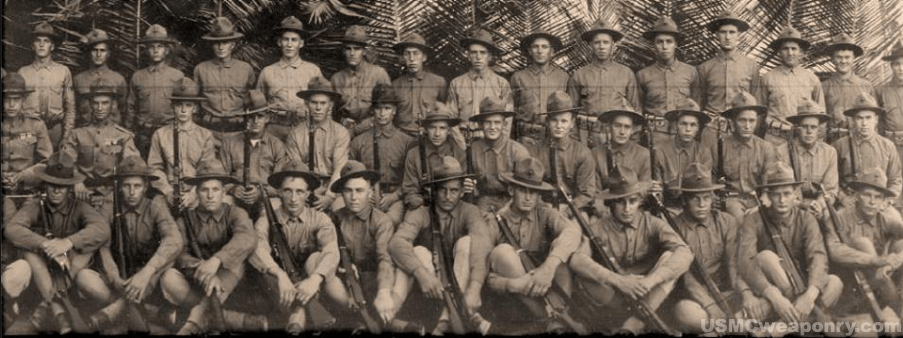
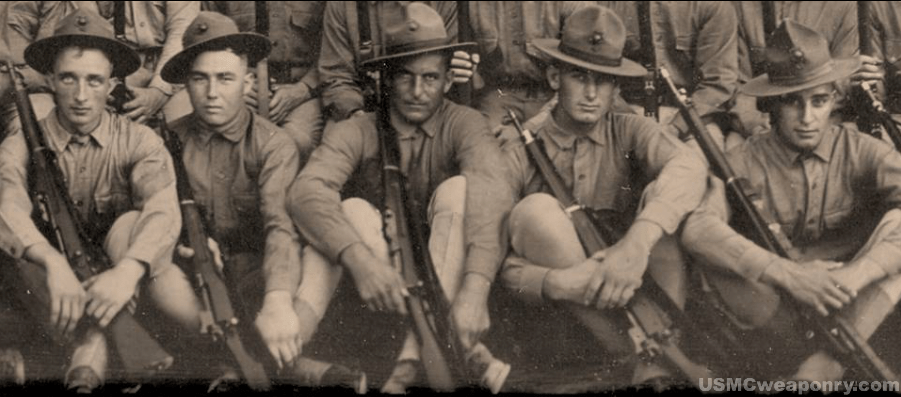
Photos showing Marines during the WWI era with M1917 Enfield rifles (Slater).
The Marine M1903s of World War I were still as-issued from the armory, and would be identical to those carried by the army. For the collector hoping to obtain a representative sample of a WWI Marine M1903, the best option would be to find an original rifle from 1917 or earlier. While individual servicemen have long snuck home their rifles in their seabags, verifying a Marine WWI rifle is exceptionally difficult, and if there is an absence of documentation or otherwise exceptional provenance, such rifles should only be taken at face value with caution.
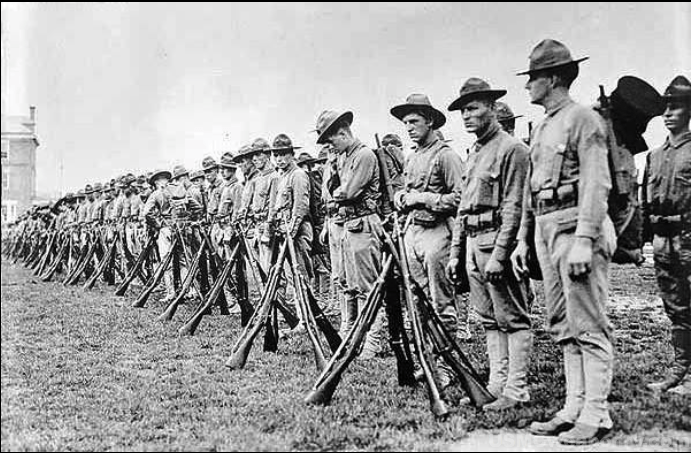
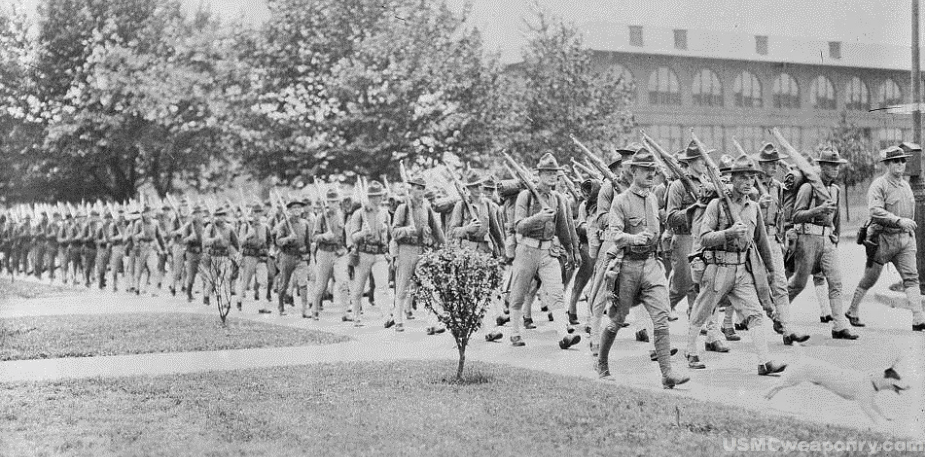
2d Battalion, 5th Marines in 1917 before departure for France (USMC).
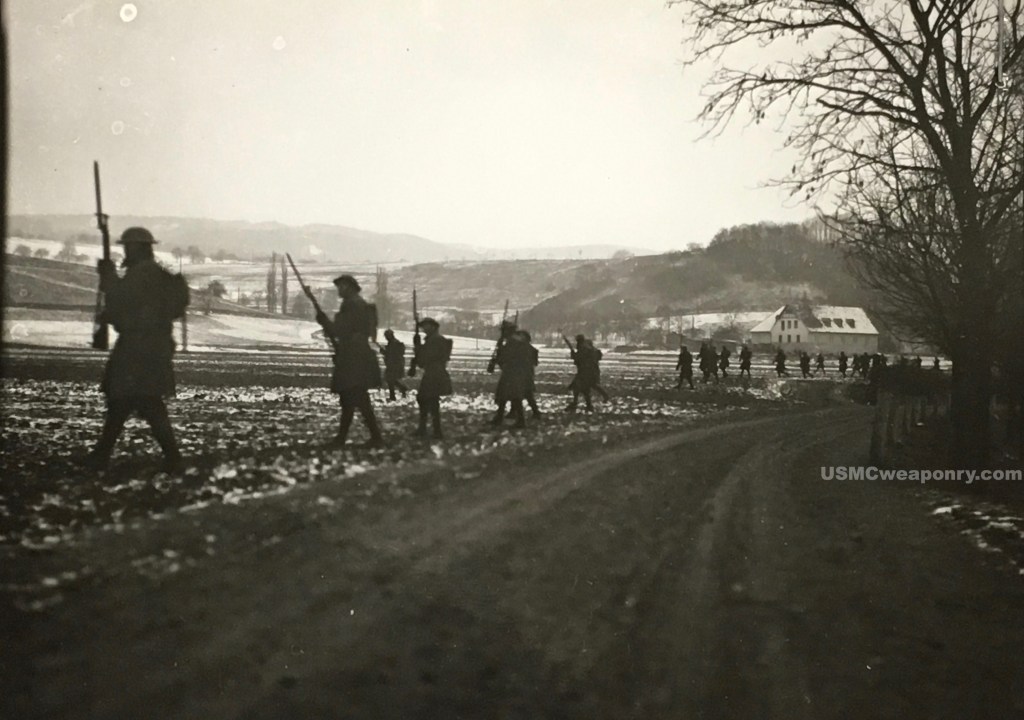
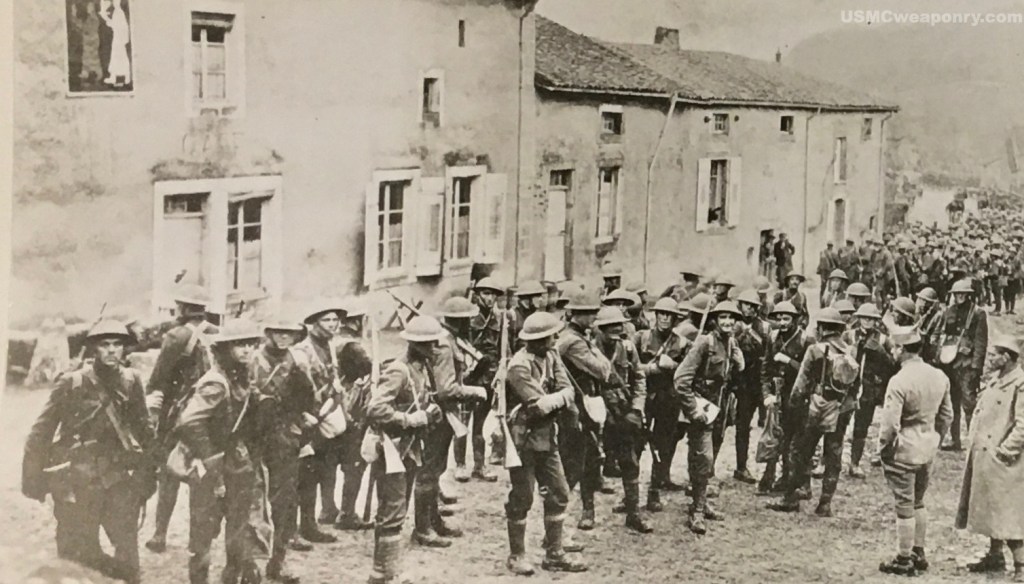
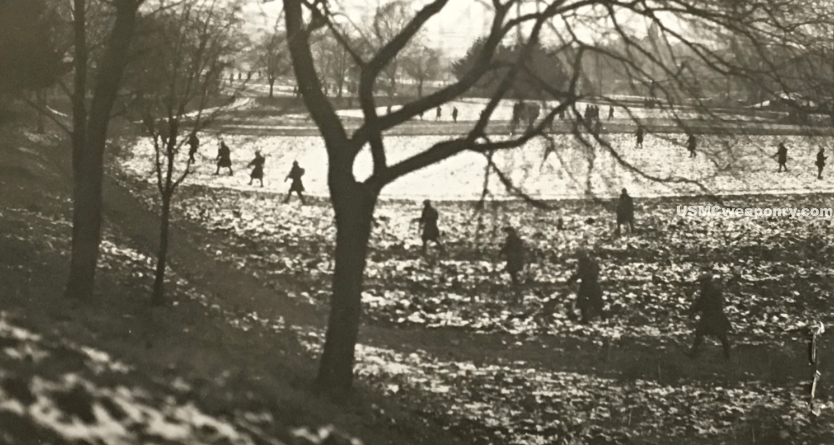
Marines of the AEF during WWI (USMC & NARA).
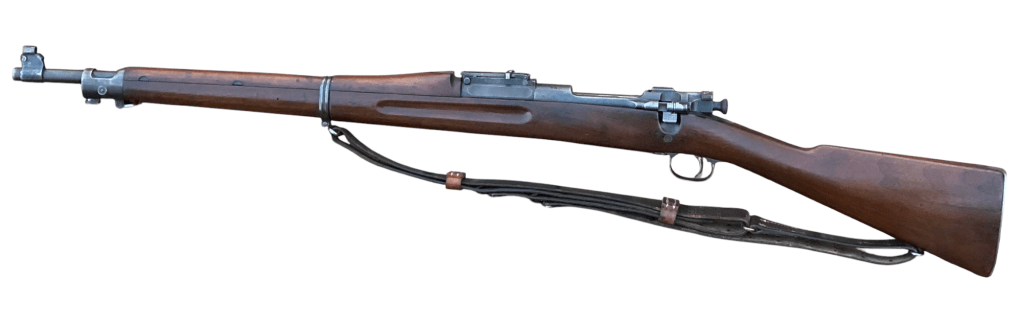
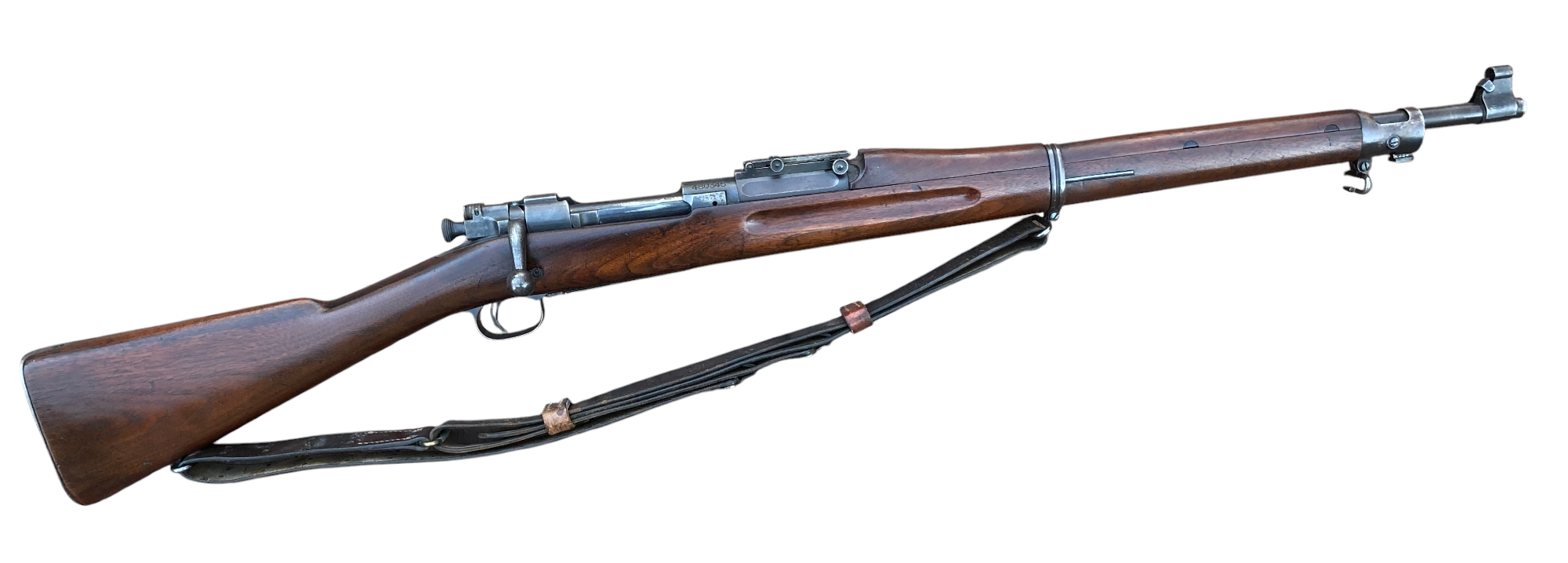

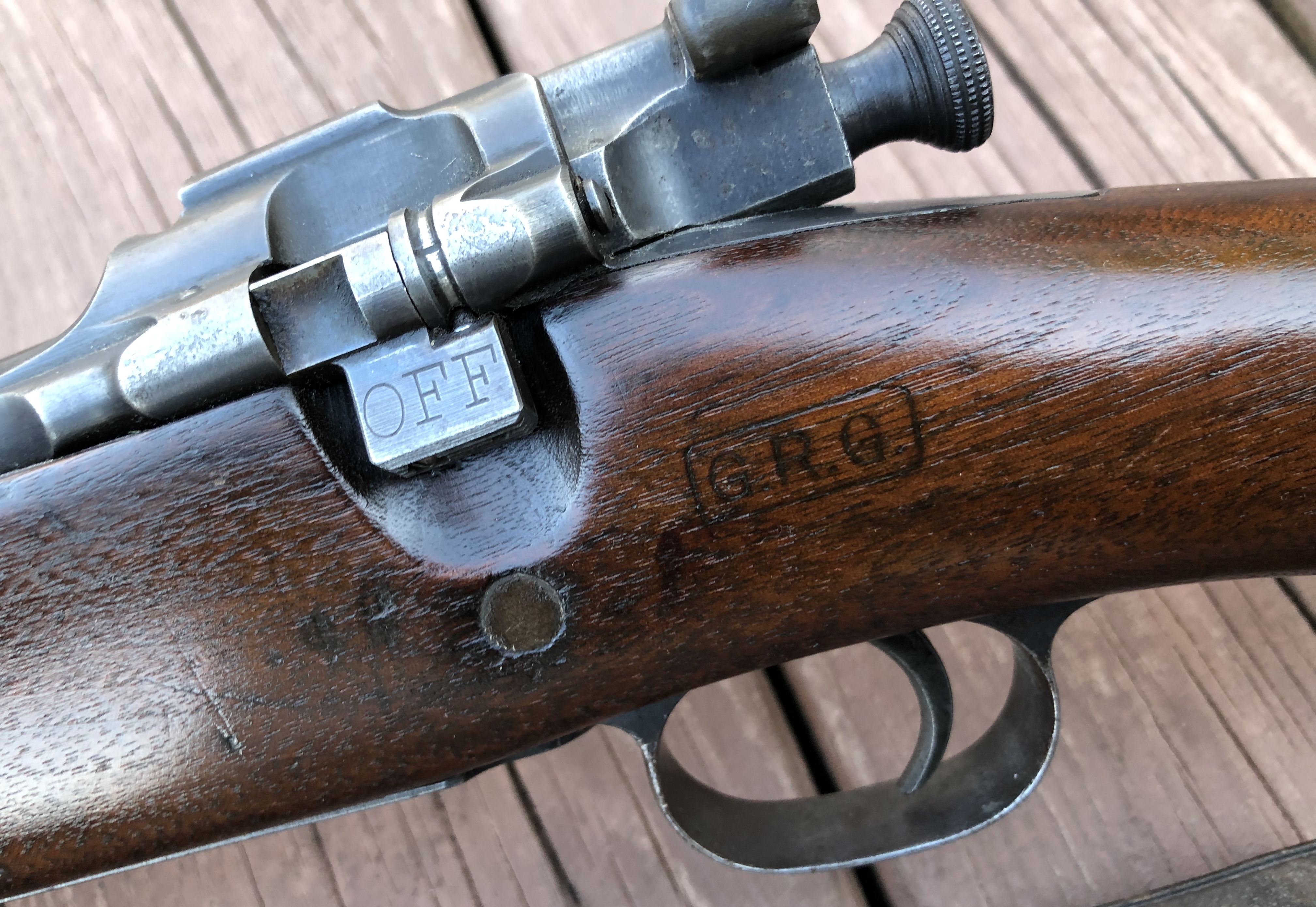

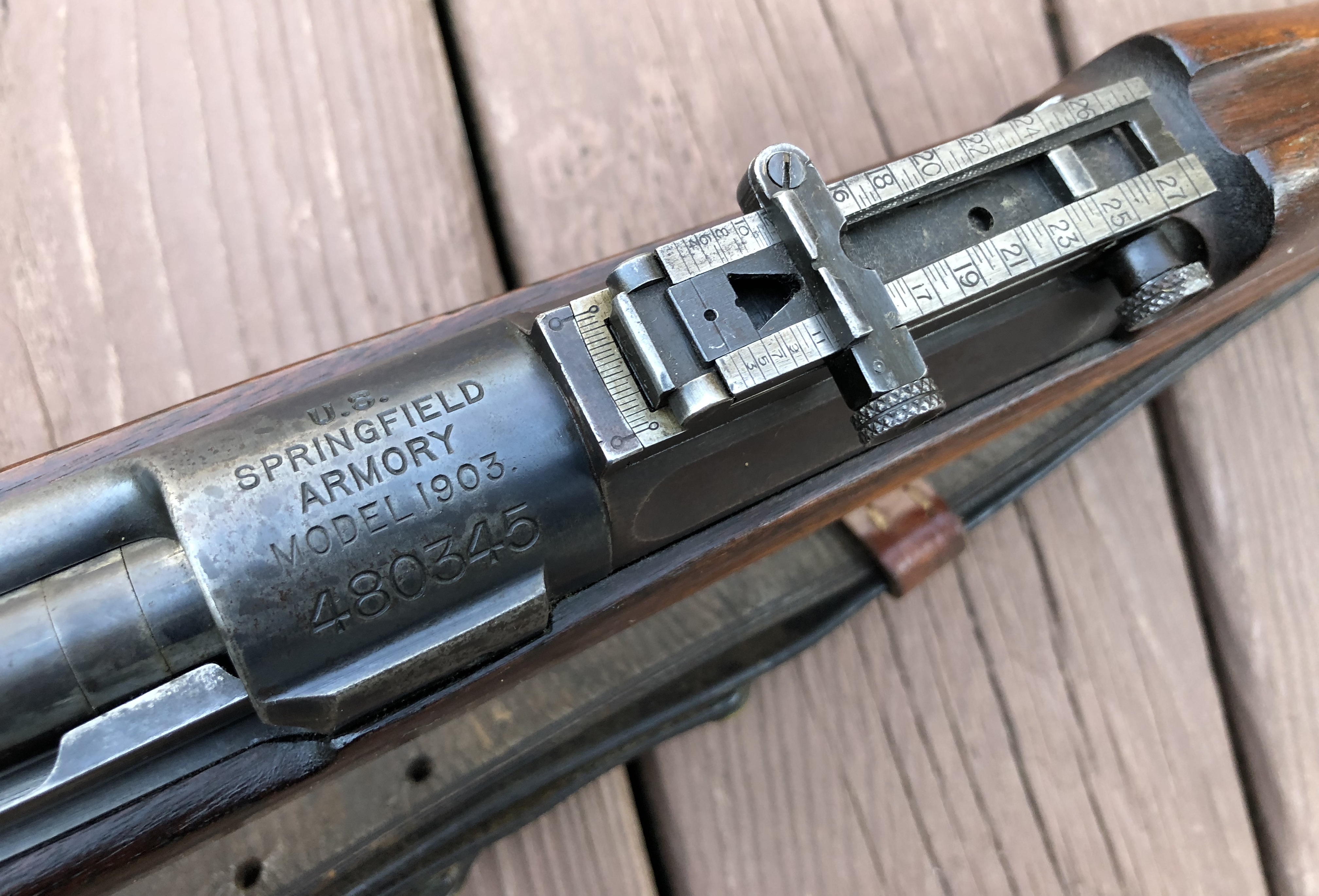
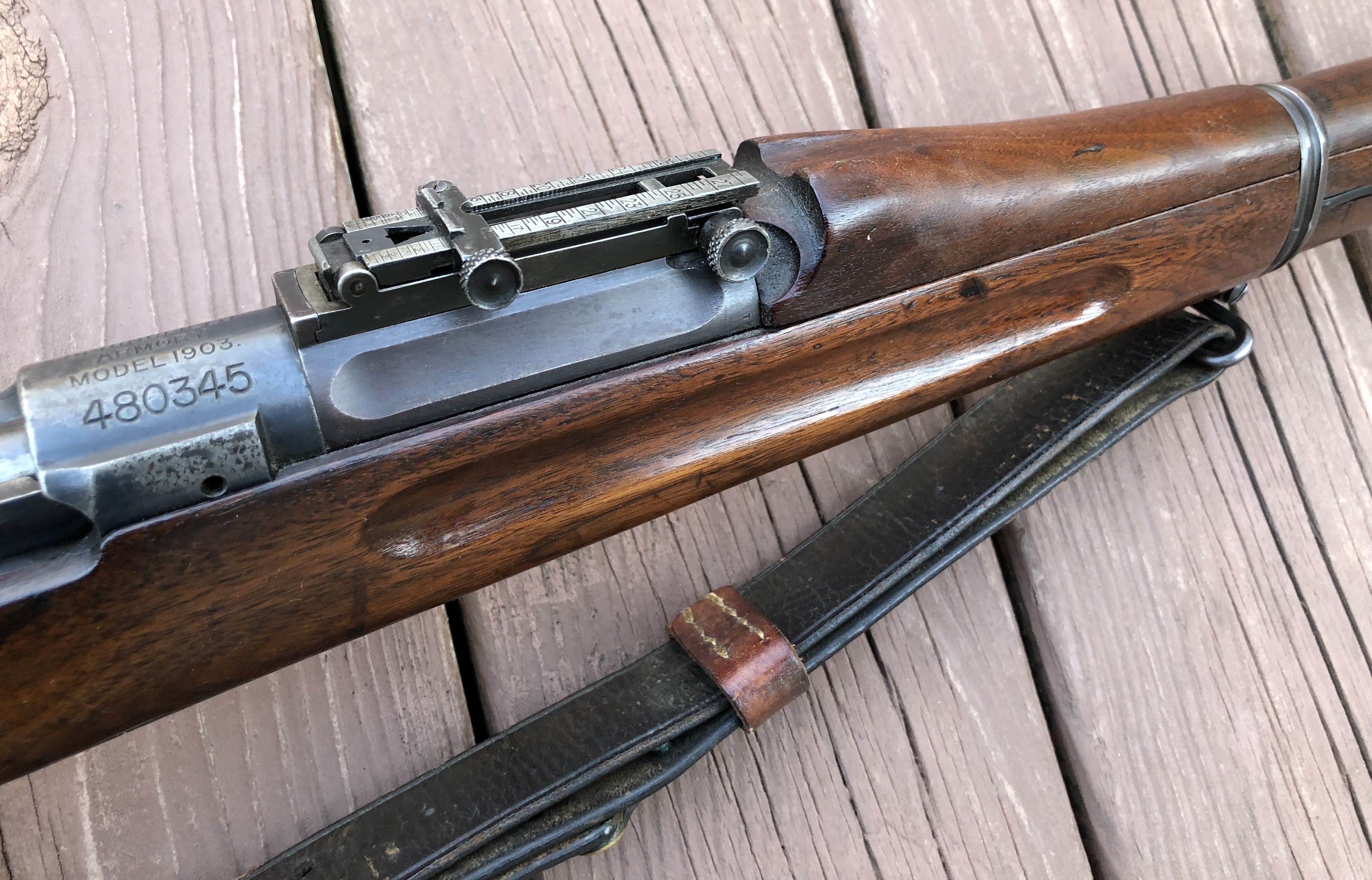
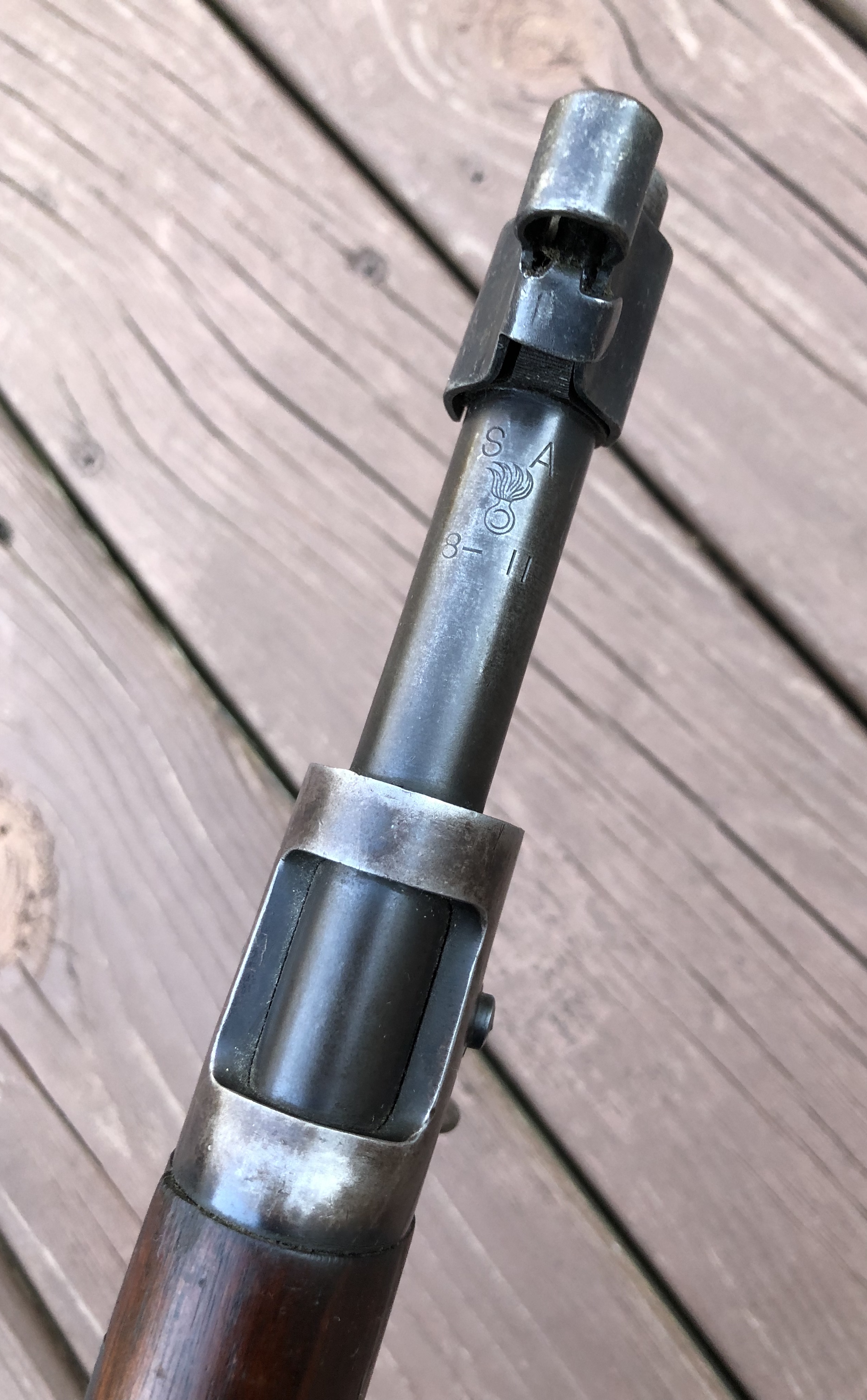
Springfield Armory M1903 #480345, an original example in a similarly dense 4th Marine Brigade serial number range (Veillon collection)
It is a fact that the feats of marksmanship performed by the Marine infantrymen of the 5th and 6th Regiments against German forces made the M1903 legendary. The devastating, precise fires laid down by Marines at Belleau Wood would forever cement the the individual Marine as the consummate rifleman. Finding the rifles used in this iconic battle is only possible through documentation. During this era, the Marines had not yet implemented the specific modifications they would utilize in later years. Most surviving examples will have received a host of modifications from the later years of their service.
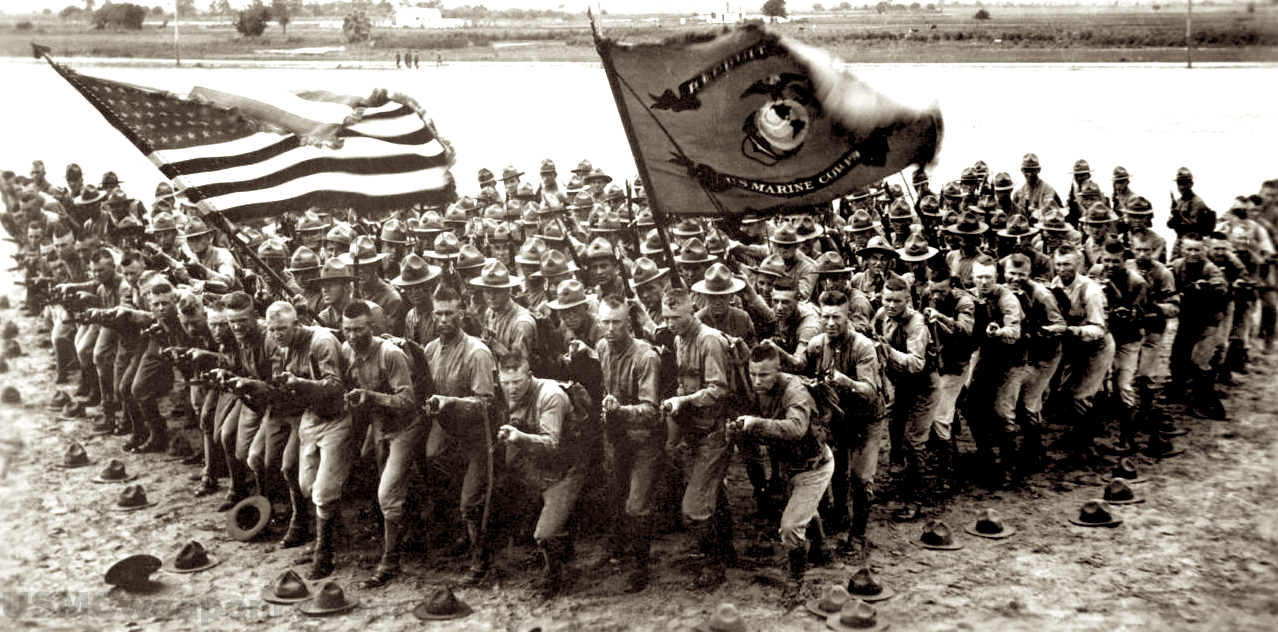
World War I Marines (USMC).
To date, only one Belleau Wood documented M1903 has been located, the rifle carried by Sergeant Guy C. Stickney. Sergeant Stickney served with 18th Company, 2nd Battalion, 5th Marine Regiment. At Belleau Wood, Sergeant Stickney would be wounded multiple times, as well as awarded the Silver Star for his actions. The vast majority of his peers who went into battle with him would not make it home alive. Sergeant Stickney’s service record book shows he was issued Model 1903 serial number 52846. This rifle was found in poor condition, a sporterized Rock Island Arsenal 1903 with USMC traits bearing an incredible serial numbe. The rifle had been parkerized following World War I, so it was restored to how it would have looked during the interwar years, complete with the USMC #10 sights that were used by the Marines from 1919 until 1935. Sergeant Stickney’s service record book did not denote whether he was issued a Springfield Armory or Rock Island Arsenal made M1903, as the Marine Corps never distinguished between the two. However, over the course of many years of compiling USMC serial numbers it is clear the odds are overwhelming that he carried this Rock Island Arsenal made M1903. Through documentation and known examples, many USMC Rock Island Arsenal M1903s with very close serial numbers to this rifle have been found, while the nearest Springfield Armory M1903 serial numbers are tens of thousands away. Coupled with the USMC traits the rifle was found with, indeed was Sergeant Stickney’s M1903.
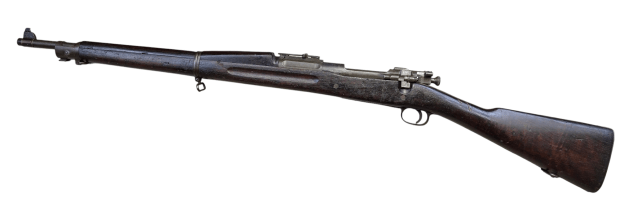
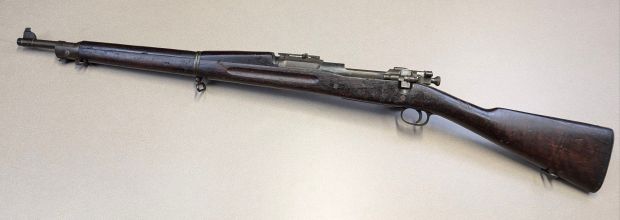
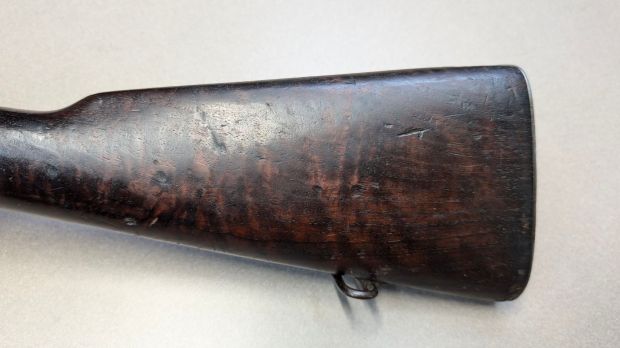
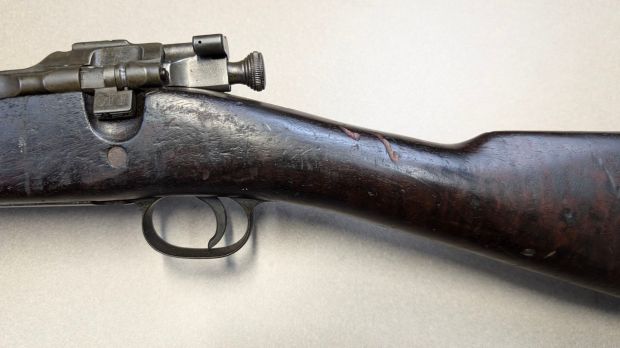
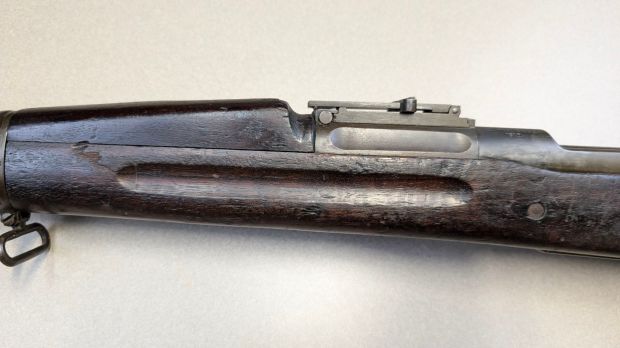
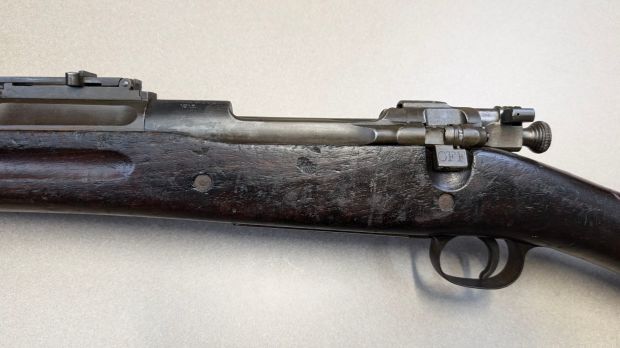
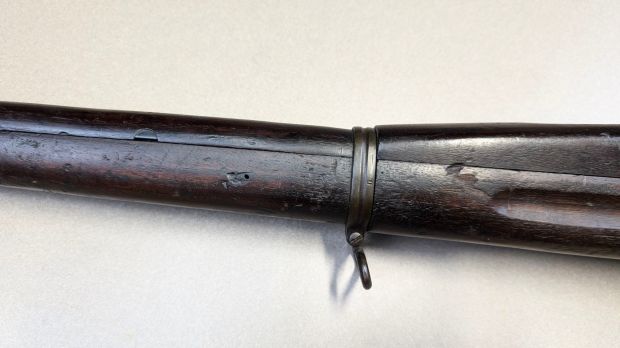
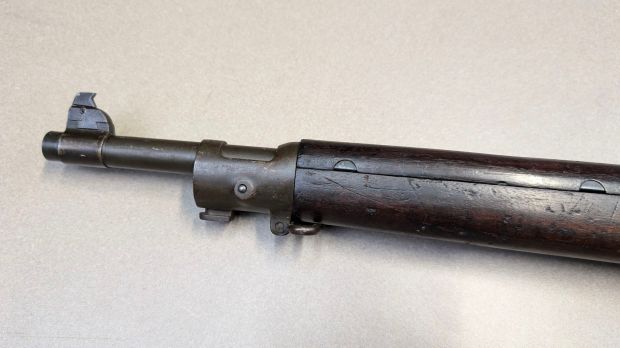
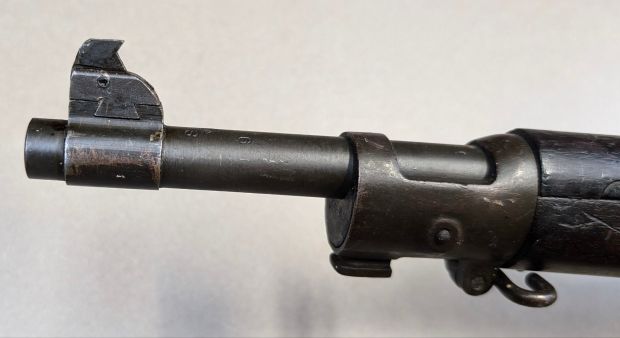
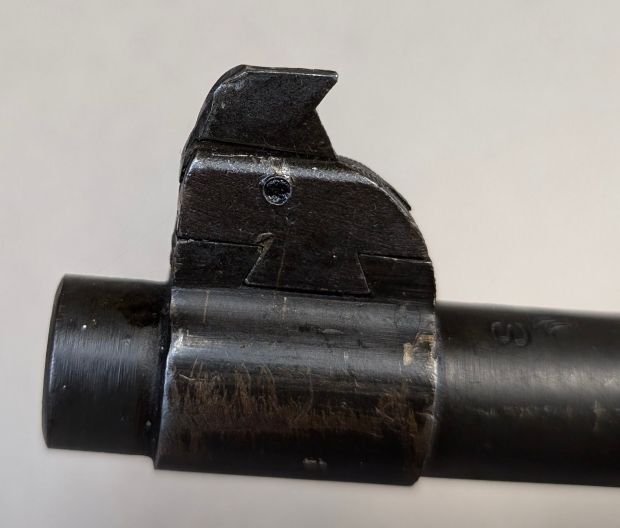
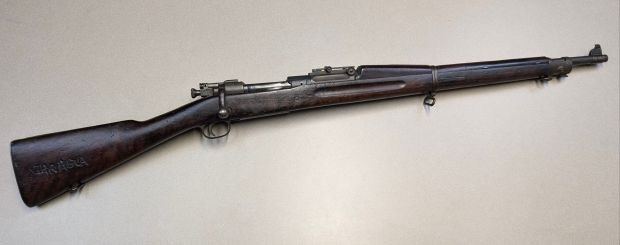
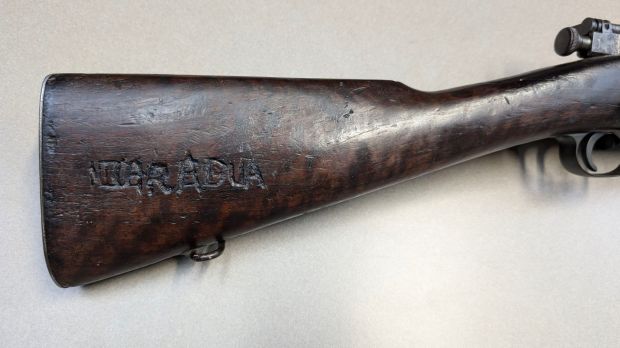
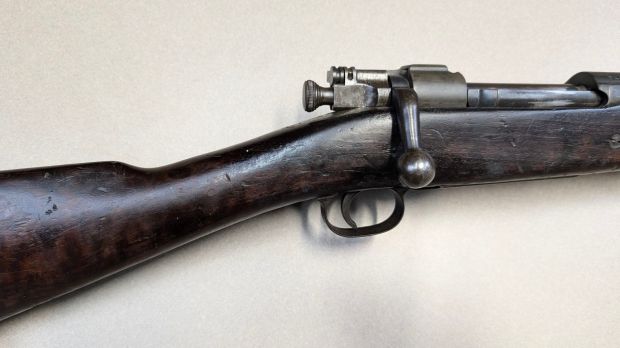
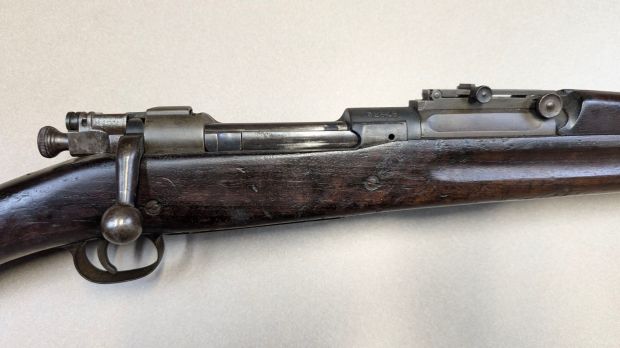
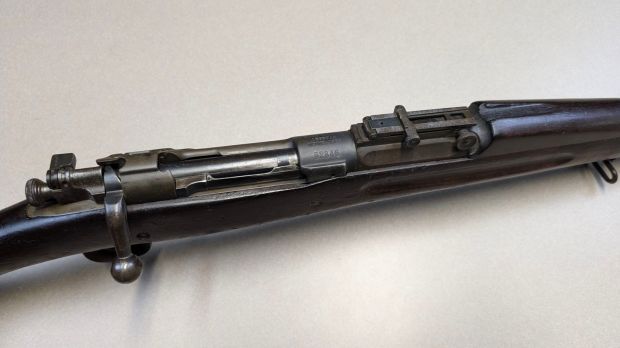
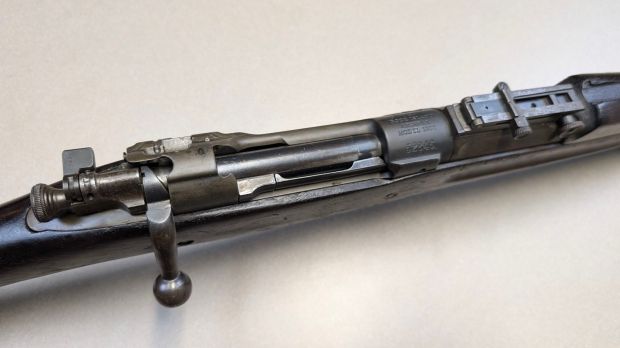
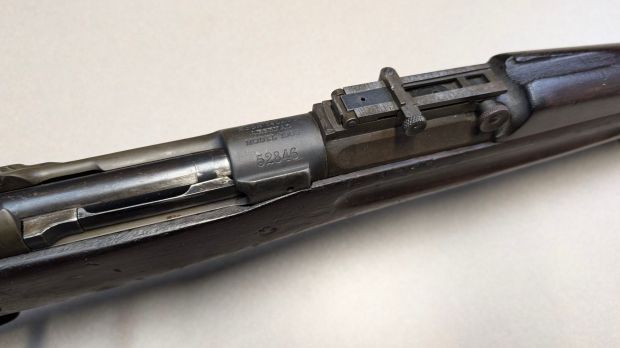
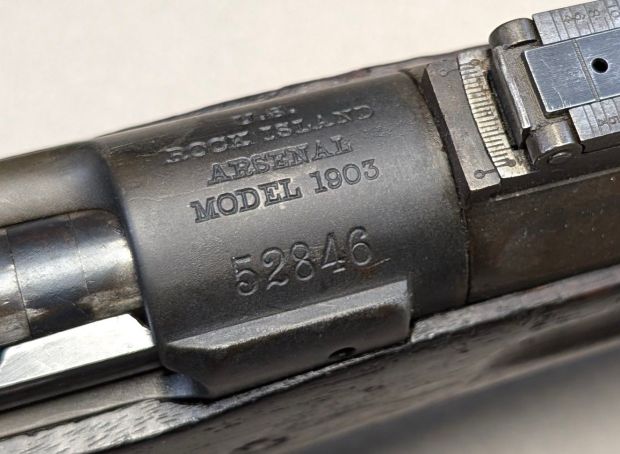
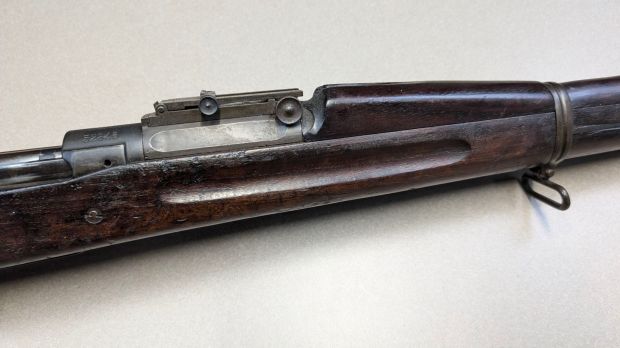
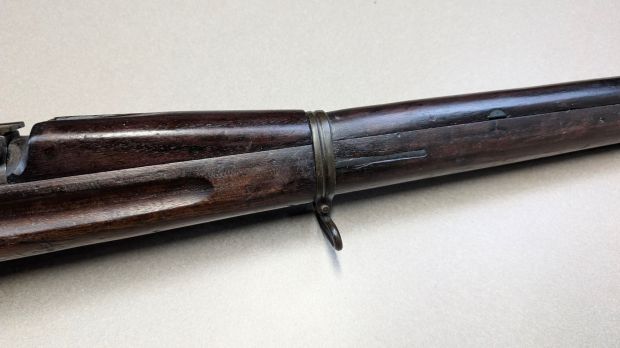
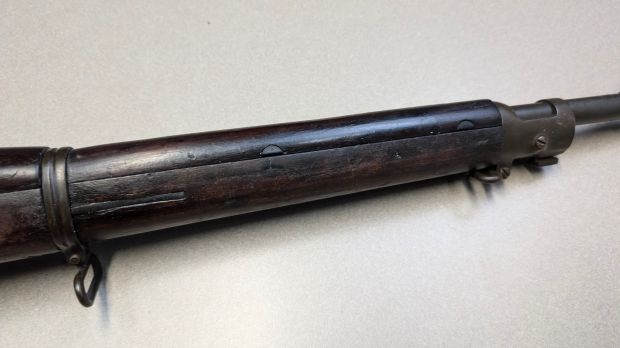
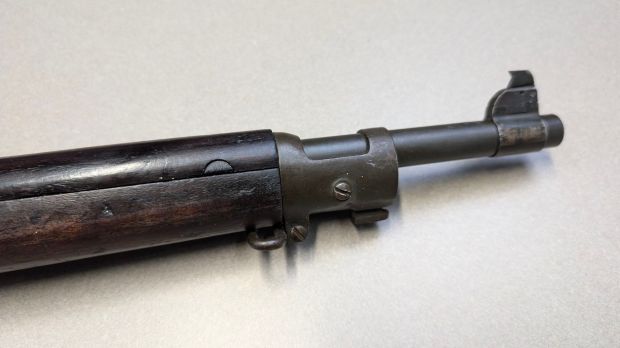
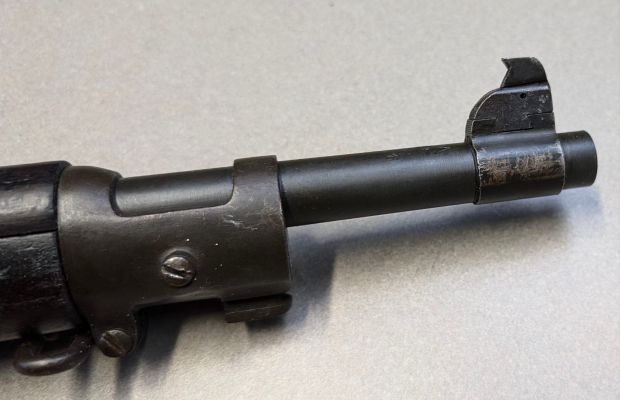

USMC M1903 #52846, carried by Sergeant Guy Charles Stickney at the Battle of Belleau Wood (Plowman collection).
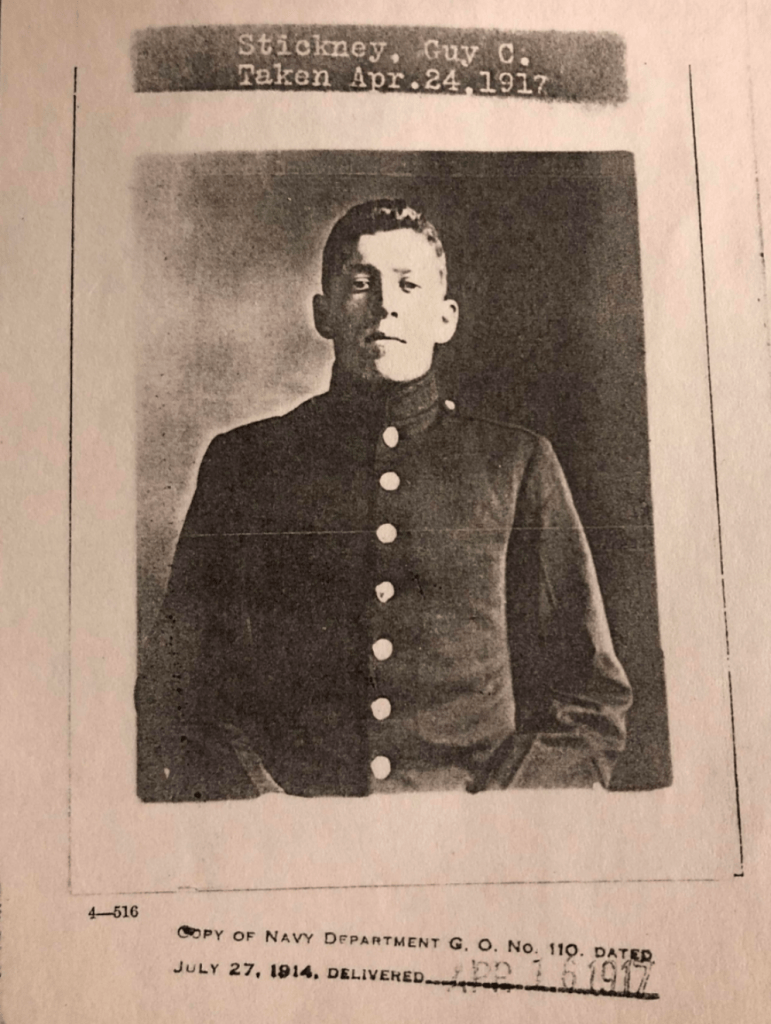
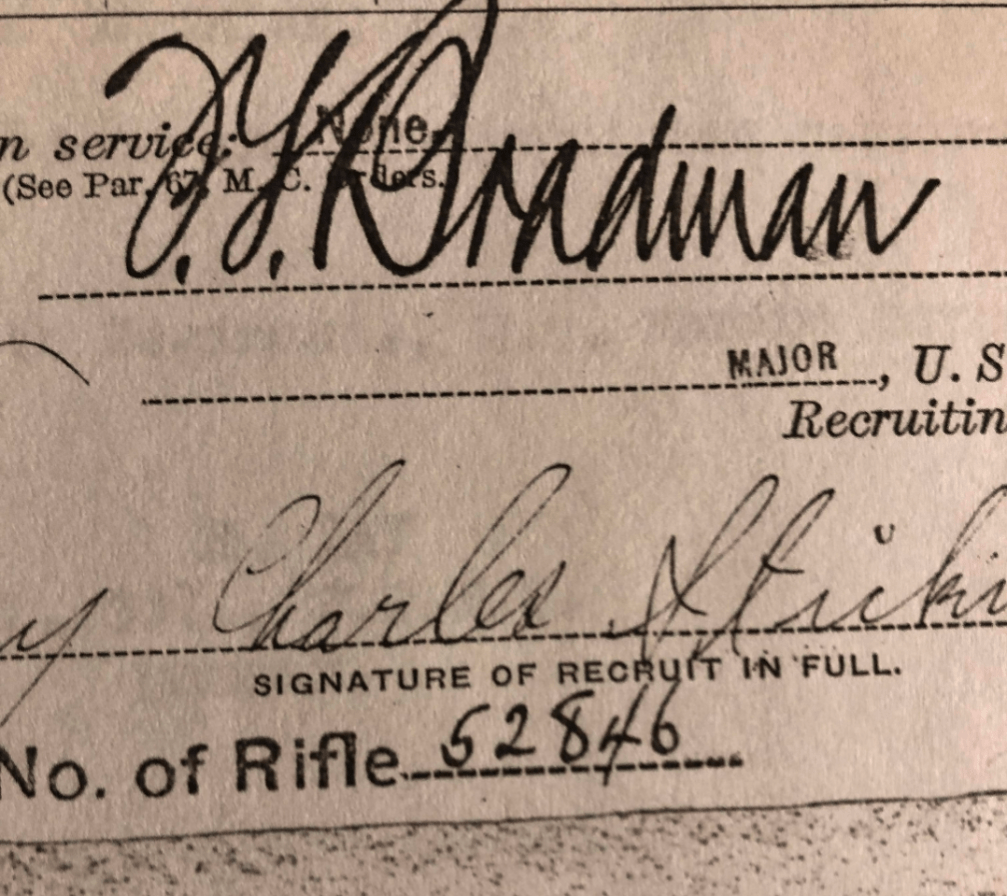
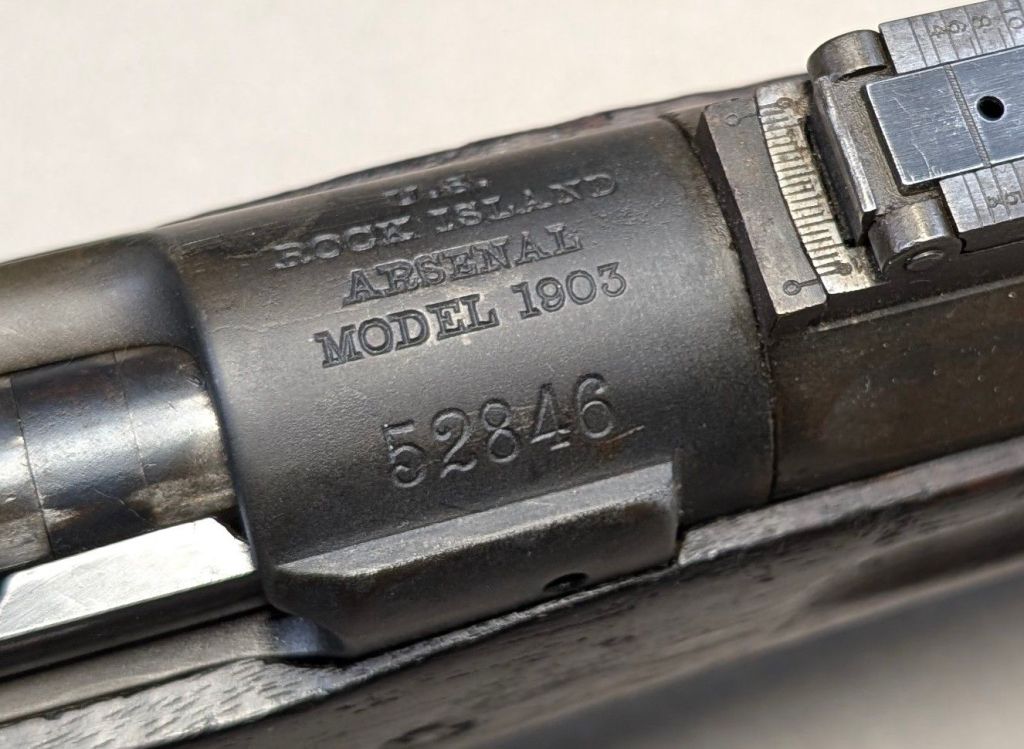
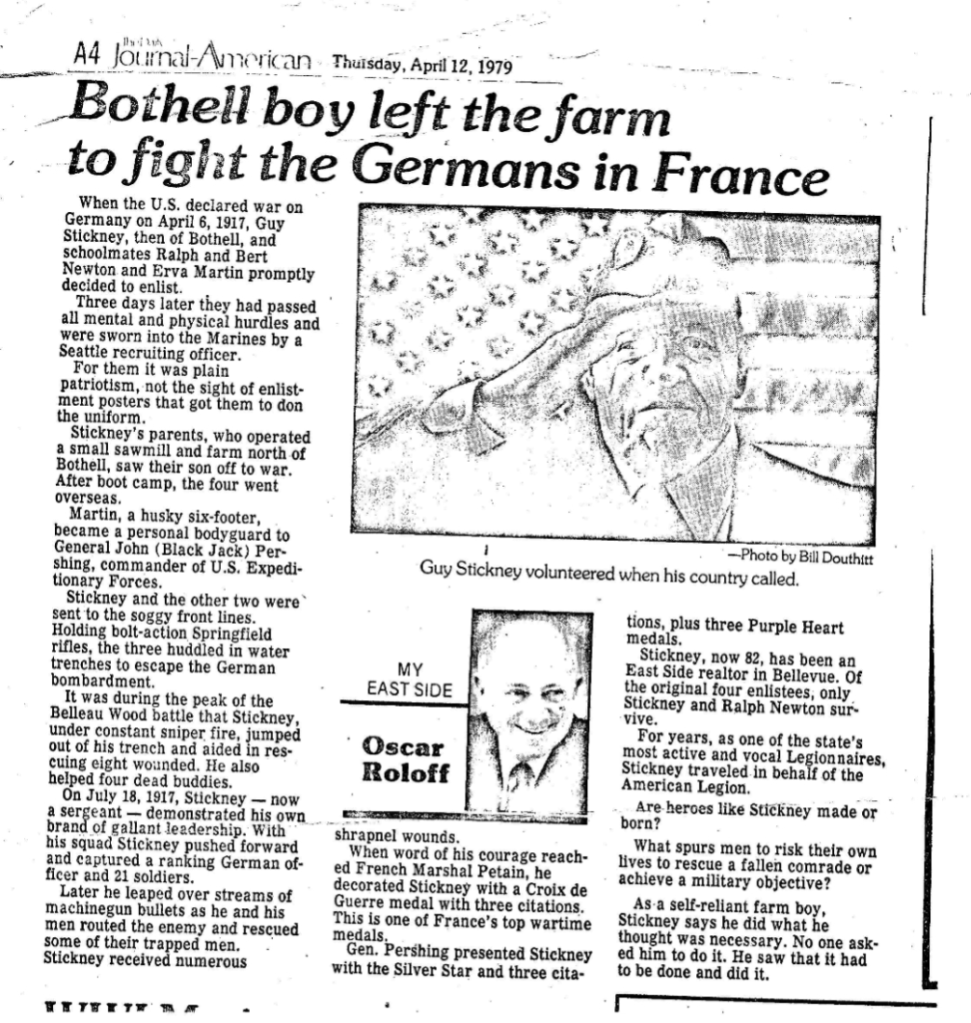
Sergeant Stickney’s Service Record Book contained the serial number of the M1903 he was issued (courtesy of Kevin Seldon).
As of now, no other Belleau Wood documented 1903s have been found. Most importantly, as interesting as a tool of war like this service rifle may be, nothing compares to the tremendous sacrifice Sergeant Stickney and his brothers in arms made in France in 1918. Veteran’s Day is a day that sprung from the celebration of that terrible war coming to an end. By taking some time to read the stories of the men who fought in World War I, the sacrifices they made will live on forevermore.
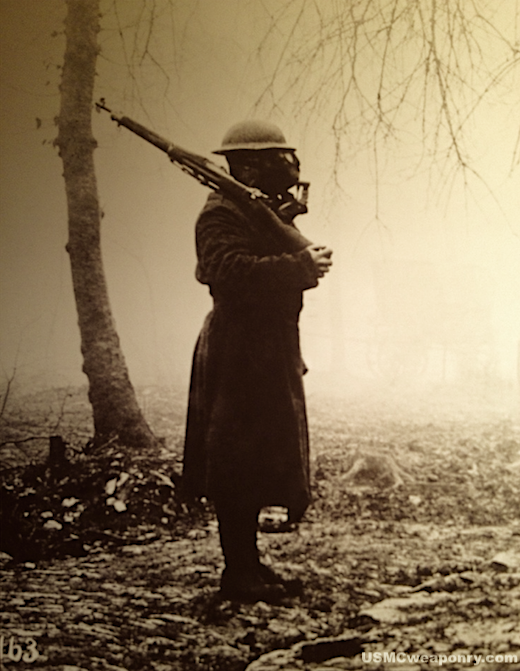
A Marine sentry stands his post in France (USMC).
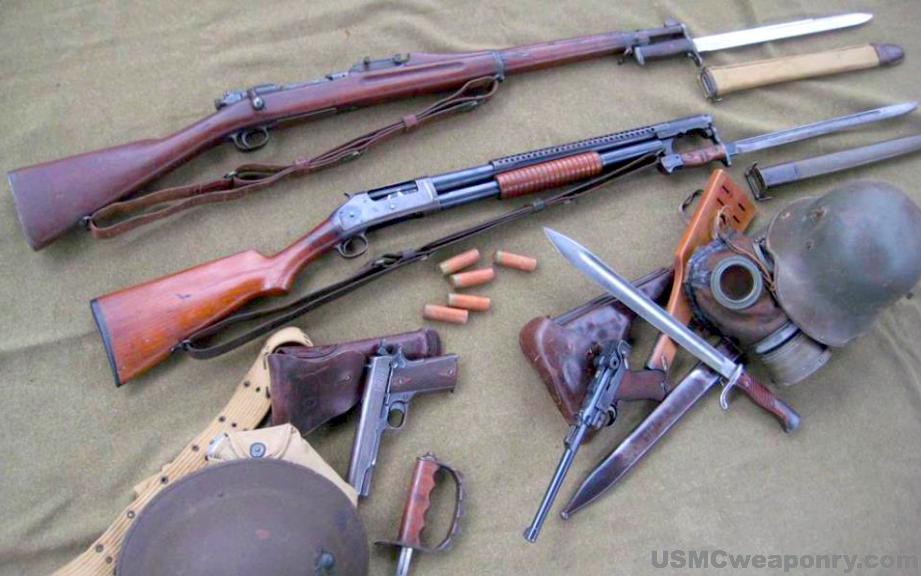
Weapons that Marines would make famous during WWI, as well as an assortment of German items many would bring home with them (Anderson/Ozark Machine Gun collection).
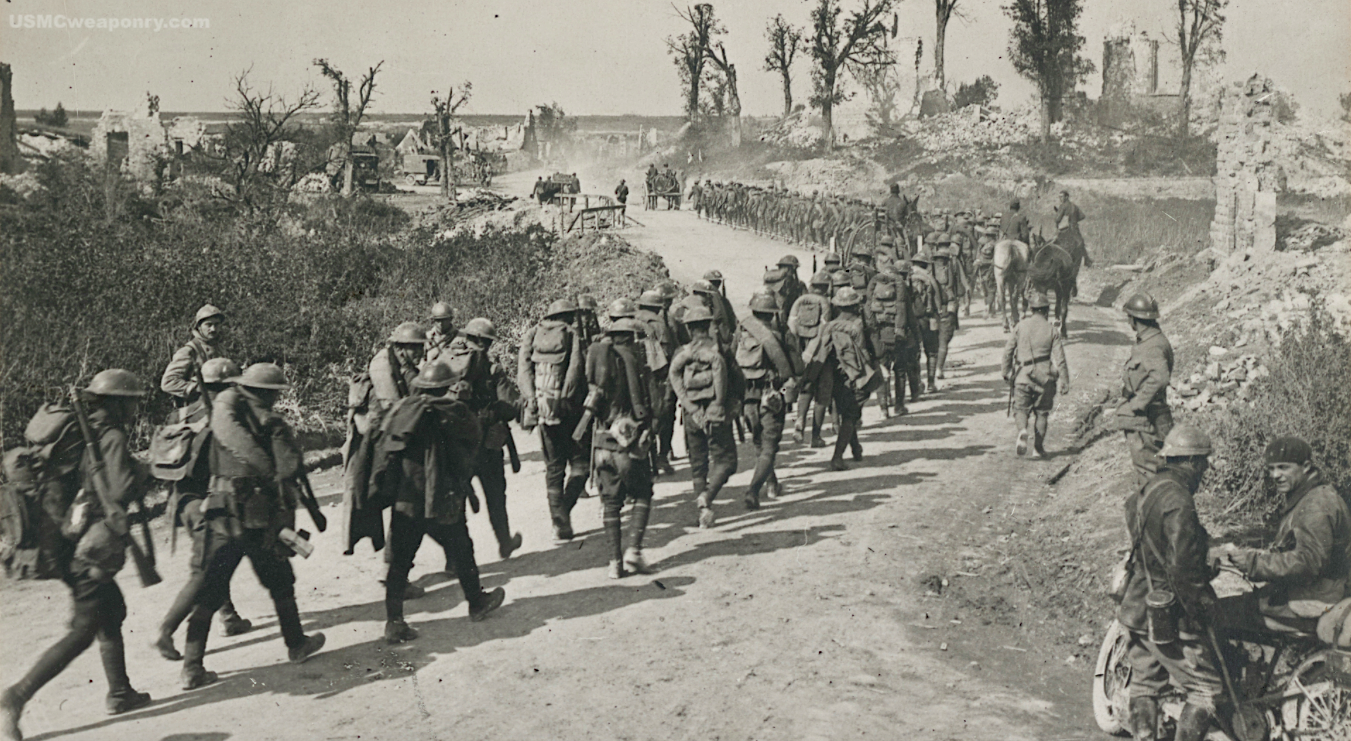
Marines on the march in France (photo: NARA).
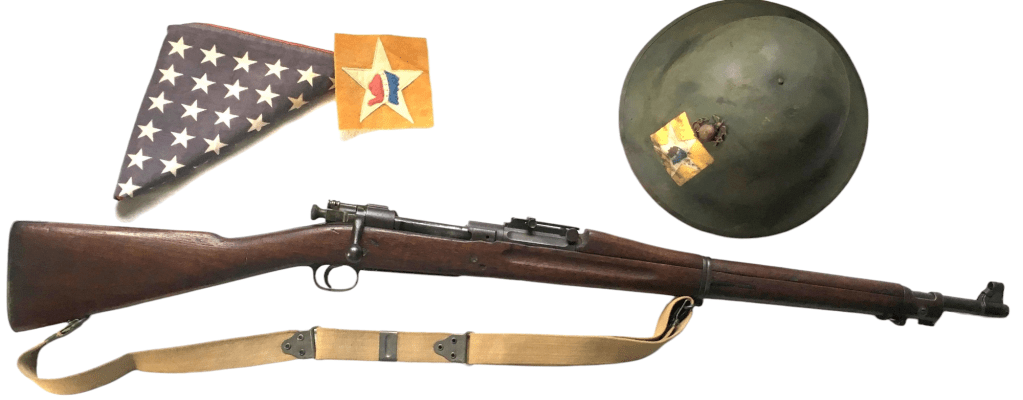
The Marines of the 4th Marine Brigade came home from Europe with their unit proudly displayed on their shoulders and helmets for a victory parade in New York City, 1919 (Plowman collection).
 USMCWEAPONRY.COM